
To keep your spare filters ready to work, store them in a cool, dry place away from moisture and sunlight. Use labeled bins to organize filters by size and type, and keep them in their original packaging until needed. Track purchase and installation dates to avoid using expired filters. Regularly inspect your storage setup to prevent damage, and stay updated on filter lifespan guidelines. Continue on for more tips to guarantee your replacements are always prepared.

Get home appliances delivered free with Prime
- Fast, free delivery on millions of items
- Prime Video, Amazon Music and more included
- Member-only deals all year
Key Takeaways
- Store filters in their original packaging in cool, dry, and dark locations to prevent damage and maintain quality.
- Label filters with type, size, purchase date, and expiration date for quick identification and lifecycle management.
- Organize filters in labeled containers by size or type to streamline access and reduce handling damage.
- Regularly inspect storage areas for moisture, dust, or environmental damage and adjust practices accordingly.
- Track installation and replacement dates to ensure filters are used within their optimal lifespan.

Proper filter storage is vital to guarantee your filters stay clean and effective for longer periods. When you’re storing spare filters, paying attention to how you label and organize them can make a huge difference in maintaining their quality. Clear filter labeling isn’t just about writing the date you bought the filter; it’s about including details like the type, size, and installation date. This helps you quickly identify the right replacement when needed, saving you time and preventing mistakes. Proper labeling also ensures that filters aren’t accidentally used past their prime, which could reduce their efficiency or compromise air quality.
Label filters with type, size, and installation date to ensure proper use and maintain air quality.
Your storage environment plays a critical role in preserving filter integrity. You want a space that’s cool, dry, and free from excess dust, humidity, or temperature fluctuations. Avoid places like garages or basements where moisture and temperature swings are common, as these conditions can degrade filter materials. Instead, choose a closet or cabinet inside your home—somewhere that’s away from direct sunlight and not prone to humidity or pests. Keeping filters in their original packaging until use is a smart move, as it provides an extra layer of protection from environmental contaminants. Additionally, understanding the filter lifespan and replacement guidelines can help you better manage your stock and ensure optimal indoor air quality. Regularly checking your storage conditions can further extend the lifespan of your filters by preventing environmental damage. Incorporating a storage checklist can help you stay organized and ensure all conditions are optimal for preserving your filters.
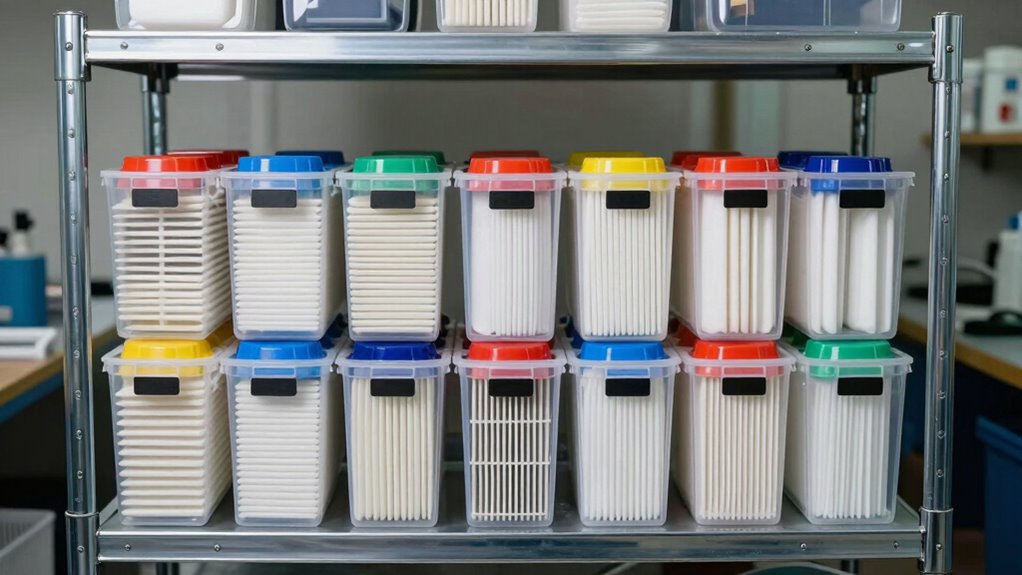
Organization is key to effective filter storage. Consider using labeled bins or containers to separate filters by size or type. This way, you won’t have to rummage through a jumble of filters when a replacement is needed, and you’ll reduce the risk of damaging the filters or contaminating them with dust from other stored items. Make sure each container has clear labels with essential information, such as the filter model number, purchase date, and expiration date if applicable. This system helps you keep track of how long filters have been stored and when they should be replaced, ensuring you always have ready-to-use filters at hand. Implementing a consistent organization system can streamline your maintenance routine and prevent unnecessary delays during filter replacements. Regularly inspecting your filters and adjusting your storage practices can further help maintain their quality over time.
As an affiliate, we earn on qualifying purchases.
Frequently Asked Questions
How Long Can Spare Filters Be Stored Before They Expire?
You can typically store spare filters for about 1 to 2 years before they expire if you keep them in a proper storage location. To guarantee longevity, store filters in a cool, dry, and dark place away from direct sunlight, moisture, and extreme temperatures. Keep the filter material sealed in its original packaging until you’re ready to use them. Proper storage preserves filter integrity and ensures they work effectively when needed.
Are There Specific Storage Conditions That Prevent Filter Deterioration?
Yes, there are specific storage conditions that prevent filter deterioration. You should store filters in a cool, dry environment, away from direct sunlight and temperature fluctuations. Keep the filter material sealed in airtight containers to prevent moisture, dust, and contaminants from damaging it. Proper storage guarantees the filter’s integrity and performance when you need it, extending its shelf life and maintaining maximum effectiveness.
Can Filters Be Stored With Other Cleaning Supplies?
Yes, you can store filters with other cleaning supplies, but make certain they’re compatible and won’t be damaged. Use airtight storage container options to protect filters from dust, moisture, and contaminants, which helps maintain their effectiveness. Keep them away from chemicals or strong-smelling products to prevent odor transfer. Proper storage guarantees filters remain ready to use when needed, and checking compatibility beforehand prevents any damage or degradation.
How Often Should Stored Filters Be Inspected for Damage?
Think of your stored filters as sleeping giants; you need to check them regularly. Inspect the filter material for signs of wear or damage at least once every six months. Use clean storage containers to protect them from dust and moisture, which can cause deterioration. By doing so, you guarantee your spare filters remain ready to spring into action when needed, keeping your air clean and your system running smoothly.
Is It Necessary to Label Filters With Purchase or Expiry Dates?
Yes, it’s necessary to label filters with purchase or expiry dates to guarantee label accuracy. This helps you track the filter material’s lifespan, preventing you from using outdated or compromised filters. Proper labeling allows you to quickly identify which filters are still effective and which need replacing, keeping your system running smoothly. Accurate labels also reduce the risk of using expired filters, ensuring safety and peak performance over time.
As an affiliate, we earn on qualifying purchases.
Conclusion
By following these simple storage tips, you’ll turn your spare filters into loyal guardians, always ready to spring into action when needed. Think of your stored filters as a well-trained army, patiently waiting in the shadows, ready to leap into battle against dirt and debris. Keep them organized, dry, and accessible, and you’ll guarantee your equipment stays in top shape. With your filters properly stored, you’ll always be prepared—like a seasoned captain steering through any storm that comes your way.
As an affiliate, we earn on qualifying purchases.
filter labeling system for storage
As an affiliate, we earn on qualifying purchases.
As an affiliate, we earn on qualifying purchases.
Cold & flu season Picks
humidifiers
As an affiliate, we earn on qualifying purchases.