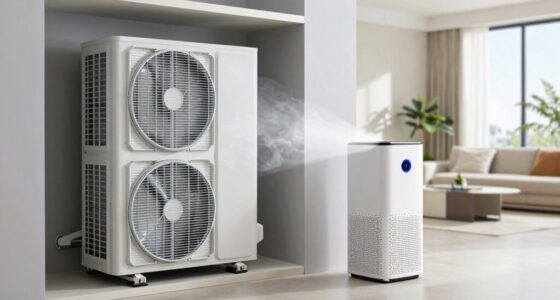
A condensate pump is a small device that helps prevent basement water damage by removing excess moisture from your HVAC systems when gravity drainage isn’t possible. It collects condensate water and pushes it away through a discharge pipe, protecting your home from mold, leaks, and structural issues. If you want to learn more about how this small part can save your basement, keep exploring the details below.
Key Takeaways
- Condensate pumps remove excess water from HVAC systems, preventing basement flooding and mold growth.
- They activate automatically when condensate reaches a certain level, ensuring continuous drainage.
- Proper pump capacity and installation are crucial to prevent water backup and damage.
- Regular maintenance keeps the pump functioning effectively, avoiding costly repairs.
- Installing a condensate pump enhances basement moisture control, protecting structural integrity and indoor air quality.
What Is a Condensate Pump and How Does It Work?

Ever wondered how excess condensate is removed from your HVAC system or industrial equipment? A condensate pump is a small device that helps manage this process efficiently. When your system produces condensation, the pump collects the water in a reservoir. Once the water reaches a certain level, the pump activates, pushing the condensate through a discharge pipe. This process prevents water buildup that could compromise air quality or disrupt temperature control. By removing excess moisture, the pump maintains ideal indoor air quality and ensures your system runs smoothly. It’s especially useful in scenarios where gravity drainage isn’t possible. Proper maintenance of condensate pumps can extend their lifespan and improve overall performance. Additionally, understanding system components helps in diagnosing potential issues early and ensures reliable operation. Regular inspections of pump operation can help identify problems before they lead to system failure.
Do You Need a Condensate Pump in Your Basement?

If your basement struggles with high humidity or poor drainage, a condensate pump might be a smart addition. Consider whether your current drainage setup handles excess water effectively and if installing a pump is a cost-efficient fix. Addressing these points can help you decide if a condensate pump is right for your space. Additionally, understanding gear care tips can prevent issues caused by excess moisture and keep your equipment in top shape. Proper maintenance of your drainage system can also help prevent the need for additional equipment like pumps. Regularly inspecting your regional moisture levels can further inform whether a condensate pump is a suitable solution for your basement. Monitoring prognosis and recovery factors in similar situations can provide valuable insights into the long-term effectiveness of installing a condensate pump. Implementing necessary cookies can enhance your browsing experience as you research the best options for your needs.
Basement Humidity Levels
Basement humidity levels can considerably impact your home’s comfort and structural integrity. High humidity encourages mold growth, wood rot, and musty odors, while low humidity can cause wood to crack. To maintain *best* humidity control, you need to monitor moisture levels regularly. Using a hygrometer helps you gauge if humidity stays between 30-50%. To prevent excess moisture, consider dehumidifiers or proper ventilation. Ensuring moisture prevention can reduce the need for costly repairs and improve your living environment. Proper moisture management is essential for maintaining a healthy basement. Humidity control strategies often involve understanding the contrast ratio in your setup to optimize the environment for comfort and safety. Here’s a quick overview:
| Humidity Level | Effect |
|---|---|
| High | Mold, musty odors, structural damage |
| Ideal | Comfort, moisture prevention |
| Low | Dryness, wood cracking |
Maintaining balanced humidity keeps your basement dry, safe, and comfortable. Additionally, implementing natural ventilation can help regulate moisture levels effectively over time. Proper condensate removal through devices like condensate pumps can also play a crucial role in managing excess moisture in your basement environment.
Existing Drainage Systems
Understanding your existing drainage system is vital to determine whether a condensate pump is necessary. Your setup impacts drainage efficiency and pump compatibility. Consider these factors:
- Is there a gravity drain that directs condensate away naturally?
- Are the pipes positioned to ensure smooth flow without clogs?
- Does the system handle increased condensate volume during peak operation?
- Are the drainage components compatible with a pump if needed?
If your current system struggles with drainage or has limited flow capacity, a pump can improve efficiency. Verifying compatibility between your drain components and the pump prevents malfunctions. Evaluating these elements helps you decide if a condensate pump will effectively support your basement’s drainage, especially when gravity alone isn’t sufficient.
Cost-Effective Solution
A condensate pump can be be a cost-effective way to guarantee reliable drainage when your existing system isn’t sufficient. By preventing water buildup, it helps you avoid costly basement damage and repairs down the line. Installing a condensate pump is budget friendly, especially compared to major drainage system overhauls. It offers immediate cost savings by reducing the risk of water leaks and mold growth, which can lead to expensive cleanup. Plus, its energy-efficient design keeps ongoing costs minimal. If your current drainage setup struggles with basement moisture, investing in a condensate pump provides a smart, affordable solution. Proper drainage management is essential for maintaining a dry basement and preventing long-term issues. Ensuring safe electrical installation of the pump is crucial for reliable operation and safety. Incorporating moisture control strategies can further enhance your basement’s dryness and protect your property from potential damage. Additionally, understanding affiliate marketing disclosures can help you make informed decisions about products related to basement maintenance.
How to Tell If Your Condensate Pump Is Failing or Missing?

If your condensate pump is starting to fail or is missing altogether, you’ll likely notice some clear signs. Reduced drainage efficiency can cause water to back up or leak, risking basement damage. You may also hear strange noises or notice the pump running constantly, indicating strain on its durability. Additionally, frequent cycling or complete failure to activate suggests the pump isn’t functioning properly. Sometimes, the pump might be silent but water accumulates, showing it’s missing or broken. Keep an eye out for water stains or mold around the condensate pan, which signals drainage issues. Regularly inspecting these signs helps you catch problems early, protecting your home and preserving your pump’s lifespan. Monitoring your sleep environment and ensuring proper drainage can prevent costly repairs and maintain optimal home conditions. Being aware of condensate pipe and pump operation is essential for early detection of issues. Proper maintenance practices also extend the life of your condensate pump and prevent unexpected failures. Understanding pump components can help you identify specific parts that may need repair or replacement before complete failure occurs.
How to Choose the Right Condensate Pump for Your Home
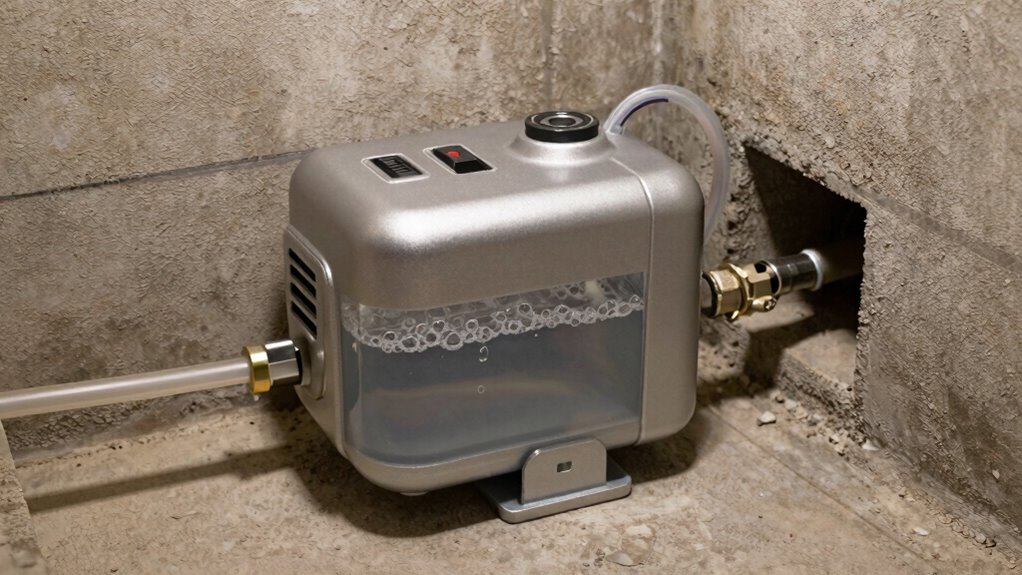
Choosing the right condensate pump depends on your home’s specific needs, like the capacity to handle your system’s water flow. You should also consider how loud it might be and whether you prefer a pump powered by electricity or other sources. By focusing on these points, you can find a pump that fits seamlessly into your home.
Pump Capacity Needs
Wondering how to determine the right condensate pump capacity for your home? Start with a clear capacity estimation based on your system’s needs. Consider these factors:
- The volume of condensate your HVAC or appliance produces daily.
- The height the pump needs to lift the condensate (vertical distance).
- The distance the condensate must travel horizontally.
- The pump size needed to handle peak condensate flow without overflow.
Matching your pump size to these factors ensures reliable operation. If your system produces large amounts of condensate or requires lifting over long distances, opt for a pump with higher capacity. Proper capacity estimation prevents overworking the pump or risking basement flooding, making your choice both effective and safe.
Noise Level Considerations
Considering the noise level of a condensate pump is crucial to guarantee it won’t disrupt your home’s comfort. Look for models with noise reduction features to keep operation quiet. Some pumps are designed with sound insulation, which minimizes vibrations and sound transmission. Check the decibel ratings; quieter pumps typically operate below 50 decibels. If your pump will run near living spaces, prioritize units with built-in soundproofing or additional sound insulation options. Proper installation also plays a role in reducing noise, so ensure the pump is mounted securely and on a stable surface. By selecting a pump with effective noise reduction and sound insulation, you ensure your basement remains a peaceful space without unwanted disturbance.
Power Source Options
Selecting the right power source for your condensate pump is vital to guarantee reliable operation and ease of installation. You have several options to contemplate:
- Standard AC power – the most common, requiring a nearby outlet for consistent performance.
- Battery backup – ensures the pump operates during power outages, preventing basement flooding.
- Solar power – ideal for eco-conscious homes, using sunlight to power the pump and reducing energy costs.
- Combination systems – integrate solar power with battery backup, offering energy efficiency and backup reliability.
Your choice depends on your home’s electrical setup, budget, and whether you want uninterrupted operation during outages or aim to reduce energy consumption with solar power.
Installing and Maintaining Your Condensate Pump for Long-Term Performance

Proper installation and regular maintenance are essential to guarantee your condensate pump operates reliably over the long term. To guarantee safety during installation, follow manufacturer instructions carefully and turn off power before starting. Regular pump maintenance keeps it working smoothly and prevents failures. Check the pump and its float switch monthly, clean any debris, and ensure the outlet isn’t blocked. Here’s a quick visual:
| Step | Action |
|---|---|
| 1 | Turn off power and disconnect |
| 2 | Inspect for debris or leaks |
| 3 | Clean the pump and check float switch |
| 4 | Reconnect power and test |
This routine promotes installation safety and prolongs your pump’s lifespan, saving you headaches and basement worries.
Troubleshooting Common Condensate Pump Problems (And When to Call a Pro)

Even with regular maintenance, condensate pumps can still encounter issues that disrupt their operation. Common problems often relate to the pump’s lifespan or electrical issues. Here’s what to check:
- Pump won’t turn on – Verify power supply and reset buttons.
- Leakage or flooding – Inspect for clogged float switches or damaged seals.
- Unusual noises – Could indicate worn-out parts or debris inside.
- Short cycling or motor failure – Often caused by electrical issues or burnt-out motor components.
If troubleshooting these problems doesn’t resolve the issue, it’s time to call a pro. Electrical problems, in particular, require expert attention to avoid safety hazards and guarantee your pump’s longevity.
Frequently Asked Questions
How Loud Is a Typical Condensate Pump During Operation?
A typical condensate pump produces moderate pump noise, usually around 45 to 55 decibels, which is comparable to a quiet conversation or background music. You might notice the sound levels more in a silent room, but they generally won’t be disruptive. The noise can vary depending on the pump’s size and quality, but most models are designed to operate quietly, so you won’t be bothered during daily activities or sleep.
Can a Condensate Pump Be Installed Outside My Basement?
You can install a condensate pump outside your basement, but you need to take into account outdoor installation and weather conditions. Make sure to choose a pump specifically rated for outdoor use, with weather-resistant features. Protect it from extreme temperatures, rain, and snow by placing it in a sheltered area. Regularly check for debris and ensure proper drainage to keep it functioning efficiently and avoid damage from the elements.
What Is the Average Lifespan of a Condensate Pump?
Think of your condensate pump like a trusty car engine, lasting about 7 to 10 years with proper care. You should consider installation considerations to guarantee longevity, and be aware that replacement costs typically range from $200 to $600. Regular maintenance, such as clearing debris and checking for leaks, helps extend its lifespan. When it’s time to replace, budget accordingly to keep your system running smoothly.
Are There Eco-Friendly or Energy-Efficient Condensate Pumps Available?
Yes, you can find energy-efficient options and eco-friendly designs when choosing a condensate pump. Look for models with energy-saving motors and low power consumption features to reduce your environmental impact. These pumps are designed to operate efficiently, helping you save on electricity bills while being kinder to the environment. By selecting eco-friendly options, you guarantee your system runs smoothly and sustainably, benefiting both your home and the planet.
How Often Should I Schedule Professional Maintenance for My Condensate Pump?
You should schedule a professional inspection of your condensate pump at least once a year to guarantee it runs smoothly. During this maintenance schedule, a technician can check for clogs, leaks, and proper operation, preventing potential basement flooding. Regular inspections help catch issues early, saving you money and stress. If you notice unusual noises or leaks, contact a professional sooner to keep your pump functioning efficiently.
Conclusion
A condensate pump might be small, but it plays a big role in protecting your basement from water damage. Regularly checking its function and maintenance can save you from costly repairs down the line. Are you ready to guarantee your home stays dry and safe? Don’t overlook this tiny hero—taking a few simple steps now can keep your basement dry and your mind at ease for years to come.