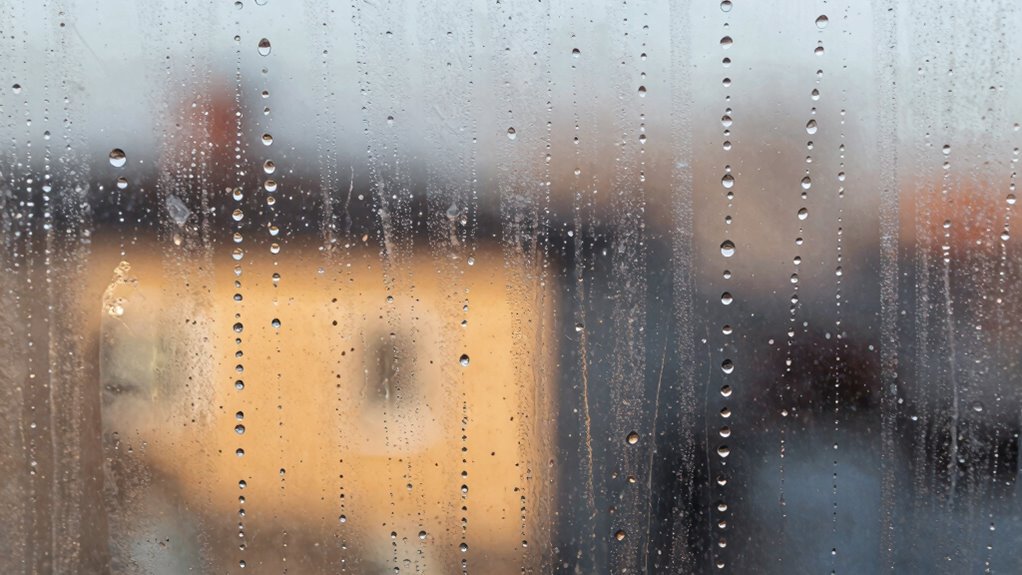

To fix condensation on your windows, focus on reducing indoor humidity and improving insulation, not just wiping away moisture. Warm, moist air hits cool window surfaces, so you need to control moisture sources like cooking, showers, and indoor plants, while ensuring proper ventilation. Sealing gaps and upgrading to better-insulated windows help keep surfaces warm. Keep your home dry and well-ventilated, and you’ll cut down on condensation—keep exploring to learn more about solving this persistent issue.
Key Takeaways
- Address indoor humidity sources like cooking, showering, and plants to reduce moisture that causes window condensation.
- Improve ventilation with exhaust fans and regular window opening to disperse excess indoor moisture.
- Seal window gaps and upgrade insulation to prevent cold drafts that promote condensation formation.
- Use dehumidifiers to maintain indoor humidity levels between 30-50%, minimizing surface condensation.
- Fix underlying issues such as leaks and poor insulation to eliminate the root causes of persistent window condensation.

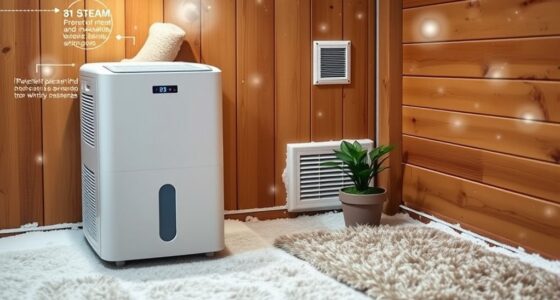
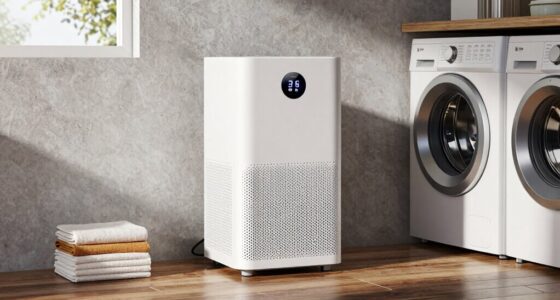
Dehumidifier, 95OZ Dehumidifier for Home 1000 Sq.Ft – Quiet with Auto Shut Off & Relaxing 7 Color Ambient Light,Ideal for Livingroom, Bedroom, Basement(Black)
Semiconductor dehumidifiers use thermoelectric cooling to remove moisture from the air. They create a drier, more comfortable environment…
As an affiliate, we earn on qualifying purchases.
As an affiliate, we earn on qualifying purchases.
What Causes Window Condensation and Why It Matters
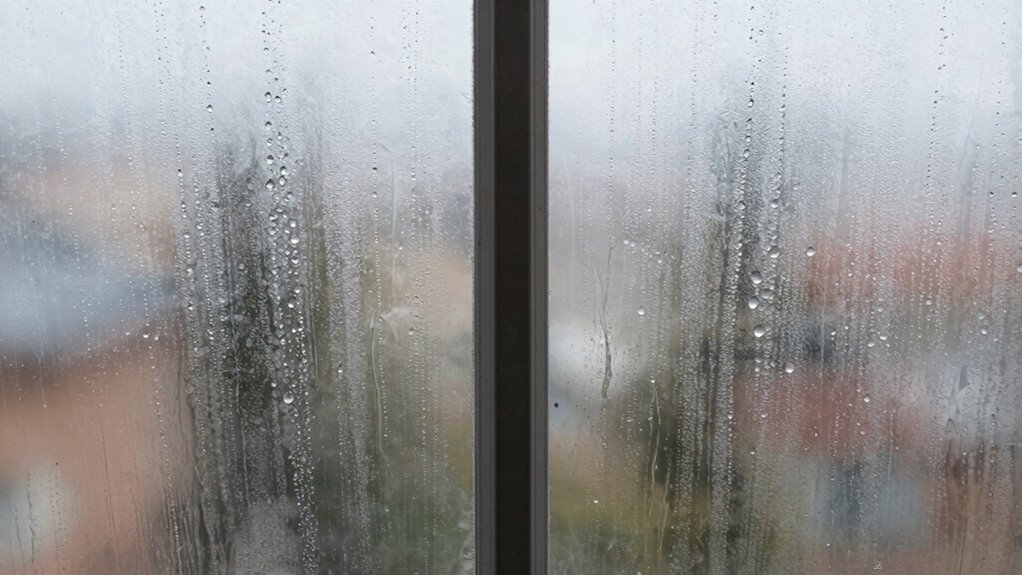
Window condensation occurs when warm, moist air comes into contact with cooler window surfaces, causing the moisture to collect as droplets. This buildup can impact your home’s air quality by trapping mold spores and allergens, which thrive in damp environments. Additionally, persistent condensation indicates energy inefficiency, as your heating system struggles to maintain stable indoor temperatures without excessive moisture buildup. When your windows fog up, it not only affects visibility but also signals potential problems with insulation and ventilation. Addressing the root cause helps improve air quality by reducing excess humidity and enhances energy efficiency by keeping warm air inside and cold air outside. Recognizing why condensation occurs is essential for maintaining a healthy, comfortable, and energy-efficient home. Identifying the underlying causes of condensation can help you implement targeted solutions to prevent future issues. Proper ventilation and controlling indoor humidity levels are key steps in managing condensation effectively. Additionally, understanding the role of insulation and sealant quality can prevent cold spots that contribute to condensation formation. Improving indoor air circulation can also help disperse excess moisture and reduce condensation on windows.

Duck MAX Strength Window Insulation Kit, Winter Window Seal Kit Fits up to 5 Windows, Heavy Duty Shrink Film Cuts to Size for Easy Indoor Installation, Window Tape Included,62 In. x 210 In., Clear
Save on energy costs during cold weather months. Duck Max Strength shrink window film is puncture-resistant and two…
As an affiliate, we earn on qualifying purchases.
As an affiliate, we earn on qualifying purchases.
How Humidity and Ventilation Lead to Moisture Buildup
Your indoor activities produce moisture sources like cooking, bathing, and even breathing, which add humidity to the air. Poor ventilation traps this moisture inside, making it harder for your home to stay dry. By managing your indoor humidity and improving airflow, you can reduce moisture buildup and prevent condensation on your windows. Utilizing heat-gun kits for DIY dehumidification projects can also be an effective way to control excess moisture. Incorporating smart ventilation systems can further optimize airflow and moisture management throughout your home. Additionally, understanding prognosis factors can help you identify the best strategies for maintaining a dry and comfortable environment. Awareness of market trends in home moisture control can also inform better investment in reliable dehumidification devices. Exploring sound healing techniques may also help reduce indoor stress-related breathing patterns that contribute to humidity levels.
Moisture Sources Inside
Moisture inside your home often comes from everyday activities that release humidity into the air, such as cooking, showering, and even breathing. These activities increase indoor humidity levels, impacting air quality and creating a moist environment. Indoor plants, while beneficial for air quality, can also contribute to excess moisture if overwatered or kept in poorly ventilated spaces. This added humidity raises the chance of condensation forming on windows and walls. Managing indoor moisture sources involves understanding how these activities influence humidity. Properly ventilating your home helps control moisture levels, preventing buildup. Be mindful of indoor plants’ watering habits and avoid overwatering, which can further elevate indoor humidity. Recognizing these sources is key to reducing condensation and maintaining a healthier, drier indoor environment. Additionally, using sustainable fabric care methods can help reduce pollution and energy consumption associated with home maintenance. Being aware of indoor air quality can also help you identify when humidity levels are too high and need adjustment. Regular use of ventilation systems can further assist in maintaining optimal indoor humidity levels. Incorporating energetic alignment practices, such as mindful ventilation, can enhance overall comfort and well-being in your space. Monitoring humidity levels with a hygrometer provides an easy way to keep indoor moisture in check and prevent window condensation.
Effects of Poor Ventilation
When ventilation is inadequate, indoor humidity levels tend to rise, creating the perfect environment for condensation to form. Poor airflow traps moisture inside, which negatively impacts air quality by increasing humidity and reducing fresh air exchange. This buildup of moisture makes it harder to maintain thermal comfort, as you might feel colder despite the temperature settings. Stale, humid air can also cause mold growth and damage to your walls and windows. Without proper ventilation, your living space becomes a closed loop, intensifying condensation issues on windows and other surfaces. Improving airflow helps regulate humidity levels, enhances air quality, and stabilizes indoor temperatures. Proper ventilation systems are crucial for maintaining optimal indoor conditions and reducing moisture buildup, which helps to prevent moisture-related damages. Additionally, choosing the right exhaust fans can actively remove excess humidity from your space. Implementing proper airflow solutions also prevents the formation of condensation by promoting consistent moisture balance throughout your home.
Managing Indoor Humidity
Managing indoor humidity effectively involves understanding how ventilation influences moisture levels. Poor ventilation traps humid air, increasing the risk of condensation. To control this, maintain your windows properly, ensuring they seal well and prevent drafts. Be aware of the outdoor climate, as high humidity outside can seep indoors and raise moisture levels. Use exhaust fans in kitchens and bathrooms to vent excess moisture. Consider the following strategies:
| Action | Effect | Consideration |
|---|---|---|
| Regular window maintenance | Prevents leaks, improves airflow | Check seals and locks |
| Ventilation adjustments | Reduces indoor humidity | Use fans during high humidity days |
| Monitor outdoor climate | Anticipates moisture influx | Adapt indoor strategies |
| Use dehumidifiers | Lowers indoor moisture | Place strategically |
| Keep windows open when needed | Promotes air exchange | Avoid during rainy days |
| Proper insulation | Helps maintain temperature and reduce condensation | Proper insulation minimizes temperature differences that contribute to moisture buildup |

Broan-NuTone Bathroom Exhaust Fan, 50 CFM Modern Grille, Energy Star Fan, 2.0 Sones
50 CFM BATHROOM EXHAUST FAN: 50 CFM is sufficient ventilation to remove, moisture, odor and pollutants from your…
As an affiliate, we earn on qualifying purchases.
As an affiliate, we earn on qualifying purchases.
Signs You Have Excess Indoor Moisture
If you notice your windows are constantly fogged up, it’s a clear sign of excess moisture inside your home. You might also see mold or mildew start to grow in damp areas, or catch an odd, musty smell lingering in the air. These signs can indicate that your indoor humidity levels need attention before more damage occurs. Recognizing indoor moisture issues can help you find reliable solutions and professional assistance to address indoor moisture problems effectively. Implementing proper ventilation and controlling sources of excess humidity are essential steps in maintaining a healthy, dry environment.
Persistent Window Condensation
Persistent window condensation is a clear sign that your home has excess indoor moisture. When you notice water forming on your windows regularly, it indicates humidity levels are too high inside. This moisture can seep into your window treatments, causing damage over time. To address this, check your exterior sealing; gaps or cracks around your windows let in moisture and cold air, worsening condensation. Sealing these areas properly helps reduce indoor humidity and prevents moisture buildup. Additionally, adjusting your window treatments to improve air circulation can help dissipate excess moisture. Ignoring persistent condensation can lead to further issues, so take action by improving exterior sealing and managing indoor humidity. These steps target the root cause, not just the symptom, keeping your home dry and comfortable.
Mold and Mildew Growth
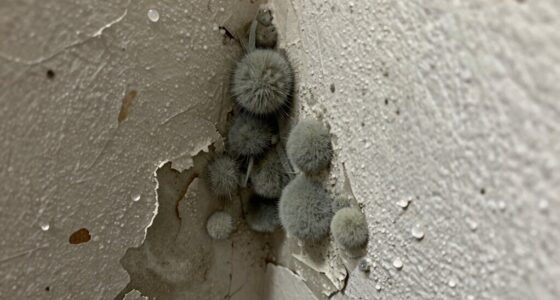
Mold and mildew growth are clear indicators that your home has excess indoor moisture. If you notice fuzzy patches or dark spots around your windows, it’s time to act. Regular window cleaning helps remove surface mold and prevents spores from spreading, but addressing the root cause is key. Consider applying glass coatings that resist moisture buildup, reducing the chances of mold developing on the glass surface. Keep indoor humidity levels low with dehumidifiers or proper ventilation, especially in areas prone to moisture. Mold and mildew thrive in damp environments, so controlling moisture is your best defense. By taking these steps, you can protect your home’s air quality and avoid the health issues associated with mold growth.
Unpleasant Indoor Odors
Have you noticed any strange or musty odors lingering in your home? These smells often signal excess indoor moisture, which can lead to mold or mildew. Poor HVAC maintenance allows humidity to build up, intensifying odors. Additionally, indoor plants can increase moisture levels if overwatered or poorly ventilated. To diagnose, consider this comparison:
| Signal | Cause |
|---|---|
| Musty smell | Excess moisture from HVAC or plants |
| Persistent odor | Insufficient ventilation or humidity control |
| Dampness | Poor HVAC maintenance or leaks |
| Odor after watering | Overwatering indoor plants |
Addressing these signs involves improving ventilation, maintaining your HVAC system, and managing indoor plant watering habits. Reducing moisture levels helps eliminate odors and prevents further indoor air quality issues.

TempPro TP50 Digital Hygrometer Indoor Thermometer Room Thermometer and Humidity Gauge with Temperature Humidity Monitor(Previously ThermoPro)
Wellness Indicator: This humidity meter with humidity level icon indicates air conditions – DRY/COMFORT/WET, allowing this humidity sensor…
As an affiliate, we earn on qualifying purchases.
As an affiliate, we earn on qualifying purchases.
How to Measure Indoor Humidity Levels
Measuring indoor humidity levels accurately is essential for preventing condensation on windows and maintaining a comfortable environment. When you know your humidity levels, you can better manage air quality and temperature control, key factors in avoiding excess moisture. Use a hygrometer to get precise readings—these are affordable and easy to operate. Place the device in the main living area, away from windows and direct sunlight, to ensure accurate measurements. Keep track of the humidity regularly, especially during seasonal changes when moisture issues tend to fluctuate. Maintaining indoor humidity between 30-50% helps prevent condensation and promotes healthier air quality. By monitoring these levels consistently, you can take targeted actions to keep your home comfortable and dry.
Simple Ways to Reduce Humidity Inside Your Home
Improving ventilation helps remove excess moisture from your home and keeps the air fresh. You can do this by opening windows or using exhaust fans in the kitchen and bathroom. Controlling indoor moisture sources, like drying clothes indoors or overwatering plants, also makes a big difference.
Improve Ventilation Effectively
Effective ventilation is one of the simplest ways to reduce indoor humidity and prevent condensation on your windows. By increasing air exchange, you help moisture escape your home, keeping humidity levels in check. Installing or upgrading ventilation systems like exhaust fans in kitchens and bathrooms ensures moist air is removed efficiently. Opening windows regularly allows fresh air to circulate, diluting indoor moisture. Use trickle vents or air vents to maintain continuous airflow, especially in rooms prone to dampness. Proper ventilation not only reduces humidity but also improves indoor air quality. Remember, consistent airflow prevents moisture buildup that causes condensation, so make it a habit to check that your ventilation systems are working effectively. Proper air exchange is key to a drier, healthier home.
Control Indoor Moisture
Controlling indoor moisture is essential for preventing condensation and maintaining a healthy home environment. One effective way is to improve window insulation, which keeps indoor air dry and reduces temperature differences that cause condensation. Proper insulation also boosts your home’s energy efficiency, saving you money on heating and cooling. Use weatherstripping or draft seals around your windows to minimize moisture intrusion and heat loss. Additionally, manage indoor humidity levels by using exhaust fans in kitchens and bathrooms, and consider a dehumidifier if needed. Keep indoor moisture in check, and you’ll notice less condensation on your windows. These simple adjustments help create a more comfortable, energy-efficient home while addressing the root cause of window condensation.
How to Improve Ventilation and Keep Windows Clear
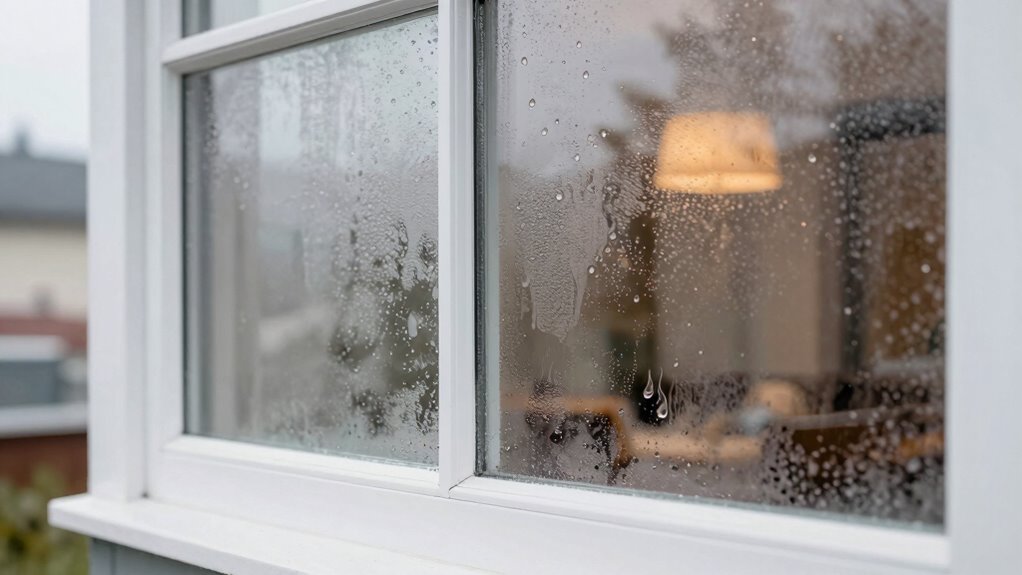
To keep your windows clear and reduce condensation, ensuring proper ventilation is essential. Good airflow improves air quality and helps regulate indoor humidity levels. Open windows regularly to allow fresh air in and stale air out, especially during and after activities that generate moisture, like cooking or showering. Using exhaust fans in kitchens and bathrooms also helps remove excess moisture. Indoor plants can contribute to better air quality, but too many can increase humidity, so balance is key. Consider creating cross-ventilation by opening windows on opposite sides of your home to promote airflow. Avoid blocking vents or windows with furniture, as this can hinder air circulation. Proper ventilation reduces moisture buildup, preventing window condensation and maintaining a healthier living environment.
Choosing and Using Dehumidifiers Effectively
Choosing the right dehumidifier is essential for reducing indoor moisture effectively. Proper dehumidifier placement is key—position it in areas prone to excess humidity, like basements or near windows. Keep it away from walls and furniture to ensure good airflow. When selecting a dehumidifier, opt for energy-efficient models; they consume less power while maintaining performance. Regularly empty the water tank or connect a drain hose for continuous operation. Use the dehumidifier consistently, especially during damp seasons, to prevent moisture buildup. Monitor humidity levels with a hygrometer and aim for 40-50%. This approach helps reduce condensation on windows and keeps your indoor environment comfortable and dry. Effective use and placement maximize your dehumidifier’s benefits and combat moisture issues more efficiently.
When to Consider Insulating Windows or Upgrading
You should consider insulating or upgrading your windows when you notice persistent drafts, condensation buildup, or cold spots inside your home. Poor window insulation allows heat to escape and cold air to enter, increasing the likelihood of condensation and discomfort. Installing window insulation, such as weatherstripping or insulating film, can improve your current windows’ performance. However, if these measures don’t resolve the issues, window upgrades might be necessary. Modern double- or triple-pane windows with better insulation properties can considerably reduce condensation and improve energy efficiency. Upgrading your windows not only addresses condensation but also enhances comfort and saves on heating and cooling costs. Recognizing when to invest in window insulation or upgrades ensures a more comfortable and healthier living environment.
Troubleshooting Persistent Window Condensation

Persistent window condensation can be frustrating, especially when simple solutions don’t seem to work. First, check your window treatments—heavy curtains or blinds can trap moisture, worsening the problem. Also, evaluate your exterior insulation; inadequate insulation allows cold air to reach windows, causing condensation. To troubleshoot, consider these factors:
| Cause | Solution | Effect |
|---|---|---|
| Poor insulation | Improve exterior insulation | Reduces cold air contact |
| Excess indoor humidity | Use dehumidifiers, vent fans | Lowers moisture levels |
| Window leaks | Seal gaps around window frames | Prevents cold drafts |
Tips for Maintaining a Condensation-Free Home Year-Round
Maintaining a condensation-free home year-round requires consistent effort and smart habits. Focus on improving your air quality by ventilating daily, especially in kitchens and bathrooms, to reduce excess moisture. Use exhaust fans or open windows when cooking or showering to help moisture escape. Enhancing your home’s energy efficiency also plays a key role; properly insulated windows and doors prevent drafts that can lead to condensation. Keep indoor humidity levels ideally between 30-50%, using dehumidifiers if needed. Regularly maintaining your HVAC system ensures efficient moisture control and better air quality. By staying proactive with ventilation, insulation, and humidity management, you create a healthier, more comfortable environment that resists condensation all year long.
Frequently Asked Questions
Can Exterior Weather Conditions Affect Indoor Window Condensation?
Yes, exterior weather can affect indoor window condensation. When it’s cold outside, the temperature difference causes indoor humidity to condense on your windows. Proper window insulation helps reduce this effect by keeping indoor air warmer and preventing moisture buildup. You should consider upgrading your window insulation or using dehumidifiers during damp, chilly weather to minimize condensation and protect your windows from damage.
Are Certain Window Materials More Prone to Condensation?
Think of your window as a mirror reflecting its material’s character. Some, like low-quality glass coatings and certain window films, are more prone to condensation because they trap moisture or lack insulation. Double-pane windows with special coatings resist condensation better, acting like a shield. You should consider upgrading to these materials, as they reduce moisture buildup and keep your view clear, making your home more comfortable and energy-efficient.
How Does Indoor Heating Influence Condensation Formation?
Indoor heating increases the temperature inside your home, which can reduce condensation if humidity levels are controlled. However, if your heating systems aren’t managing indoor humidity properly, moisture can still build up on windows. To prevent this, keep indoor humidity between 30-50%, and use exhaust fans or dehumidifiers when needed. Properly balancing heating and humidity helps eliminate condensation, protecting your windows and maintaining a comfortable environment.
Can Plants Inside the Home Increase Window Moisture?
Yes, plants inside your home can increase window moisture through plant transpiration, which adds indoor humidity. When you have many plants or they’re kept in warm, humid conditions, they release moisture into the air, raising indoor humidity levels. This excess moisture can then condense on windows, especially if your home isn’t well-ventilated. To reduce this, manage indoor humidity and avoid overwatering your plants.
What Long-Term Structural Issues Can Cause Persistent Condensation?
Think of your home like a sandwich—if the bread (walls) has cracks or gaps, moisture seeps in, causing persistent condensation. Long-term issues like thermal bridging and insulation gaps create cold spots that make humidity condense on windows. Over time, these structural flaws let heat escape and moisture accumulate, making condensation worse. To fix it, you’ll need to address insulation and make sure proper thermal barriers, stopping the cycle at its source.
Conclusion
By addressing the real causes behind window condensation, you’re not just fixing a fleeting issue—you’re safeguarding your home’s comfort and efficiency. But what if the solution isn’t as simple as adjusting humidity or upgrading windows? The true challenge lies beneath the surface, waiting to be uncovered. Stay vigilant, because the next step could reveal surprises that change how you see your home forever. Are you ready to uncover the hidden secrets behind persistent condensation?