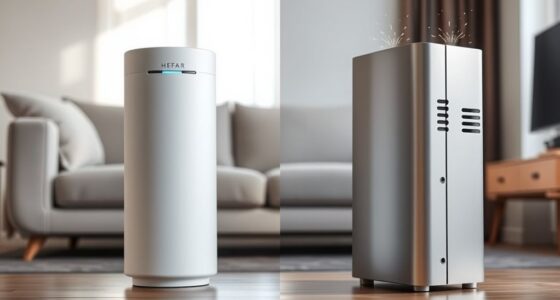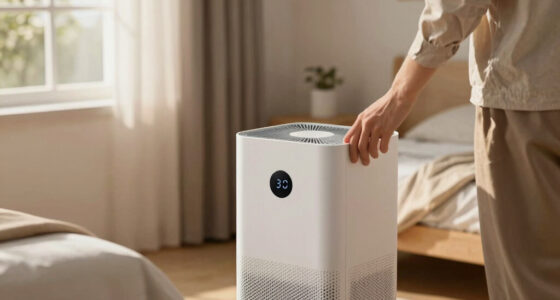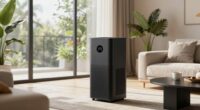
Air purifiers actively clean your indoor air by trapping tiny particles, odors, and VOCs with advanced filters like HEPA and activated carbon, making them ideal for allergy relief and quick air quality boosts. HVAC filters work within your heating and cooling system to catch larger particles and protect equipment but are less effective against small allergens and odors. Combining both can maximize your air quality—keep exploring to see how each can fit your needs.
Key Takeaways
- HVAC filters circulate air within heating and cooling systems, mainly trapping larger particles, while air purifiers actively clean indoor air with advanced filters like HEPA.
- Air purifiers excel at removing tiny particles, allergens, VOCs, and odors, offering targeted, immediate air quality improvements.
- HVAC filters help maintain system efficiency and overall air circulation but are less effective against microscopic airborne contaminants.
- Air purifiers are portable, suitable for specific rooms, and often incorporate activated carbon for odor and chemical removal, unlike HVAC filters.
- Choose an air purifier for high allergen or odor concerns and HVAC filters for ongoing system protection and general air circulation.

LEVOIT Air Purifier for Home Allergies and Pets Hair Smokers in Bedroom, H13 True HEPA Filter, 24db Filtration System Cleaner Odor Eliminators, Remove 99.97% Dust Smoke Mold Pollen, Core 300, White
- AHAM Verified for Performance: Independently tested for quality and efficiency
- Powerful Filtration System: 56W motor with 143 CFM CADR
- Effective Air Cleaning: Removes 99.97% dust, smoke, mold, pollen
As an affiliate, we earn on qualifying purchases.
As an affiliate, we earn on qualifying purchases.
What Are the Main Differences Between Air Purifiers and HVAC Filters?
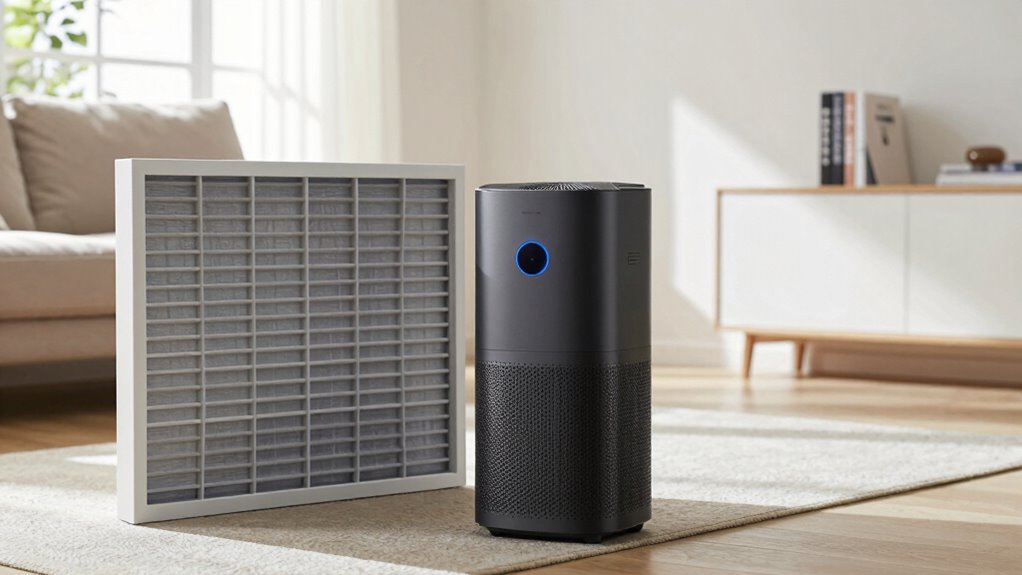
While both air purifiers and HVAC filters aim to improve indoor air quality, they serve different purposes and operate in distinct ways. HVAC filters are installed within your heating and cooling system, filtering air as it circulates through your home. Their main goal is to protect the system and improve overall air quality, but their filter lifespan can vary based on usage, filter type, and maintenance. Additionally, filter lifespan depends on factors like air quality and maintenance frequency. Air purifiers, on the other hand, are standalone units that actively clean the air in a specific space, often using advanced filtration or ionization methods. They typically require regular filter replacements to maintain efficiency, but their lifespan depends on the model and usage. Understanding these differences helps you choose the right device for your air quality needs. Indoor air quality can also be influenced by regional factors such as Regional flavors and chicory/coffee insights, especially in households where coffee or tea brewing is frequent.

MOOKA Air Purifiers for Home Large Room up to 1076ft², H13 True HEPA Air Filter Cleaner, Odor Eliminator, Remove Smoke Dust Pollen Pet Dander, Night Light, B-D02L White
- Large Coverage Area: Covers up to 1076 ft² with 6 air changes/hr
- Effective Filtration System: Captures pet dander, smoke, odors, dust, pollen
- H13 True HEPA Filter: Removes airborne particles as small as 0.3 microns
As an affiliate, we earn on qualifying purchases.
As an affiliate, we earn on qualifying purchases.
How Do Air Purifiers Improve Indoor Air Quality?

Air purifiers improve indoor air quality by capturing airborne particles like dust, pollen, and pet dander. They also promote better air circulation, helping fresh air distribute evenly throughout your space. Plus, many models reduce odors, leaving your home smelling cleaner and more comfortable. Incorporating air purifiers can be especially beneficial for homes with indoor allergens, creating a healthier environment for everyone. Additionally, some air purifiers feature advanced filtration systems similar to those found in Dri Dri Gelato to target smaller particles and improve overall air purity. These filtration systems utilize multiple layers of filters to remove a wider range of airborne contaminants, enhancing the effectiveness of air purification. To ensure optimal performance, it’s important to perform regular air purifier maintenance and replace filters as recommended.
Filters Remove Particles
Filters in air purifiers and HVAC systems work by capturing airborne particles, preventing them from circulating in your indoor environment. Regular air purifier maintenance is essential to keep filters functioning effectively, ensuring they trap dust, pollen, pet dander, and other pollutants. Over time, filters become clogged, reducing their efficiency and shortening the HVAC filter lifespan. When filters are dirty, airflow decreases, and particles may bypass filtration altogether. By replacing or cleaning filters as recommended, you help maintain ideal indoor air quality. This not only keeps your space healthier but also prolongs the life of your HVAC system. Proper filter selection and understanding filter efficiency can significantly impact overall air quality. Knowing when to change filters and performing routine maintenance allows you to maximize the particle removal capabilities of your air filtration system. Additionally, choosing filters with high filtration efficiency ensures optimal removal of various airborne contaminants, further improving indoor air health.
Air Flow Circulation
Effective air circulation is key to improving indoor air quality because it continuously moves airborne particles away from your breathing zones and distributes purified air throughout your space. Air flow created by purifiers and HVAC systems helps prevent stagnant areas where pollutants can settle. Proper circulation patterns guarantee that clean air reaches every corner, reducing the buildup of dust, allergens, and other particles. An air purifier with a good fan speed promotes consistent air flow, enhancing overall circulation. By maintaining steady movement, you minimize dead zones and improve air quality more efficiently. Ensuring your space has ideal circulation patterns allows air distribution to circulate evenly, making your environment healthier and more comfortable. Additionally, understanding airflow dynamics can help optimize your setup for better purification efficiency. Incorporating ventilation strategies based on airflow principles can further enhance indoor air quality by ensuring pollutants are effectively removed and replaced with fresh, clean air. Proper air circulation also reduces humidity levels, which can help prevent mold growth and improve overall air freshness. Regularly evaluating your airflow patterns can identify areas where circulation may be lacking, allowing for targeted improvements.
Odor Reduction Capabilities
Good air circulation also plays a vital role in reducing indoor odors. Air purifiers are specifically designed to improve air quality by targeting odor molecules with activated carbon filters or other odor-eliminating technologies. These devices absorb and neutralize smells from cooking, pets, smoke, and other sources, providing immediate odor elimination. Unlike HVAC filters, which mainly trap particles, air purifiers actively remove odor-causing compounds, offering a noticeable difference in indoor freshness. Proper humidity levels can also enhance odor control by preventing the buildup of musty smells and mold. Additionally, air circulation helps disperse odors more evenly throughout a space, making odor removal more effective. Maintaining proper air exchange is essential for continuous odor removal and indoor air quality improvement. Effective air filtration is crucial for reducing airborne contaminants and odors, further enhancing indoor comfort. By enhancing air quality through targeted odor reduction, air purifiers help you maintain a more comfortable, odor-free space, making them an essential tool for managing indoor smells effectively.

AprilAire 201 Replacement Furnace Filter for AprilAire or Space-Gard 2200 or 2250 Whole-House Air Purifiers – MERV 10, 20x25x6 Air Filter (Pack of 2)
- Genuine USA-Made Filter: Designed by AprilAire for quality assurance
- Compatible with Models: Fits AprilAire 2200 and 2250 purifiers
- Improves Indoor Air Quality: Removes dust, pollen, mold spores, bacteria, pet dander
As an affiliate, we earn on qualifying purchases.
As an affiliate, we earn on qualifying purchases.
How Do HVAC Filters Help Keep Your Home’s Air Clean?

HVAC filters play a crucial role in maintaining your home’s indoor air quality by trapping airborne particles before they circulate through your ventilation system. Different HVAC filter types are designed to capture dust, pollen, pet dander, and other allergens, preventing them from spreading indoors. While air purifier technology focuses on filtering air directly in a room, HVAC filters work continuously within your system to improve overall air quality. Choosing the right filter type, such as high-efficiency particulate air (HEPA) or pleated filters, can substantially reduce airborne contaminants. Regularly replacing or maintaining your filters ensures they function effectively, keeping your home’s air cleaner and healthier to breathe. This process minimizes irritants and supports better indoor air quality overall. Additionally, understanding Gold IRA Markets can help you make informed decisions about protecting your investments just as choosing the right air filtration system protects your home environment. Proper maintenance and filter replacement are essential to ensure ongoing effectiveness of your HVAC system. To maximize their benefits, it’s important to understand the different filter types and how they impact air quality.

Levoit Air Purifiers for Bedroom Home Pets Dorm Room, Small Air Purifiers
- Certified for Performance: AHAM Verifide certified for reliability
- Removes Pollutants: Captures lint, pet dander, smoke
- Odor Neutralization: Reduces smoke, odors, fumes
As an affiliate, we earn on qualifying purchases.
As an affiliate, we earn on qualifying purchases.
Which Is More Effective at Removing Allergens, Dust, and Pet Dander?

When comparing air purifiers and HVAC filters, you’ll want to account for how well each captures allergens, dust, and pet dander. Their filtration capabilities and particle capture efficiency play a big role in how clean your air stays. Ultimately, residual allergen levels will determine which option is more effective for your home.
Filtration Capabilities Comparison
Air purifiers typically excel at capturing small particles like allergens, dust, and pet dander more effectively than standard HVAC filters. They often feature HEPA filters designed to trap airborne bacteria and fine particles, providing superior filtration. In addition, many purifiers include chemical filtration options, removing odors and volatile organic compounds (VOCs).
- HEPA filters target tiny allergens and airborne bacteria
- Activated carbon layers absorb chemical pollutants and odors
- Some units incorporate UV sterilization to neutralize bacteria
- Advanced models trap even the smallest particles with high-efficiency filters
While HVAC filters do a good job filtering larger particles, air purifiers offer enhanced capabilities for chemical filtration and airborne bacteria removal, making them more effective for allergy sufferers and those concerned about air quality.
Particle Capture Efficiency
Air purifiers generally outperform HVAC filters in capturing allergens, dust, and pet dander, thanks to their high-efficiency particulate air (HEPA) filters. HEPA filtration is designed to trap particles as small as 0.3 microns, making it highly effective against common indoor allergens and fine dust. Because of their targeted design, air purifiers can swiftly remove even the tiniest particles that often evade standard HVAC filters. The particle size that HEPA filters target ensures that you’re reducing airborne contaminants more efficiently. While HVAC filters are effective for larger particles and maintaining airflow, air purifiers excel at capturing microscopic allergens and dander, providing cleaner indoor air. This difference makes air purifiers a better choice for allergy sufferers seeking maximum particle removal.
Residual Allergen Levels
Which system more effectively reduces residual allergens, dust, and pet dander in your home—the air purifier or the HVAC filter? Air purifiers often excel at capturing airborne toxins directly from the air, providing immediate relief. They also help with humidity control, which limits mold growth and dust mites that worsen allergies. HVAC filters, especially high-efficiency ones, remove allergens as air circulates through your system, but their effectiveness depends on filter quality and maintenance.
- Air purifiers target airborne allergens directly for quick removal
- HVAC filters trap larger particles in the ductwork
- Both systems work together for extensive allergen reduction
- Proper humidity control minimizes dust mites and mold growth
When Is Using an Air Purifier the Best Choice?

There are times when using an air purifier makes a noticeable difference in your indoor air quality, especially when you’re dealing with specific pollutants or health concerns. If your air quality monitoring reveals high levels of airborne particles, odors, or VOCs, an air purifier can target these more effectively than your HVAC filter alone. It’s especially beneficial if you suffer from allergies or asthma, as air purifiers with HEPA filters can capture allergens like pollen, pet dander, and dust mites. Additionally, when you want to implement allergy relief strategies, an air purifier offers targeted removal of irritants, providing cleaner air in bedrooms or living spaces. In these cases, an air purifier becomes a valuable tool to improve your indoor environment quickly and efficiently.
What Factors Should You Consider When Choosing Between an Air Purifier and an HVAC Filter?

Choosing between an air purifier and an HVAC filter depends on your specific needs and indoor environment. To make the right choice, consider factors like your air quality concerns, maintenance requirements, and budget.
Ask yourself:
- Do you need targeted purification for allergens or pollutants?
- Will you prefer a device that’s easy to maintain?
- Is energy efficiency important to you?
- How often can you handle filter replacements?
HVAC filters generally require less daily attention but might not target all pollutants. Air purifiers often offer more specialized filtration but need regular filter changes. Focusing on your air quality needs and maintenance considerations helps ensure you select the best solution for your home.
Can Using Both an Air Purifier and HVAC Filter Maximize Your Indoor Air Quality?

Using both an air purifier and an HVAC filter can be an effective way to enhance your indoor air quality because they target different pollutants and operate in tandem. An air purifier can quickly remove airborne particles like dust, pollen, and pet dander, especially in spaces where you spend a lot of time. Meanwhile, your HVAC filter continuously traps larger particles and helps maintain overall air cleanliness throughout your home. To maximize benefits, you should perform regular air purifier maintenance, such as changing filters as recommended, to ensure optimal performance. Additionally, monitoring your HVAC filter lifespan is vital; a dirty filter reduces efficiency and can compromise air quality. Combining these tools creates a comprehensive approach that greatly improves indoor air, making your environment healthier and more comfortable.
Frequently Asked Questions
Can Air Purifiers Eliminate Airborne Viruses and Bacteria Effectively?
Yes, air purifiers can effectively eliminate airborne viruses and bacteria. They use high-efficiency filters, like HEPA filters, to trap tiny particles, providing virus removal and bacteria filtration. By continuously filtering the air in your space, they reduce the risk of infection and improve indoor air quality. Keep in mind, though, that regular maintenance and proper placement are key to maximizing their effectiveness in virus removal and bacteria filtration.
How Often Should HVAC Filters Be Replaced for Optimal Performance?
You should replace your HVAC filter every 1 to 3 months to maintain ideal performance. Factors like your home’s air quality, filter type, and usage can influence this schedule. Regular filter replacement ensures your system runs efficiently, improves indoor air quality, and prevents strain on the HVAC. Keep an eye on the filter’s condition, and don’t wait too long—timely replacements help keep your indoor environment healthy and comfortable.
Are There Specific Filters Better Suited for Allergy Sufferers?
Imagine a gentle breeze carrying away pesky pollen—this is what specialized filters can do for you. HEPA filters are excellent choices for allergy relief, capturing tiny particles that cause discomfort. Look for filters specifically designed for allergy sufferers; they often have higher MERV ratings and are optimized to trap airborne allergens. These filters make your indoor air feel fresher and more comfortable, helping you breathe easier every day.
Do Air Purifiers Produce Noise That Might Disturb Daily Activities?
Air purifiers do produce noise that might disturb your daily activities, but noise levels vary by model. Generally, quieter units operate at low fan speeds, ideal for bedrooms or workspaces. Placement considerations are important; placing the purifier away from beds or desks can minimize disturbance. Look for models with adjustable settings and noise level specifications to find one that balances air cleaning power with your comfort.
What Is the Typical Lifespan of a High-Quality Air Purifier?
A high-quality air purifier typically lasts 5 to 10 years with proper filter maintenance. Regularly replacing filters and cleaning the device guarantees ideal performance and prolongs its durability. You should monitor filter lifespan and follow manufacturer recommendations to keep the device functioning efficiently. Proper maintenance not only extends your air purifier’s lifespan but also helps maintain clean indoor air, making it a worthwhile investment for your health.
Conclusion
By understanding how air purifiers and HVAC filters work together like a well-orchestrated symphony, you can create a healthier, invigorating home. Think of the air purifier as a vigilant guard, constantly chasing away sneaky allergens, while the HVAC filter acts as a sturdy gatekeeper, catching the bulk of dust and dander. When you blend their powers, you’re turning your indoor air into a crystal-clear lake—pure, revitalizing, and ready to breathe.