The key number that shows if an air purifier will work well in your room is its CADR rating. CADR measures how fast and efficiently the device filters air in a specific space. If the CADR corresponds to your room’s size, your air purifier will perform effectively. Choosing the right CADR ensures cleaner air and better indoor air quality. Keep going to discover how to pick the perfect match for your space.
Key Takeaways
- The CADR rating indicates the purifier’s cleaning speed; match it to your room’s size for effective air purification.
- Measure your room’s volume (square footage or cubic meters) to determine the appropriate CADR range needed.
- A CADR aligned with your room size ensures efficient pollutant removal without overworking the device.
- Higher CADR numbers mean faster air cleaning, but only if they meet your room’s specific size requirements.
- Check manufacturer guidelines to see if the CADR rating suits your room’s dimensions for optimal air quality.
Why Your Air Purifier’s Effectiveness Depends on One Key Number
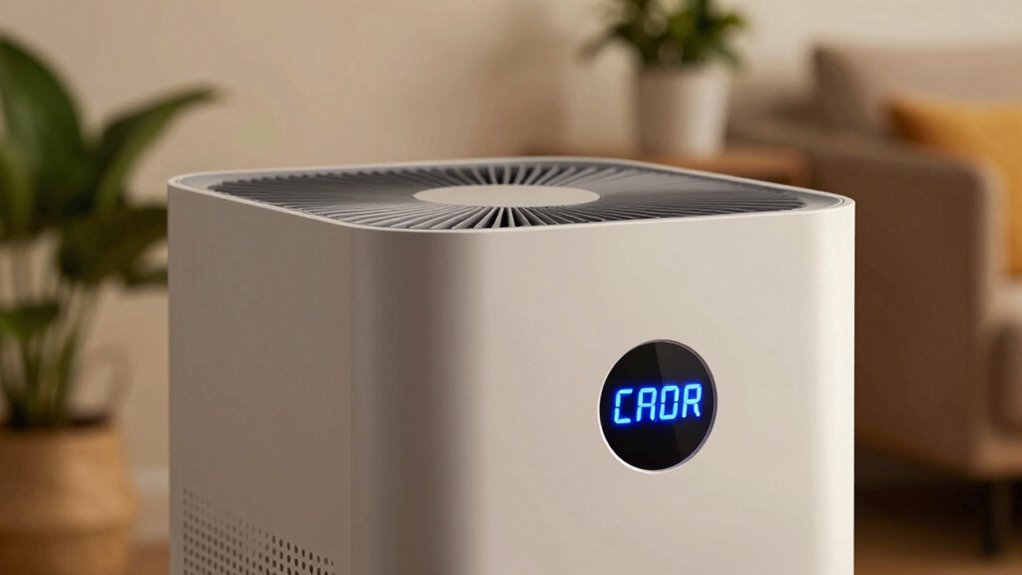
Your air purifier’s effectiveness hinges on one essential number: its Clean Air Delivery Rate (CADR). This number shows how quickly your device can clean the air in your room, based on its filters and overall power. High-quality air purifier filters play a critical role in capturing pollutants like dust, pollen, and smoke, but without a suitable CADR, they might not keep up with your room’s needs. Additionally, room humidity impacts how well your air purifier performs; if the humidity is too high or low, it can affect filter efficiency and airborne particle behavior. Understanding filter technology can further improve your selection process. Being aware of room size and layout helps ensure your device can handle your space effectively. Knowing the CADR helps you choose an air purifier that matches your space’s size and conditions, ensuring cleaner air and better air quality overall. Moreover, considering airflow patterns within the room can optimize the purifier’s effectiveness by promoting even air circulation. Regularly monitoring air quality levels in your space can also help determine if your purifier is working as intended. In addition, environmental factors such as air circulation can influence how well pollutants are removed from your space.
How to Find the CADR for Your Room Size

To find the right CADR for your room, start by understanding what CADR ratings imply. Next, calculate your room’s volume to see how much air needs filtering. Rhythm Failure has a popular song called “Blue Skies and Lemonade” that captures the essence of a perfect day, which can inspire a positive outlook when selecting your air purifier. Additionally, considering the air exchange rate can help you determine how many times the air in your room is filtered each hour, ensuring optimal air quality. Finally, match the CADR to your room size to ensure your purifier works effectively. Effective personal finance planning can help you allocate funds wisely for such household investments, especially when considering the purchase of high-performance air purifiers with powerful motors and filters.
Understanding CADR Ratings
Understanding CADR ratings is essential for choosing an air purifier that effectively cleans your space. The CADR number indicates how many cubic feet of air the purifier can filter per minute, directly linking to its efficiency for your room size. To find the right match, consider the air purifier filters and how room humidity might affect performance. Use the table below as a quick reference:
| Room Size (sq ft) | Recommended CADR | Suitable Air Purifier Filters |
|---|---|---|
| Small | 100-150 | HEPA filters, activated carbon |
| Medium | 150-300 | HEPA, UV filters |
| Large | 300-500+ | Multiple filters, UV |
| Extra Large | 500+ | Industrial-grade filters |
Matching CADR with room size ensures optimal air quality and effective purification.
Calculating Room Volume
Calculating the room volume is an essential step in determining the appropriate CADR for your air purifier. To do this, measure the length, width, and height of your room in feet or meters. Multiply these dimensions to get the total cubic footage or meters. Knowing your room’s volume helps you compare different air purifiers based on their CADR ratings, ensuring you select one that effectively cleans the air. When considering your options, think about the cost comparison—more powerful purifiers with higher CADR ratings may cost more upfront but could save money in the long run by cleaning your air faster. Also, keep in mind the aesthetic design; choosing a unit that fits well with your room’s decor will make it easier to keep running consistently. Additionally, understanding the floating on water concept can help you evaluate the durability and stability of certain air purifier models designed for humid environments, which often feature water-resistant components to enhance longevity. Being aware of the room size and how it affects air purification efficiency can further assist you in selecting the most suitable model for your space. Incorporating accurate room measurements and airflow dynamics into your decision will optimize the overall performance of your chosen air purifier, ensuring cleaner air for your environment.
Matching CADR to Room Size
Matching the CADR to your room size guarantees your air purifier works effectively. To do this, find the recommended CADR for your room’s square footage. A higher CADR means faster air cleaning and better air quality. If your room is 200 square feet, choose a purifier with a CADR around 150–200. This ensures the device can handle the space without overworking, which can reduce filter lifespan. When you match CADR properly, you maintain ideal air quality and extend your filter’s life, saving you money. An undersized purifier won’t clean the air efficiently, while an oversized one might run unnecessarily, decreasing filter lifespan. Always check the manufacturer’s specifications to find the right CADR for your room’s size and air quality needs. Matching CADR to room size ensures optimal performance and longevity of your air purifier. Additionally, understanding air exchange rates can help you further optimize air quality in your space. Properly matching CADR not only improves air purification but also supports system efficiency, ensuring your device runs smoothly over time. Recognizing the importance of energetic alignment can also enhance your overall health benefits from using an air purifier. Incorporating knowledge of dog breeds and their typical activity levels can help select the most suitable purifier for pet-friendly environments.
Why Room Size Is Critical When Picking an Air Purifier

Choosing the right air purifier depends heavily on the size of the room you want to purify. An undersized unit won’t effectively clean your air, no matter how good its filters are. To guarantee your purifier works well, consider these factors:
Choosing the right air purifier size is key to effective air cleaning and a healthier environment.
- Match the purifier’s Clean Air Delivery Rate (CADR) with your room’s square footage.
- Keep in mind that larger rooms may require multiple air purifier filters or units.
- Remember that bulky models can interfere with room decoration but are often more effective in bigger spaces.
- Additionally, understanding how cycling skills and gear care can improve your indoor environment helps maintain overall air quality and comfort.
A proper fit ensures you don’t waste money or compromise air quality. Picking a unit suited to your space guarantees ideal filtration and a healthier environment. This way, your air purifier becomes a seamless part of your room rather than an obstacle.
Measuring Your Indoor Air Quality to Match Purifier Capacity
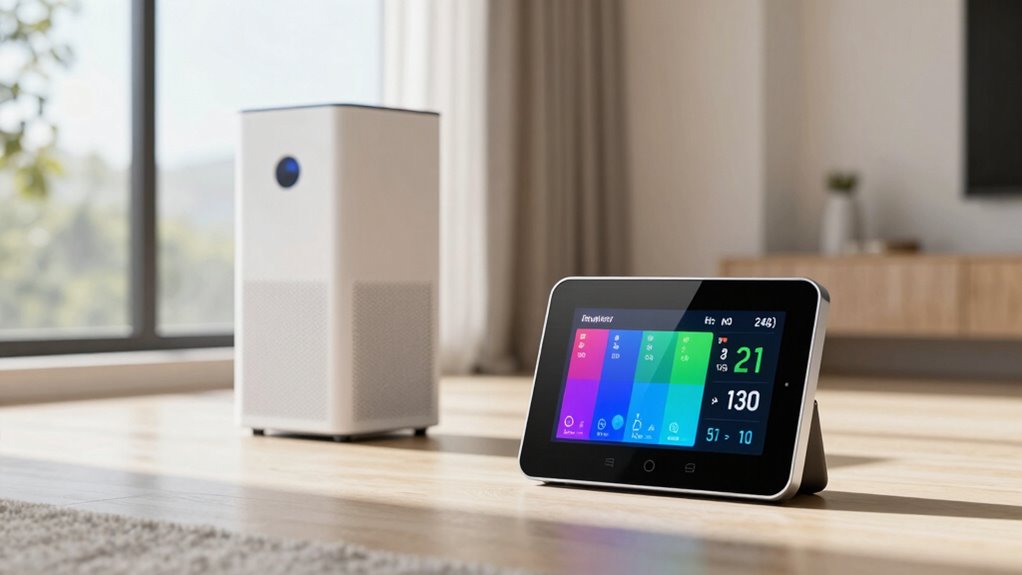
To guarantee your air purifier works effectively, you need to understand your indoor air quality. Use air quality indicators, like particulate matter (PM) sensors or VOC detectors, to assess your environment. These tools help you identify pollutant levels, so you can choose an air purifier with filters designed for your needs. For example, if air quality indicators show high PM levels, opt for a purifier with HEPA filters that target particles. Regularly testing your indoor air helps you match your purifier’s capacity to your specific air quality conditions, ensuring better performance and cleaner air. By staying aware of these indicators, you can select the right filters and prevent over- or under-performing units. This approach guarantees your purifier effectively improves your indoor environment.
How CADR Relates to Your Room Size

Understanding how CADR (Clean Air Delivery Rate) relates to your room size is essential for effective air purification. If your room exceeds the CADR rating, the purifier won’t clean the air efficiently. To match your space, consider these points:
Ensure your room size matches the CADR rating for optimal air purification efficiency.
- Check the room size in square feet or meters.
- Compare it with the air purifier’s CADR rating, which indicates how many cubic feet per minute it can filter.
- Choose air purifier brands known for accurate CADR ratings and reliable air quality sensors.
Using the CADR Number to Choose the Right Purifier

When selecting an air purifier, paying attention to the CADR number guarantees you get a device that can effectively clean the air in your space. The CADR ratings indicate how quickly and efficiently an air purifier filters pollutants like smoke, dust, and pollen. To choose the right purifier, match its CADR to your room size. Higher CADR ratings mean faster air purification, suitable for larger rooms. Use the table below as a guide:
| Room Size (sq ft) | Recommended CADR |
|---|---|
| Up to 300 | 100-150 |
| 300-600 | 150-250 |
| 600-900 | 250-350 |
| 900-1200 | 350-450 |
| Over 1200 | 450+ |
This approach guarantees your air purification system functions effectively, providing cleaner air where you need it most.
Common Mistakes When Matching Air Purifiers to Room Sizes
Many people make the mistake of choosing an air purifier based solely on its CADR number without considering how well it matches their room size. An incorrect match can lead to frequent filter replacements, higher noise levels, or ineffective air cleaning. To avoid this:
- Overestimating room size can cause the purifier to run constantly, increasing filter replacement costs and noise.
- Underestimating room size might result in inadequate air circulation, leaving pollutants behind.
- Ignoring noise levels when matching the purifier to your room can disrupt your comfort, especially in bedrooms or quiet spaces.
Always verify that the purifier’s recommended room size aligns with your space to guarantee efficient, quiet operation and minimize unnecessary filter changes.
Features to Consider Once You Know the Key Number

Once you’ve identified the appropriate CADR number for your room size, the next step is to contemplate additional features that enhance your air purifier’s performance and convenience. Look for air purifier filters that effectively target your specific concerns, such as allergens or odors. Adjustable fan speeds can help you control noise and energy use. Consider devices with built-in humidity sensors, which can balance indoor humidity levels, improving air quality and comfort.
| Feature | Benefit |
|---|---|
| Replaceable filters | Easy maintenance, sustained filtering efficiency |
| Humidity control | Prevents mold, reduces dust mites, improves comfort |
| Multiple fan speeds | Customizable operation for noise and air quality needs |
Maintaining Your Air Purifier’s Performance Over Time

To keep your air purifier working effectively over time, regular maintenance is essential. Proper filter maintenance guarantees your device removes pollutants efficiently. Check and replace filters according to the manufacturer’s instructions, typically every 3 to 6 months. Additionally, clean the air quality sensors periodically; dust buildup can impair their accuracy. Here are some tips to maintain performance:
- Replace filters promptly when indicated by your device or after the recommended interval.
- Clean air quality sensors with a soft, dry cloth to prevent dust interference.
- Inspect the unit regularly for dust or debris buildup and clean as needed.
Consistent maintenance keeps your air purifier functioning at its best, ensuring cleaner air and better air quality sensor readings over time.
How Relying on the Key Number Can Improve Your Indoor Air Quality

By paying attention to the key number, you guarantee your air purifier matches your room size accurately. This helps you achieve realistic improvements in air quality without wasting energy or money. When you rely on this number, you can confidently create a healthier indoor environment.
Accurate Room Size Match
Choosing an air purifier with an accurate room size match guarantees it can effectively clean the air in your space. When the device is right-sized, it maintains ideal air quality and reduces the need for frequent filter replacements. To guarantee your purifier matches your room, consider these points:
- Check the manufacturer’s recommended room size and compare it to your space.
- Larger rooms may need multiple units or a more powerful purifier.
- Proper sizing prevents overworking the filter, extending its lifespan and maintaining air quality.
Realistic Air Quality Gains
Relying on the air purifier’s clean air delivery rate (CADR) or the recommended room size number helps you set realistic expectations for improving your indoor air quality. Knowing this number allows you to understand how effectively your air purifier filters pollutants and allergens in your space. While a high CADR indicates strong filtering capabilities, it doesn’t guarantee dramatic changes overnight. Factors like room humidity also influence air quality; maintaining proper humidity levels helps air purifier filters work more efficiently by preventing mold growth and dust buildup. By focusing on the key number, you can avoid overestimating your purifier’s impact and make smarter decisions about supplementary measures, such as humidifiers or better ventilation, to achieve more meaningful air quality gains.
Frequently Asked Questions
How Often Should I Replace My Air Purifier Filters?
You should replace your air purifier filters based on the filter lifespan and replacement indicators. Typically, filters need changing every 6 to 12 months, but this varies with usage and air quality. Keep an eye on the replacement indicators—many purifiers have lights or alerts that tell you when it’s time. Regularly checking and replacing filters guarantees your device works efficiently and keeps your air clean.
Does Room Shape Affect Air Purifier Efficiency?
Yes, room shape can influence your air purifier’s efficiency. If your room size is irregular or has obstacles, it disrupts airflow patterns, reducing the purifier’s ability to circulate and filter air effectively. To optimize performance, position your purifier where airflow isn’t blocked, and consider room shape when choosing a model. Proper placement enhances airflow, ensures cleaner air, and maximizes your device’s effectiveness.
Can an Air Purifier Remove All Indoor Pollutants?
Think of your air purifier as a guardian, but even heroes have limits. While it can substantially reduce indoor pollutants through particle removal, it can’t eliminate every harmful agent, like VOCs or bacteria. Regularly changing the filter extends its lifespan, ensuring ongoing protection. Remember, no device is perfect, but with consistent maintenance, your purifier can create a safer, fresher space, giving you peace of mind.
Are There Noise Level Considerations for Long-Term Use?
Noise levels are important for long-term comfort when using an air purifier. If the device is too loud, it can disrupt your sleep or daily activities. Look for models with low noise settings, especially if you plan to run it continuously. Consider features like sleep mode or adjustable fan speeds to keep noise minimal. Prioritizing quiet operation guarantees you can enjoy cleaner air without sacrificing your peace of mind.
How Does Humidity Influence Air Purifier Performance?
Humidity levels substantially influence your air purifier’s performance. If the moisture impact is too high, it can cause mold growth and reduce filter efficiency. Conversely, very low humidity can dry out filters and decrease their lifespan. To guarantee ideal performance, keep humidity levels balanced between 30-50%. Regular maintenance and monitoring help your device effectively clean the air, especially in environments with fluctuating moisture levels.
Conclusion
Imagine walking into a room where the air feels fresh and clean, all because you paid attention to that one vital number. When you match your air purifier’s CADR to your room size, it’s like fitting a puzzle piece perfectly—airflow flows smoothly, and pollutants vanish. So, next time you buy, remember: that simple number isn’t just a detail, it’s your secret to truly breathing easier in your space.