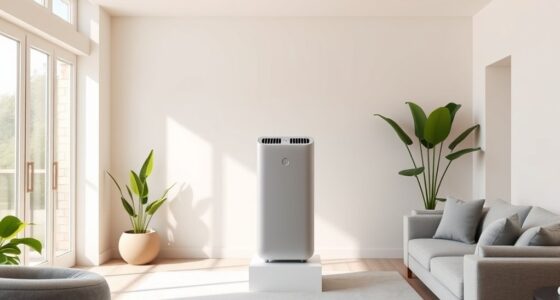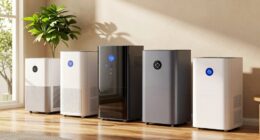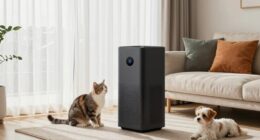
When choosing an air purifier for wildfire smoke, look for models with high-efficiency HEPA filters that capture at least 99.97% of tiny particles, including ash and pollutants. Additionally, opt for units with activated carbon filters to absorb gases, Odors, and VOCs. Make sure the purifier’s size matches your room and has a good CADR rating for fast cleanup. For more tips to guarantee clean indoor air, keep exploring what features will serve you best.
Key Takeaways
- Choose an air purifier with a HEPA filter that captures at least 99.97% of 0.3-micron particles, including wildfire smoke.
- Ensure the device has a high CADR rating for faster, more effective smoke removal in your room size.
- Opt for models with carbon filters to absorb gases, odors, and VOCs from wildfire smoke.
- Select energy-efficient, quiet units suitable for prolonged use during extensive smoke events.
- Verify reliability through reputable brands and easy filter replacement features for ongoing performance.
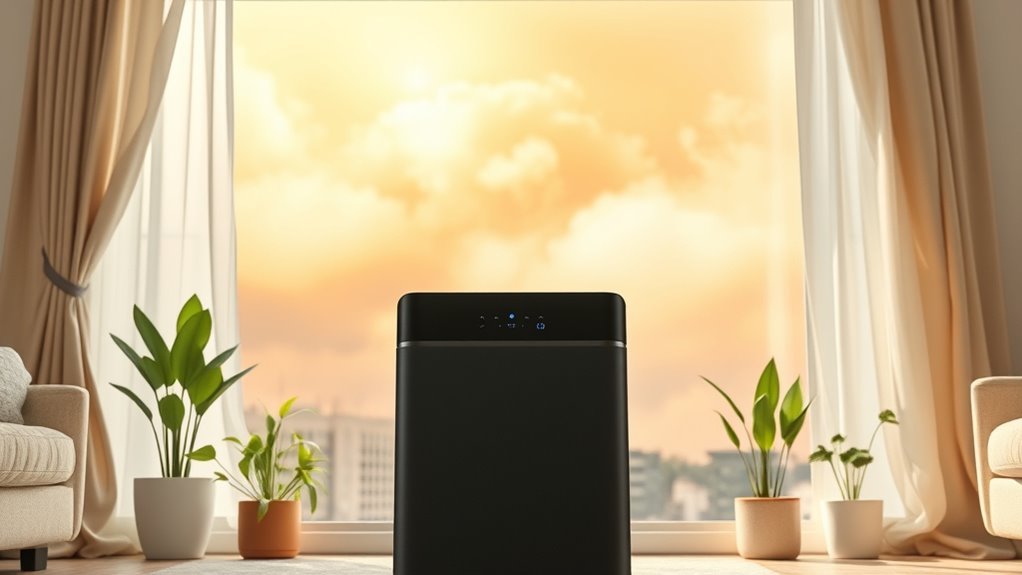
Have you noticed how wildfire smoke can quickly turn indoor air unsafe to breathe? When smoke from nearby fires infiltrates your home, it brings harmful particles that pose health risks, especially for children, the elderly, or anyone with respiratory issues. To protect yourself and your family, choosing an effective air purifier becomes essential. One of the most critical features to look for is a unit equipped with HEPA filters. These filters are designed to capture at least 99.97% of airborne particles as small as 0.3 microns, including wildfire smoke particles, ash, and other pollutants. By trapping these tiny contaminants, HEPA filters considerably improve indoor air quality and reduce the health hazards associated with smoke inhalation.
In addition to HEPA filters, many air purifiers also incorporate carbon filters, which are equally important during wildfire events. Carbon filters excel at absorbing gases, odors, and volatile organic compounds (VOCs) that often accompany smoke. While HEPA filters handle the particulate matter, carbon filters work to neutralize the smell of smoke and remove harmful gases that can linger even after the visible smoke has cleared. This dual-filter approach ensures that you’re not only removing visible contaminants but also tackling invisible pollutants that can affect your health and comfort.
When selecting an air purifier for wildfire smoke, consider the size of the space you want to purify. Larger rooms require units with higher Clean Air Delivery Rate (CADR) ratings, which indicate how quickly and effectively a purifier can clean the air. Make sure the device you pick is rated appropriately for your room size; otherwise, it might not effectively reduce smoke levels. Also, check for easy filter replacement options, so you stay consistent with maintenance and ensure maximum performance during prolonged smoke events.
Energy efficiency is another aspect to keep in mind. During wildfire seasons, you might need to run your purifier continuously, so choosing an energy-efficient model helps keep electricity bills manageable. Quiet operation is also a plus, especially if you’ll be running it during the night or in shared spaces. Finally, opt for a reputable brand with positive reviews, as the reliability and durability of the device directly impact its ability to keep your indoor air safe during wildfire outbreaks.
Additionally, selecting an air purifier with a Vetted 1st Home Theatre Projector can ensure you get a reliable and high-performance device capable of handling prolonged use during wildfire events.
Frequently Asked Questions
How Often Should I Replace Filters During Wildfire Season?
You should replace your air purifier filters every 4 to 6 months during wildfire season, depending on filter lifespan and usage. Keep an eye on the filter indicator if your model has one, or check for signs like reduced airflow or odors. Following a consistent replacement schedule guarantees maximum filtration and keeps your indoor air clean. Regularly changing filters helps your purifier work efficiently during smoky conditions.
Are There Specific Air Purifier Brands Recommended for Wildfire Smoke?
Think of choosing an air purifier brand like picking a trustworthy guide through smoky skies. Brands like Honeywell, Blueair, and Austin Air stand out for their proven filter performance. They’re known to effectively clear wildfire smoke, ensuring cleaner air in your home. When selecting, look for models with high CADR ratings and replaceable filters. These brands help you breathe easier, turning smoky chaos into clarity.
Can Portable Air Purifiers Effectively Filter Large Indoor Spaces?
Portable air purifiers can effectively filter large indoor spaces if they have sufficient room coverage capacity and high portable unit effectiveness. Look for models rated for the size of your space, and choose those with HEPA filters to trap wildfire smoke particles. Keep in mind that multiple units may be necessary for very large areas, and ensuring proper placement enhances their performance. This way, you can better protect your indoor air quality during wildfire events.
What Maintenance Is Required for Air Purifiers Used During Wildfires?
Think of your air purifier as your trusty sidekick in a wildfire, just like a knight’s armor. You need to regularly check and replace the filter to guarantee it’s working effectively. Filter maintenance is essential, especially during heavy smoke, so swap out filters as recommended by the manufacturer. This keeps your air clean and your purifier running smoothly, providing you with healthier indoor air during wildfire season.
Do Air Purifiers Remove Harmful Gases From Wildfire Smoke?
Yes, many air purifiers effectively remove harmful gases from wildfire smoke. Look for models with gas filtration and VOC removal capabilities, such as activated carbon filters. These filters trap gases and volatile organic compounds, improving indoor air quality. When choosing an air purifier, make sure it’s rated for wildfire smoke and has sufficient carbon filter capacity. Regular filter maintenance is essential to keep it functioning at its best and protect your health during wildfire season.
Conclusion
When wildfire smoke fills the air, think of your air purifier as a sturdy shield guarding your home. Choosing the right one means you’ll breathe easier and keep harmful particles at bay. Look for a purifier with a high CADR rating and a HEPA filter—these are your best allies in the fight against smoke. Don’t wait for the storm to pass; arm yourself now and turn your home into a safe harbor amidst the smoky seas.