Excessive humidity can lead to mold growth, which releases allergens and irritants that harm your respiratory health. High moisture levels also make spaces feel damp and uncomfortable. On the other hand, low humidity causes dry skin, sore throats, and can help airborne viruses spread more easily. Keeping humidity between 30% and 50% helps prevent these issues. If you want to learn strategies to maintain balanced moisture, there’s more to discover below.

Get home appliances delivered free with Prime
- Fast, free delivery on millions of items
- Prime Video, Amazon Music and more included
- Member-only deals all year
Key Takeaways
- Excess humidity promotes mold growth, releasing allergens that can worsen respiratory health.
- Low humidity dries out nasal passages and skin, increasing irritation and vulnerability to infections.
- High moisture levels create uncomfortable environments and can facilitate airborne mold and bacteria spread.
- Proper humidity management prevents mold development and reduces airborne irritants, supporting better health.
- Monitoring and maintaining indoor humidity between 30% and 50% helps protect respiratory health and overall comfort.
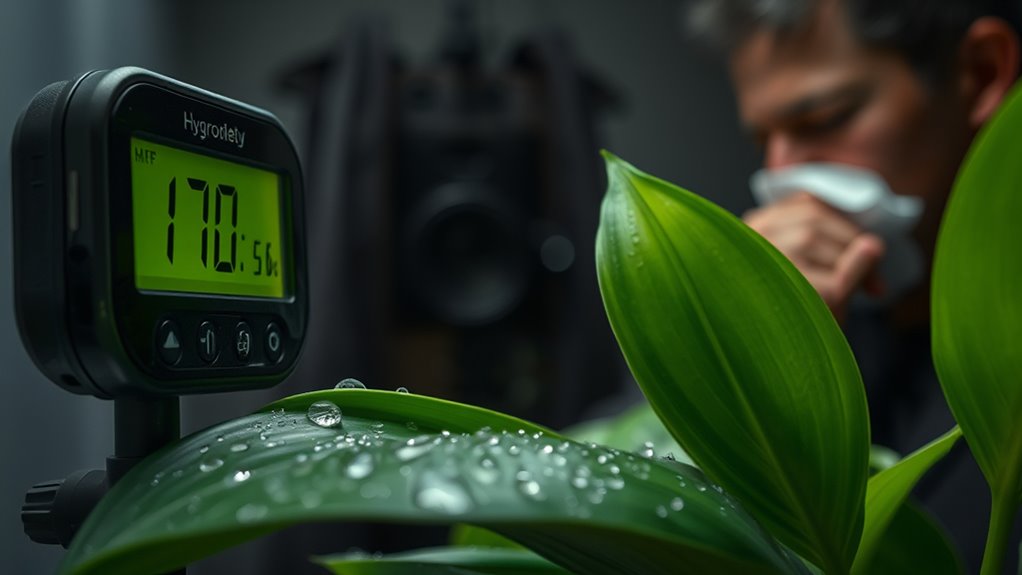
Have you ever noticed how your breathing feels different depending on the humidity in your environment? When the air is too dry or too damp, it can impact more than just comfort — it affects your health too. Humidity levels play a vital role in indoor air quality, which directly influences how you breathe and how healthy your home is. Low humidity often makes the air feel crisp, but it can dry out your nasal passages and throat, leading to irritation and increased susceptibility to colds. On the other hand, high humidity creates a moist environment that encourages mold growth, which can have serious health implications if left unchecked.
Proper humidity levels are essential for healthy breathing and a mold-free home.
If the air around you is overly damp, mold spores can thrive on surfaces like walls, ceilings, and furniture. Mold growth isn’t just a cosmetic issue; it releases allergens and irritants into the air that can trigger respiratory problems, especially for those with allergies or asthma. You might start experiencing frequent coughing, sneezing, or even wheezing without realizing that excess moisture is the root cause. Mold spores are tiny but potent, and once airborne, they can be inhaled deep into your lungs, aggravating existing health issues or creating new ones. Maintaining proper humidity levels helps prevent mold from taking hold, preserving your indoor air quality and your health.
Conversely, when humidity drops too low, your home becomes a breeding ground for dry air-related problems. You might notice your skin feels dry, your lips chap easily, or your throat becomes sore. Dry air also makes it easier for viruses and bacteria to linger in the air, increasing your chances of getting sick. Plus, low humidity can cause dust and other airborne particles to become more concentrated, further irritating your respiratory system. To strike the right balance, a humidity level between 30% and 50% is recommended. This range helps keep your indoor air quality ideal, reducing mold growth and minimizing respiratory discomfort.
Managing humidity isn’t just about comfort; it’s about health too. Using dehumidifiers in damp spaces and humidifiers in dry ones can help you maintain that perfect range. Ventilating your home properly allows moisture to escape and fresh air to circulate, cutting down on mold and airborne irritants. Regularly inspecting areas prone to moisture — like bathrooms and basements — ensures mold doesn’t have a chance to develop. Staying informed about indoor air quality and controlling humidity levels are key steps to creating a healthier, more comfortable living space. By controlling indoor humidity, you not only improve your comfort but also protect yourself from the potential health hazards linked to poor indoor air quality and mold growth. Staying aware of humidity levels empowers you to create a healthier, more comfortable living space.
As an affiliate, we earn on qualifying purchases.
Frequently Asked Questions
How Does Humidity Affect Indoor Air Quality?
Humidity affects indoor air quality by impacting HVAC efficiency and promoting mold growth. When humidity levels are high, your HVAC system works harder, reducing its efficiency and increasing energy costs. Excess moisture creates a perfect environment for mold to grow, which can cause respiratory issues and allergies. Keeping humidity balanced helps maintain better air quality, protects your HVAC system, and prevents mold from thriving in your home.
Can Humidity Levels Influence Allergy Symptoms?
Imagine your allergy symptoms ballooning to epic proportions—that’s what high humidity can do. It creates perfect conditions for mold growth, which worsens allergy symptoms and threatens your respiratory health. When humidity stays too high, you might feel like you’re inhaling dampness itself, making allergies unbearable. Keep humidity levels balanced to prevent mold, breathe easier, and protect your respiratory health from moisture-related irritants.
What Are Safe Humidity Ranges for Infants?
You should keep humidity levels between 30-50% for infants to guarantee their skin remains moisturized and comfortable. Proper humidity promotes sleep comfort by preventing dry skin and irritation. Too low humidity can cause dryness and discomfort, while too high increases the risk of mold and respiratory issues. Regularly monitor your home’s humidity to create a safe, cozy environment that supports your infant’s health and restful sleep.
How Does Humidity Impact Wooden Furniture and Electronics?
High humidity causes wooden furniture to swell and can lead to warping or cracking, so you should keep moisture levels balanced. For electronics, excess humidity accelerates corrosion and short circuits, risking damage or failure. To prevent these issues, use dehumidifiers and ensure proper ventilation. Maintaining ideal humidity helps preserve your wooden pieces and electronics, keeping them in good condition and functioning properly over time.
Are There Seasonal Variations in Optimal Humidity Levels?
You bet there are seasonal variations in ideal humidity levels. As seasons change, humidity fluctuations can make your home feel damp or dry, affecting comfort and health. In winter, lower humidity helps prevent mold, while summer’s higher levels keep things from drying out. Staying aware of these shifts allows you to maintain balanced humidity year-round, ensuring your space stays cozy and healthy despite the changing seasons.
adjustable humidifier for bedroom
As an affiliate, we earn on qualifying purchases.
As an affiliate, we earn on qualifying purchases.
Conclusion
As you step into a room where moisture hangs heavy like a thick fog, you realize how humidity can quietly impact your health. Too much moisture turns your space into a playground for mold and dust mites, sneaking into your lungs and causing discomfort. But with a balanced level of humidity, it’s like breathing in fresh, crisp air after a rain—refreshing and revitalizing. Keep the moisture just right, and your health will thank you.
As an affiliate, we earn on qualifying purchases.
As an affiliate, we earn on qualifying purchases.
NFL season / tailgating Picks
team gear
As an affiliate, we earn on qualifying purchases.