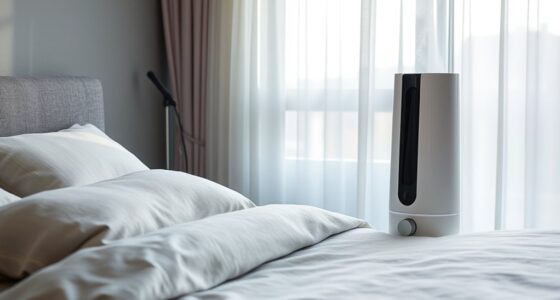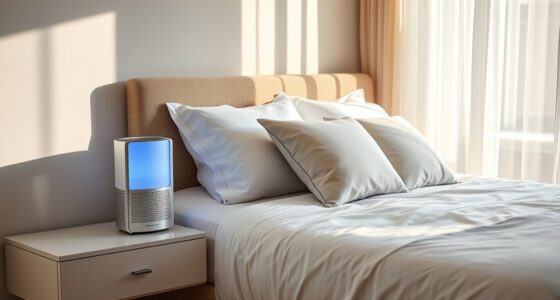
To prepare a safe nursery during pregnancy, focus on improving indoor air quality by choosing low-emission paints, organic bedding, and untreated furniture. Guarantee good ventilation and use a HEPA air purifier to reduce dust, allergens, and VOCs. Regular cleaning and avoiding smoking or strong chemicals indoors also help. Keep the space well-ventilated and monitor air quality to address issues promptly—discover more tips that can help you create the safest environment for your baby.
Key Takeaways
- Monitor indoor air quality with devices measuring VOCs, dust, and allergens during nursery preparation.
- Use non-toxic paints, organic bedding, and natural furniture to minimize chemical emissions.
- Ensure proper ventilation by opening windows and using air purifiers with HEPA filters regularly.
- Avoid chemical-based cleaners, scented candles, and air fresheners that can pollute indoor air.
- Maintain cleanliness through frequent dusting and vacuuming to reduce allergens and airborne irritants.

During pregnancy, maintaining good air quality becomes essential because exposure to pollutants can affect both your health and your baby’s development. As you prepare the nursery, it’s important to focus on reducing pollution inside your home. Pollution reduction isn’t just about avoiding outdoor smog; indoor air quality plays a fundamental role in safeguarding your little one. You want to create a space that’s as clean and safe as possible, free from airborne irritants that could compromise your pregnancy.
One of the best ways to guarantee this is through indoor air monitoring. With the right devices, you can keep a close eye on pollutants like volatile organic compounds (VOCs), dust, and allergens that might accumulate in the nursery. These monitors give you real-time data, empowering you to take action if levels rise above safe thresholds. For example, if your indoor air monitoring shows elevated VOCs, it might be time to increase ventilation or eliminate sources like certain paints, cleaning agents, or new carpets. This proactive approach helps you stay ahead of potential hazards, giving you peace of mind as you set up the nursery.
Pollution reduction also involves choosing non-toxic, low-emission products for the nursery. Opt for natural paints, organic bedding, and furniture made from untreated wood. Keep the space well-ventilated by opening windows when weather permits and using air purifiers equipped with HEPA filters. These filters are effective at trapping tiny particles, ensuring cleaner air for your baby’s room. Regular cleaning is equally important; dust and vacuum frequently to remove allergens and prevent buildup of indoor pollutants. Also, avoid smoking indoors or using strong chemical cleaners that can release harmful fumes into the air.
Choose non-toxic, low-emission products and keep the nursery well-ventilated for a safer, cleaner environment for your baby.
In addition, be mindful of household items that could contribute to poor air quality. Scented candles, air fresheners, and certain cleaning products often contain chemicals that can irritate your respiratory system. Instead, opt for natural alternatives and ensure good airflow whenever possible. When setting up the nursery, consider placing air purifiers in the room and running them continuously, especially if you live in an area with high outdoor pollution or if you notice any signs of poor air quality through your indoor air monitoring.
Frequently Asked Questions
How Does Air Pollution Affect Fetal Brain Development?
Pollutant exposure during pregnancy can negatively affect fetal brain development, increasing neurodevelopmental risks. When you breathe in polluted air, harmful particles cross the placenta and disrupt normal brain growth, leading to issues like cognitive delays and behavioral problems. By reducing your exposure to air pollution, you help safeguard your baby’s neurodevelopment, promoting healthier brain growth and lowering the risk of future neurodevelopmental challenges.
Are Indoor Air Purifiers Effective During Pregnancy?
Indoor air purifiers are your shield in a sea of pollutants, and yes, they can be effective during pregnancy. Many air purifier myths suggest they’re a miracle cure, but portable air filters with HEPA filters help reduce airborne allergens and pollutants. To maximize their benefits, choose a reliable model and keep your nursery well-ventilated. It’s like giving your baby a gust of invigorating mountain air, even indoors.
What Are the Safest Paint Options for a Nursery?
You should choose low VOC paints and natural finishes for your nursery. These options emit fewer harmful chemicals, making the environment safer for your baby. Always look for paints labeled as low VOC or zero VOC, and consider natural finishes like milk paint or plant-based dyes. Proper ventilation during and after painting also helps reduce any lingering fumes, ensuring a healthier space for your little one.
Can Plants Improve Nursery Air Quality Safely?
Did you know some air purifying plants can remove up to 87% of indoor toxins in 24 hours? Yes, plants can safely improve nursery air quality when chosen carefully. Opt for low-maintenance, non-toxic options like spider plants or pothos to enhance nursery air safety without risking your baby’s health. Just guarantee proper placement and avoid overwatering, so your plants contribute positively to the nursery environment.
How Often Should Nursery Air Quality Be Tested?
You should perform air quality testing in the nursery at least once every three to six months, especially if you notice any odors, mold, or dust buildup. Regular nursery ventilation is key to maintaining good air quality, so guarantee proper airflow daily. Frequent testing helps identify pollutants early, creating a safer environment for your baby. If you have concerns about specific issues, consider more frequent testing or installing air purifiers.
Conclusion
As you prepare the nursery, remember that a baby’s first breaths are like opening a delicate flower to the sun. Protecting your air quality is like shielding this fragile bloom from harsh storms—your care and attention can nurture a safe, healthy haven. By creating a clean environment, you’re giving your little one the best start in life, ensuring their dreams can take root and blossom in a world full of fresh, tender air.