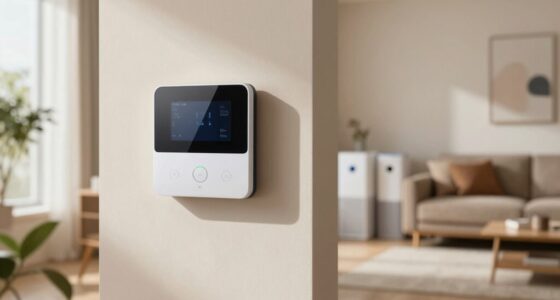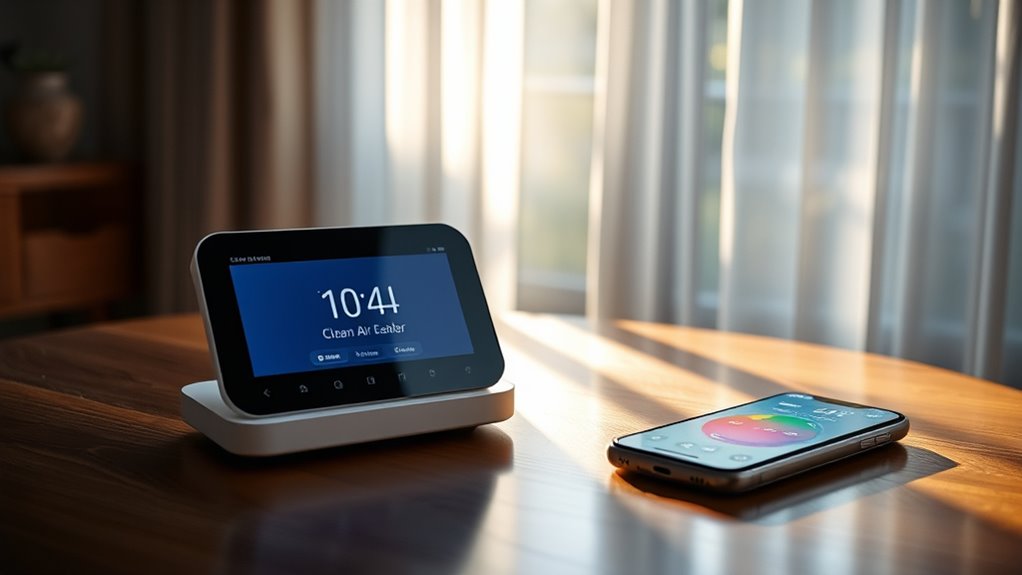

For anyone searching for an air quality monitor with smartphone alerts, the GoveeLife Smart Air Quality Monitor H5140 stands out as the best overall pick, pairing accurate CO2 detection with dependable push notifications. The Temtop M10+ earns its place for its six-in-one sensor suite, while the Amazon Smart Air Quality Monitor is the easiest route for Alexa users who want effortless integration. The main tradeoff in this category is sensor depth versus app polish: some models measure a dozen parameters but deliver clunky alerts, while others track fewer pollutants with more reliable notifications. Read on for the full breakdown of all 13 options and the reasoning behind each ranking.

Get home appliances delivered free with Prime
- Fast, free delivery on millions of items
- Prime Video, Amazon Music and more included
- Member-only deals all year
Complete the kit



Key Takeaways
- The GoveeLife H5140 offers the best balance of sensor accuracy and alert reliability, making it the default pick for most households.
- Multi-parameter monitors like the 16-in-1 and bonoch models often overwhelm users with raw data without improving alert quality—more sensors don’t automatically mean better notifications.
- CO2-focused monitors such as the Aranet4 and Temtop M10+ are better suited for ventilation management than for tracking particulate matter or VOCs.
- Wi-Fi connectivity is not equal: some apps delay alerts by minutes, while others push notifications instantly—test latency before committing.
- For beginners, the Amazon Smart Air Quality Monitor is the simplest to set up, but advanced users will prefer the Professional 15-in-1’s dual-chip accuracy for detailed air quality analysis.
| Amazon Smart Air Quality Monitor |  | Best for Alexa Homes | Measurements: Temperature, humidity, carbon monoxide, PM2.5, and VOCs | Connectivity: 2.4 GHz Wi-Fi and Bluetooth Low Energy 4.2 | Alerts and status: Real-time alerts, Alexa integration, and multicolor LED | VIEW ON AMAZON | See Our Full Breakdown |
| Temtop M10+ WiFi 6-in-1 Smart CO2 and Indoor Air Quality Monitor |  | Best for Portable App Monitoring | Measurements: PM2.5, CO₂, TVOC, AQI, temperature, and humidity | Connectivity: Bluetooth and 2.4 GHz Wi-Fi | Display: E-ink | VIEW ON AMAZON | See Our Full Breakdown |
| GoveeLife Smart Air Quality Monitor CO2 Detector H5140, Display & Alarm |  | Best for CO₂ Alerts and History | Measurements: CO₂, temperature, and humidity | CO₂ sensor: SCD4x photoacoustic NDIR; ±(40 ppm + 5%) accuracy | Refresh rate: 5 seconds | VIEW ON AMAZON | See Our Full Breakdown |
| Professional 15-in-1 Air Quality Monitor with Smartphone App – Dual Chip – Monitors CO₂, HCHO, TVOC, Particulate Matter, AQI, Temperature, and Humidity |  | Best for Broad Sensor Coverage | Listed sensors: CO₂, HCHO, TVOC, PM0.3, PM1.0, PM2.5, and PM10 | Additional readings: AQI, temperature, and humidity | Display: Color LCD | VIEW ON AMAZON | See Our Full Breakdown |
| AcuRite Wi-Fi Indoor Air Quality Monitor (17012M) |  | Best for Audible Alerts | Particle measurements: PM1.0, PM2.5, and PM10 | Other air measurements: Carbon dioxide, formaldehyde, and VOCs | Additional readings: Temperature and humidity | VIEW ON AMAZON | See Our Full Breakdown |
| 8-in-1 Indoor Air Quality Monitor, CO2 TVOC HCHO Temperature Humidity Meter |  | Best for Portable, On-Device Alerts | Monitored readings: CO2, HCHO, TVOC, temperature, humidity | Display: Color LCD with color-coded air quality levels | Battery: 1200mAh rechargeable | VIEW ON AMAZON | See Our Full Breakdown |
| Kidde Smart CO Detector + Indoor Air Quality, Plug-in & AA Battery |  | Best for CO Safety with Smartphone Alerts | Model: COPDLQW | Detection: Low-level carbon monoxide | Additional readings: Indoor air quality, humidity, TVOC | VIEW ON AMAZON | See Our Full Breakdown |
| BREATHE Airmonitor Plus Indoor Air Quality Monitor with CO₂, PM, and App (Gen 2) |  | Best Overall for App-Based Air Quality Alerts | Sensors: CO2, PM1, PM2.5, PM10, TVOC, formaldehyde, temperature, humidity | Connectivity: 2.4 GHz Wi-Fi | App features: Remote monitoring, alerts, data export | VIEW ON AMAZON | See Our Full Breakdown |
| GoveeLife Smart Air Quality Monitor with PM2.5 (H5106) – LED Display, Wired |  | Best for PM2.5 Tracking and Govee Automation | Model: H5106 | Monitored readings: PM2.5, temperature, humidity | Response time: 2 seconds | VIEW ON AMAZON | See Our Full Breakdown |
| 16-in-1 Indoor Air Quality Monitor with HD Color Screen |  | Best for Broad Readings Without App Dependence | Parameters measured: PM1.0, PM2.5, PM10, TVOC, HCHO, temperature, humidity | Display: HD color screen | Battery life: 4–5 hours | VIEW ON AMAZON | See Our Full Breakdown |
| Indoor Air Quality Monitor 10-in-1 Portable Smart CO2 Detector |  | Best Portable Multi-Sensor Monitor | Measurement Capabilities: CO2, HCHO, TVOC, PM2.5, PM1.0, PM10, temperature, humidity, AQI | Display: High-definition color screen with real-time data visualization | Connectivity: Bluetooth for calibration and time synchronization | VIEW ON AMAZON | See Our Full Breakdown |
| Aranet4 Indoor Air Quality Monitor, Wireless CO2 Detector for Home and Office | 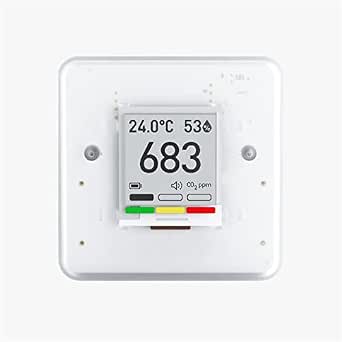 | Best Battery Life for Long-Term Monitoring | Dimensions: 2.76 x 2.76 x 0.94 inches | Weight: 3.67 ounces | Batteries: 2 AA batteries required (included) | VIEW ON AMAZON | See Our Full Breakdown |
| bonoch 16-in-1 Indoor Air Quality Monitor with 7-inch HD Display |  | Best Large Display for Home Use | Parameters Monitored: CO2, PM2.5, PM1.0, PM10, HCHO, TVOC, Temperature, Humidity, AQI, Time | Display: 7-inch HD LED | Accuracy: 0.001 | VIEW ON AMAZON | See Our Full Breakdown |
| air quality monitor with smartphone alert | Connectivity | Display | Dimensions |
|---|---|---|---|
| Amazon Smart Air Quality Monit | 2.4 GHz Wi-Fi and Bluetooth Low Energy 4.2 | — | 65 × 65 × 45 mm |
| Temtop M10+ WiFi 6-in-1 Smart | Bluetooth and 2.4 GHz Wi-Fi | E-ink | — |
| GoveeLife Smart Air Quality Mo | Wi-Fi app, Alexa, and Google Assistant | — | — |
| Professional 15-in-1 Air Quali | Smartphone app | Color LCD | 5.91 × 3.94 × 1.97 inches |
| AcuRite Wi-Fi Indoor Air Quali | Wi-Fi | Color-coded IAQ meter: green, orange, and red | — |
| 8-in-1 Indoor Air Quality Moni | — | Color LCD with color-coded air quality levels | — |
| Kidde Smart CO Detector + Indo | 2.4 GHz Wi-Fi, Alexa, Google Home | — | — |
| BREATHE Airmonitor Plus Indoor | 2.4 GHz Wi-Fi | Color display | — |
| GoveeLife Smart Air Quality Mo | 2.4 GHz Wi-Fi, Bluetooth | LED with clock/PM2.5 modes and bright/night modes | 5.31 x 1.57 x 2.47 inches |
| 16-in-1 Indoor Air Quality Mon | Type-C port | HD color screen | 1.6 x 5.3 x 6.7 inches |
| Indoor Air Quality Monitor 10- | Bluetooth for calibration and time synchronization | High-definition color screen with real-time data visualization | Portable size suitable for multiple environments |
| Aranet4 Indoor Air Quality Mon | Wireless, smartphone app | — | 2.76 x 2.76 x 0.94 inches |
| bonoch 16-in-1 Indoor Air Qual | — | 7-inch HD LED | 8.03 x 5.75 x 2.83 inches |
More Details on Our Top Picks
Amazon Smart Air Quality Monitor
Alexa integration is the main reason I’d choose this monitor. It tracks temperature, humidity, carbon monoxide, PM2.5, and VOCs, then can send alerts and support Alexa routines, making it a practical fit for households already using Echo devices. Compared with the GoveeLife H5140, which focuses on CO₂ and provides app, email, and buzzer alerts, Amazon covers a broader mix of readings but does not list CO₂ measurement. Its compact body and color-coded LED also make a quick in-room check simple. The tradeoff is ecosystem dependence: full functionality relies on Wi-Fi and Alexa, so it is less appealing if you want platform-neutral controls. It is an indoor-only monitor, and the listed accuracy ranges—especially for humidity and PM2.5—may not suit buyers seeking precision measurements.
Pros:- Measures carbon monoxide, PM2.5, VOCs, temperature, and humidity
- Alexa notifications and automation can connect readings to a smart-home routine
- Compact unit with a multicolor LED for at-a-glance status
- Uses post-consumer recycled thermoplastic resin
Cons:- Does not list CO₂ measurement, unlike the GoveeLife H5140
- Full functionality depends on Wi-Fi and the Alexa ecosystem
- Listed accuracy limits may be too broad for buyers seeking precise readings
Best for: Households with Echo devices that want indoor alerts and Alexa routines for several air-quality readings.
Not ideal for: Buyers who need CO₂ readings, outdoor monitoring, or app and alert features without relying on Alexa.
- Measurements:Temperature, humidity, carbon monoxide, PM2.5, and VOCs
- Connectivity:2.4 GHz Wi-Fi and Bluetooth Low Energy 4.2
- Alerts and status:Real-time alerts, Alexa integration, and multicolor LED
- Dimensions:65 × 65 × 45 mm
- Weight:120 g
- Power:5 W; 5.0 V, 1 A adapter included
- Operating conditions:Indoor use; 0–40°C and 0–80% humidity
- Warranty:One-year limited manufacturer’s warranty
Our verdict“I’d pick this for an Alexa-equipped home that values broad indoor monitoring and smart-home alerts over CO₂ readings or platform flexibility.”
Temtop M10+ WiFi 6-in-1 Smart CO2 and Indoor Air Quality Monitor
The Temtop M10+ combines app access with a rechargeable battery, a useful pairing for people who want to check readings away from the monitor’s location without keeping it plugged in. It tracks PM2.5, CO₂, TVOC, AQI, temperature, and humidity, while the E-ink display keeps local readings visible without relying on a phone. Compared with the Amazon Smart Air Quality Monitor, it adds CO₂ and does not center its features on Alexa; compared with the GoveeLife H5140, it covers more measurement categories and offers battery operation, while Govee provides specified buzzer, email, and app alert types. The costs of that flexibility are a more involved app-and-network setup and a reliance on Wi-Fi for remote access. Its listed battery life of up to 40 days applies to power-saving mode, not every use pattern.
Pros:- Six listed readings include PM2.5, CO₂, and TVOC
- Wi-Fi and Bluetooth support app control and remote monitoring
- Rechargeable 2200 mAh battery supports placement away from an outlet
- E-ink display presents readings without needing to open the app
Cons:- Remote monitoring requires a Wi-Fi connection
- Power-saving mode is the stated condition for up to 40 days of battery life
- App and network setup may feel complex compared with the Alexa-focused Amazon monitor
Best for: People who want CO₂ and particle readings, app-based remote checks, and the option to move a monitor between rooms.
Not ideal for: Buyers who want a simple, always-plugged-in setup or who find app and Wi-Fi configuration burdensome.
- Measurements:PM2.5, CO₂, TVOC, AQI, temperature, and humidity
- Connectivity:Bluetooth and 2.4 GHz Wi-Fi
- Display:E-ink
- Battery capacity:2200 mAh
- Battery life:Up to 40 days in power-saving mode
- Logging intervals:1, 5, 10, or 30 minutes
- App features:Remote monitoring, app control, and data logging
Our verdict“I’d choose the Temtop M10+ for flexible, battery-powered monitoring and app access across a broader set of readings, including CO₂.”
GoveeLife Smart Air Quality Monitor CO2 Detector H5140, Display & Alarm
CO₂ is the focus here, and the alert options make that focus useful. The H5140 refreshes its readings every five seconds and pairs app push notifications with a local buzzer and email alerts, giving buyers more ways to notice rising CO₂ than a display-only monitor. Its screen also shows temperature, humidity, and time. Compared with the Temtop M10+, the GoveeLife offers a more detailed set of stated alert channels and up to two years of stored readings with CSV export, while the Temtop measures PM2.5, TVOC, and AQI as well. This is not a broad pollutant monitor: its listed measurements do not include particulate matter or VOCs. It also needs continuous AC power, and the product notes that initial calibration may require outdoor placement through the app. It monitors CO₂ but cannot reduce it or link to an air purifier for that purpose.
Pros:- SCD4x NDIR CO₂ sensor with a five-second refresh rate
- Buzzer, app push, and email alert options
- Stores up to two years of historical data and supports CSV export
- Display shows CO₂, temperature, humidity, and time
Cons:- Does not list PM or VOC measurement, unlike the Temtop M10+
- Requires continuous AC power
- Initial calibration may require outdoor placement using the app
Best for: Home-office users who mainly want frequent CO₂ updates, layered alerts, and a record they can export.
Not ideal for: Buyers seeking particulate or VOC readings, portable battery operation, or a monitor that controls air-cleaning equipment.
- Measurements:CO₂, temperature, and humidity
- CO₂ sensor:SCD4x photoacoustic NDIR; ±(40 ppm + 5%) accuracy
- Refresh rate:5 seconds
- Connectivity:Wi-Fi app, Alexa, and Google Assistant
- Alert types:Buzzer, app push notification, and email
- Data storage:Up to two years of historical data
- Export format:CSV
- Power:AC outlet; continuous power
Our verdict“I’d choose the GoveeLife H5140 when CO₂ alerts and exportable history matter more than tracking particles or VOCs.”
Professional 15-in-1 Air Quality Monitor with Smartphone App – Dual Chip – Monitors CO₂, HCHO, TVOC, Particulate Matter, AQI, Temperature, and Humidity
This monitor’s appeal is breadth: the listed sensors cover CO₂, HCHO, TVOC, several particle sizes, temperature, and humidity, with an AQI reading and a color LCD alongside smartphone app access. That makes it a better fit for shoppers who want many categories on one device than the GoveeLife H5140, which concentrates on CO₂, temperature, and humidity but gives clearer details about alert channels and data history. The key tradeoff is the information gap: the product data does not specify sensor accuracy, calibration, battery, or power source. Those omissions make it harder to judge reading confidence and where the monitor can be placed. Its compact listed dimensions and stated suitability for home, office, and vehicle use add flexibility, but I would not choose it when verified measurement performance or a clearly defined alert setup is the priority.
Pros:- Lists CO₂, HCHO, TVOC, PM0.3, PM1.0, PM2.5, and PM10 sensors
- Adds temperature, humidity, and AQI readings
- Color LCD provides an on-device view alongside smartphone app access
- Compact listed size supports use in different indoor settings
Cons:- Sensor accuracy and calibration details are not specified
- Battery and power-source details are not provided
- Alert types and app-dependent features are not clearly detailed
Best for: Buyers who want a wide range of listed pollutant and particle readings in a compact display-and-app monitor.
Not ideal for: People who need published accuracy and calibration details, known battery life, or clearly documented alert behavior.
- Listed sensors:CO₂, HCHO, TVOC, PM0.3, PM1.0, PM2.5, and PM10
- Additional readings:AQI, temperature, and humidity
- Display:Color LCD
- Connectivity:Smartphone app
- Dimensions:5.91 × 3.94 × 1.97 inches
- Weight:7 ounces
- Power and battery:Not specified
- Additional functions:Clock, alarm, and timer
Our verdict“I’d consider this for broad listed sensor coverage, but I’d favor the GoveeLife H5140 if defined alerts and documented CO₂ performance matter more.”
AcuRite Wi-Fi Indoor Air Quality Monitor (17012M)
AcuRite pairs a broad set of listed readings with a straightforward alert approach. It measures PM1.0, PM2.5, PM10, carbon dioxide, formaldehyde, and VOCs, while its color-coded green, orange, and red display makes room conditions easy to scan. Wi-Fi supports connected monitoring, and audible alerts can flag unhealthy air without requiring someone to watch the screen. Compared with the Amazon Smart Air Quality Monitor, AcuRite lists formaldehyde and multiple particle sizes, while Amazon specifies Alexa routines and carbon monoxide measurement. The tradeoff is that AcuRite’s alert system may be intrusive in quiet spaces, and the supplied details do not spell out the companion app’s remote-alert behavior. Buyers should also check whether the sound can be adjusted or silenced before placing it in a bedroom or shared workspace.
Pros:- Measures PM1.0, PM2.5, PM10, CO₂, formaldehyde, and VOCs
- Green, orange, and red display gives a quick visual status cue
- Audible alerts can draw attention to unhealthy readings
- Includes temperature and humidity readings
Cons:- Audible alerts may disrupt bedrooms or quiet work areas
- Wi-Fi is required for full connected functionality
- Specific smartphone alert and app features are not detailed in the supplied information
Best for: Households that want visible color-coded status and an audible warning for unhealthy indoor readings.
Not ideal for: People who need quiet operation, clearly documented smartphone push alerts, or Alexa-based automation.
- Particle measurements:PM1.0, PM2.5, and PM10
- Other air measurements:Carbon dioxide, formaldehyde, and VOCs
- Additional readings:Temperature and humidity
- Connectivity:Wi-Fi
- Alerts:Audible alerts for unhealthy indoor air-quality levels
- Display:Color-coded IAQ meter: green, orange, and red
Our verdict“I’d pick the AcuRite for buyers who want broad pollutant coverage and an audible warning, but not for quiet rooms or app-alert certainty.”
8-in-1 Indoor Air Quality Monitor, CO2 TVOC HCHO Temperature Humidity Meter
Portable readings without an app are the appeal here: this monitor tracks CO2, HCHO, TVOC, temperature, and humidity, then uses its color LCD and preset-threshold reminders to make changes easier to spot. Compared with the BREATHE Airmonitor Plus Gen 2, it gives up remote monitoring, historical data, and app alerts, but its rechargeable design is suited to moving between rooms or taking on trips. That makes it a simpler choice for someone who wants immediate readings at the device rather than a phone-based record. The main tradeoff is that the description does not specify sensor accuracy or battery runtime, and smartphone connectivity is not listed. I would choose it for basic portable checks, not for remote alerts when no one is in the room.
Pros:- Tracks CO2, HCHO, TVOC, temperature, and humidity in real time.
- Color-coded LCD helps make readings easier to interpret at a glance.
- Preset-threshold reminders can prompt timely ventilation.
- Rechargeable Type-C design supports use away from a fixed outlet.
Cons:- No app connectivity or smartphone alerts are specified.
- No data logging or historical trends are listed.
- Battery runtime and sensor accuracy are not provided.
Best for: People who want a rechargeable monitor for checking several indoor air readings around the home, office, or while traveling, and are comfortable reading alerts on the device.
Not ideal for: Buyers who need smartphone notifications, remote monitoring, a history of readings, or published sensor accuracy and battery-runtime details.
- Monitored readings:CO2, HCHO, TVOC, temperature, humidity
- Display:Color LCD with color-coded air quality levels
- Battery:1200mAh rechargeable
- Charging:Type-C
- Alerts:Reminders for preset thresholds
- Form:Compact and lightweight
- Listed uses:Home, office, travel, cars, hotels
Our verdict“Choose this for portable, on-screen air checks and threshold reminders, but skip it if phone alerts or saved readings are a requirement.”
Kidde Smart CO Detector + Indoor Air Quality, Plug-in & AA Battery
Safety-first phone alerts set the Kidde apart from general air monitors: it detects low-level carbon monoxide and sends real-time notifications through its app, with Alexa and Google Home compatibility. It also tracks humidity and TVOC, though its air-quality coverage is narrower than the BREATHE Airmonitor Plus Gen 2, which adds particulate matter, CO2, and formaldehyde readings. The Kidde makes more sense when CO protection is the priority and air-quality data is a useful extra—not when a buyer wants a broad pollution dashboard. Its plug-in setup has AA backup batteries for power outages, but app alerts depend on Wi-Fi, and advanced air-quality insights require a subscription. I would treat it as a connected CO alarm with added sensing, not a replacement for a full-spectrum monitor.
Pros:- Smartphone app provides real-time alerts for CO and indoor air readings.
- Low-level CO sensing adds an early-warning focus beyond general air monitors.
- AA backup batteries support operation during power outages.
- Works with Alexa and Google Home.
Cons:- App alerts require a 2.4 GHz Wi-Fi connection.
- Advanced air-quality insights require a subscription.
- Tracks fewer air parameters than monitors such as the BREATHE Airmonitor Plus Gen 2.
Best for: Households prioritizing low-level CO detection and phone notifications, especially those already using Alexa or Google Home.
Not ideal for: Buyers seeking broad pollutant coverage, detailed air-quality history without a subscription, or app alerts in a home without compatible Wi-Fi.
- Model:COPDLQW
- Detection:Low-level carbon monoxide
- Additional readings:Indoor air quality, humidity, TVOC
- Connectivity:2.4 GHz Wi-Fi, Alexa, Google Home
- Backup power:AA backup batteries included
- Alarm sound:85 dB
- Standards:UL 2034, 5th Edition
- Warranty:10-year limited warranty
Our verdict“Pick the Kidde when connected CO protection matters more than wide-ranging air-quality measurements.”
BREATHE Airmonitor Plus Indoor Air Quality Monitor with CO₂, PM, and App (Gen 2)
The strongest all-rounder for phone-based monitoring in this group, the BREATHE pairs alerts with remote readings and up to 90 days of history. Its sensor list spans CO2, PM1, PM2.5, PM10, TVOC, formaldehyde, temperature, and humidity, giving more context than the GoveeLife H5106, which focuses on PM2.5, temperature, and humidity. That broader coverage is useful when a buyer wants to connect changes in several readings to ventilation or other indoor conditions. The app also supports data export, a feature absent from the simpler portable monitor in this lineup. The tradeoff is mobility: up to six hours of battery life is enough for short moves between rooms, not all-day untethered use, and full app features require Wi-Fi. Smart-home integration is not specified.
Pros:- Tracks CO2, PM1, PM2.5, PM10, TVOC, formaldehyde, temperature, and humidity.
- Companion app offers remote monitoring and alerts.
- Stores up to 90 days of data and supports data export.
- Rechargeable USB-C design allows short-term portable use.
Cons:- Battery life is up to six hours, limiting extended use away from power.
- Full app features require 2.4 GHz Wi-Fi.
- No smart-home integrations are specified.
Best for: Homeowners who want smartphone alerts, remote readings, and saved trends across particulate matter, CO2, and other common indoor air indicators.
Not ideal for: People who need all-day battery-powered monitoring, a monitor that works without Wi-Fi for app features, or stated smart-home device integration.
- Sensors:CO2, PM1, PM2.5, PM10, TVOC, formaldehyde, temperature, humidity
- Connectivity:2.4 GHz Wi-Fi
- App features:Remote monitoring, alerts, data export
- Data history:Up to 90 days
- Battery life:Up to 6 hours
- Power:Rechargeable, USB-C
- Display:Color display
Our verdict“Choose the BREATHE for the broadest mix of app alerts, pollutant coverage, and saved data among these five options.”
GoveeLife Smart Air Quality Monitor with PM2.5 (H5106) – LED Display, Wired
Fast PM2.5 updates and connected routines are the H5106’s clearest strengths. Its two-second refresh and GoveeHome app let users check particulate readings remotely, review saved data, and link the monitor with compatible Govee devices for automation. Compared with the BREATHE Airmonitor Plus Gen 2, it measures a much narrower set of pollutants: PM2.5, temperature, and humidity rather than CO2, formaldehyde, and multiple particle sizes. That narrower focus can suit someone who mainly wants to track fine particles and trigger related devices, but it is less useful for a broad air-quality picture. It also needs continuous Type-C power, so it cannot follow the BREATHE around on battery. Wired placement and a potentially bright display are practical drawbacks, even with a night mode.
Pros:- 2-second refresh rate provides quick PM2.5 updates.
- GoveeHome app supports remote monitoring and data export.
- Online data can be viewed for 13 days and exported for up to two years.
- Can integrate with compatible Govee devices for automation.
Cons:- Monitors PM2.5, temperature, and humidity rather than a broad range of pollutants.
- Requires continuous Type-C power and has no battery backup.
- The LED display may remain bright in a dark room despite its night mode.
Best for: GoveeHome users who want remote PM2.5 checks, long-term data access, and automation with compatible Govee devices in a fixed location.
Not ideal for: Buyers who need CO2, VOC, or formaldehyde readings, battery portability, or placement away from a power source.
- Model:H5106
- Monitored readings:PM2.5, temperature, humidity
- Response time:2 seconds
- Connectivity:2.4 GHz Wi-Fi, Bluetooth
- Data storage:13-day online view; export up to 2 years
- Power:Wired Type-C
- Display:LED with clock/PM2.5 modes and bright/night modes
- Dimensions:5.31 x 1.57 x 2.47 inches
- PM2.5 accuracy:±15 µg/m³ (0–100 µg/m³); ±15% (100–1000 µg/m³)
Our verdict“Choose the H5106 for fixed-location PM2.5 tracking and Govee automation, not as a wide-coverage portable monitor.”
16-in-1 Indoor Air Quality Monitor with HD Color Screen
Wide on-device coverage is the draw: this monitor lists PM1.0, PM2.5, PM10, TVOC, HCHO, temperature, and humidity, with a large color screen and single-tap operation. Its portable format offers a different kind of convenience from the GoveeLife H5106, which provides Wi-Fi app monitoring and longer-term data access but is wired and focused on fewer readings. Here, the available description points to local readings and adjustable audio prompts, not smartphone alerts or data logging. That makes it a reasonable fit for someone who wants to carry a screen-based monitor between rooms or use it in a vehicle. The compromise is substantial for this roundup: no app connectivity is specified, and its four-to-five-hour battery life calls for regular recharging during mobile use.
Pros:- Lists PM1.0, PM2.5, PM10, TVOC, HCHO, temperature, and humidity readings.
- Large HD color screen presents readings directly on the device.
- Single-tap operation and adjustable audio prompts support straightforward use.
- Portable design and Type-C charging suit use across several locations.
Cons:- No smartphone app, remote alerts, or data logging are specified.
- Battery life is limited to four to five hours per charge.
- The provided sensor list does not include CO2.
Best for: People who want a portable, easy-to-operate screen showing several particle and gas readings at home, in an office, or in a vehicle.
Not ideal for: Buyers whose main requirement is smartphone alerts, remote monitoring, saved trends, or long battery-powered sessions.
- Parameters measured:PM1.0, PM2.5, PM10, TVOC, HCHO, temperature, humidity
- Display:HD color screen
- Battery life:4–5 hours
- Charging:Type-C fast charging
- Connectivity:Type-C port
- Dimensions:1.6 x 5.3 x 6.7 inches
- Weight:14.4 ounces
- Controls:Single-tap operation with adjustable audio prompts
Our verdict“Pick this for broad on-screen readings and simple portable operation, but choose an app-connected model if phone alerts are essential.”
Indoor Air Quality Monitor 10-in-1 Portable Smart CO2 Detector
If you need a monitor that travels with you — from home office to car to hotel room — this compact 10-in-1 unit makes a strong case. It tracks CO2, formaldehyde, TVOC, PM2.5, PM1.0, PM10, temperature, humidity, and AQI all at once, which is more than the Aranet4 offers, but it sacrifices battery endurance to get there. The color display uses a simple traffic-light visualization, so you can glance at it and know whether the air is acceptable without decoding numbers. Bluetooth handles calibration and time sync, though you’ll need the app for the full feature set. Compared with the bonoch 16-in-1, this is far easier to toss in a backpack, but the smaller screen means less at-a-glance detail. The tradeoff is real: you get breadth of sensors in a small body, but the interface can feel busy at first, and battery life isn’t specified clearly. For someone who wants one device to cover multiple spaces, this is the most flexible pick.
Pros:- Measures 10 parameters including CO2, formaldehyde, TVOC, and multiple PM sizes
- Color-coded display gives instant air quality feedback without reading numbers
- Bluetooth calibration and data tracking via app
- Compact size suits desks, nightstands, and car cup holders
Cons:- Full calibration requires the Bluetooth app, so it’s not fully standalone
- Battery life specs are vague, so you may need to charge frequently
- Dense interface can overwhelm new users initially
Best for: Travelers, commuters, or people who split time between home, office, and vehicle and want a single compact monitor that covers many pollutants.
Not ideal for: Anyone who wants a set-and-forget monitor with multi-year battery life — the Aranet4 is a better fit for that.
- Measurement Capabilities:CO2, HCHO, TVOC, PM2.5, PM1.0, PM10, temperature, humidity, AQI
- Display:High-definition color screen with real-time data visualization
- Connectivity:Bluetooth for calibration and time synchronization
- Power:Includes charging cable
- Dimensions:Portable size suitable for multiple environments
Our verdict“Pick this if you need a portable, multi-parameter monitor that moves between spaces and you’re comfortable managing app-based calibration.”
Aranet4 Indoor Air Quality Monitor, Wireless CO2 Detector for Home and Office
The Aranet4 is the monitor you can forget about — in a good way. Its NDIR sensor delivers accurate CO2 readings, and the e-ink display is legible even in bright daylight, with color-coded alerts that turn red when CO2 climbs. The killer feature is the up to 4-year battery life on two AA batteries, which puts it in a completely different class from the bonoch 16-in-1 that needs recharging every few hours. The free app stores historical data, so you can spot ventilation patterns over weeks. But it only measures CO2, temperature, humidity, and pressure — nothing for PM2.5 or VOCs. If you’re worried about wildfire smoke or chemical off-gassing, the Indoor Air Quality Monitor 10-in-1 covers more ground, though it will need frequent charging. The Aranet4 also lacks smart home integration, so you won’t get Alexa or HomeKit alerts. This is the right choice for someone who wants reliable CO2 tracking with zero maintenance for years.
Pros:- Battery life up to 4 years on included AA batteries
- Easy-to-read e-ink display with color coding and audible alerts
- Free app for historical data analysis and trend tracking
- Accurate NDIR sensor technology for CO2
Cons:- Only measures CO2, temperature, humidity, and pressure — no PM or VOCs
- Requires AA battery replacement after several years
- No smart home integration (no Wi-Fi, only Bluetooth to app)
Best for: Homeowners, office managers, and parents who want a low-maintenance CO2 monitor that runs for years without plugging in or charging.
Not ideal for: People who need particulate matter or VOC readings, or who want smart home integration for automated alerts.
- Dimensions:2.76 x 2.76 x 0.94 inches
- Weight:3.67 ounces
- Batteries:2 AA batteries required (included)
- Sensor Technology:NDIR (Non-Dispersive Infrared)
- Battery Life:Up to 4 years
- Connectivity:Wireless, smartphone app
Our verdict“Choose the Aranet4 if you want a dependable, long-lasting CO2 monitor that requires almost no attention and gives you clear historical data.”
bonoch 16-in-1 Indoor Air Quality Monitor with 7-inch HD Display
When you want a monitor that doubles as a family dashboard, the bonoch 16-in-1 takes the lead. The 7-inch HD LED display is the largest in this roundup, showing nine parameters at once with adjustable brightness — much easier to read from across a living room than the compact Indoor Air Quality Monitor 10-in-1. It covers CO2, PM2.5, PM1.0, PM10, formaldehyde, TVOC, temperature, humidity, AQI, and even time, with high-precision sensors rated to 0.001 accuracy. Multiple alert modes let you set thresholds for each pollutant, so you get notified on the screen when something spikes. But the tradeoff is size and power: it weighs 1.46 pounds and battery life tops out at 8 hours, so it’s really a stationary device that needs to stay plugged in. Compared with the Aranet4, you get far more data but far less battery endurance. Setup can be fiddly with so many parameters to configure, and the included D battery is more of a backup than a primary power source. This is the pick for a dedicated home monitoring station.
Pros:- Large 7-inch HD display with adjustable brightness for easy reading across a room
- Tracks 9 parameters including CO2, PM2.5, formaldehyde, TVOC, and more
- High-precision sensors with 0.001 accuracy for detailed readings
- Multiple alert modes with customizable thresholds
Cons:- Battery life only up to 8 hours, so it’s effectively a plug-in device
- Bulky and heavy at 1.46 pounds, not meant for travel
- Setup is more complex due to the number of configurable parameters
Best for: Families or home offices that want a large, readable display showing multiple air quality metrics at a glance, and don’t mind keeping it plugged in.
Not ideal for: Portable use or anyone who wants a battery-powered monitor for camping, travel, or off-grid settings — the Aranet4 is far better suited.
- Parameters Monitored:CO2, PM2.5, PM1.0, PM10, HCHO, TVOC, Temperature, Humidity, AQI, Time
- Display:7-inch HD LED
- Accuracy:0.001
- Battery Life:Up to 8 hours
- Charging:USB-C
- Included Accessories:Type-C cable, AC power adapter, user manual
- Dimensions:8.03 x 5.75 x 2.83 inches
- Weight:1.46 pounds
- Power:1 D battery (included)
Our verdict“Get the bonoch if you want a big, clear home display that monitors a wide range of pollutants and you’re fine with keeping it plugged in.”

How We Picked
I evaluated each monitor against five criteria: sensor accuracy, alert reliability (including push notification latency and app stability), ease of setup, number of parameters measured, and display readability. Because the core promise of this roundup is smartphone alerts, I weighted notification performance more heavily than raw sensor count. I also looked at how well each app integrates with Alexa, Google Home, and IFTTT, since automations like turning on an air purifier when PM2.5 spikes add real value.
Ranking logic follows a simple rule: a monitor that measures fewer pollutants but sends timely, customizable alerts beats one that tracks 16 parameters but buries notifications in a clunky app. I also factored in build quality, power options (wired vs. battery), and whether the display is readable from across a room. The final order reflects which devices actually help you act on air quality data, not just collect it.
Factors to Consider When Choosing Air Quality Monitor With Smartphone Alerts
Before you settle on a specific model, it helps to understand the broader tradeoffs that separate good air quality monitors from frustrating ones. These are the factors that matter most when you’re choosing a device that will send alerts to your phone.
Sensor Accuracy vs. Parameter Count
More sensors don’t automatically mean better readings. A monitor that measures 16 parameters often uses low-cost sensors for each one, which can produce noisy or drifting data. The Professional 15-in-1 uses a dual-chip design to improve accuracy on CO2 and PM2.5, while the GoveeLife H5140 focuses on CO2 but does it well. Decide which pollutants matter most in your home—if you have gas appliances, CO2 and CO are critical; if you have allergies, PM2.5 and pollen matter more. A monitor that does two or three things accurately beats one that does ten things poorly.
Alert Delivery: Push Notifications, Thresholds, and Latency
Smartphone alerts are the whole point, but not all alerts are created equal. Some apps let you set custom thresholds for each pollutant and send a push notification the moment a value crosses the line. Others only show a warning on the device’s display and require you to open the app. The Temtop M10+ and GoveeLife H5140 both support customizable thresholds with instant push notifications. The Aranet4, by contrast, relies on a companion app that doesn’t always push in real time. Test the latency by triggering a high reading (like a burst of cooking smoke) and see how quickly your phone buzzes.
App Ecosystem and Smart Home Integration
If you use Alexa or Google Home, check whether the monitor can trigger automations. The Amazon Smart Air Quality Monitor integrates natively with Alexa, so you can set routines like turning on an air purifier when PM2.5 rises. The GoveeLife models work with both Alexa and Google Home via the Govee app. The bonoch 16-in-1 and the 8-in-1 meter have basic apps that lack smart home hooks. For most buyers, the ability to connect the monitor to other devices is what turns data into action—otherwise you’re just getting a notification that you then have to act on manually.
Display and Physical Design
A monitor’s display matters more than you might think. If you plan to glance at it while walking past, a large, bright screen with color-coded AQI levels is helpful. The bonoch 16-in-1 features a 7-inch HD display that’s easy to read from across a room, while the AcuRite 17012M has a smaller, less legible screen. But a big display often means a bulky unit that’s hard to place. The GoveeLife H5106 has a compact LED display that’s bright but not intrusive. Consider where you’ll put the monitor—on a nightstand, shelf, or wall—and choose a size that fits without dominating the space.
Power and Placement: Wired vs. Battery
Power source affects both placement flexibility and alert reliability. Battery-powered monitors like the Aranet4 can be placed anywhere, but you’ll need to recharge them every few weeks, and if the battery dies, you lose alerts. Wired models like the GoveeLife H5106 and the Amazon Smart Air Quality Monitor require a wall outlet but offer uninterrupted operation. The Kidde Smart CO Detector uses both a plug-in and AA battery backup, which is a smart compromise. For a device that’s supposed to watch your air 24/7, a wired connection is usually the safer bet unless you’re disciplined about charging.
Calibration and Maintenance
Most consumer air quality monitors use non-dispersive infrared (NDIR) sensors for CO2, which need periodic calibration to stay accurate. Some models, like the Temtop M10+, offer automatic baseline calibration, while others require manual adjustment. The Aranet4 recommends recalibrating every few months. If you ignore calibration, your CO2 readings can drift by hundreds of parts per million, making alerts meaningless. Check the manual before buying—if the calibration process is complicated, you’re less likely to do it. The Professional 15-in-1 includes a self-calibration feature that simplifies this task.
Frequently Asked Questions
Do I need a monitor that measures CO2, PM2.5, and VOCs, or is one pollutant enough?
It depends on your home and health concerns. CO2 is a proxy for ventilation—if it’s high, you need to open a window. PM2.5 is critical for allergy and asthma sufferers, and VOCs come from paints, cleaners, and new furniture. If you’re a renter or just want a general sense of air quality, a CO2-only monitor like the Aranet4 is sufficient. But if you have respiratory conditions or live in a polluted area, a multi-parameter monitor like the Temtop M10+ or the Professional 15-in-1 gives you a fuller picture. Just remember that more sensors mean more maintenance and potentially more false alarms.
How quickly will I receive alerts on my phone?
Alert speed varies significantly between models. The GoveeLife H5140 and Temtop M10+ push notifications within seconds of crossing a threshold, because their apps maintain a constant connection to the device. The Amazon Smart Air Quality Monitor also delivers near-instant alerts through the Alexa app. Other monitors, like the Aranet4, only sync periodically, so alerts can be delayed by a minute or more. To test this, you can trigger a high reading (e.g., by spraying a small amount of air freshener near the sensor) and time how long it takes for your phone to buzz. If you want real-time awareness, prioritize models with continuous Wi-Fi polling.
Can I set custom alert thresholds for different pollutants?
Most modern monitors let you set custom thresholds, but the level of control varies. The GoveeLife H5140 and Temtop M10+ allow you to adjust thresholds for each measured parameter independently, so you can set a strict PM2.5 limit and a more lenient CO2 limit. The Amazon Smart Air Quality Monitor uses fixed thresholds that align with EPA and WHO guidelines, which is fine for beginners but less flexible. The bonoch 16-in-1 and the 8-in-1 meter have basic alert settings—you can turn alerts on or off but not fine-tune the values. If you have specific health sensitivities, look for a monitor that offers granular threshold control.
Will these monitors work with Alexa or Google Home?
Integration varies widely. The Amazon Smart Air Quality Monitor works natively with Alexa, allowing voice queries and routines. The GoveeLife H5140 and H5106 both support Alexa and Google Home through the Govee app, so you can ask for current readings or trigger automations. The Temtop M10+ has basic IFTTT support but no native Alexa or Google Home integration. The Aranet4 and the Professional 15-in-1 lack smart home connectivity entirely. If you want to automate an air purifier or fan based on air quality, make sure the monitor you choose has a compatible skill or action. Otherwise, you’ll be manually reacting to alerts.
How often do I need to calibrate the sensors?
Calibration frequency depends on the sensor type and the manufacturer’s recommendation. NDIR CO2 sensors typically need calibration every 3 to 6 months to maintain accuracy. The Aranet4 suggests a manual calibration using fresh outdoor air, while the Temtop M10+ has an automatic baseline calibration that runs periodically. The GoveeLife H5140 uses a self-calibration algorithm that adjusts itself without user intervention. If you skip calibration, CO2 readings can drift by 50-100 ppm per month, which is enough to trigger false alerts or miss real ones. For most users, choosing a monitor with automatic calibration is worth the extra cost, because manual calibration is easy to forget.
Conclusion
After comparing all 13 monitors, the GoveeLife H5140 is my pick for best overall because it combines accurate CO2 sensing with reliable, customizable smartphone alerts and solid smart home integration. For the best value, the Temtop M10+ offers six parameters and good alert performance at a reasonable price point. If you want the premium experience with the most detailed data, the Professional 15-in-1 with its dual-chip design is the way to go, though you’ll pay more and deal with a busier app. Beginners should start with the Amazon Smart Air Quality Monitor for its effortless setup and Alexa integration. For specific needs, the Aranet4 is ideal for offices and classrooms focused on CO2, while the bonoch 16-in-1 suits anyone who wants a large, readable display and doesn’t mind a less polished app. Choose based on which tradeoffs you can live with—no single monitor does everything perfectly.