TL;DR

Get home appliances delivered free with Prime
- Fast, free delivery on millions of items
- Prime Video, Amazon Music and more included
- Member-only deals all year
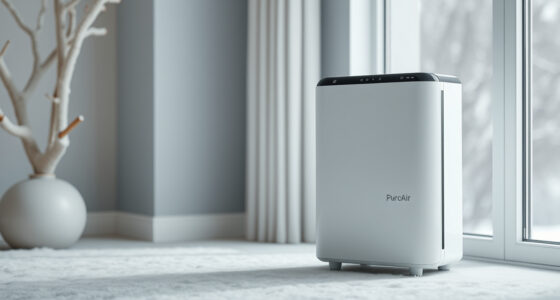
Whole room air purifiers are portable devices designed to reduce airborne particles across a room by drawing air through filters and circulating it back. Match the unit’s CADR and room coverage to your space, keep its airflow clear, and account for noise and filter costs; no purifier replaces ventilation, source control, or cleaning.
A purifier can have a filter rated to catch tiny particles and still leave a bedroom stuffy if its airflow is too low for the space. The box’s room-size claim is only useful when you know the cleaning rate behind it.
Whole room air purifiers draw room air through filters, then send it back out. Used in a suitably sized room, they can reduce airborne dust, pollen, smoke particles, and some other aerosols. They do not clean every surface or remove every gas.
This guide explains how to compare CADR and room coverage, what HEPA can and cannot do, and how placement, fan speed, noise, and replacement filters affect everyday use. That matters whether you want less airborne pollen in a bedroom or a practical way to reduce smoke particles while keeping windows closed.
Compare CADR and room coverage with your room’s floor area and ceiling height; check the air changes per hour behind the coverage claim.
A HEPA filter’s 99.97% rating applies to specified 0.3-micron particle test conditions, not to all pollution throughout a room.
Keep the intake and outlet clear, and choose a fan setting that balances cleaning speed with noise.
Activated carbon may reduce some odors and gases, but the amount of carbon and its replacement schedule affect results.
Treat filter upkeep, energy use, and ozone emissions as part of the buying decision; keep ventilation and cleaning in your routine.
What a whole room air purifier can actually clean
A whole room air purifier is a portable device designed to reduce airborne particles across a room by pulling air through filters and circulating the cleaned air back. It does not clean every cubic inch at once; it needs time and enough airflow to cycle room air. Think of it like stirring a pot: a steady swirl mixes the contents, while a blocked spoon barely moves them. This is why a strong filter rating alone does not guarantee a noticeable room-wide result: the fan must move enough air, and the air in the room must circulate past the intake.
A particle filter can catch dust, pollen, smoke particles, and some other aerosols that pass through it. A true HEPA filter is designed to capture at least 99.97% of 0.3-micron particles under specified test conditions [1]. That percentage applies to the filter under those conditions, not to all pollutants throughout your home. Gaps, weak airflow, and poor fit can reduce real-world results. In practice, the filter’s efficiency and the volume of air passing through it work together: a very efficient filter on a low fan setting may clean the room more slowly than a less restrictive setup moving more air.
For example, if wildfire smoke drifts into a closed bedroom, a properly sized purifier may lower airborne smoke particles while it runs. It will not remove smoke residue from the curtains or stop new smoke from entering through leaks. You still need to address the source where possible and clean surfaces where particles settle. The distinction matters because a lower particle count in the air does not mean the room is free of contamination, especially if smoke keeps entering or settled particles are stirred back up.
Particle filtration has firm limits. Standard HEPA filters do not remove carbon monoxide, and they do not solve every indoor pollution source. Activated carbon can help with some odors and gases, but results depend on the type and amount of carbon and how often you replace it. A musty smell from a damp wall calls for fixing the moisture, not just masking the air with a fan and filter. A purifier is most useful when its target is clear: particle filtration for airborne particles, source repair or ventilation for problems the filter cannot capture.
Products Worth Considering

Blueair Blue Pure 211i Max Air Purifier for Large Rooms

Blueair Blue Pure 511i Max Air Purifier

LEVOIT Vital Pet Smart Air Purifier
As an affiliate, we earn on qualifying purchases.
Choose a size by checking CADR and air changes
Choose a purifier by comparing its Clean Air Delivery Rate (CADR) and room coverage with your room’s size and ceiling height. CADR estimates how quickly a unit removes smoke, dust, and pollen; higher ratings generally mean faster particle cleaning. A manufacturer’s coverage number is easier to interpret when you also know the air changes per hour assumed for that rating. These measures answer related but different questions: CADR describes the volume of cleaned air delivered over time, while coverage translates that output into a suggested room size under particular assumptions.
Room coverage claims can use different assumptions, so two products with the same listed floor area may not clean at the same rate. More air changes per hour usually mean faster particle reduction. A large living room with a high ceiling needs more airflow than a small bedroom with the same floor area. Ceiling height matters because the purifier is treating a volume of air, not just the floor beneath it; an open-plan room may also exchange air with adjacent spaces, increasing the effective area it must serve.
| What to compare | What it tells you | Practical example |
|---|---|---|
| CADR | Estimated cleaning speed for common particle types | A higher smoke CADR can be useful when smoke particles are the main concern. |
| Room coverage | Manufacturer’s suggested room size under stated assumptions | Check whether a rating fits your actual bedroom, not a smaller test space. |
| Air changes per hour | How often the unit can cycle the room’s air at a given setting | A lower fan speed may deliver fewer changes than the headline rating implies. |
Suppose you are choosing a unit for a living room where the family spends most evenings. Compare ratings for the area and ceiling height, then check the fan setting used to achieve the stated performance. If the unit only meets the needed airflow on a loud high setting, that tradeoff matters just as much as the number on the carton. You may prefer a larger-capacity model run more quietly, but that can raise the purchase price and filter costs. A smaller unit may be cheaper and easier to place, yet become impractical if its effective setting is too noisy for daily use.
Product claims and standards change. Check current independent test results and the details behind any certification before comparing models. A sensor, app, or filter-life display may make a purifier easier to use, but none of those features proves that it cleans your room quickly. Prioritize verified airflow for your room, then treat convenience features as secondary factors that may help you keep the device running consistently.
Use HEPA for particles, and carbon for some odors
A HEPA purifier can capture virus-containing particles that pass through the filter, but it does not sterilize a room or remove all transmission risk. Airflow, how long the purifier runs, room conditions, source control, and ventilation all affect exposure. The useful promise is narrower: filtration can remove some particles from the air that reaches the device. This means the device may lower the amount of airborne material over time, while people close to a source can still be exposed before those particles travel to the purifier.
Imagine a family member with a cold spending the afternoon in a shared room. A purifier with suitable airflow can help reduce some airborne particles over time, but it cannot guarantee that others will not be exposed. Opening windows when conditions allow, avoiding close contact, and following relevant health guidance address other parts of the problem. A purifier’s benefit also depends on run time: switching it on only after an exposure has occurred cannot undo that exposure, though continued filtration can reduce particles that remain suspended.
Particle filters also differ from gas filters. A standard HEPA filter is made for particles, while activated carbon may reduce certain odors or gases. A thin carbon layer may have limited capacity, so a persistent cooking odor or chemical smell can outlast it. Check the amount of carbon and the replacement guidance rather than relying on a label that simply says “odor control.” Carbon works by adsorbing some compounds onto its surface; once available sites are used, performance can fall even if the purifier still moves air normally.
For allergies, pollen, dust, or wildfire smoke, a well-sized particle-filtering unit may reduce particles floating in the room. It will not pull pollen off a rug or keep outdoor pollution from coming inside. Washing bedding, damp-dusting, vacuuming with suitable filtration, and reducing the source can complement the purifier. If the air smells like damp plaster, investigate moisture; a purifier cannot repair a leak or prevent mold growth. Think of filtration as one layer: it can address what is airborne, while cleaning and repairs address what has settled or continues to enter.
Place the purifier where air can move freely
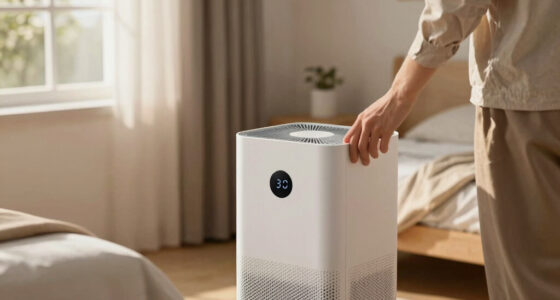
Place a purifier where its intake and outlet can move air freely, and follow the spacing guidance in its manual. A machine pressed into a corner behind a curtain may run all night while moving far less room air than expected. Clear airflow gives the fan room to draw in and return air across the space. If the outlet immediately feeds air back into the intake, the unit can repeatedly clean the same small pocket while distant parts of the room mix more slowly.
Try this quick placement check when you bring a unit home:
- Choose the room you use most. A bedroom where you spend eight hours a night may be a better first choice than a hallway that everyone passes through.
- Read the manual’s clearance guidance. Keep the inlet and outlet away from walls, furniture, and hanging fabric.
- Check the actual path of the air. Make sure a sofa, bed skirt, or stack of boxes does not block the grille.
- Run the unit on a useful setting. If particles rise during cooking or cleaning, a higher setting can circulate air faster while the source is active.
For instance, if the purifier sits beside a bookcase and blows directly into it, the air may loop around that corner instead of mixing well across the room. Moving it into a more open spot can improve circulation without buying a larger unit. Avoid placing it where people might trip over the cord, and keep it away from water or heat sources as directed by the manufacturer. Placement is a practical way to protect the performance you already paid for: a correctly sized machine cannot deliver its rated room benefit if its intake is starved of air.
Purifiers are portable, so you can move one between rooms, but one unit only cleans the space it can reach effectively. Moving it from a smoky living room to a bedroom changes where its benefit goes. If both rooms need treatment at the same time, a single portable device cannot provide full airflow to both. Prioritize the room with the greatest need or where people spend the most time, and avoid assuming that open doors make one unit equivalent to dedicated airflow in several rooms.
Balance cleaner air with fan noise and running costs
A purifier cleans faster when it moves more air, but higher fan speeds usually create more noise and use more energy. Compare noise and energy use at the settings you expect to run, rather than judging a unit by its quietest mode. That lowest setting may feel gentle in a nursery but deliver too little airflow for a larger room. The everyday tradeoff is adherence: a loud unit that gets turned off may provide less cleaning over a full day than a quieter model that runs steadily at a useful rate.
Picture a bedroom at bedtime: a soft hum might blend into the room, while a strong fan roar can keep you awake. You might run the unit on high for an hour after vacuuming, then lower it overnight. That routine gives you a chance to trade speed for comfort, though a lower setting also means slower cleaning. If the overnight setting is very low, consider running it at a higher speed before bed so it has more time to reduce airborne particles before you sleep.
Upkeep adds to the purchase price. Filters need periodic replacement, and washable prefilters need cleaning according to the manual. A filter packed with dust can reduce airflow, much like lint blocking a dryer vent. Consider replacement-filter availability and cost before you buy; a low-cost unit can become expensive if its filters are hard to find or unusually costly. The total cost depends on how often you run the purifier, how quickly the filters load with particles, and whether the model uses multiple replacement layers.
Filter indicators are reminders, not direct measurements of filter performance. Heavy use or smoky, dusty conditions may shorten filter life, so follow the manufacturer’s schedule while paying attention to the unit’s condition and airflow. A sensor or automatic mode can make operation easier, but a sensor may cover only certain pollutants, and its automatic setting may keep the fan low when faster cleaning would help. Check what the sensor measures and whether you can set the fan manually. Convenience is useful when it encourages consistent use, but it should not obscure the underlying tradeoff between airflow, noise, and maintenance.
Keep purifier safety and expectations grounded
Choose a purifier that does not intentionally produce ozone for use in an occupied room, and look for independent emissions testing where available. Some ionizers and other air-cleaning technologies may produce ozone, which can irritate the lungs. A feature name alone does not tell you whether a device emits ozone; check the product’s documentation and test details. This matters because a device intended to improve air quality should not add an irritant that undermines that goal.
For example, if you are buying a unit for a child’s room, compare filter-based models and check whether any ionizer can be switched off. Follow the manufacturer’s placement and electrical instructions, keep cords in good condition, and do not cover ventilation grilles. These simple steps support safe use while keeping the airflow unobstructed. A switchable feature can offer flexibility, but confirm that the purifier still provides the needed filtration when that feature is off.
A purifier works best as one part of a broader approach. Ventilation can bring in outdoor air when conditions are suitable, and source control can reduce pollution before it spreads. Cleaning also matters because particles settle on shelves, floors, and bedding. If you cook with a smoky pan, use an exhaust fan when available, then let the purifier handle airborne particles that remain. Each measure addresses a different path: ventilation dilutes or replaces indoor air, source control limits what enters it, and filtration removes some particles that remain suspended.
A purifier complements ventilation and cleaning; it does not replace them. It also cannot remove carbon monoxide with a standard HEPA filter, so use proper carbon monoxide alarms and address any suspected source immediately.
If you cannot identify a gas odor, smoke source, or breathing concern, do not count on a purifier alone to solve it. A filter can reduce some airborne particles, but it cannot make every indoor air problem safe or harmless. Matching the response to the problem is essential: particle filtration is not a substitute for investigating a possible gas leak, removing a pollution source, or seeking help for serious symptoms.
Frequently Asked Questions
Will a purifier clean an entire room?
It can reduce airborne particles across a room when it has enough airflow for the space and runs long enough. Cleaning is not instant or perfectly uniform, and particles that settle on surfaces remain until you clean them.
How do I choose the right purifier size?
Compare CADR and the stated room coverage with your room’s floor area and ceiling height. Check the air changes per hour assumed for that coverage, since a room-size number by itself does not show how quickly the device cleans.
Does a HEPA purifier remove viruses?
HEPA filtration can capture virus-containing particles that pass through the filter. It does not sterilize a room or eliminate every transmission risk; airflow, operation time, room conditions, ventilation, and source control also matter.
Can a purifier help with allergies or wildfire smoke?
A well-sized particle-filtering purifier may reduce airborne pollen, dust, or smoke particles while it runs. It will not remove particles already settled on furniture or stop new pollution from entering, so pair it with cleaning and source control.
Will a HEPA purifier remove odors and gases?
Standard HEPA filters capture particles, not gases such as carbon monoxide. Activated carbon can reduce some odors and gases, but its performance depends on the pollutant, the amount of carbon, and timely replacement.
Where should I put a whole room air purifier?
Set it where air can circulate freely, with the intake and outlet clear of walls, furniture, and curtains. Follow the manual’s spacing guidance and consider the room where you spend the most time.
How often should I replace the filter?
Follow the manufacturer’s replacement schedule, adjusting for heavy use or smoky and dusty conditions. A filter indicator is a reminder rather than a direct measurement of how well the filter performs.
Can an air purifier replace ventilation or cleaning?
No. A purifier can complement ventilation and source control, while cleaning removes particles that have settled on surfaces. Standard HEPA filtration also does not address every gas or indoor pollution source.
Conclusion
Choose a purifier that can move enough air for your room, then give it clear space and run it at a setting you can live with. Check filter costs and safety details before buying, and keep cleaning and ventilation in the mix.
The best purifier is the one that quietly keeps air moving where you spend your time—not a machine boxed behind a chair, humming into the wall.