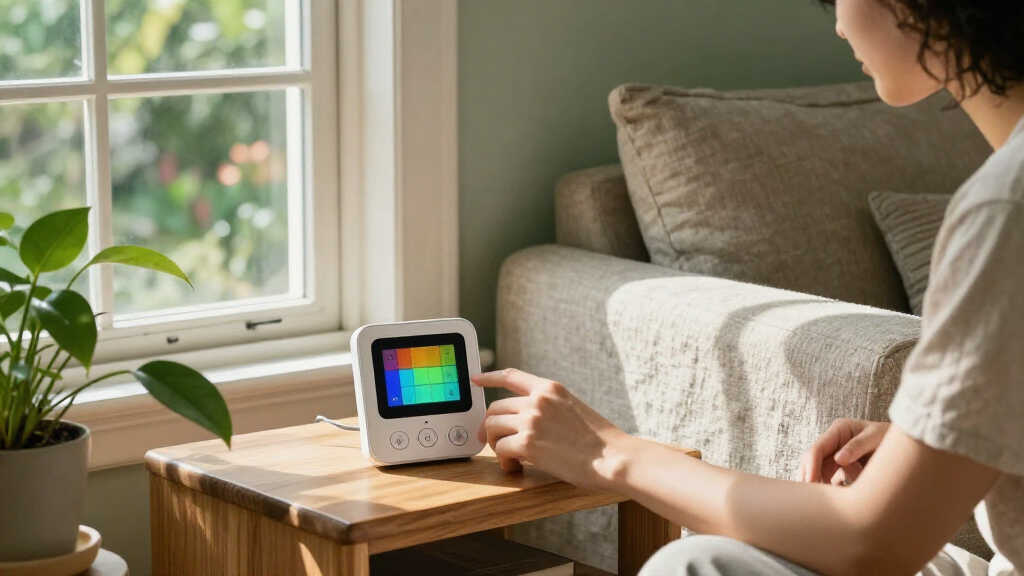

The best smart air quality monitor for most homes is the AprilAire ZAWTHCPV, a 5-in-1 Wi-Fi option that balances several indoor readings with connected monitoring. The Airthings View Plus stands out for buyers who want radon tracking and battery-powered placement, while the Amazon Smart Air Quality Monitor suits Alexa households seeking a simple setup. The main tradeoff is deciding which pollutants matter: a broad sensor list is not the same as measuring every hazard, and specialist radon or carbon monoxide detection can call for a dedicated device. App support, smart-home compatibility, display style, and power source also separate these models. Read on for the full breakdown and a guide to choosing the right monitor for your rooms and priorities.

Get home appliances delivered free with Prime
- Fast, free delivery on millions of items
- Prime Video, Amazon Music and more included
- Member-only deals all year
Complete the kit


Key Takeaways
- Sensor fit matters more than the biggest number of readings: this lineup includes broad indoor monitors, CO₂-focused devices, radon specialists, and a carbon monoxide alarm with air-quality features.
- The AprilAire ZAWTHCPV is the most balanced general-purpose pick: its 5-in-1 scope makes it a stronger all-rounder than models centered on a single pollutant.
- Airthings separates specialist monitoring from everyday air checks: View Plus and Wave Plus focus on radon alongside other readings, while battery power on View Plus can give more placement flexibility.
- Large displays and connected ecosystems serve different habits: Lecoolife emphasizes an at-a-glance screen, while Amazon and GoveeLife options make app and smart-home integration a bigger part of the experience.
- Some devices solve a specific safety or room-monitoring need: Kidde adds carbon monoxide detection, and Amazon‘s two-pack can cover more than one room, but neither format replaces checking which pollutants each sensor actually measures.
| AprilAire ZAWTHCPV Smart 5-in-1 Wi-Fi Air Quality Monitor |  | Best for Actionable Home Monitoring | Brand: AprilAire | Model: ZAWTHCPV | Sensors: CO2, VOC/TVOC, PM2.5, humidity, temperature | VIEW LATEST PRICE | See Our Full Breakdown |
| BREATHE Airmonitor Plus Gen 2 Smart Indoor Air Quality Monitor |  | Best for Broad Pollutant Coverage | Brand: BREATHE | Model: BTL40001 | Sensors: NDIR CO2, laser PM1/PM2.5/PM10, TVOC, HCHO, temperature, humidity | VIEW LATEST PRICE | See Our Full Breakdown |
| Temtop M100 2nd Gen WiFi Air Quality Monitor |  | Best for Large Displays and Multi-Room Expansion | Brand: Temtop | Model: M100 2nd Gen | Sensors: PM2.5, PM10, CO2, TVOC, temperature, humidity | VIEW LATEST PRICE | See Our Full Breakdown |
| Temtop S1+ Smart Air Quality Monitor with Indoor Thermometer and Hygrometer |  | Best Compact Monitor for Long Battery Runtime | Brand: Temtop | Model: JP-S1+ | Sensors: PM2.5, AQI, temperature, humidity | VIEW LATEST PRICE | See Our Full Breakdown |
| Amazon Smart Air Quality Monitor, 2-Pack |  | Best for Alexa-Connected Homes | Brand: Amazon | Pack size: 2 monitors | Monitored factors: Temperature, humidity, carbon monoxide, PM2.5, VOCs | VIEW LATEST PRICE | See Our Full Breakdown |
| GoveeLife H5106 Smart Air Quality Monitor with LED Display |  | Best for Fast PM2.5 Updates | Model: H5106 | Measurements: PM2.5, temperature, humidity | PM2.5 accuracy: ±15 µg/m³ from 0 to 100 µg/m³; ±15% from 100 to 1000 µg/m³ | VIEW LATEST PRICE | See Our Full Breakdown |
| Lwyinp MT13S 10-in-1 Indoor Air Quality Monitor |  | Best for Broad On-Device Readings | Model: MT13S | Measurements: CO2, HCHO, TVOC, AQI, PM2.5, PM1.0, PM10, temperature, humidity | Display: Color screen | VIEW LATEST PRICE | See Our Full Breakdown |
| Lecoolife 16-in-1 Indoor Air Quality Monitor with 7-Inch Display |  | Best for a Large, Readable Display | Monitored measurements: CO₂, PM1.0, PM2.5, PM10, HCHO, TVOC, temperature, humidity, AQI, and more | Display: 7-inch screen with adjustable brightness | Alerts: Buzzer alerts with mute function | VIEW LATEST PRICE | See Our Full Breakdown |
| Temtop M10+ 6-in-1 CO2 Meter & Indoor Air Quality Monitor |  | Best for Battery-Powered Quiet Monitoring | Model: US-M10+ | Monitored parameters: CO2, PM2.5, TVOC, temperature, humidity, AQI | Display: E-ink | VIEW LATEST PRICE | See Our Full Breakdown |
| Kidde Smart Carbon Monoxide Detector with Indoor Air Quality Monitoring |  | Best for CO Safety with Added Air Readings | Model: COPDLQW | Monitors: Carbon monoxide, temperature, humidity, TVOCs | Power: 120V plug-in with two AA backup batteries | VIEW LATEST PRICE | See Our Full Breakdown |
| GoveeLife H5140 Smart CO₂ Air Quality Monitor |  | Best for CO₂ Tracking and Long-Term Trends | Model: H5140 | Sensor: SCD4x photoacoustic NDIR CO₂ sensor | Measurements: CO₂, temperature, and humidity | VIEW LATEST PRICE | See Our Full Breakdown |
| Airthings View Plus Battery-Powered Radon and Air Quality Monitor |  | Best for Broad, Cable-Free Monitoring | Model: 2960 | Measurements: Radon, PM2.5, CO₂, VOCs, humidity, temperature, and air pressure | Connectivity: Wi-Fi | VIEW LATEST PRICE | See Our Full Breakdown |
| Airthings Wave Plus Radon and Air Quality Monitor |  | Best for Battery-Powered Radon Monitoring | Model: 2930 | Measurements: Radon, CO₂, VOCs, humidity, temperature, and air pressure | Power: 2 AA batteries | VIEW LATEST PRICE | See Our Full Breakdown |
| SONOFF SAWF-07P Smart Indoor Air Quality Monitor with PM2.5, PM10, Temperature & Humidity Sensor |  | Best for Matter Smart-Home Integration | Model: SAWF-07P | Measurements: PM2.5, PM10, temperature, and humidity | Connectivity: 2.4GHz Wi-Fi and Matter | VIEW LATEST PRICE | See Our Full Breakdown |
| Amazon Smart Air Quality Monitor | | Best for Alexa Routines and Simple Setup | Measurements: Temperature, humidity, carbon monoxide, PM2.5, and VOCs | Dimensions: 65 × 65 × 45 mm | Weight: 120 g without cable or adapter | VIEW LATEST PRICE | See Our Full Breakdown |
| smart air quality monitor | Connectivity | Model |
|---|---|---|
| AprilAire ZAWTHCPV Smart 5-in- | Wi-Fi | ZAWTHCPV |
| BREATHE Airmonitor Plus Gen 2 | 2.4 GHz Wi-Fi | BTL40001 |
| Temtop M100 2nd Gen WiFi Air Q | 2.4 GHz Wi-Fi, LoRa | M100 2nd Gen |
| Temtop S1+ Smart Air Quality M | Bluetooth, app | JP-S1+ |
| Amazon Smart Air Quality Monit | Works with Alexa | — |
| GoveeLife H5106 Smart Air Qual | 2.4 GHz Wi-Fi and Bluetooth | H5106 |
| Lwyinp MT13S 10-in-1 Indoor Ai | Bluetooth | MT13S |
| Lecoolife 16-in-1 Indoor Air Q | — | — |
| Temtop M10+ 6-in-1 CO2 Meter & | Bluetooth | US-M10+ |
| Kidde Smart Carbon Monoxide De | 2.4 GHz Wi-Fi | COPDLQW |
| GoveeLife H5140 Smart CO₂ Air | App, Alexa, and Google Assistant | H5140 |
| Airthings View Plus Battery-Po | Wi-Fi | 2960 |
| Airthings Wave Plus Radon and | Bluetooth; Airthings app for iOS and Android | 2930 |
| SONOFF SAWF-07P Smart Indoor A | 2.4GHz Wi-Fi and Matter | SAWF-07P |
| Amazon Smart Air Quality Monit | 2.4 GHz Wi-Fi and Bluetooth LE 4.2 | — |
More Details on Our Top Picks
AprilAire ZAWTHCPV Smart 5-in-1 Wi-Fi Air Quality Monitor
The AprilAire ZAWTHCPV earns this spot by pairing five useful readings—PM2.5, VOCs, CO2, humidity, and temperature—with app alerts and practical guidance. Its color-coded display makes a quick room check simpler than studying detailed graphs, while the AprilAire Healthy Air App provides trends and suggestions for responding to readings. Compared with the BREATHE Airmonitor Plus Gen 2, it measures fewer pollutants and offers less historical data detail, but its straightforward display and EPA-aligned framing may suit households that want clear signals rather than a broad data dashboard. The tradeoff is a tied app experience: the monitor requires AprilAire’s app, and automated mitigation through a compatible thermostat involves an additional purchase. I’d choose it for guided day-to-day awareness, not for the widest sensor list.
Pros:- Tracks PM2.5, VOCs, CO2, humidity, and temperature in one device.
- Color-coded display provides a quick status check without opening the app.
- App offers real-time trends, notifications, and actionable guidance.
- Three-year warranty is longer than the BREATHE monitor’s stated two-year warranty.
Cons:- Requires the AprilAire Healthy Air App for its smart features.
- Automated mitigation requires a separately purchased compatible Wi-Fi thermostat.
Best for: Households that want clear air-quality status, phone alerts, and guidance across common indoor conditions.
Not ideal for: Buyers who want formaldehyde readings, portable battery operation, or automated HVAC control without adding compatible equipment.
- Brand:AprilAire
- Model:ZAWTHCPV
- Sensors:CO2, VOC/TVOC, PM2.5, humidity, temperature
- Connectivity:Wi-Fi
- App:AprilAire Healthy Air App
- Display options:Default, always on, always off
- Warranty:3 years
Our verdict“Choose the AprilAire if you want a clear five-metric overview with guided app alerts and do not need the broader pollutant coverage of the BREATHE Airmonitor Plus Gen 2.”
BREATHE Airmonitor Plus Gen 2 Smart Indoor Air Quality Monitor
For buyers who want more than a basic room snapshot, the BREATHE Airmonitor Plus Gen 2 stands out with eight readings, including PM1, PM2.5, PM10, and formaldehyde. Its NDIR CO2 and laser particle sensors give the readings a more specific technical basis than a simple air-quality score, while the app adds remote alerts, trend graphs, 90-day history, and CSV export. Compared with the AprilAire ZAWTHCPV, it covers more particle sizes and adds formaldehyde, making it a stronger fit for people who want to track patterns or export data. That breadth comes with a less convenient power setup: battery use lasts up to six hours, so portable checks are possible but continuous monitoring still calls for USB-C power. It also needs 2.4 GHz Wi-Fi and is not a replacement for smoke, CO, or gas alarms.
Pros:- Tracks eight factors, including PM1, PM2.5, PM10, TVOC, and formaldehyde.
- Uses NDIR CO2 and laser particle sensors.
- App supports remote alerts, graphs, 90-day history, and CSV export.
- USB-C power and battery operation allow short portable monitoring sessions.
Cons:- Battery lasts up to six hours, limiting unplugged monitoring.
- Requires a 2.4 GHz Wi-Fi network for app connectivity.
- Does not detect smoke, gas leaks, or carbon monoxide and cannot replace safety alarms.
Best for: Data-minded homeowners, renters, or RV users who want broad pollutant monitoring, app history, and exportable readings.
Not ideal for: People seeking a long-running battery monitor, a safety alarm, or a device that works without 2.4 GHz Wi-Fi.
- Brand:BREATHE
- Model:BTL40001
- Sensors:NDIR CO2, laser PM1/PM2.5/PM10, TVOC, HCHO, temperature, humidity
- Connectivity:2.4 GHz Wi-Fi
- Power:USB-C or battery
- Battery life:Up to 6 hours
- App features:Remote alerts, trend graphs, 90-day history, CSV export
- Warranty:2 years
Our verdict“Pick the BREATHE if broad sensor coverage and exportable history matter more than long battery life or a simple, at-a-glance experience.”
Temtop M100 2nd Gen WiFi Air Quality Monitor
The Temtop M100 2nd Gen is the display-focused choice here: its 7-inch HD touchscreen gives readings more room than the compact screen on the Temtop S1+, which can help when several measurements need to be visible at once. It monitors PM2.5, PM10, CO2, TVOC, temperature, and humidity, with data logging and customizable alarms for users who want more than a basic live reading. Wi-Fi supports app access, while LoRa extension capability offers a route to broader coverage across a home or workplace. That expansion is its main distinction from the BREATHE Airmonitor Plus Gen 2, which emphasizes pollutant breadth and downloadable history instead. The M100’s multi-room promise depends on add-on LoRa units, and its one-year limited warranty is shorter than the AprilAire’s. Its large display and battery also make it less discreet than a small room sensor.
Pros:- Large 7-inch HD touchscreen presents multiple readings clearly.
- Monitors PM2.5, PM10, CO2, TVOC, temperature, and humidity.
- Data logging and customizable alarms support ongoing monitoring.
- LoRa extension capability can support wider coverage with additional units.
Cons:- LoRa extension units are sold separately.
- One-year limited warranty is shorter than the AprilAire ZAWTHCPV’s three-year warranty.
- Large touchscreen design may be less suitable for discreet placement.
Best for: Homeowners, office managers, and lab users who want a large on-device display, logging, and the option to extend monitoring across rooms.
Not ideal for: Buyers who need a discreet monitor, built-in multi-room coverage without add-ons, or a longer stated warranty.
- Brand:Temtop
- Model:M100 2nd Gen
- Sensors:PM2.5, PM10, CO2, TVOC, temperature, humidity
- Screen:7-inch HD touchscreen
- Connectivity:2.4 GHz Wi-Fi, LoRa
- Battery:4000mAh; more than 8 hours
- Warranty:1-year limited
Our verdict“Choose the M100 if a large, information-rich display and expandable coverage matter more than compact size or an all-in-one multi-room setup.”
Temtop S1+ Smart Air Quality Monitor with Indoor Thermometer and Hygrometer
The Temtop S1+ takes a narrower, more portable approach than the M100 2nd Gen: it tracks PM2.5, AQI, temperature, and humidity rather than offering a broad set of pollutant measurements and a large touchscreen. Its strongest differentiator is the stated battery life of up to 60 days, which suits a monitor that needs to move between a nursery, office, or other rooms without frequent charging. Bluetooth app access and audible alerts add convenience, but they do not match the remote reach of Wi-Fi models such as the AprilAire ZAWTHCPV. That makes the S1+ a sensible pick for nearby checks and basic particle awareness, not for monitoring CO2, VOCs, or several particle sizes. Buyers should also expect Bluetooth range limits and a less extensive data feature set than the M100.
Pros:- Stated battery life of up to 60 days reduces charging frequency.
- Tracks PM2.5, AQI, temperature, and humidity in real time.
- Bluetooth app connection supports monitoring and OTA updates.
- Portable format suits moving the monitor between indoor spaces.
Cons:- Bluetooth range can limit remote access compared with Wi-Fi monitors.
- Does not measure CO2 or VOCs, unlike the AprilAire ZAWTHCPV and BREATHE Airmonitor Plus Gen 2.
- Its sensor set is narrower than the Temtop M100 2nd Gen.
Best for: People who want a portable PM2.5 and climate monitor for nearby rooms, especially where frequent charging would be inconvenient.
Not ideal for: Buyers who need CO2 or VOC readings, Wi-Fi-based remote access, or multi-room data logging and expansion.
- Brand:Temtop
- Model:JP-S1+
- Sensors:PM2.5, AQI, temperature, humidity
- Connectivity:Bluetooth, app
- Battery type:Built-in rechargeable
- Battery life:Up to 60 days
- Temperature accuracy:±0.5 °C
- Operating humidity:10–90%
Our verdict“Choose the S1+ for long-lasting portable checks of particles and room climate, but choose a broader Wi-Fi monitor if you need CO2 or VOC data.”
Amazon Smart Air Quality Monitor, 2-Pack
This two-monitor Alexa set makes the most sense for households that want air readings to feed into existing smart-home routines. Each unit tracks temperature, humidity, carbon monoxide, PM2.5, and VOCs; the Alexa app presents an air-quality score and can send alerts, while compatible devices can respond through Routines. Compared with the AprilAire ZAWTHCPV, the Amazon option includes CO sensing and a second monitor, but the AprilAire offers CO2 monitoring and an app experience built around air-quality guidance. The Amazon set’s value depends on an Alexa-centered setup: setup and detailed readings live in the Alexa app, and automated responses require compatible devices. It also provides less sensor detail than the BREATHE Airmonitor Plus Gen 2, which tracks multiple particle sizes and formaldehyde. Treat it as a smart-home monitor, not a substitute for dedicated safety alarms.
Pros:- Two monitors support air-quality checks in more than one room.
- Tracks temperature, humidity, carbon monoxide, PM2.5, and VOCs.
- Alexa app provides air-quality status and alerts.
- Routines can automate compatible air purifiers, dehumidifiers, and fans.
Cons:- Setup and detailed air-quality information require the Alexa app.
- Automations depend on compatible Alexa devices.
- Does not list CO2 monitoring or the formaldehyde and particle-size detail offered by the BREATHE Airmonitor Plus Gen 2.
Best for: Alexa households that want two room monitors and the option to trigger compatible fans, dehumidifiers, or air purifiers.
Not ideal for: People who do not use Alexa, need CO2 readings or detailed pollutant history, or expect this device to replace certified safety alarms.
- Brand:Amazon
- Pack size:2 monitors
- Monitored factors:Temperature, humidity, carbon monoxide, PM2.5, VOCs
- Connectivity:Works with Alexa
- Alerts:Phone notifications or announcements on Echo devices
- Automation:Alexa Routines for compatible devices
- Setup:Plug in and configure through the Alexa app
Our verdict“Choose this two-pack if Alexa routines and coverage in two rooms are your priorities; look to a more data-focused monitor for broader pollutant analysis.”
GoveeLife H5106 Smart Air Quality Monitor with LED Display
The GoveeLife H5106 is a focused choice for people who want quick readings on particulate matter alongside temperature and humidity. Its two-second updates can make changes easier to spot than on the Temtop M10+, whose data logging is described as hourly. Wi-Fi adds remote monitoring and two years of exportable data, while Bluetooth offers a local connection; linking compatible GoveeLife appliances can also make the readings more useful in a connected setup. The tradeoff is that this is not a broad gas monitor: unlike the Lwyinp MT13S, it does not list CO2, formaldehyde, or TVOC measurements. It also needs continuous USB-C power, so it is less flexible to place than a battery-powered monitor. Its PM2.5 accuracy figures are worth checking against your needs before treating readings as precise measurements.
Pros:- Measures PM2.5, temperature, and humidity in one compact unit
- Updates readings every two seconds
- Wi-Fi supports remote monitoring and export of up to two years of data
- Can link with compatible GoveeLife appliances
Cons:- No built-in battery, so placement depends on continuous USB-C power
- Does not measure CO2, formaldehyde, or TVOC
- Listed PM2.5 accuracy is ±15 µg/m³ from 0 to 100 µg/m³ and ±15% from 100 to 1000 µg/m³
Best for: GoveeLife users who want rapid PM2.5, temperature, and humidity readings, remote access, and exportable history near a USB power source.
Not ideal for: Buyers who need CO2 or gas readings, a battery-powered unit, or a monitor with tighter stated PM2.5 accuracy.
- Model:H5106
- Measurements:PM2.5, temperature, humidity
- PM2.5 accuracy:±15 µg/m³ from 0 to 100 µg/m³; ±15% from 100 to 1000 µg/m³
- Temperature and humidity accuracy:±0.54°F; ±3% RH
- Response time:2 seconds
- Connectivity:2.4 GHz Wi-Fi and Bluetooth
- Data history:13-day graphs; export data from the past 2 years
- Power:Wired USB Type-C; no built-in battery
- Dimensions and weight:5.31 × 1.57 × 2.47 inches; 5.44 ounces
Our verdict“Choose the H5106 for fast, connected PM2.5 tracking if you can keep it plugged in and do not need gas measurements.”
Lwyinp MT13S 10-in-1 Indoor Air Quality Monitor
The Lwyinp MT13S suits buyers who want to see several types of air readings on one portable color screen. Its listed measurements span CO2, HCHO, TVOC, PM1.0, PM2.5, and PM10, plus temperature, humidity, and AQI, giving it broader coverage than the GoveeLife H5106, which focuses on PM2.5 and basic room conditions. That range is useful when moving the monitor between rooms, an office, or a vehicle. The catch is that the product information does not provide measurement ranges or accuracy figures, making it harder to judge how much confidence to place in individual readings. Bluetooth is included, but the described phone connection is for time calibration rather than remote Wi-Fi monitoring. Compared with the Lecoolife 16-in-1, this is the more portable-screen approach, not the large-display option.
Pros:- Lists readings for CO2, HCHO, TVOC, PM1.0, PM2.5, and PM10
- Color screen shows readings on the device
- Portable design is suited to use in different indoor spaces and vehicles
- Includes sound and screen controls
Cons:- Product information does not specify measurement ranges or accuracy
- Bluetooth connection does not provide the Wi-Fi remote monitoring listed for the GoveeLife H5106
- Automatic time calibration requires a phone connection
Best for: People who want a portable monitor with a color screen and readings for multiple gases and particle sizes across rooms, offices, or vehicles.
Not ideal for: Buyers who need published sensor accuracy and ranges, remote Wi-Fi access, or detailed cloud-based history.
- Model:MT13S
- Measurements:CO2, HCHO, TVOC, AQI, PM2.5, PM1.0, PM10, temperature, humidity
- Display:Color screen
- Connectivity:Bluetooth
- Controls:Sound and screen controls
- Time calibration:Bluetooth phone connection
- Included items:Monitor, charging cable, user manual
- Color:Black
Our verdict“Pick the MT13S if broad on-screen readings and portability matter more to you than documented accuracy or remote access.”
Lecoolife 16-in-1 Indoor Air Quality Monitor with 7-Inch Display
The Lecoolife 16-in-1 is built around visibility: its 7-inch adjustable-brightness screen gives readings more room than the compact displays on the Lwyinp MT13S and Temtop M10+. It lists CO₂, multiple particle sizes, HCHO, TVOC, temperature, humidity, and AQI, making it a broad dashboard for a fixed room. Configurable buzzer alerts can call attention to changes, and the mute option helps keep those alerts from becoming disruptive. This is a less portable, more screen-centered choice, weighing 1.47 pounds with package dimensions provided in the product data. Calibration support is useful, but the listing warns that perfumes and strong odors may affect accuracy and that readings may need adjustment. Unlike the connected GoveeLife H5106, the supplied details do not list app access or Wi-Fi, so this is better for checking the display in person than monitoring from elsewhere.
Pros:- Large 7-inch screen with adjustable brightness
- Lists CO₂, PM1.0, PM2.5, PM10, HCHO, TVOC, temperature, humidity, and AQI
- Configurable buzzer alerts include a mute option
- Supports calibration and °F/°C settings
Cons:- Product information does not provide accuracy figures or measurement ranges
- Perfumes and strong odors may affect readings, and calibration may be needed
- No Wi-Fi or app connectivity is listed, unlike the GoveeLife H5106
Best for: Households that want a large, easy-to-read room display with broad air readings, adjustable brightness, and configurable audible alerts.
Not ideal for: Buyers who need a lightweight portable monitor, specified sensor accuracy, or app-based remote monitoring.
- Monitored measurements:CO₂, PM1.0, PM2.5, PM10, HCHO, TVOC, temperature, humidity, AQI, and more
- Display:7-inch screen with adjustable brightness
- Alerts:Buzzer alerts with mute function
- Settings:12/24-hour time; °F/°C temperature
- Calibration:Calibration support
- Package dimensions:7.91 × 5.71 × 2.91 inches
- Item weight:1.47 pounds
- Manufacturer:Shenzhen Langtao Technology Co., LTD
Our verdict“Choose the Lecoolife if you want a large, adjustable screen for room-level checks and can accept limited connectivity details.”
Temtop M10+ 6-in-1 CO2 Meter & Indoor Air Quality Monitor
The Temtop M10+ is the strongest fit here for people who want to place a monitor in a bedroom, nursery, or office without leaving it tethered to power. Its e-ink display and battery life of up to 60 days make it more placement-flexible than the wired GoveeLife H5106, while listed readings cover CO2, PM2.5, TVOCs, temperature, humidity, and AQI. Bluetooth connects it to the Temtop app for data logging and calibration, but does not provide the remote Wi-Fi access available on the GoveeLife. The product description also says logging is hourly rather than continuous, so it is better for tracking broad patterns than inspecting rapid changes. Quiet operation and muteable alarms suit sleep spaces, though buyers seeking the widest range of gases and particles may prefer the Lwyinp MT13S.
Pros:- Battery life is listed as up to 60 days
- E-ink display supports low-power operation
- Measures CO2, PM2.5, TVOC, temperature, humidity, and AQI
- Bluetooth app supports data logging and calibration
Cons:- Bluetooth updates require the phone to be within range
- Data logging is hourly rather than continuous
- Does not offer the Wi-Fi remote monitoring listed for the GoveeLife H5106
Best for: People monitoring bedrooms, nurseries, or offices who value quiet operation, long battery life, and core readings without Wi-Fi setup.
Not ideal for: Buyers who need remote monitoring away from the device, continuous real-time data logging, or a broad list of gas and particle measurements.
- Model:US-M10+
- Monitored parameters:CO2, PM2.5, TVOC, temperature, humidity, AQI
- Display:E-ink
- Battery life:Up to 60 days
- Connectivity:Bluetooth
- Data logging:Hourly intervals
- Enclosure materials:Metal, plastic
- Included items:M10+ device, charging cable, user manual
Our verdict“Choose the M10+ for quiet, battery-powered monitoring in a room where local Bluetooth access is enough.”
Kidde Smart Carbon Monoxide Detector with Indoor Air Quality Monitoring
The Kidde Smart Carbon Monoxide Detector earns a distinct place because its main job is CO protection, with temperature, humidity, and TVOC readings added for context. That makes it a different kind of choice from the Temtop M10+, which tracks CO2 and PM2.5 as part of a broader air-monitoring set but is not presented as a carbon monoxide alarm. Kidde pairs an 85 dB alarm and early low-level CO alerts with app notifications over 2.4 GHz Wi-Fi; AA backup batteries provide another layer during power outages. Alexa and Google Home support suit households already using those systems. The tradeoff is limited air-quality coverage: it does not list particulate matter or CO2 measurements. Some extended air-quality insights also require an optional subscription, though app alerts are described as available without one.
Pros:- Provides early alerts for low-level carbon monoxide
- Includes an 85 dB alarm and AA battery backup
- Sends real-time app alerts over 2.4 GHz Wi-Fi without a required subscription
- Supports Alexa and Google Home and monitors temperature, humidity, and TVOCs
Cons:- Does not list CO2 or particulate measurements, unlike the Temtop M10+
- Extended air-quality insights require an optional paid subscription
- Requires 2.4 GHz Wi-Fi for connected features
Best for: Households that want a connected carbon monoxide alarm with low-level alerts and a small set of additional indoor air readings.
Not ideal for: Buyers seeking a dedicated monitor for CO2, particulate matter, or broad pollutant tracking rather than a CO-focused safety device.
- Model:COPDLQW
- Monitors:Carbon monoxide, temperature, humidity, TVOCs
- Power:120V plug-in with two AA backup batteries
- Connectivity:2.4 GHz Wi-Fi
- Alarm:85 dB
- Smart home compatibility:Amazon Alexa and Google Home
- Warranty:10-year limited warranty
- Certifications:UL 2034, 5th Edition; ETL Listed
Our verdict“Choose Kidde when carbon monoxide alerts are your priority and added TVOC and room-condition readings are a useful extra.”
GoveeLife H5140 Smart CO₂ Air Quality Monitor
I’d pick the GoveeLife H5140 for households that want to track CO₂ changes and act on them, rather than monitor a broad range of pollutants. Its SCD4x photoacoustic NDIR sensor refreshes every five seconds, while the display shows CO₂, temperature, and humidity at a glance. Customizable buzzer, app, and email alerts can make rising CO₂ easier to catch, and up to two years of history with CSV export supports longer-term comparisons. Unlike the SONOFF SAWF-07P, which tracks PM2.5 and PM10 and offers Matter integration, this GoveeLife focuses on CO₂ and works with Alexa and Google Assistant. The tradeoff is continuous AC power and no direct air-purifier link to reduce CO₂; the clock also requires an app connection.
Pros:- Measures CO₂, temperature, and humidity on a clear display
- Refreshes readings every five seconds and offers configurable buzzer, app, and email alerts
- Stores up to two years of data and supports CSV export
- Supports Alexa and Google Assistant voice queries and smart home links
Cons:- Requires continuous AC power, limiting placement away from outlets
- Does not link to air purifiers to reduce CO₂
- Clock requires an app connection, and outdoor calibration may be needed
Best for: People who want frequent CO₂ readings, configurable alerts, and exportable history for home offices, bedrooms, or shared rooms
Not ideal for: Buyers seeking radon or particulate monitoring, battery-powered placement, or automatic CO₂ reduction through an air purifier
- Model:H5140
- Sensor:SCD4x photoacoustic NDIR CO₂ sensor
- Measurements:CO₂, temperature, and humidity
- CO₂ accuracy:±(40 ppm + 5%)
- Refresh rate:5 seconds
- Data history:Up to 2 years
- Connectivity:App, Alexa, and Google Assistant
- Power:AC power; Type-C cable included
Our verdict“Choose the H5140 if CO₂ trends and flexible alerts matter more to you than measuring particles or radon.”
Airthings View Plus Battery-Powered Radon and Air Quality Monitor
The Airthings View Plus earns its place for buyers who want a wide view of indoor conditions, especially radon, without tying the monitor to an outlet. It tracks seven measurements: radon, PM2.5, CO₂, VOCs, humidity, temperature, and air pressure. Its customizable eInk screen makes readings visible on the device, while the app adds trends and notifications. Compared with the Airthings Wave Plus, View Plus adds PM2.5 and a screen, so it offers more immediate information without relying on Bluetooth-only app access. The tradeoff is a more connected setup: an account and internet access are required, and readings are saved in the cloud. Buyers who want a simpler battery-powered radon monitor may prefer the Wave Plus; those who want broader coverage and on-device readings have a stronger case for View Plus.
Pros:- Tracks radon, PM2.5, CO₂, VOCs, humidity, temperature, and air pressure
- Battery power allows placement without a nearby outlet
- Customizable eInk screen displays readings on the device
- App provides trends and notifications and can connect with other Airthings monitors
Cons:- Requires an account, app, and internet access
- Readings are saved in the cloud
- The broad sensor set may be more than buyers need for basic room monitoring
Best for: Homeowners who want radon monitoring plus particles and gases, with flexible placement and readings visible on the unit
Not ideal for: People who avoid cloud-stored data, accounts, or internet-dependent monitoring, or who only need basic temperature and humidity readings
- Model:2960
- Measurements:Radon, PM2.5, CO₂, VOCs, humidity, temperature, and air pressure
- Connectivity:Wi-Fi
- Power:Battery-powered
- Display:Customizable eInk screen
- Operating temperature:4 to 40°C / 39 to 104°F
- Sensor type:Electrochemical
- Warranty:Optional extended warranty of up to five years; registration required within 30 days
Our verdict“Choose View Plus if you want broad, radon-inclusive monitoring with an on-device display and accept cloud-based app access.”
Airthings Wave Plus Radon and Air Quality Monitor
I’d choose the Airthings Wave Plus when radon is a priority and you want a battery-powered monitor without the View Plus’s Wi-Fi and cloud requirements. It measures six indoor air factors, including radon, CO₂, and VOCs, with color-coded readings on the device and more detail through the Airthings app or online dashboard. Its two AA batteries can last up to 16 months, making it easier to place in a room without running a cable. The compromise is connectivity: the Wave Plus uses Bluetooth to connect to the app, rather than the Airthings View Plus Wi-Fi approach, and its sensor needs a seven-day settling period. It also lacks View Plus’s PM2.5 measurement and customizable eInk screen, so I’d favor it for core radon and gas readings over broader particle monitoring.
Pros:- Tracks radon, CO₂, VOCs, humidity, temperature, and air pressure
- Color-coded readings provide a quick visual status on the device
- Runs on two AA batteries for flexible placement
- Battery life is up to 16 months
Cons:- Sensors need a seven-day settling period
- Uses Bluetooth to connect to the app rather than Wi-Fi
- Does not measure PM2.5, unlike the Airthings View Plus
Best for: Homeowners who want battery-powered radon, CO₂, and VOC monitoring with on-device visual status
Not ideal for: Buyers who need PM2.5 measurements, Wi-Fi-connected access, a screen with detailed readings, or useful readings immediately after setup
- Model:2930
- Measurements:Radon, CO₂, VOCs, humidity, temperature, and air pressure
- Power:2 AA batteries
- Battery life:Up to 16 months
- Connectivity:Bluetooth; Airthings app for iOS and Android
- Sensor settling period:7 days
- Included:2 AA batteries and Quick Start Guide
- Warranty:Optional 5-year extended warranty; registration required within 30 days
Our verdict“Choose the Wave Plus for long-running, battery-powered radon and gas monitoring if you can accept Bluetooth app access and a settling period.”
SONOFF SAWF-07P Smart Indoor Air Quality Monitor with PM2.5, PM10, Temperature & Humidity Sensor
The SONOFF SAWF-07P is the strongest fit here for buyers whose air monitor needs to work inside a mixed smart-home setup. Its Matter compatibility connects it with Apple Home, Alexa, Google Home, SmartThings, and Home Assistant, while the 3.73-inch display puts PM2.5, PM10, temperature, and humidity in view. Readings update every two seconds, a useful pace for watching changing particle levels. Compared with the Amazon Smart Air Quality Monitor, SONOFF measures PM10 and supports more platforms, while Amazon adds carbon monoxide and VOC monitoring within Alexa. SONOFF’s focus on particles comes with gaps: it does not list CO₂, VOC, or radon sensing, and it needs continuous power. I’d choose it for ecosystem flexibility and quick particulate updates, not as a broad gas monitor.
Pros:- Matter compatibility supports Apple Home, Alexa, Google Home, SmartThings, and Home Assistant
- Measures PM2.5, PM10, temperature, and humidity on one display
- Two-second response time provides frequent updates
- Supports historical data tracking and export
Cons:- Requires continuous power for real-time monitoring
- Does not list radon, CO₂, VOC, or carbon monoxide measurements
- The listed PM2.5 accuracy varies across concentration ranges
Best for: Smart-home owners using Matter-compatible platforms who want visible PM2.5 and PM10 readings with temperature and humidity
Not ideal for: Buyers who need radon, CO₂, VOC, or carbon monoxide readings, or want battery-powered placement
- Model:SAWF-07P
- Measurements:PM2.5, PM10, temperature, and humidity
- Connectivity:2.4GHz Wi-Fi and Matter
- Display:3.73 inches
- PM2.5 accuracy:±10μg/m³ (0–100μg/m³); ±10% (100–500μg/m³)
- Temperature accuracy:±1°F
- Humidity accuracy:±3%RH
- Response time:2 seconds
- Dimensions and weight:2.36 x 4.72 x 5.51 inches; 0.22 kg
Our verdict“Choose the SAWF-07P if platform flexibility and fast particulate readings matter more than monitoring gases or radon.”
Amazon Smart Air Quality Monitor
The Amazon Smart Air Quality Monitor makes the most sense for Alexa households that want alerts to lead directly to actions. It tracks temperature, humidity, carbon monoxide, PM2.5, and VOCs, then reports conditions through a color-coded LED and an air-quality score in the Alexa app. When readings worsen, it can send notifications, announce the change on Echo devices, or trigger compatible fans, dehumidifiers, and air purifiers through Alexa Routines. That makes it more action-oriented than the GoveeLife H5140, which focuses on CO₂ and does not link to air purifiers to reduce CO₂. The tradeoff is that Amazon’s smart features depend on Alexa and compatible devices, and this model is for indoor use only. It also lacks the radon coverage of the Airthings monitors and does not list CO₂ sensing.
Pros:- Tracks temperature, humidity, carbon monoxide, PM2.5, and VOCs
- Provides a color-coded LED and air-quality score in the Alexa app
- Can send phone notifications and Echo announcements when readings worsen
- Alexa Routines can trigger compatible air purifiers, fans, and dehumidifiers
Cons:- Smart features require Alexa and compatible devices
- Does not list CO₂ or radon measurements
- Designed for indoor use only
Best for: Alexa users who want air-quality alerts to trigger compatible fans, dehumidifiers, or air purifiers automatically
Not ideal for: People outside the Alexa ecosystem, or buyers who need CO₂ or radon readings and a monitor that works without compatible smart devices
- Measurements:Temperature, humidity, carbon monoxide, PM2.5, and VOCs
- Dimensions:65 × 65 × 45 mm
- Weight:120 g without cable or adapter
- Connectivity:2.4 GHz Wi-Fi and Bluetooth LE 4.2
- Power:5 W adapter; 100–240 V AC input, 5 V/1 A output
- Compatibility:Echo devices and Alexa app version 2021.16 or later
- Operating conditions:0–40 °C; 0–80% humidity
- Included:Monitor, Micro-USB cable, power adapter, and Quick Start Guide
- Warranty:One-year limited manufacturer warranty
Our verdict“Choose this monitor if Alexa Routines are central to your home and you want alerts to trigger compatible air-quality devices.”

How We Picked
I compared these 15 smart air quality monitors by the readings they are designed to track, including particulate matter, CO₂, radon, temperature, and humidity. I gave more weight to a useful sensor mix for the stated use than to a long feature count; a monitor cannot be treated as a complete home-safety system simply because it lists many readings. I also considered how each product presents information, whether it offers app or smart-home connectivity, and how power and placement may affect day-to-day use.
The ranking favors versatility, practical usability, and clear buyer fit. Broad monitors lead for people seeking an everyday overview, while products with narrower strengths rank higher for those specific needs rather than as universal picks. I also accounted for tradeoffs such as display size, battery-powered placement, multi-room coverage, and the limits of relying on a single device. Because the lineup spans distinct jobs, the best choice depends on the pollutants and rooms a buyer wants to monitor.
Factors to Consider When Choosing Smart Air Quality Monitors
Before choosing a monitor, decide what you want its readings to help you do. A device that tracks everyday conditions may not cover a specific concern such as radon or carbon monoxide, and extra sensors do not automatically make it the best fit. These factors help match the monitor to your home, habits, and need for alerts.
Match the sensors to the problem you want to track
Start with the reason you are shopping: smoke or dust concerns point toward particulate readings, while ventilation questions make CO₂ tracking more relevant. Radon monitoring is a separate need, and a general indoor air monitor may not measure it. Temperature and humidity add useful context for comfort and interpreting room conditions, but they do not stand in for pollutant sensors. Avoid choosing by a large “in-1” count alone; check which readings are included and whether the device covers your main concern. If you have several concerns, prioritize the one that needs the clearest ongoing information and add a dedicated device where needed.
Know the limits of readings and alerts
A monitor provides information about the air near its sensors; it does not automatically remove pollutants or prove that every part of a home is safe. Different devices may measure different substances, so two monitors can show very different kinds of information without one being a complete substitute for the other. Check whether alerts are available through the display, an app, or a smart-home platform, and whether those alerts fit how you respond to changes. A high reading is a prompt to investigate, not a diagnosis of the source. For safety hazards such as carbon monoxide, use a properly rated alarm as directed rather than relying on a general-purpose air monitor.
Plan for placement and room coverage
One monitor reports conditions around its own location, so placement affects how useful its readings are. A device in a bedroom may not describe a kitchen or basement, and a central hallway may miss changes in a frequently used room. Think about where you spend time and where the concern occurs before deciding whether one unit is enough. A two-pack can make room-to-room comparisons easier, while a single unit may be more sensible when you want to focus on one space first. Keep the monitor away from spots that could distort readings, such as right beside an open window or a strong air source, and follow the maker’s placement guidance.
Choose a display and app you will actually check
A large on-device screen helps people who want a quick glance without opening a phone; an app-centered monitor may suit someone who prefers remote checks and alerts. These are different ways to use the same kind of information, not a simple quality ladder. Before buying, confirm that the app and connectivity options work with your phone and smart-home setup. Consider whether other household members need to read the display, since a tiny screen or phone-only interface can make shared use less convenient. Do not assume a device supports a particular voice assistant or automation feature just because it is described as smart.
Factor power and maintenance into the location
Plug-in monitors need a suitable outlet, which can limit where they sit; battery-powered designs allow more flexible placement but require attention to battery life and replacement. A wall outlet may be convenient in a main living area but awkward in a hallway or a room where cords are unwelcome. Find out whether a product needs calibration, sensor replacement, cleaning, or other upkeep, and check the maker’s instructions for its specific model. A device that is easy to place but hard to maintain can become less useful over time. Pick the power arrangement that suits the room you want to monitor, not just the one that looks easiest at checkout.
Pay for coverage that changes your decision
More sensors, a larger display, multiple units, and specialist monitoring each add value only when they answer a real question for your household. If you mainly want a quick view of a single room, a focused monitor may be simpler than a broad unit with readings you will not use. A radon-focused model makes more sense when radon is your priority; it is not automatically a better general monitor. For a home with distinct rooms or concerns, wider coverage or a multi-room setup may justify choosing a more feature-rich option. Compare what each sensor measures and how you will act on its information before paying for extra capabilities.
Frequently Asked Questions
Can one smart air quality monitor measure every indoor hazard I care about?
No single model in this lineup should be assumed to cover every pollutant or safety hazard. General monitors may focus on particulate matter, CO₂, temperature, and humidity, while Airthings models include radon monitoring and Kidde pairs air-quality monitoring with carbon monoxide detection. Check the exact sensor list for the concern you want to address. For hazards that require a certified alarm, keep the appropriate dedicated safety device even if a monitor also shows related readings.
Should I buy a radon monitor or a general air quality monitor first?
Choose based on the question you need answered rather than the product category name. If ongoing radon information is your priority, a radon-focused option such as the Airthings View Plus or Wave Plus is a closer fit than a general particulate or CO₂ monitor. If you mainly want an everyday overview of room conditions, a broader monitor may cover more of your immediate needs. These functions are not interchangeable, so households with both concerns may need separate devices.
Is a CO₂ monitor enough to tell whether my indoor air is healthy?
No. CO₂ readings can help you understand one aspect of indoor conditions, but they do not report every pollutant, such as particulate matter or radon. A CO₂-focused device may be a practical choice if ventilation is your main concern, but it should not be treated as a full air-quality assessment. Look at the sensor list and decide whether you also need particulate, radon, or other monitoring for your home.
Does a smart air quality monitor replace a carbon monoxide alarm?
Do not assume that it does. This roundup includes the Kidde Smart Carbon Monoxide Detector, which combines CO alarm functionality with indoor air-quality monitoring, but general-purpose air monitors are not substitutes for a properly rated carbon monoxide alarm. Check the device’s stated safety certifications and follow the manufacturer’s installation and maintenance directions. If you already have required alarms, keep them in place unless the relevant safety guidance says otherwise.
Is a two-pack better than one higher-feature monitor?
It depends on whether room coverage or sensor breadth matters more to you. A two-pack such as the Amazon Smart Air Quality Monitor, 2-Pack can help compare conditions in separate spaces, while one more feature-rich unit may track a broader set of readings in a single location. Multiple units do not automatically add new sensor types, and one unit cannot represent every room. Choose the two-pack when comparing or monitoring rooms is the priority; choose broader sensor coverage when you need more kinds of readings in one place.
Conclusion
Best overall: I would start with the AprilAire ZAWTHCPV for a balanced everyday overview. Best value: the Amazon Smart Air Quality Monitor, 2-Pack makes the most sense when covering separate rooms matters more than having the broadest sensor mix. Best premium: I’d point buyers seeking battery-powered placement and radon monitoring toward the Airthings View Plus. Best for beginners: the Amazon Smart Air Quality Monitor is a straightforward fit for Alexa households that want a simple connected entry point. For specific needs, choose the Airthings Wave Plus for radon monitoring, Kidde for carbon monoxide alarm functionality alongside air-quality features, or a CO₂-focused Temtop or GoveeLife model when ventilation is the main question. My final advice is to choose by the readings and rooms you need, not by the longest feature list.