TL;DR

Get home appliances delivered free with Prime
- Fast, free delivery on millions of items
- Prime Video, Amazon Music and more included
- Member-only deals all year
A Family Handyman report says smart devices left in a home may remain linked to a previous owner’s account, and there is no reliable visual way to tell. Experts recommend checking ownership and shared users, resetting devices, changing codes and Wi-Fi credentials, and replacing equipment that cannot be reset or no longer receives security updates.
A Family Handyman report warns that cameras, smart locks, thermostats and other connected devices left in a home may still be linked to a previous owner’s account, allowing continued remote access. The report cites cybersecurity specialists who recommend assuming inherited devices may still be accessible until their ownership, user lists and settings have been checked and reset.
There is no reliable way to identify lingering access by looking at a device, according to Kurtis Baron, an offensive security specialist at Echo Secure, who advises new owners to assume the former owner may retain access. Nathan Connell, founder and editor of Future Technology, recommends trying to register devices through their manufacturer’s apps. An app indicating that a device is already registered may mean it remains connected to another account. Some companies, including Ring, provide an ownership-transfer process.
Homeowners should inspect each device’s shared-user list for accounts they do not recognize. Connell said that a former owner or someone previously given permission could retain remote access to functions such as door locks, garage doors or camera feeds. Baron recommends factory-resetting inherited cameras, alarms, locks, thermostats and connected appliances, then setting them up under the new owner’s account using the manufacturer’s instructions.
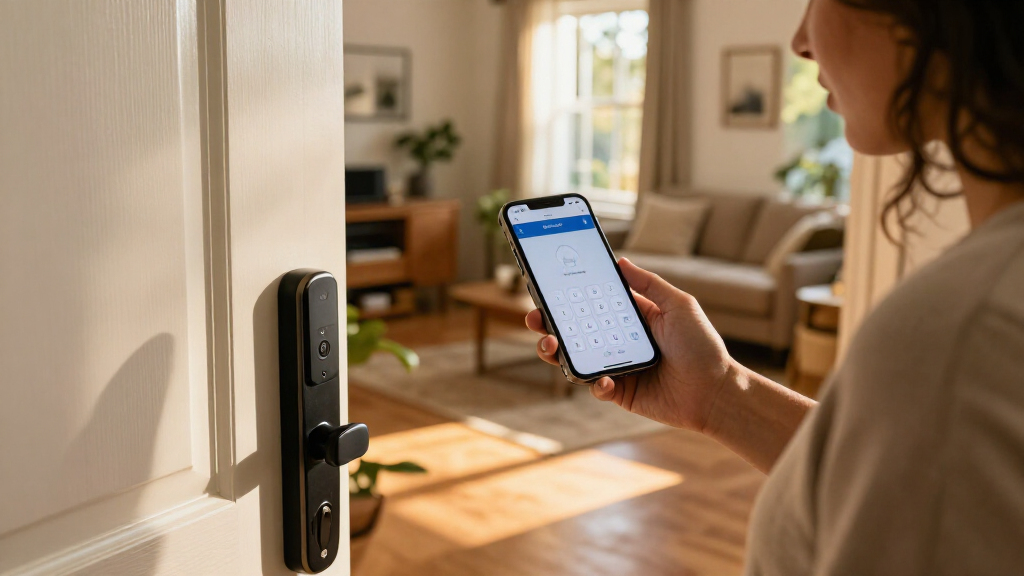
Resetting a device may not remove every route of access. Connell says old keypad PINs and alarm-panel codes can remain active, so owners should delete existing codes, create new ones and revoke guest access. The report also recommends securing the home router: use a new Wi-Fi password, check the list of connected devices and consider replacing the previous owner’s router. The Federal Trade Commission says connected devices typically use the router to access the internet and notes that some smart products, including light bulbs and security systems, can be difficult to identify.
Close Old Routes Into Your Home
Unchanged accounts, entry codes and network settings can leave a new household relying on devices that someone else may still control. The consequences vary by product: a camera could expose a live feed, while a lock or garage controller could affect physical access. These are risks identified by the report’s sources; the material does not establish that any particular former owner has used access improperly.
Checking every device matters because connected equipment may not be obvious to a new resident. A thermostat, bulb or alarm component could be connected even if it is not immediately recognized as a smart device. Reviewing ownership and permissions helps homeowners establish their own accounts and decide which equipment they can safely continue using.
As an affiliate, we earn on qualifying purchases.
Account Transfers After a Sale
The report focuses on a gap that can arise when a property changes hands: physical possession of a device does not necessarily transfer its online account or revoke permissions previously granted to other users. Some manufacturers support formal transfers, while other devices may require the former owner to remove them from an account before the new owner can register them. Google’s Nest guidance, cited by the report, says some devices require removal by the previous owner.
For buyers, Connell recommends requesting a list of connected equipment included in the sale, along with manuals, hub details and transfer instructions. The FTC advises sellers to leave instructions explaining smart features that may be hard to identify. Baron suggests adding a closing-paperwork requirement that the seller remove their accounts and access. Those steps can help clarify which devices are included and what setup remains before the buyer relies on them.
“It is much safer to just assume the old owner can still access them.”
— Kurtis Baron, offensive security specialist at Echo Secure
As an affiliate, we earn on qualifying purchases.
Device Access Is Hard to See
The report does not establish whether previous owners actually retain access to any specific device or how often that occurs. A device’s appearance alone cannot confirm whether it remains registered to an old account, and setup procedures vary by manufacturer and model. An app’s ownership message or an unfamiliar shared user can be a warning sign, but homeowners may need manufacturer support to resolve account-transfer issues.
It is also not clear that every inherited device can be fully reset or transferred. Baron recommends replacing devices that cannot be completely factory-reset or that no longer receive security updates. Until access is resolved, the report advises homeowners not to rely on inherited smart locks or security cameras for protection.
As an affiliate, we earn on qualifying purchases.
Reset, Transfer or Replace
Homeowners can begin by making an inventory of connected devices, checking each manufacturer’s app and reviewing shared users. They should follow the relevant instructions to remove old accounts, factory-reset equipment and register it under their own account. They can then change keypad and alarm codes, revoke guest permissions, update Wi-Fi credentials and review the router’s connected-device list.
If a device remains tied to another account, the owner can consult the manufacturer’s transfer process or support team. Devices that cannot be fully reset, or that no longer receive security updates, may need replacement. For future sales, buyers can request manuals and a connected-device list before closing, while sellers can confirm in writing that accounts and previously authorized access have been removed.
As an affiliate, we earn on qualifying purchases.
Key Questions
How can I tell whether a previous owner still has access?
There is no dependable visual check. Try registering the device through its manufacturer’s app and review its shared-user list for accounts you do not recognize. Contact the manufacturer if ownership remains unclear.
Which smart devices should I check after moving?
Check inherited cameras, alarms, locks, thermostats and connected appliances, as well as less obvious products such as smart bulbs. The report recommends resetting connected devices included with the home.
Is a factory reset enough to secure a smart lock?
Not necessarily. Delete old PIN codes, create new ones and remove guest access, then follow the manufacturer’s reset and account-registration instructions.
Should I replace inherited smart devices?
Not automatically. Some manufacturers support ownership transfers. The report’s cybersecurity source recommends replacing devices that cannot be fully reset or no longer receive security updates.
What should I ask the seller before closing?
Request a list of connected devices, their manuals, hub information and transfer instructions. Ask the seller to remove their accounts and revoke access for other authorized users.
Source: rss
Fall yard work Picks
leaf blowers
As an affiliate, we earn on qualifying purchases.