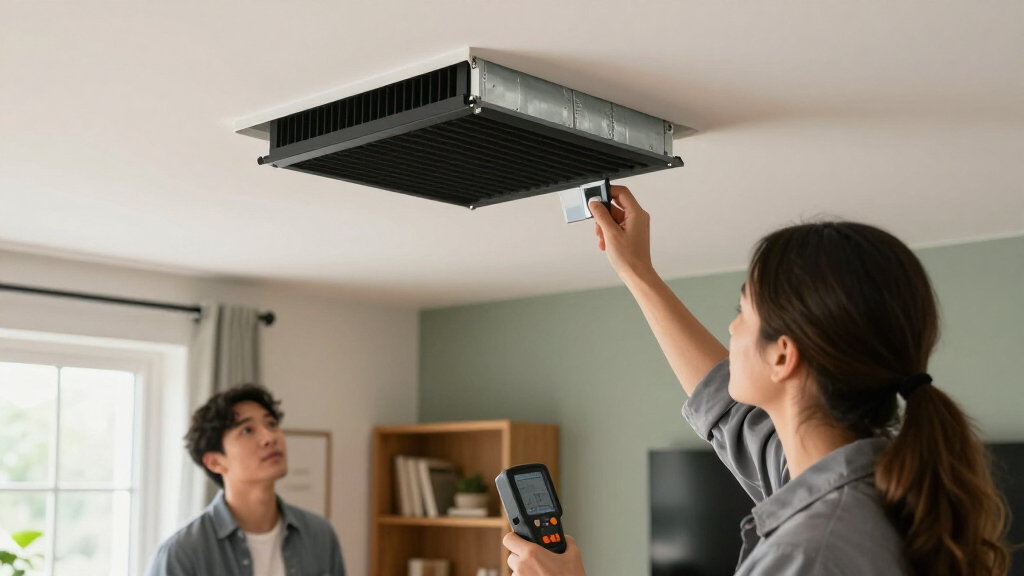

For most HRV systems, I’d start with the Fantech LD 6: its purpose-built six-inch silencer makes it the strongest all-around fit for a matching duct run. The Repa Market 6-inch silencer stands out for its two-inch mineral wool insulation, while the Suncourt DuctMuffler DM110 suits buyers working with a much larger ten-inch duct. The main tradeoff is matching silencer diameter and available space to the actual duct layout; a larger or more heavily insulated unit is not automatically a better fit. Smaller foam inserts and compact silencers can suit tighter runs, but their format and dimensions matter. Read on for the full comparison and guidance on choosing for your HRV installation.

Get home appliances delivered free with Prime
- Fast, free delivery on millions of items
- Prime Video, Amazon Music and more included
- Member-only deals all year
Complete the kit


Key Takeaways
- Fantech LD 6 is my best overall pick for a six-inch HRV run because it is a dedicated duct silencer; its size makes it unsuitable for smaller ducts.
- Repa Market is the insulation-led alternative, with two-inch mineral wool, but buyers should check its fit and installation space against their specific layout.
- Suncourt DM110 is the large-duct specialist in this lineup, with a ten-inch connection that rules it out for typical smaller duct runs.
- FANTECH’s four-inch silencer and TroyStudio’s four-inch foam insert serve different needs: a duct-mounted silencer versus an insert-style noise reducer.
- Diameter, length, and placement separate useful choices from mismatches; the broadest-looking product is not necessarily right for a compact HRV duct route.
| neverest ESD 6.3″ Adjustable Inline Duct Silencer |  | Best Overall | Duct Diameter: 6.3 inches (160mm) | Segments: 5 removable | Sound Attenuation Levels: 44, 39, 35, 30 dB(A) | VIEW LATEST PRICE | See Our Full Breakdown |
| Repa Market 6″ Round Inline Duct Silencer with 2″ Mineral Wool Insulation |  | Best Value | Duct Size: 6 inch (installation diameter 5.87″) | Body Length: 11.81 inches | Body Diameter: 9.84 inches | VIEW LATEST PRICE | See Our Full Breakdown |
| FANTECH 4-Inch Duct Silencer |  | Best for Small-Duct Branch Lines | Brand: FANTECH | Item: Duct silencer | Duct Diameter: 4 inches | VIEW LATEST PRICE | See Our Full Breakdown |
| Fresh Speed 5-Inch Round Air Vent Duct Foam Silencer |  | Best Budget Pick | Diameter: 5 inches (125 mm) | Material: Foam | Shape: Round | VIEW LATEST PRICE | See Our Full Breakdown |
| Fantech LD 6 Silencer, 6-Inch Duct |  | Best Premium Pick | Brand: Fantech | Duct Size: 6 inches | Insulation Thickness: 2 inches | VIEW LATEST PRICE | See Our Full Breakdown |
| TroyStudio 4-Inch Air Vent Noise Reducer Foam Insert |  | Best Adjustable Insert for 4-Inch Ducts | Duct size: 4 inches | Outer diameter: 4.05 inches | Length: 4 inches | VIEW LATEST PRICE | See Our Full Breakdown |
| Suncourt DuctMuffler 10-Inch In-Line Duct Noise Muffler (DM110) |  | Best for Measured Attenuation in 10-Inch Ducts | Model: DM110 | Duct diameter: 10 inches | Material: 26-gauge galvanized steel | VIEW LATEST PRICE | See Our Full Breakdown |
| AC Infinity 8-Inch Inline Duct Fan Silencer |  | Best for 8-Inch Inline Fan Noise | Duct opening diameter: 8 inches | Length: 14.75 inches | Weight: 6.00 pounds | VIEW LATEST PRICE | See Our Full Breakdown |
| HRV duct sound attenuator | Material |
|---|---|
| neverest ESD 6.3" Adjustable I | — |
| Repa Market 6" Round Inline Du | Galvanized steel |
| FANTECH 4-Inch Duct Silencer | Galvanized steel |
| Fresh Speed 5-Inch Round Air V | Foam |
| Fantech LD 6 Silencer | Galvanized steel |
| TroyStudio 4-Inch Air Vent Noi | High-density polyurethane foam |
| Suncourt DuctMuffler 10-Inch I | 26-gauge galvanized steel |
| AC Infinity 8-Inch Inline Duct | — |
More Details on Our Top Picks
neverest ESD 6.3″ Adjustable Inline Duct Silencer
Modularity is what sets this silencer apart from every fixed-design option in this roundup. The five removable segments let you tune the balance between noise reduction (44, 39, 35, or 30 dB(A)) and airflow — something the Fantech LD 6 simply cannot do, since its attenuation is fixed at whatever the factory builds in. That flexibility matters most in HRV installs where duct runs differ room to room and a one-size silencer either chokes airflow or underperforms acoustically. Compared with the Repa Market 6-inch, the neverest trades a slightly more involved setup for far more control. The tradeoff: adjustment is manual, so it suits set-and-forget systems rather than setups that change frequently, and at least one segment must come out before air flows at all, capping maximum attenuation in practice.
Pros:- Five removable segments allow a custom airflow-to-noise balance
- Four staggered attenuation levels up to 44 dB(A)
- Corrosion-resistant galvanized steel holds up in humid ventilation environments
- Backed by decades of HVAC engineering experience
Cons:- Adjusting requires manually removing segments, which is impractical in finished ductwork
- At least one segment must be removed for any airflow, so the top 44 dB rating is never fully usable
Best for: HRV and ventilation installers who want to fine-tune the airflow-versus-noise balance for a specific duct run
Not ideal for: Buyers who want maximum attenuation at all times — the design forces you to remove at least one segment to get any airflow
- Duct Diameter:6.3 inches (160mm)
- Segments:5 removable
- Sound Attenuation Levels:44, 39, 35, 30 dB(A)
- Housing Material:Galvanized steel
- Acoustic Material:Perforated sound-absorbing foam
- Brand:neverest
Our verdict“The most versatile pick here — ideal if you want a silencer you can tune to your system instead of accepting a fixed compromise.”
Repa Market 6″ Round Inline Duct Silencer with 2″ Mineral Wool Insulation
This option delivers the core ingredients of an effective silencer — 2-inch mineral wool insulation inside a galvanized steel shell — at a working-person’s price point. Mineral wool is a denser absorber than the foam used in the Fresh Speed 5-inch, which typically translates to better low-frequency fan rumble control, the kind of noise that bothers people most in bedrooms and living rooms. The rolled double flanges make installation genuinely quick compared with the plain-ends-on-some competitors. Against the similarly insulated Fantech LD 6, the Repa Market unit is more compact at 11.81 inches of body length, fitting tighter mechanical spaces. The honest caveat: it’s a newer entry with a limited track record, and there are no published dB attenuation figures, so you’re buying on materials and design rather than verified numbers.
Pros:- 2-inch mineral wool lining absorbs fan noise and vibration effectively
- Corrosion-resistant galvanized steel body handles humidity and heat
- Rolled double flanges speed up installation on intake or exhaust sides
- Compact 11.81-inch body fits tight mechanical closets
Cons:- No published attenuation figures to compare against rivals
- Relatively new product with a short market track record
Best for: Budget-conscious HRV owners who want dense mineral-wool attenuation without paying premium-brand prices
Not ideal for: Buyers who need guaranteed performance data before cutting into their ductwork
- Duct Size:6 inch (installation diameter 5.87″)
- Body Length:11.81 inches
- Body Diameter:9.84 inches
- Flange Depth:1.77 inches
- Insulation:1.97″ mineral wool lining
- Material:Galvanized steel
Our verdict“A smart buy if you trust dense materials over brand names and want solid mineral-wool damping for less.”
FANTECH 4-Inch Duct Silencer
Most silencers in this roundup target 6-inch-plus main ducts, which leaves 4-inch branch runs to bedrooms and quiet rooms poorly served. That’s the gap this Fantech fills: a purpose-built silencer for 4-inch ductwork from an established ventilation brand, with the same galvanized steel construction as its larger sibling, the Fantech LD 6. Compared with the TroyStudio foam insert, which also targets small ducts, this is a proper steel inline unit rather than a passive foam plug, so it handles continuous HRV airflow and condensation better over years of service. The limitations are real, though: there’s no insulation thickness or attenuation data published, and it’s a single-size, single-purpose part with zero adjustability — nothing like the segment-tuning of the neverest ESD.
Pros:- Purpose-built for 4-inch ductwork, a size most silencers skip
- Galvanized steel construction suitable for continuous ventilation duty
- Backed by an established ventilation brand with a full product ecosystem
- Simple inline design with no settings to manage
Cons:- No published attenuation or insulation specifications
- Single fixed size with no adjustability
Best for: Homeowners quieting a 4-inch HRV branch line running to a bedroom or office
Not ideal for: Anyone with 6-inch or larger main ducting — this unit only fits 4-inch runs and offers no size flexibility
- Brand:FANTECH
- Item:Duct silencer
- Duct Diameter:4 inches
- Material:Galvanized steel
- Color:Silver
Our verdict“The go-to choice when your noise problem lives on a 4-inch branch line rather than the main duct.”
Fresh Speed 5-Inch Round Air Vent Duct Foam Silencer
For renters or anyone testing whether a duct silencer will even solve their noise problem, this foam unit is the cheapest way to experiment. It drops into an existing 5-inch round duct without tools or cutting, which is dramatically simpler than installing the steel Repa Market or Fantech LD 6 units — both of which assume you’re comfortable breaking into the duct run. The size range (3 to 6.3 inches) covers most residential HRV trunks too. But be clear about what you’re buying: foam cannot match mineral wool or steel-baffle designs for low-frequency fan rumble, and the listing provides no measured attenuation figures or airflow-resistance data. Think of it as a mild noise dampener, not a true silencer — if your fan is genuinely loud, the neverest ESD class of product is the honest answer.
Pros:- Tool-free installation into existing round duct systems
- Available in five sizes from 3 to 6.3 inches
- Foam maintains damping properties through normal temperature and airflow changes
- Very low cost of entry for experimentation
Cons:- No published noise-reduction measurements
- No data on airflow restriction, which can hurt HRV ventilation rates
- Foam construction is far weaker than steel-and-mineral-wool silencers for low-frequency noise
Best for: Renters and DIYers wanting a low-cost, tool-free first attempt at taming mild duct noise
Not ideal for: Anyone fighting serious fan rumble or low-frequency noise — foam construction can’t absorb it the way mineral wool can
- Diameter:5 inches (125 mm)
- Material:Foam
- Shape:Round
- Function:Noise reduction and airflow regulation
- Available Sizes:3, 4, 5, 6, and 6.3 inches
Our verdict“A cheap, low-commitment first step for mild noise — but don’t expect steel-silencer performance from a foam plug.”
Fantech LD 6 Silencer, 6-Inch Duct
This is the set-and-forget choice for a permanent 6-inch HRV main duct. The LD 6 pairs a galvanized steel shell with 2 inches of insulation — the same spec sheet as the Repa Market, but with Fantech’s long-standing reputation in residential ventilation behind it and assembly in the USA. Compared with the neverest ESD, you give up all adjustability: what you install is what you get. In exchange you get a fit-and-forget unit with no segments to fiddle with and a design that ventilation contractors actually specify, which matters if an installer is doing the work or you plan to sell the home. The drawbacks are straightforward — it’s the pricier route to the same insulation thickness, and its fixed 6-inch size means branch lines still need a separate solution like the FANTECH 4-inch.
Pros:- 2-inch-thick insulation for serious broadband fan-noise reduction
- Durable galvanized steel construction built for decades of service
- Made in the USA with a long-established ventilation brand behind it
- Widely recognized by HVAC contractors, simplifying professional installs
Cons:- Higher cost than comparable insulated silencers like the Repa Market
- Fixed 6-inch size and fixed attenuation — no tuning like the neverest ESD
Best for: Homeowners doing a permanent, contractor-grade HRV installation on a 6-inch main duct
Not ideal for: Tinkerers and budget buyers — it costs more than the Repa Market for the same insulation spec, with no adjustability to justify the premium
- Brand:Fantech
- Duct Size:6 inches
- Insulation Thickness:2 inches
- Material:Galvanized steel
- Country of Manufacture:USA
Our verdict“Pay the premium for proven, contractor-trusted attenuation on a 6-inch main duct — skip it if budget or flexibility is the priority.”
TroyStudio 4-Inch Air Vent Noise Reducer Foam Insert
The TroyStudio suits buyers who want to tune a standard 4-inch duct without adding a long metal muffler. Its perforated polyurethane core and nine removable strips let you trade some sound absorption for more open airflow. That adjustability gives it a different role from the fixed-bore Suncourt DuctMuffler DM110, which offers lab-reported reductions but fits 10-inch ducts and needs to be cut into the run. Compared with the Fresh Speed foam silencer, TroyStudio’s removable sections make airflow adjustment an explicit part of the design. The tradeoff is limited evidence: the supplied product data gives no measured noise reduction or airflow figures, so I would not choose it when quantified performance is a requirement. Its push-fit format also keeps it suited to compatible 4-inch sections.
Pros:- Nine removable strips allow adjustment of airflow and sound absorption
- Perforated polyurethane core is designed to absorb and diffuse duct noise
- Push-fit installation fits compatible standard 4-inch duct sections
- Can be placed near fans, vents, elbows, or duct junctions
Cons:- No measured noise reduction or airflow figures are provided
- Compatibility is limited to 4-inch ducts
- Foam insert may not suit buyers seeking a rigid, metal in-line silencer
Best for: DIYers with a 4-inch ventilation run who want to adjust the balance between sound absorption and airflow.
Not ideal for: Buyers who need measured acoustic or airflow performance, or who have ducts larger than 4 inches.
- Duct size:4 inches
- Outer diameter:4.05 inches
- Length:4 inches
- Material:High-density polyurethane foam
- Foam density:25 kg/m³
- Structure:Acoustically perforated
- Adjustable strips:9 removable foam strips
- Installation:Push-fit into duct
Our verdict“Choose TroyStudio if you have a 4-inch duct and value adjustable foam attenuation over quantified performance data.”
Suncourt DuctMuffler 10-Inch In-Line Duct Noise Muffler (DM110)
The Suncourt DM110 stands apart for buyers who want frequency-specific noise figures rather than a general reduction claim. Lab data reports attenuation rising from 11.2 dBA at 250 Hz to 25.5 dBA at 1000 Hz, giving a clearer basis for judging its fit than the supplied specs for TroyStudio’s foam insert. Its open-bore passive design needs no power and is intended to preserve airflow, while the UL listing and stated NFPA standards add useful installation credentials. Compared with the AC Infinity 8-inch silencer, this is the larger-duct option with reported band measurements; AC Infinity instead describes fan-noise reduction up to 50%. The DM110’s tradeoffs are its 10-inch-only fit and the work of cutting into an existing duct run.
Pros:- Lab-reported noise reduction at 250, 500, and 1000 Hz
- Open-bore design is intended to maintain airflow
- Passive operation requires no electricity or routine maintenance
- UL Listed as a Class 1 air duct liner and meets NFPA 90A and 90B
Cons:- Fits 10-inch round ducts only
- Installation requires cutting and inserting into an existing duct run
- Reported attenuation figures cover specified frequencies, not every noise condition
Best for: HVAC owners with a 10-inch round duct who want lab-reported attenuation figures and a passive, listed component.
Not ideal for: People with smaller ducts or those who need a quick push-fit insert without cutting into an existing duct run.
- Model:DM110
- Duct diameter:10 inches
- Material:26-gauge galvanized steel
- Noise reduction:11.2 dBA at 250 Hz; 18.8 dBA at 500 Hz; 25.5 dBA at 1000 Hz
- Listing:UL Listed, Class 1 Air Duct
- Standards:Meets NFPA 90A and 90B
- Installation:Inline in a 10-inch round duct
- Power:None required
- Country of manufacture:USA
Our verdict“Pick the DM110 for a 10-inch duct when measured frequency data and passive operation matter more than simple installation.”
AC Infinity 8-Inch Inline Duct Fan Silencer
For an 8-inch inline fan, AC Infinity offers a purpose-built silencer with egg-crate neoprene lining inside a galvanized steel body. The product data claims noise reduction of up to 50%, which gives buyers a direct headline figure, though it does not provide frequency-specific results like the Suncourt DM110. Its dual aluminum flanges connect it to compatible ducting, and the 14.75-inch length makes it a substantial in-line component rather than a short insert like TroyStudio’s 4-inch foam piece. That length and its six-pound weight call for enough room and support in the run. I would shortlist it for fan noise in grow tents, bathrooms, or similar setups, but skip it if the duct opening differs from 8 inches or if you need a stated test breakdown.
Pros:- Designed for inline fans across grow-tent, bathroom, and HVAC applications
- Egg-crate neoprene lining is paired with a claimed reduction of up to 50%
- Galvanized steel body resists corrosion and extreme temperatures
- Dual aluminum flanges support connection to compatible ducting
Cons:- Limited to an 8-inch duct opening
- Six-pound weight may require suitable support in the duct run
- The up-to-50% claim is not accompanied by frequency-specific figures in the supplied data
Best for: Grow-tent and bathroom ventilation users with an 8-inch inline fan seeking a lined metal silencer.
Not ideal for: Owners of ducts other than 8 inches or buyers who need frequency-by-frequency attenuation data.
- Duct opening diameter:8 inches
- Length:14.75 inches
- Weight:6.00 pounds
- Lining material:Egg-crate-pattern neoprene foam
- Body material:Galvanized steel
- Noise reduction:Up to 50%
- Flanges:Dual aluminum
Our verdict“Choose AC Infinity for a compatible 8-inch fan setup when a lined metal silencer fits your space and the broad reduction claim meets your needs.”

How We Picked
I compared the eight listed products for their fit to HRV duct sound control, looking at stated duct diameter, silencing format, insulation details, and the likely space and installation demands each format brings. I gave more weight to purpose-built inline duct silencers with clearly stated sizes, since a unit that fits the duct run is a more practical starting point than a foam insert chosen without checking how it installs.
The Fantech LD 6 ranks first as a dedicated six-inch option, while the Repa Market model follows for its specified mineral wool insulation. The remaining picks fill narrower roles by diameter, format, or duct scale: the Suncourt is for ten-inch runs, and the TroyStudio is an insert rather than a full inline silencer. Product descriptions alone do not establish measured acoustic reduction, airflow impact, or compatibility with every HRV, so I treat those as items buyers should confirm for their own system.
Factors to Consider When Choosing Best HRV Duct Sound Attenuators
Before choosing a silencer, I’d treat it as one part of an airflow system. The right purchase depends on where noise travels, what duct size is installed, and how much straight run is available.
Match the duct diameter before comparing insulation
Measure the duct itself and confirm whether the listed product size refers to its connection diameter. A mismatch can require adapters, add joints, or make a clean installation impossible. Those extra transitions also take space and can complicate sealing. The lineup spans four, five, six, eight, and ten-inch formats, so diameter is a meaningful first filter. If your duct is between common sizes, check the system manual and the silencer maker’s fit details before improvising. Choose a correctly sized unit over a larger model with a feature list that looks more impressive.
Plan placement around the noise source
Noise may come from the HRV fan, duct vibration, or sound carried between rooms, and each can call for a different placement. A silencer installed near a fan can address noise traveling down the connected duct, while room-to-room sound may call for treatment on the branch serving that space. Look at the whole route, including bends, access panels, and nearby fittings, before choosing a unit. A long silencer may not fit where a short insert can, but an insert’s compact format does not make it a universal substitute. Avoid placing a unit where it blocks service access or forces a sharp bend right at its connection.
Protect airflow and system balance
HRV systems are balanced ventilation systems, so added components should not be treated as acoustically useful at any airflow cost. Ask the manufacturer for pressure-drop data at the airflow your system uses; a product description that only names insulation may not answer that question. If that data is unavailable, discuss the proposed component with the installer before purchase. After installation, a changed duct path or added resistance can call for airflow checks and rebalance. This matters especially when adding a silencer to a system that already has long runs or several fittings. Quieter operation is only a good result if ventilation delivery remains appropriate.
Compare construction and insulation details
Insulation type and thickness can help distinguish products, but they do not by themselves prove how much sound a silencer will reduce in a real system. The Repa Market listing specifies two-inch mineral wool, while other options use foam or describe a silencer without the same insulation detail. Check that the construction suits the location and that the product’s materials and installation method match the manufacturer’s guidance. Ask for sound-attenuation data by frequency if a particular hum or fan tone is the problem. That evidence is more useful than relying on broad claims about quiet operation. A product with less published detail may still fit, but it gives you less basis for predicting the result.
Check space, access, and installation method
Measure the space available along the duct, including room to connect and secure the silencer. Inline units take up a section of the run, while an insert-style product may fit a different configuration and may not offer the same installation approach. Check connection type, total length, and any clearance guidance before ordering. Also consider whether the section will remain reachable for inspection or replacement. Tight installations can turn a straightforward component into extra ductwork changes. If the layout is concealed, verify dimensions before closing walls or ceilings.
Spend more only for a specific system need
A premium or larger-format component makes sense when its dimensions and documented performance solve a known problem in your system. Paying for a ten-inch silencer offers little value on a four-inch run, and extra insulation is not a substitute for a correct duct connection. First identify whether the complaint is fan noise, vibration, or sound traveling through a branch. Then compare compatible options using acoustic and airflow data, installation length, and material details. If you are unsure, an HVAC professional can help locate the noise and check whether duct layout changes are part of the solution. This prevents buying a component that is well made but poorly matched to the source.
Frequently Asked Questions
Can I use a 6-inch HRV silencer on a 6-inch duct without checking anything else?
The matching diameter is a useful start, but it does not confirm full compatibility. Check the silencer’s connection style, overall length, clearance needs, and any direction or installation guidance. Ask for pressure-drop information at your system’s operating airflow, since a matching connection can still affect delivered airflow. Confirm that the component is approved for the intended ventilation use. If you cannot find these details, ask the manufacturer or installer before fitting it.
Should I put the attenuator beside the HRV or near the noisy room?
Placement depends on where the sound is traveling and which duct path carries it. Fan noise that propagates from the HRV through a duct may call for treatment near the unit or along that path, while noise between rooms may be more localized to a branch. Check the equipment manual and the attenuator’s installation instructions for placement limits. Avoid a location that creates awkward bends or blocks access to serviceable equipment. An HVAC professional can help identify the transmission path when the source is unclear.
Will adding a duct silencer reduce my HRV airflow?
It can add resistance, but the effect depends on the product and the system’s airflow. Product diameter alone does not reveal pressure drop, so look for performance data at a relevant flow rate. A changed duct route, reducers, or extra fittings can also affect the result. After installation, have airflow checked and the system rebalanced if needed. Do not assume acoustic treatment leaves ventilation performance unchanged.
Is mineral wool a better choice than a foam insert for HRV noise?
The materials and formats address different installation needs, and the material name alone does not establish which will work better. Mineral wool is specified in the Repa Market unit, while the TroyStudio listing describes a foam insert; their dimensions and mounting approach also differ. Compare documented attenuation, airflow resistance, and compatibility with your duct before choosing. Consider whether you need a full inline component or a compact insert for the particular section. If sound reduction is the deciding factor, request test data for the noise frequencies you hear.
How do I choose between a 4-inch silencer and an 8- or 10-inch model?
Start with the installed duct diameter and the HRV manufacturer’s ducting requirements, then rule out sizes that do not match. The four-inch FANTECH and TroyStudio options serve smaller-format applications, while the AC Infinity and Suncourt listings cover larger diameters. A larger silencer cannot simply replace a smaller one without compatible ductwork and enough room. Adapters may add fittings and complexity, so check whether they are permitted and how they affect airflow. If the existing duct size is unclear, measure it or have an installer identify it before buying.
Conclusion
For a compatible six-inch run, I recommend the Fantech LD 6 as the best overall because it is a dedicated inline duct silencer. The Repa Market model is my value-minded pick for buyers who want specified two-inch mineral wool, provided its dimensions and system fit check out. For a larger duct installation, the Suncourt DM110 is the specialist choice; its ten-inch size makes it a poor match for smaller runs. Beginners should begin with exact duct measurements and compare the straightforward four-inch FANTECH silencer with the TroyStudio insert only after confirming their installation style. Choose the AC Infinity eight-inch option for an eight-inch duct setup, and consider the Fresh Speed five-inch or neverest adjustable model when their stated dimensions suit the existing route. My final recommendation is to confirm fit, pressure-drop information, and placement before ordering any attenuator.