Editorial update log
November 13, 2026:
Deal update: RoundupForge price history now flags ASIN B0BN2MGV5H on amazon.com as below its typical tracked range. RF labels the deal as near_low.
Exact pricing remains intentionally gated through the live Grimfaste price module in the article.
Wi-Fi connectivity turns an air purifier from a set-and-forget appliance into something you can monitor, schedule, and automate from anywhere, and the gap between a good smart purifier and a frustrating one usually comes down to app quality, sensor accuracy, and replacement filter costs. My top pick is the Blueair Blue Pure 311i Max, which pairs one of the most polished apps in the category with genuine large-room coverage and quiet operation. The DREO Smart Air Purifier with PM2.5 monitor stands out for real-time air quality feedback at a mid-range price, while the budget-friendly SerneLife HEPA model makes app control accessible if you don’t need to clean 2,000 square feet. The main tradeoff to weigh: connected features and large coverage claims often come with higher long-term filter costs, and some apps are far more reliable than others. Keep reading for the full breakdown of all twelve models.

Get home appliances delivered free with Prime
- Fast, free delivery on millions of items
- Prime Video, Amazon Music and more included
- Member-only deals all year
Complete the kit



Key Takeaways
- Blueair‘s 311i Max took the top spot because its app and air quality reporting felt noticeably more refined than budget competitors, not because of raw specs alone.
- Several budget models (DAYETTE, EECOSELF, the generic 3000 sq ft unit) claim near-identical coverage and features, so the deciding factors became filter cost, warranty support, and app polish rather than the spec sheet.
- Coverage numbers are calculated differently across brands — Blueair and DREO use more conservative one-hour exchange rates, while some budget brands rely on generous single-pass estimates, so treat square footage claims skeptically.
- A built-in PM2.5 sensor with a live AQI display, found on the DREO and EECOSELF models, is the single feature that makes Wi-Fi connectivity genuinely useful rather than a gimmick.
- Washable pre-filters on the DAYETTE and Blueair models meaningfully reduce long-term ownership costs for pet owners who deal with heavy hair and dander loads.
| SereneLife HEPA Air Purifier for Home – Smart WiFi & App Control |  | Best Budget Pick for Big Rooms | Floor Area: 1,800 sq ft | Filter Type: HEPA (0.3 micron retention) | Control Method: App, Button Control | VIEW LATEST PRICE | See Our Full Breakdown |
| FreAire Air Purifier for Large Rooms up to 3850 sq ft, HAP611WF |  | Best for Whole-Floor Coverage | Coverage Area: 3,850 sq ft | CADR: 450 CFM | Filter Life: 3-6 months | VIEW LATEST PRICE | See Our Full Breakdown |
| DREO Smart Air Purifier for Large Rooms, HEPA, Wi-Fi/Voice Control |  | Best Smart Features | Coverage Area: Up to 1,176 sq ft | CADR: 158 CFM | Filter Type: 3-in-1 (pre-filter, high-efficiency filter, activated carbon) | VIEW LATEST PRICE | See Our Full Breakdown |
| Blueair Blue Pure 311i Max Air Purifier for Home up to 2,107 sq ft |  | Best Overall | Coverage Area: 2,107 sq ft | Filtration Technology: HEPASilent dual filtration | Particle Removal Efficiency: 99.97% down to 0.1 microns | VIEW LATEST PRICE | See Our Full Breakdown |
| Levoit Air Purifier for Home Pets Bedroom Dorm Room, Smart & Voice Control |  | Best Compact Pick | Room Size: 140 sq ft | Air Changes per Hour: 4.8 | Filter Type: HEPA, activated carbon, nylon pre-filter | VIEW LATEST PRICE | See Our Full Breakdown |
| Levoit Air Purifier for Home and Bedroom, Smart WiFi Control, AHAM Verified |  | Best for Bedrooms and Sleep | CADR (Smoke/Dust/Pollen): 141 / 156 / 175 CFM | Noise Level: 22dB in sleep mode | Control: WiFi, Alexa, Google Assistant, VeSync app | VIEW LATEST PRICE | See Our Full Breakdown |
| Blueair Blue Pure 211i Max Air Purifier for Large Rooms |  | Best for Open-Concept Spaces | Room Coverage: Up to 3,235 sq ft | Filtration Technology: HEPASilent dual filtration | Control: App control with air quality sensors | VIEW LATEST PRICE | See Our Full Breakdown |
| DREO Smart Air Purifier for Home with Wi-Fi, Alexa, HEPA Filter, and Air Quality Monitor | 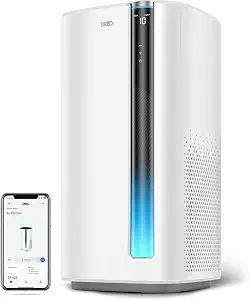 | Best Value for Large Rooms | Coverage Area: Up to 2,187 sq ft | CADR: 294 CFM | Filtration System: 3-in-1: washable pre-filter, HEPA, activated carbon | VIEW LATEST PRICE | See Our Full Breakdown |
| DAYETTE Air Purifier for Large Rooms up to 2400 ft² with HEPA 14, WiFi Control, Aromatherapy, Auto Mode, Washable Prefilter, Pet Mode |  | Best for Pet Households | Coverage Area: Up to 2400 sq ft | Filter Type: HEPA 14 with washable prefilter | WiFi Compatibility: Yes, 2.4GHz | VIEW LATEST PRICE | See Our Full Breakdown |
| Blueair Blue Pure 511i Max Air Purifier for Home and Bedroom |  | Best Compact for Small Rooms | Coverage Area: Up to 1,138 sq ft | Filtration Technology: HEPASilent dual filtration | Particle Removal: 99.97% down to 0.1 microns | VIEW LATEST PRICE | See Our Full Breakdown |
| ECOSELF Smart Air Purifier for Large Rooms, HAP603WF |  | Best for Air Quality Data Lovers | Coverage Area: Up to 2400 ft² | Filtration System: 2X-Power Filtration | Noise Level: 22 dB | VIEW LATEST PRICE | See Our Full Breakdown |
| Air Purifier for Home and Large Rooms up to 3000 sq ft, HEPA with Washable Filters |  | Best Whole-Floor Coverage with Voice Control | Coverage Area: up to 3000 sq ft | Filtration System: Pre-filter, HEPA filter, Activated carbon filter (washable pre-filter) | Noise Level: 15 dB in sleep mode | VIEW LATEST PRICE | See Our Full Breakdown |
| air purifiers with Wi-Fi connectivity | Noise Level | Coverage Area | Control |
|---|---|---|---|
| SereneLife HEPA Air Purifier f | 20 dB | — | — |
| FreAire Air Purifier for Large | 20 dB in Sleep Mode | 3,850 sq ft | App, Touch Panel |
| DREO Smart Air Purifier for La | — | Up to 1,176 sq ft | — |
| Blueair Blue Pure 311i Max Air | 23-50 dB | 2,107 sq ft | Smart app control |
| Levoit Air Purifier for Home P | 27 dB | — | Voice & App Control |
| Levoit Air Purifier for Home a | 22dB in sleep mode | — | WiFi, Alexa, Google Assistant, VeSync app |
| Blueair Blue Pure 211i Max Air | — | — | App control with air quality sensors |
| DREO Smart Air Purifier for Ho | HyperSilent technology with sleep mode | Up to 2,187 sq ft | — |
| DAYETTE Air Purifier for Large | 22dB in sleep mode | Up to 2400 sq ft | — |
| Blueair Blue Pure 511i Max Air | 19 dB | Up to 1,138 sq ft | — |
| ECOSELF Smart Air Purifier for | 22 dB | Up to 2400 ft² | WiFi App Control |
| Air Purifier for Home and Larg | 15 dB in sleep mode | up to 3000 sq ft | WiFi, Alexa, Google Assistant |
More Details on Our Top Picks
SereneLife HEPA Air Purifier for Home – Smart WiFi & App Control
Most inexpensive Wi-Fi purifiers max out around 300 sq ft, which makes the SereneLife’s 1,800 sq ft coverage claim stand out at this price. You get the core connected experience — app control and remote scheduling — without paying the premium that the Blueair Blue Pure 311i Max commands. The 20 dB sleep mode is genuinely quiet for a unit this size. The tradeoff is polish: there’s no real-time air quality sensor like the DREO Smart offers, so the app is a remote rather than an intelligence hub, and filter replacement documentation is thin, meaning you’ll need to research ongoing costs yourself. Compared with the Levoit Core 200S, this trades refinement for raw coverage, which is the right call if square footage is your priority.
Pros:- Large 1,800 sq ft coverage at a budget-friendly price
- Smart WiFi and app control for remote operation
- Ultra-quiet 20 dB sleep mode for bedrooms
- Handles dust, pet hair, smoke, and odors effectively
Cons:- No real-time air quality sensor or auto mode
- Sparse documentation on filter replacement and costs
Best for: Budget-conscious buyers with large living spaces who want app control without a premium price
Not ideal for: Data-driven users who want real-time PM2.5 readings and air quality automation — this unit lacks sensors
- Floor Area:1,800 sq ft
- Filter Type:HEPA (0.3 micron retention)
- Control Method:App, Button Control
- Noise Level:20 dB
- Power Source:AC
- Dimensions:12.2″D x 6.3″W x 15.75″H
- Color:White
Our verdict“A sensible choice for anyone who wants big-room coverage and app control on a tight budget, provided they can live without air quality data.”
FreAire Air Purifier for Large Rooms up to 3850 sq ft, HAP611WF
With a 3,850 sq ft coverage rating and a 450 CFM CADR, the FreAire out-muscles everything else in this lineup — the Blueair Blue Pure 311i Max moves less air despite costing more upfront. The reusable pre-filter is a genuine cost saver over time, since pet hair and lint get caught there instead of clogging the main HEPA layer, and pet mode is tailored for households where shedding is constant. The catch is maintenance cadence: filters run 3 to 6 months, and the warranty only holds if you use genuine replacements, which locks you into an ecosystem. Setup is also more involved than the Levoit Core 200S’s near-instant pairing. If your goal is cleaning an entire open-concept floor rather than one room, this is the unit that gets it done.
Pros:- Class-leading 3,850 sq ft coverage with 450 CFM CADR
- Reusable pre-filter reduces long-term filter costs
- Dedicated pet mode for shedding households
- Child lock, timer, and filter reset built in
Cons:- Filter replacements every 3-6 months add up
- Warranty requires genuine filters only
- Setup is more complex than simpler rivals
Best for: Pet owners in open-concept homes who need whole-floor air cleaning and want to trim filter costs with a washable pre-filter
Not ideal for: Small apartments or dorm rooms — its size and airflow capacity are wasted, and the frequent filter cycle adds cost
- Coverage Area:3,850 sq ft
- CADR:450 CFM
- Filter Life:3-6 months
- Noise Level:20 dB in Sleep Mode
- Control:App, Touch Panel
- Modes:Pet Mode, Sleep Mode
- Extra Features:Child lock, timer, filter reset
Our verdict“The strongest choice for covering an entire floor from one unit, as long as you’re comfortable with a faster filter replacement cycle.”
DREO Smart Air Purifier for Large Rooms, HEPA, Wi-Fi/Voice Control
The DREO earns its slot on connectivity depth: Wi-Fi, Alexa, and Google Assistant support plus a PM2.5 sensor with a live AQI display let the purifier adjust itself rather than waiting for you to notice the air has gone stale. That’s a real step up from the SereneLife, which offers app control but no sensing at all. Its 3-in-1 filtration stack (pre-filter, high-efficiency filter, activated carbon) handles both particles and odors, and roughly 162 kWh of annual consumption keeps running costs modest. Be aware that the 158 CFM CADR means its 1,176 sq ft rating assumes about one air change per hour — the FreAire clears big spaces faster. Full functionality also requires app setup, so plug-and-play buyers should budget ten minutes of configuration.
Pros:- Real-time PM2.5 monitoring with AQI display
- Works with Alexa and Google Assistant alongside the app
- 3-in-1 filtration covers particles and odors
- Energy-efficient at roughly 162 kWh per year
Cons:- Full feature set requires app setup
- 158 CFM CADR is modest for its coverage claim
- Higher initial cost than basic connected models
Best for: Smart-home enthusiasts who want voice control, live air quality data, and automated operation
Not ideal for: Buyers who want maximum airflow per dollar — its CADR lags larger units like the FreAire despite a mid-range price
- Coverage Area:Up to 1,176 sq ft
- CADR:158 CFM
- Filter Type:3-in-1 (pre-filter, high-efficiency filter, activated carbon)
- Connectivity:Wi-Fi, Alexa, Google Assistant
- Monitoring:PM2.5 sensor with AQI display
- Energy Consumption:Approximately 162 kWh annually
- Modes:Sleep Mode
Our verdict“The pick for anyone whose air purifier needs to talk to the rest of their smart home and react to air quality on its own.”
Blueair Blue Pure 311i Max Air Purifier for Home up to 2,107 sq ft
The Blue Pure 311i Max is the most complete package here, and that’s why it leads the roundup. Its HEPASilent dual filtration captures 99.97% of particles down to 0.1 microns — smaller than the 0.3-micron standard most rivals advertise — while the 360° air intake lets it clean 2,107 sq ft in about an hour, matching the FreAire’s practical reach with quieter, more refined operation. The minimalist Scandinavian design is a bonus the boxy SereneLife can’t claim. Drawbacks are real but predictable: it sits at the top of the price range, replacement filters aren’t cheap, and its footprint overwhelms small rooms where the Levoit Core 200S fits easily. Think of it as paying once for the best balance of performance, noise, and app polish.
Pros:- 99.97% particle removal down to 0.1 microns
- 2,107 sq ft coverage with 360° air intake
- Quiet 23-50 dB range suitable for nurseries
- Polished app with monitoring and scheduling
Cons:- Highest price in this batch
- Ongoing genuine filter costs add up
- Physical footprint too large for small rooms
Best for: Homeowners who want the best mix of cleaning power, quiet operation, and app polish and are willing to pay for it
Not ideal for: Small bedrooms, dorms, or tight budgets — its size and price are overkill where a compact unit like the Levoit Core 200S suffices
- Coverage Area:2,107 sq ft
- Filtration Technology:HEPASilent dual filtration
- Particle Removal Efficiency:99.97% down to 0.1 microns
- Noise Level:23-50 dB
- Design:Minimalist Scandinavian with 360° air intake
- Control:Smart app control
Our verdict“If budget allows, this is the well-rounded default choice that outperforms and outlasts the cheaper connected options.”
Levoit Air Purifier for Home Pets Bedroom Dorm Room, Smart & Voice Control
The Levoit Core 200S-P is the entry point of this lineup, and it owns that role well. While the DREO and Blueair units fight over large-room supremacy, this compact, lightweight unit delivers 4.8 air changes per hour in rooms up to 140 sq ft — exactly what a bedroom, nursery, or dorm needs. The app tracks filter life so you never guess on replacements, and voice control comes standard. Its 27 dB noise floor sits slightly above the SereneLife’s 20 dB claim but remains bedroom-friendly. The limitation is structural: no air quality sensor means no auto mode, and pushing it past 140 sq ft dilutes performance fast. Genuine filters are required for best results, which matters for a machine whose replacement parts are the main ongoing cost.
Pros:- Compact and lightweight for desks, dorms, and nightstands
- 4.8 air changes per hour within its rated room size
- App filter-life monitoring and voice control
- Quiet 27 dB operation for sleeping
Cons:- Limited to small rooms up to 140 sq ft
- No air quality sensor or auto mode
- Performance depends on genuine replacement filters
Best for: Students, renters, and parents who need affordable, quiet app-controlled purification for a single small room
Not ideal for: Anyone covering living rooms or open spaces — its 140 sq ft ceiling makes it underpowered beyond one room
- Room Size:140 sq ft
- Air Changes per Hour:4.8
- Filter Type:HEPA, activated carbon, nylon pre-filter
- Noise Level:27 dB
- Control:Voice & App Control
- Intake:360° design
Our verdict“The cheapest credible way into Wi-Fi air purification, as long as your ambitions stop at one small room.”
Levoit Air Purifier for Home and Bedroom, Smart WiFi Control, AHAM Verified
Most Wi-Fi purifiers in this roundup compete on raw coverage numbers, but this one earns its place with AHAM-verified performance — a third-party confirmation that the CADR claims actually hold up. With a 22dB sleep mode, it sits among the quietest connected options here, and the VeSync app plus Alexa and Google Assistant support makes scheduling and remote control genuinely useful rather than a gimmick.
Compared with the Blueair Blue Pure 511i Max, the Levoit offers slightly stronger smoke CADR numbers (141 CFM) while trading away the Blueair’s slicker hardware design. Compared with the DREO Smart Air Purifier, it covers less square footage but costs noticeably less.
The tradeoff: performance is locked to official Levoit replacement filters, so cheaper third-party filters risk undermining the purification you paid for. App setup can also be fussy for less tech-savvy households.
Pros:- AHAM-verified CADR means performance claims are independently confirmed
- 22dB sleep mode is quiet enough for light sleepers
- Full smart control through VeSync app, Alexa, and Google Assistant
- Strong odor reduction thanks to activated carbon filtration
Cons:- Locked into official Levoit filters for best results, which adds long-term cost
- App setup and Wi-Fi connectivity can frustrate first-time users
- Limited color options compared with Blueair’s customizable designs
Best for: Sleepers and allergy sufferers who want certified performance and near-silent overnight operation in a bedroom or living room
Not ideal for: Buyers with very large open floor plans — the coverage here trails the Blueair 211i Max considerably
- CADR (Smoke/Dust/Pollen):141 / 156 / 175 CFM
- Noise Level:22dB in sleep mode
- Control:WiFi, Alexa, Google Assistant, VeSync app
- Filtration:HEPA with activated carbon for odors
- Certification:AHAM verified
- Suitable Rooms:Bedrooms, living rooms, kitchens
Our verdict“This is the pick for bedroom-focused buyers who want certified, whisper-quiet purification with solid smart features at a mid-range price.”
Blueair Blue Pure 211i Max Air Purifier for Large Rooms
When one device needs to clean a genuinely big footprint, the 211i Max is the strongest claimant in this batch, with coverage up to 3,235 sq ft. Its HEPASilent dual filtration combines electrostatic and mechanical capture, which lets it move serious air volume without the fan noise you’d expect — a key reason it outclasses the similarly sized DAYETTE and DREO for whole-floor cleaning.
The 360° air intake matters more than it sounds: you don’t have to position it carefully against a wall the way you do with front-intake rivals. Real-time air quality monitoring in the app also gives feedback similar to the DREO’s PM2.5 display.
Be clear-eyed about the tradeoffs, though. It’s the most expensive option here, its footprint swallows small rooms, and you’re committing to Blueair’s proprietary filter ecosystem long term.
Pros:- Class-leading coverage up to 3,235 sq ft for this roundup
- HEPASilent technology delivers high airflow at low noise
- Real-time air quality monitoring through the app
- Flexible 360° intake means no placement restrictions
Cons:- Premium price may exceed many budgets
- Large physical footprint overwhelms small rooms
- Ongoing proprietary filter replacement costs
Best for: Homeowners with open floor plans or great rooms who want one machine to handle a whole living space
Not ideal for: Apartment dwellers and nursery buyers — it’s oversized, overpowered, and overpriced for rooms under 400 sq ft
- Room Coverage:Up to 3,235 sq ft
- Filtration Technology:HEPASilent dual filtration
- Control:App control with air quality sensors
- Design:Minimalist Scandinavian, 360° air intake
- Target Pollutants:Dust, smoke, pet dander, allergens
Our verdict“If your priority is cleaning a large, shared space with one capable machine and you’re willing to pay for it, this is the roundup’s big-room benchmark.”
DREO Smart Air Purifier for Home with Wi-Fi, Alexa, HEPA Filter, and Air Quality Monitor
This model’s pitch is simple: near-Blueair 211i Max capability at a friendlier price. With a 294 CFM CADR and coverage up to 2,187 sq ft, it actually moves more air per dollar than most of the lineup, and the washable pre-filter is a genuinely practical touch — pet owners will appreciate not replacing filters as often because hair and dust get caught at the first stage.
Where the Levoit Core 300S-P wins on third-party AHAM certification, the DREO counters with raw output and a built-in air quality monitor that gives you the same kind of feedback loop Blueair charges a premium for. Voice control via Alexa and Google Assistant rounds out the connected experience.
The compromises: full functionality hinges on completing app setup, and the underlying HEPA and carbon filters still need periodic replacement. If you want verified lab numbers, look elsewhere; if you want power per dollar, this is it.
Pros:- High 294 CFM CADR delivers strong performance for the price
- Washable pre-filter cuts waste and replacement frequency
- Built-in air quality monitor with app and voice control
- HyperSilent sleep mode keeps bedrooms peaceful
Cons:- Requires app setup to unlock full functionality
- No third-party performance verification like AHAM
- Core HEPA and carbon filters still need ongoing replacement
Best for: Budget-conscious buyers who need large-room coverage and app control without paying Blueair prices
Not ideal for: Buyers who want independently certified performance data — the CADR figures lack AHAM verification
- Coverage Area:Up to 2,187 sq ft
- CADR:294 CFM
- Filtration System:3-in-1: washable pre-filter, HEPA, activated carbon
- Connectivity:Wi-Fi, Alexa, Google Assistant
- Noise Level:HyperSilent technology with sleep mode
- Air Quality Monitor:Yes
Our verdict“The smart middle path for large rooms — more power than the Levoit, far cheaper than the 211i Max, with minor verification tradeoffs.”
DAYETTE Air Purifier for Large Rooms up to 2400 ft² with HEPA 14, WiFi Control, Aromatherapy, Auto Mode, Washable Prefilter, Pet Mode
Few purifiers in this roundup are built around pet problems, but the DAYETTE leans in hard: a dedicated Pet Mode, a HEPA 14 filter (a higher standard than the typical H13 found in the Levoit), and a washable pre-filter that catches fur before it clogs the main filter. Coverage of 2,400 sq ft puts it between the DREO and the Blueair 211i Max.
Its differentiator is the built-in aromatherapy diffuser, which no other product here offers — useful when pet odors linger after the particles are gone. Auto mode with air quality detection, a child lock, and 2–8 hour timers round out a feature-dense package.
Realistically, it’s a less proven brand than Blueair or Levoit, so long-term reliability is a bigger unknown. App features only fully work on a 2.4GHz network, and the HEPA 14 filters cost more to replace than standard ones.
Pros:- Dedicated Pet Mode targets hair, dander, and pet odors
- HEPA 14 filtration exceeds the H13 standard common in rivals
- Built-in aromatherapy diffuser adds a comfort feature nobody else has
- Child lock and flexible timers suit family households
Cons:- Newer brand with a shorter reliability track record
- App requires a 2.4GHz Wi-Fi connection only
- Higher-grade filters cost more to replace over time
Best for: Pet owners who battle hair, dander, and lingering odors and want targeted modes plus scent control
Not ideal for: Buyers who prioritize brand track record and verified certifications — Blueair and Levoit offer more proven pedigrees
- Coverage Area:Up to 2400 sq ft
- Filter Type:HEPA 14 with washable prefilter
- WiFi Compatibility:Yes, 2.4GHz
- Modes:Sleep, I, II, III, Auto, Pet
- Noise Level:22dB in sleep mode
- Timer Options:2, 4, 6, 8 hours
- Extras:Aromatherapy diffuser, child lock
Our verdict“A feature-packed choice for fur-filled homes that trades brand pedigree for pet-specific smarts and a welcome aroma option.”
Blueair Blue Pure 511i Max Air Purifier for Home and Bedroom
Not everyone needs to clean 3,000 sq ft, and buying oversized machines for a nursery wastes money and floor space. The 511i Max brings the same HEPASilent dual filtration as its big sibling, the 211i Max, but scales it for rooms up to 1,138 sq ft — and at 19dB, it’s the quietest option in this entire batch, beating even the Levoit’s 22dB sleep mode.
It captures 99.97% of particles down to 0.1 microns, which is finer than many true-HEPA competitors manage, and the compact 360° design tucks into corners or nightstands easily. App control mirrors the larger Blueair’s experience, so you lose nothing in smart functionality — only coverage.
The honest tradeoff: in open spaces it’s simply outmatched, and like all Blueair units, you’re buying proprietary filters indefinitely. Blueair also doesn’t clearly publish filter lifespan, which makes budgeting replacements harder than with Levoit’s clearly listed consumables.
Pros:- Quietest unit in the lineup at 19dB
- Captures 99.97% of particles down to 0.1 microns
- Compact Scandinavian design fits nightstands and nurseries
- Full app control despite the small footprint
Cons:- Coverage ceiling too low for large or open rooms
- Proprietary filters with no clearly stated lifespan
- Priced higher than similarly sized non-smart competitors
Best for: Parents and light sleepers outfitting nurseries, bedrooms, or home offices under 400 sq ft
Not ideal for: Open-plan living spaces — the 1,138 sq ft ceiling falls well short of the 211i Max or DAYETTE
- Coverage Area:Up to 1,138 sq ft
- Filtration Technology:HEPASilent dual filtration
- Particle Removal:99.97% down to 0.1 microns
- Noise Level:19 dB
- App Control:Yes
- Design:Compact Scandinavian, 360° air intake
Our verdict“The small-room specialist for anyone who wants Blueair filtration and smart control without paying for coverage they don’t need.”
ECOSELF Smart Air Purifier for Large Rooms, HAP603WF
This option stands out for its detailed AQI and PM 2.5 display, which turns air quality from a guess into a number a buyer can actually watch improve. Compared with the SereneLife model, which covers less area and offers simpler feedback, the ECOSELF gives large-room coverage up to 2400 ft² with more granular real-time reporting — useful for allergy sufferers tracking pollen or smoke events. The pairing of a 22dB sleep mode with an aromatherapy function makes this pick better suited to bedrooms than the similarly sized DAYETTE, which leans more on pet-focused modes. The tradeoff is cost of ownership: it wants official ECOSELF replacement filters, and the app setup plus layered smart features take patience. Compared with the FreAire’s bigger 3850 ft² footprint, this one sacrifices raw reach for a friendlier price and richer data.
Pros:- Real-time AQI and PM 2.5 display makes air quality visible and actionable
- 2400 ft² coverage handles open-plan living spaces
- Whisper-quiet 22dB sleep mode with built-in aromatherapy
- Full certification stack: ETL, FCC, EPA, CARB, DOE
Cons:- Locked into official ECOSELF replacement filters for best results
- Wi-Fi setup and layered smart features can frustrate less technical users
Best for: Allergy sufferers and data-driven buyers in large homes who want to monitor PM 2.5 trends in real time
Not ideal for: Buyers who want the cheapest long-term ownership — proprietary replacement filters add recurring cost
- Coverage Area:Up to 2400 ft²
- Filtration System:2X-Power Filtration
- Noise Level:22 dB
- Control:WiFi App Control
- Display:AQI and PM 2.5
- Modes:Sleep Mode, Auto Mode, Timer
- Certification:ETL, FCC, EPA, CARB, DOE
Our verdict“This model makes the most sense for large-space buyers who want visible air quality data on the unit itself, provided they accept branded filter costs.”
Air Purifier for Home and Large Rooms up to 3000 sq ft, HEPA with Washable Filters
For buyers whose priority is sheer coverage plus hands-free operation, this model covers up to 3000 ft² and works with both Alexa and Google Assistant — a step up from the ECOSELF, which relies on app control alone. The washable pre-filter is the real differentiator against most picks here, trimming long-term costs in pet-heavy homes where hair clogs filters fast. Its 15dB sleep mode is quieter than nearly everything in this lineup, including the DREO models, making it a strong bedroom candidate despite its size. The tradeoff is the price: advanced features and high CADR push it above simpler options like the Blueair 511i Max. Setup also demands more effort than plug-and-play rivals, and the 3-stage filtration still needs regular maintenance even with the washable pre-filter. The 24-month warranty softens the premium.
Pros:- 3000 sq ft coverage with dual-sided multi-intake for whole-floor purification
- Works with WiFi app, Alexa, and Google Assistant
- Washable pre-filter cuts recurring filter expenses
- Ultra-quiet 15 dB sleep mode with 24-month warranty
Cons:- Higher price point driven by its advanced feature set
- Setup and ongoing filter maintenance are more involved than simpler rivals
Best for: Pet owners and busy families in large homes who want voice control and lower filter replacement costs over time
Not ideal for: Budget buyers or small-apartment dwellers — the price and capacity are overkill for a single bedroom
- Coverage Area:up to 3000 sq ft
- Filtration System:Pre-filter, HEPA filter, Activated carbon filter (washable pre-filter)
- Noise Level:15 dB in sleep mode
- Control:WiFi, Alexa, Google Assistant
- Timer:1-12 hours
- Aromatherapy:Built-in box with pads
- Safety Certifications:ETL, EPA, FCC, CE, CARB
- Warranty:24 months
Our verdict“Worth the premium for large households that want maximum coverage, voice control, and cheaper upkeep — skip it if you only need one room cleaned.”

How We Picked
I evaluated these twelve purifiers through the lens that defines this category: does Wi-Fi connectivity actually improve how you use the machine? That meant scoring app reliability and design, voice assistant compatibility, the presence and accuracy of air quality sensors, and whether auto mode responds intelligently to real conditions. A purifier with a glitchy app or a sensor that never budges fails the core promise of this roundup regardless of how well it filters.
Beyond smart features, I weighed CADR and realistic room coverage, filtration quality (true HEPA and filter stages), noise at sleep-level speeds, energy draw, and total cost of ownership including replacement filters. Value was judged relative to price tier — a $90 unit isn’t held to Blueair’s standards, but it still has to justify its spot against direct rivals. The ranking favors models that balance smart functionality with honest performance claims, which is why established brands with conservative coverage math and better app support clustered near the top.
Factors to Consider When Choosing Air Purifiers With Wi-Fi Connectivity
Wi-Fi purifiers span from $60 budget units to $250+ flagship models, and the connected experience varies wildly. Before picking one, understand what actually separates a useful smart purifier from one with a bolted-on app.App Quality Matters More Than the App Existing
The single biggest differentiator in this category isn’t filtration — it’s whether the companion app works reliably six months after purchase. Cheap generic apps often lose cloud connectivity, suffer delayed updates, or get abandoned by the manufacturer, leaving you with a very expensive dumb purifier. Established brands like Blueair and Levoit maintain their apps actively and support integrations that keep working when you switch phones or add smart home hubs. Before buying, check recent app store reviews rather than the overall rating, which is often inflated by early five-star reviews. If a bargain model has a 3-star app with recent complaints about connection drops, that discount will cost you the feature you paid extra for. A useful rule: the app should let you check air quality remotely, schedule operation, and adjust fan speed without lag.
Understand How Coverage Numbers Are Calculated
A ‘3,000 sq ft’ claim from a budget brand and a ‘2,100 sq ft’ claim from Blueair may represent identical real-world performance, because there is no standardized way brands must state coverage. Some calculate based on one full air exchange per hour, while others use two or even five exchanges, which shrinks the usable room size dramatically. AHAM-verified models like the Levoit units publish CADR figures you can compare directly against room size math. For bedrooms and offices, almost any of these purifiers will cycle air adequately; the discrepancies only matter in genuinely large open-plan spaces. A common mistake is buying for the total square footage of a home rather than the specific rooms where air needs cleaning — two mid-size units placed strategically usually outperform one large-claim unit. Divide your room’s square footage by the CADR to estimate minutes per air exchange.
Sensors and Auto Mode: Where Smart Becomes Useful
A PM2.5 laser sensor paired with automatic mode is what converts connectivity from a novelty into a genuinely hands-off system. Purifiers without real-time sensing force you to guess when to raise fan speed, which defeats the purpose of remote monitoring. The DREO and EECOSELF models in this lineup show live particulate readings, letting you see cooking smoke or pollen spikes register within seconds. Cheaper units sometimes display a static or algorithm-driven ‘air quality’ figure that barely moves regardless of conditions — a red flag worth checking in reviews. Look for a visible AQI display if you want feedback without opening the app, and verify that auto mode actually ramps the fan up aggressively when readings spike. For allergy sufferers, responsive auto mode means the purifier catches a pollutant surge before symptoms do.
Filter Replacement Costs Compound Over Years
The sticker price is only the entry fee — replacement filters typically cost $20–60 per year depending on brand and run time, and proprietary filter ecosystems lock you in. Budget brands sometimes offset low upfront prices with pricier or harder-to-find filters, while Blueair and Levoit benefit from wide third-party availability that keeps prices competitive. Washable pre-filters, found on the DAYETTE and Blueair Max models, extend the life of the main HEPA layer considerably in pet households by intercepting hair before it loads the filter. Calculate a three-year ownership cost (unit plus filters) before comparing prices, because a $120 purifier with $80/year filters costs more than a $200 one with $30/year filters. Also check whether the app tracks filter life accurately — some units nag for replacements far earlier than needed, inflating costs.
Voice Assistant and Ecosystem Compatibility
Nearly every model here claims Alexa and Google Assistant support, but implementation quality varies from full voice control of every setting to basic on/off commands. If you live in an Apple Home household, check carefully — HomeKit support is rare in this price range, and only a handful of models offer it natively. Users who rely on Alexa Routines or Google automations should verify the purifier can be triggered by air quality events or schedules, not just manual commands. Another often-overlooked factor: some apps require account creation and constant cloud connectivity even for local controls, which means an internet outage can disable features you use daily. Brands with local control fallbacks handle outages more gracefully. Match the ecosystem you already live in rather than assuming cross-compatibility.
Noise Profiles and Bedroom Placement
Every model in this roundup advertises a quiet sleep mode, but ‘whisper quiet’ covers a range from a barely audible 22 dB to a noticeable 45 dB hum. Fan design matters more than marketing — cylindrical filters moving air through a larger surface area run quieter at equivalent cleaning rates than small cartridge filters pushed to keep up. Display brightness is another bedroom consideration: an AQI readout is useful at noon but a nuisance at 2 a.m., so look for models with auto-dimming or a display-off toggle controllable from the app. Placement also affects perceived noise, since a unit on hardwood near the bed sounds louder than one on carpet across the room. If the purifier will live where you sleep, prioritize measured decibel figures at medium speed, not just the sleep-mode floor.
Frequently Asked Questions
Do I need Wi-Fi connectivity, or is it just a gimmick?
It depends on how you use the purifier. Connectivity becomes genuinely valuable when paired with an air quality sensor and auto mode, letting the unit respond to pollution spikes without your input — and letting you verify air quality remotely before arriving home or entering a room. If you plan to set a fan speed once and never touch the purifier again, a dumb model with the same CADR will clean air equally well for less money. The premium you pay for Wi-Fi buys monitoring, scheduling, voice control, and filter-life tracking, not better filtration itself. My advice: skip smart features only if you’re certain you’ll never check readings or want automation. Otherwise the convenience compounds, especially for allergy sufferers who benefit from seeing what triggers symptoms.
Why do coverage claims vary so much between brands with similar prices?
Because there’s no enforced standard for how brands state coverage. A manufacturer can claim a room size based on one air exchange per hour, while a competitor calculates the same figure at two or three exchanges, producing drastically different numbers from identical hardware. Blueair and Levoit tend to publish more conservative figures backed by AHAM-verified CADR testing, while some budget brands use theoretical maximums you’ll never replicate in a room with furniture, doors, and real airflow. The practical fix is to compare CADR (clean air delivery rate) instead of square footage: divide your room’s area by the CADR to estimate how quickly air cycles. As a rule, assume the real usable coverage of aggressive claims is roughly half the headline number.
Are cheap Wi-Fi air purifiers under $100 worth buying?
They can be, if you go in with calibrated expectations. Budget models like the SereneLife in this roundup deliver workable app control and decent small-to-mid-room filtration, and the HEPA media itself is largely commoditized at this point. Where cheap units fall short is sensor accuracy, app longevity, build quality, and warranty support — a $70 purifier with a flaky app and no responsive manufacturer may frustrate you within a year. Filter availability is another risk, since obscure brands sometimes discontinue consumables. My suggestion is to treat sub-$100 smart purifiers as bedroom or dorm solutions where coverage demands are modest, and spend more for main living areas where you’ll rely on auto mode daily. Check app store reviews from the last three months before committing.
How much should I budget per year for replacement filters?
Plan on $30–80 annually for a single unit running daily, depending on brand and how polluted your environment is. Pet households and smokers load filters faster, potentially pushing replacement intervals from twelve months down to six. Models with washable pre-filters — the Blueair Max series and the DAYETTE here — intercept hair and large dust before it reaches the HEPA layer, stretching main filter life meaningfully. Before buying, look up the exact replacement filter price and whether third-party versions exist, since proprietary filters from smaller brands can cost disproportionately more than the unit’s price suggests. Also verify the app’s filter-life estimate isn’t set to nag prematurely; some brands shorten intervals to drive consumable sales. Budgeting the three-year filter cost alongside the purchase price gives the true comparison between models.
Does voice control and app use require a subscription or always-on internet?
No model in this roundup charges a subscription — app control, scheduling, and voice assistant integration are one-time features included in the purchase. However, most of them do require an internet connection and a manufacturer account for remote features, since commands route through brand cloud servers rather than your local network. That means an internet outage typically disables app and voice control, though physical buttons on the unit keep working. Privacy-conscious buyers should note that cloud-connected purifiers report usage and air quality data back to the manufacturer, covered in the app’s privacy policy. If that concerns you, prioritize models with local control or simply use the onboard controls when home. Alexa and Google integration also requires linking the purifier skill through those platforms during setup.
Conclusion
The right pick here depends less on specs and more on how you plan to use connectivity. For the best overall experience, the Blueair Blue Pure 311i Max delivers the most dependable app, honest coverage claims, and a washable pre-filter that keeps running costs sane — the Blue Pure 211i Max is the same formula scaled up for large open spaces, making it my best premium pick. Value shoppers get the most from the DREO Smart Air Purifier with PM2.5 monitor, which brings real-time sensing and solid app control at a mid-range price, while the SerneLife smart model is the best for beginners who want to try app control without a big commitment. If pets drive your purchase, the DAYETTE with HEPA 14, pet mode, and aromatherapy targets that use case directly, and the Levoit smart models suit dorm rooms and bedrooms where AHAM-verified performance and a trusted app matter in a compact footprint. Whatever you choose, prioritize app reliability and filter costs over headline coverage numbers — those two factors determine whether you’re still happy with the purchase three years from now.
Black Friday Picks

Sonos One (Gen 2) Two-Room Set Voice-Controlled Smart Speaker with Alexa (2-Pack, Black)
As an affiliate, we earn on qualifying purchases.