
TL;DR

Get home appliances delivered free with Prime
- Fast, free delivery on millions of items
- Prime Video, Amazon Music and more included
- Member-only deals all year
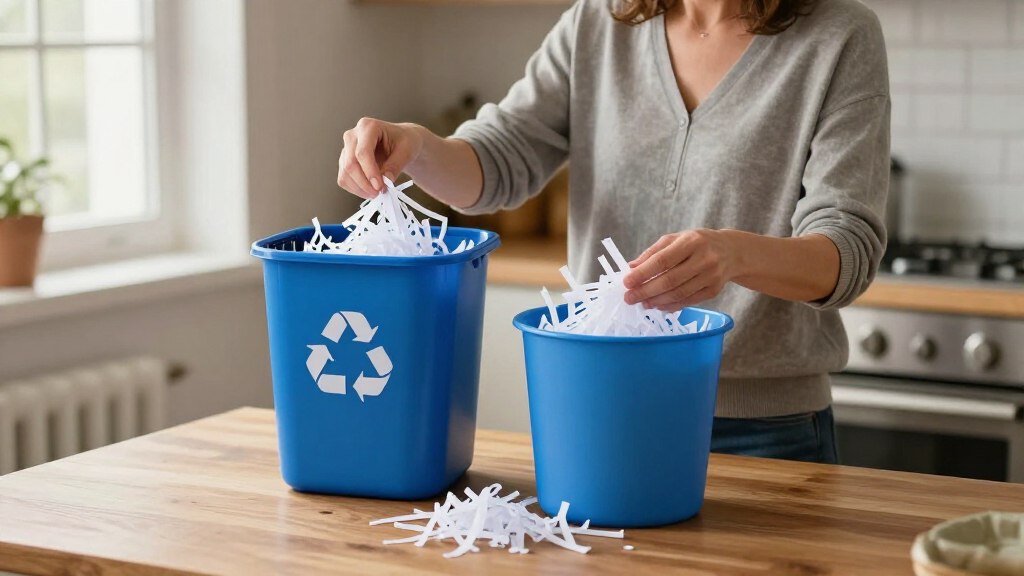
Online interest in why shredded paper cannot always go in the recycling bin is rising sharply. Waste management experts have long noted that shredded paper’s short fibers, potential for sorting machine jams, and contamination risk make it problematic for curbside programs. The specific trigger for the current search spike is unconfirmed.
Online interest in why shredded paper cannot always be placed in the recycling bin is spiking, drawing renewed attention to a long-standing rule in municipal waste management. The specific trigger for this surge in searches and coverage is not yet confirmed, but the core issue involves how the material behaves at recycling facilities.
Recycling programs have long treated shredded paper differently from whole sheets. Shredding cuts paper fibers short, which reduces their ability to bind together into new paper products. This fiber degradation makes shredded paper less valuable to paper mills, which prefer longer, stronger fibers for manufacturing new stock.
Another confirmed issue is mechanical. Shredded paper can jam the sorting screens and conveyor belts used at material recovery facilities (MRFs). Because the pieces are small and light, they can fall through sorting gaps or wrap around machinery, forcing facilities to pause operations for maintenance. Additionally, shredded paper is often contaminated with plastic window envelopes, staples, or sticky notes, which complicates the recycling stream and reduces the quality of the final bale. According to the Environmental Protection Agency (EPA), such contamination can lead to increased processing costs and material rejection.
Local rules vary widely. While some municipalities accept shredded paper if it is bagged, many explicitly exclude it from single-stream curbside bins, directing residents to drop-off centers or trash instead.
What This Means for Your Curbside Bin
The renewed interest matters because millions of households routinely shred documents for privacy and security. Putting shredded paper in the wrong bin can contaminate an entire batch of recyclables, leading to materials being sent to landfill instead of being processed. Understanding the distinction between what is technically recyclable and what is accepted by a specific local program helps residents avoid costly sorting errors.
There is also an economic angle. Contaminated loads cost recycling facilities money in extra sorting labor and lost material value. When residents follow local guidelines for shredded paper, they support the efficiency of their community’s recycling infrastructure and help keep overall program costs stable.
Products Worth Considering

Philips Hue Essential Starter Kit with Bridge and 4 E26 Smart Bulbs

eufy Security Floodlight Camera E30, 2K

Dyson Big Ball Multi Floor Canister Vacuum, Yellow
As an affiliate, we earn on qualifying purchases.
Why Shredding Complicates the Paper Stream
The practice of shredding documents for identity protection has grown steadily over the past two decades. Most curbside programs accept whole paper, magazines, and cardboard, but many explicitly exclude shredded paper from single-stream bins. Some municipalities recommend bagging shredded paper or taking it to designated drop-off centers where it can be baled separately.
The distinction is rooted in the economics and mechanics of paper recycling, which relies on consistent fiber quality and clean, uniform feedstocks. According to the American Forest & Paper Association (AF&PA), whole sheets maintain fiber length and are easy to sort, while shredded pieces behave more like confetti, creating operational challenges that many facilities are not equipped to handle.
What Triggered the Latest Search Surge
It is not yet clear what prompted the recent spike in interest. No specific news event, viral video, or policy change has been confirmed as the catalyst. The trend could stem from a seasonal reminder about spring cleaning, a social media post about recycling mistakes, or a local news segment. Details on the exact origin of the surge remain unconfirmed as of this writing.
How to Handle Shredded Paper Going Forward
Residents should check their local municipal recycling guidelines, as rules vary by jurisdiction. If curbside pickup is not an option, common alternatives include composting (if the paper is not glossy or heavily inked), placing it in regular trash, or using a community shredding event. Waste management experts recommend consulting local waste authorities or recycling facilities to confirm proper disposal methods before adding shredded paper to the bin, as contamination penalties can affect the whole neighborhood’s recycling costs.
Key Questions
Can I put shredded paper in my curbside recycling bin?
It depends on your local program. Many municipalities exclude it due to fiber length and sorting issues, while others accept it if it is placed in a sealed paper or clear plastic bag. Check with your local waste authority for specific rules.
Why is shredded paper bad for recycling machines?
The small pieces can fall through sorting screens or jam conveyor belts at material recovery facilities. This causes downtime and increases maintenance costs, which is why many facilities prefer not to handle it. The EPA notes that shredded paper can also cause operational inefficiencies and equipment wear.
Is shredded paper compostable?
Yes, in most cases, unless it is glossy, heavily inked, or contains plastic. Shredded paper is a good source of carbon for compost piles and breaks down relatively quickly, as supported by composting guidelines from the USDA and other environmental agencies.
What is the best way to recycle shredded paper?
If your local program accepts it, it is often best to place it in a paper bag or clear bag to prevent it from scattering. Otherwise, look for dedicated drop-off centers or community shredding events that collect it separately. The EPA recommends these methods to ensure proper recycling and reduce contamination.
Does shredding reduce the value of paper?
Yes. Shredding shortens the fibers, which reduces their strength and makes them less desirable for paper mills that need long fibers to produce new paper. This lower value is a key reason why some mills reject shredded paper, as noted by the American Forest & Paper Association (AF&PA).
Source: rss