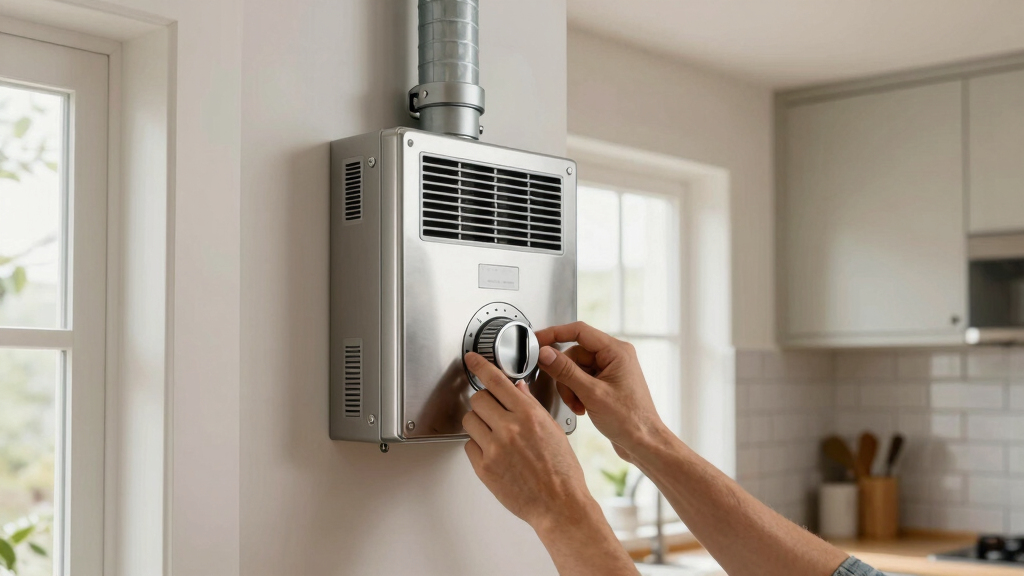

Choosing the best energy recovery ventilator (ERV) for your house involves balancing performance, ease of installation, and cost. The Vents-US Frigate ERV 150 stands out as the best overall for its reliable airflow and moisture control. For those prioritizing efficiency, the Aprilaire V22BEC offers impressive capacity for larger homes, while the Broan B210E75RT provides higher airflow for demanding spaces. Common tradeoffs include higher price points versus energy savings and installation complexity versus long-term durability. Keep reading to see which model fits your specific needs and budget.
Key Takeaways
- The top performers excel in balancing airflow capacity and energy efficiency, making them suitable for different home sizes.
- Models with better filtration features tend to cost more but offer improved indoor air quality over time.
- Ease of installation varies; wall-mounted units are generally simpler but may have fewer features than integrated systems.
- Price often correlates with capacity and advanced features like WiFi control or anti-freeze protection.
- Choosing the right ERV depends heavily on your home’s size, climate, and ventilation needs.


More Details on Our Top Picks
VENTS-US Frigate ERV 150 Ventilation System – 180 CFM Whole House Fresh Air Intake and Humidity Exhaust for Balanced Indoor Comfort, Includes Washable Filters and Anti-Freeze Protection
This VENTS-US Frigate ERV 150 excels as the best all-around choice for house-wide ventilation, offering a high airflow capacity of 180 CFM and a slim, corrosion-resistant steel casing that fits tight spaces. It features an enthalpy core that recovers both heat and humidity, making it ideal for climates with seasonal temperature swings. Compared to larger units like the Broan B210E75RT, this model balances power with ease of installation, though it involves a tradeoff in slightly higher energy use at 189 watts. Its washable filters and automatic frost protection add to long-term efficiency, but the unit’s size and power draw may be overkill for very small homes or apartments. This pick makes the most sense for homeowners seeking a durable, efficient, whole-house solution that emphasizes humidity and heat recovery without excessive complexity.
Pros:- 180 CFM airflow capacity suits entire house ventilation
- Enthalpy core recovers both heat and humidity, reducing energy costs
- Slim, corrosion-resistant steel casing fits tight spaces
Cons:- Higher power consumption at 189 watts may increase energy bills
- Size and capacity may be excessive for small homes or single rooms
Best for: Homeowners needing a durable, high-capacity ERV for balanced indoor comfort and seasonal humidity control
Not ideal for: Small apartments or spaces with minimal ventilation needs, due to its size and airflow capacity
- Air Flow Capacity:180 CFM
- Size:9.6 inches deep
- Power Consumption:189 watts
- Room Type:Whole house
- Material:Corrosion-resistant steel
- Includes:Washable filters, anti-freeze protection
Bottom line: This is best for homeowners who want a reliable, whole-house ERV with humidity and heat recovery capabilities.
Broan B110H65RS AI 100 CFM Wall or Ceiling Mounted Heat Recovery Ventilator with Side Ports and LCD Screen – N/A
Compared to the larger VENTS-US ERV 150, the Broan B110H65RS offers a more modest 100 CFM airflow, making it suitable for smaller households seeking efficient ventilation. Its integrated LCD screen simplifies setup and control, providing real-time airflow measurement and diagnostic codes, which is a significant advantage over basic models. The unit’s MERV 8 filters provide high-quality filtration, and the optional upgrade to MERV 13 enhances air purity further. While it is quiet and energy-efficient with a PMSM ECM motor, at 90 watts, it may lack the power for larger homes or spaces with higher ventilation demands. The compact, easy-to-install design is ideal for retrofit projects but might be insufficient for large or multi-story homes requiring higher airflow capacity. This unit makes sense for users prioritizing advanced control and filtration in smaller homes.
Pros:- LCD screen for real-time diagnostics and easy control
- Energy-efficient PMSM ECM motor with low power draw
- Modest 100 CFM airflow suitable for smaller spaces
Cons:- Limited airflow capacity for larger homes
- Higher upgrade cost for advanced filtration options
Best for: Owners of small to medium-sized homes who want precise control and reliable filtration
Not ideal for: Large households or homes requiring over 110 CFM airflow, due to its limited capacity
- CFM:100
- Power:90 watts
- Filters:MERV 8 (upgrade to MERV 13 available)
- Size:23.5″ W x 19.1″ H x 16″ D
- Control:LCD screen
- Noise Level:Quiet
Bottom line: Ideal for small to medium homes where control, filtration, and energy savings are key priorities.
Aprilaire V22BEC Energy Recovery Ventilator (ERV), 120 CFM Air Exchanger for Homes up to 6,000 Sq. Ft. – Whole-House Fresh Air Ventilation System (HRV/ERV) with Wall, Ceiling, or Floor Mount Bracket
The Aprilaire V22BEC stands out for its suitability in large homes, covering up to 6,000 sq. ft., with a steady 120 CFM airflow that balances fresh air intake and exhaust. Its simple push-button controls offer intuitive operation, and the unit’s design ensures balanced air exchange while tempering indoor conditions via its energy recovery core. Unlike smaller units like the Broan B110H65RS, this model effectively maintains indoor humidity and temperature year-round, making it a strong choice for environments with varying climate conditions. However, its installation may be more complex and require more space, and its power consumption is higher at an unspecified level, which could affect operating costs. This system is best for those prioritizing large-scale ventilation and indoor air quality in expansive homes.
Pros:- 120 CFM airflow suitable for large homes
- Simple push-button operation for easy control
- Balances indoor temperature and humidity effectively
Cons:- Installation may be complex and space-consuming
- Potentially higher energy costs due to larger capacity
Best for: Large households or homes up to 6,000 sq. ft. seeking balanced, whole-house ventilation
Not ideal for: Small homes or apartments due to its larger size and power needs
- CFM:120
- Suitable Area:up to 6,000 sq. ft.
- Control Type:Push-button
- Efficiency:Balanced air exchange with heat/moisture recovery
- Mounting Options:Wall, ceiling, or floor mount
- Power:Unspecified but suitable for whole-house
Bottom line: Best suited for large homes needing a straightforward system that improves indoor air quality and temperature stability.
Heat Recovery Ventilator with Ceramic Heat Exchanger, Wall-Mounted Fresh Air System with WiFi/Remote Control for Home, Attic, Garage – Supply, Exhaust & Recirculation Ventilation Fan
This Heat Recovery Ventilator with Ceramic Heat Exchanger offers innovative remote control via WiFi, making it ideal for tech-savvy users who want to manage air quality from anywhere. Its high-efficiency ceramic heat exchanger recovers up to 90% of heat, significantly lowering energy use in single rooms like attics or garages, unlike larger whole-house units such as the Aprilaire V22BEC. The unit’s quiet operation and magnetic panel for easy cleaning are key pluses, though the 60-watt power draw and 100 CFM airflow limit make it less suitable for larger spaces. Its flexible modes—Fresh Air, Exhaust, and Recirculation—offer customization, but it’s best suited for small, contained areas rather than whole-home ventilation. This pick makes the most sense for users seeking smart controls and efficient heat recovery in smaller, dedicated spaces.
Pros:- WiFi and remote control for convenient management
- Ceramic heat exchanger recovers up to 90% of heat
- Multiple modes for flexible ventilation
Cons:- Limited airflow of 100 CFM for whole-house ventilation
- Higher power consumption at 60 watts for small spaces
Best for: Tech-savvy homeowners needing efficient, smart control for small rooms or garage ventilation
Not ideal for: Large homes or spaces requiring high airflow, as its capacity is limited to 100 CFM
- CFM:100
- Power:60 watts
- Heat Recovery:Ceramic core, 90%
- Control:WiFi/remote
- Size:Wall-mounted
- Modes:Fresh, Exhaust, Recirculation
Bottom line: Best for small, smart-controlled spaces where heat recovery and remote operation are prioritized.
Awoco 6” Vent Energy Recovery Ventilator (ERV) System Various Speeds 100 CFM with Filter, Energy Saving HVI Certified (ERV)
The Awoco 6” ERV System offers a cost-effective option for balanced ventilation, providing adjustable speeds from 40 to 100 CFM, making it suitable for moderate-sized spaces or specific room ventilation. Its washable filters and built-in dampers for defrost and recirculation enhance energy efficiency, and the unit’s 70-inch power cord allows flexible installation. Compared to the Broan B110H65RS, it’s more affordable but has a lower maximum airflow and fewer advanced features like a digital display. Its 50dB noise level and 60W power draw make it suitable for quiet operation, but it may not be sufficient for larger homes or those requiring high airflow. This model makes sense for budget-conscious users desiring adjustable speeds and decent filtration in smaller spaces.
Pros:- Adjustable speeds from 40 to 100 CFM
- HVI certified for energy efficiency
- Includes washable filters and dampers for maintenance
Cons:- Maximum airflow limited to 100 CFM
- Fewer advanced controls or digital diagnostics
Best for: Homeowners seeking an economical, adjustable-speed ERV for small to medium rooms
Not ideal for: Large homes or users needing high airflow capacity over 100 CFM
- CFM:up to 100
- Power:60 watts
- Duct Size:6 inches
- Noise Level:50 dB
- Features:Washable filters, dampers
- Certification:HVI
Bottom line: This is a practical, budget-friendly choice for smaller spaces requiring adjustable ventilation speeds.
VENTS-US Frigate HRV 120s Heat Recovery Ventilator – Whole House Ventilation Fan with Up to 118 CFM and Freeze Protection
The VENTS-US Frigate HRV 120s stands out for its reliable performance in colder environments, thanks to its electronic antifreeze protection and high heat recovery rate of up to 73%. Compared to the Broan B210E75RT, which offers more advanced automation and easier installation, this model emphasizes durability with a corrosion-resistant steel casing and a robust heat exchange core. While the Frigate HRV 120s provides excellent heat retention and low power use at just 19 Watts on low speed, it involves more manual control with a three-speed switch, which may not suit those seeking smart features. This pick makes sense for homeowners in freezing climates who prioritize long-term durability and consistent heat recovery.
Pros:- High heat recovery efficiency of up to 73% for lower utility bills
- Electronic antifreeze protection ensures continuous operation in freezing weather
- Corrosion-resistant steel casing suitable for humid environments
- Low power consumption at 19 Watts on low speed
Cons:- Lacks smart controls or automation features found in newer models
- Manual three-speed operation can be less convenient for some users
Best for: Families living in cold regions needing reliable, freeze-proof ventilation with high heat recovery.
Not ideal for: Homeowners seeking smart, app-controlled systems or those in milder climates where antifreeze features are unnecessary.
- Airflow Capacity:118 CFM
- Power Consumption:19 Watts
- Sensible Effectiveness:73%
- Materials & Care:Corrosion-resistant steel casing
- Mounting Type:Ceiling mount
- Warranty:Not specified
Bottom line: Ideal for cold climate households prioritizing durability and heat retention but not for those seeking high-tech automation.
Broan B210E75RT AI 206 CFM Wall or Ceiling Mounted Energy Recovery Ventilator with Top Ports and Superior HRV Core Performance
The Broan B210E75RT excels in large home applications with its high airflow capacity of 210 CFM and quick setup thanks to VIRTUO™ technology, which automates airflow balancing and simplifies installation. Unlike the VENTS-US Frigate HRV 120s, which is more manual and suited for colder climates, this model is designed for ease of use with an integrated LCD display showing real-time data and diagnostics. Its durable ERV core achieves up to 81% sensible recovery efficiency at 32°F, making it highly effective in temperate to cold environments. However, it lacks smart home integration and does not include WiFi capabilities, which might be a drawback for tech-savvy users. This product makes the most sense for larger homes or renovation projects where installation speed and high airflow are priorities.
Pros:- Powerful airflow of up to 210 CFM suitable for large homes
- Quick, tool-free setup with VIRTUO™ auto-balancing technology
- High ERV core efficiency reaching 81% at 32°F
- Durable design with a versatile top or side port configuration
Cons:- No built-in WiFi or smart home compatibility
- Higher initial cost compared to simpler models
Best for: Homeowners with large square footage needing effortless setup and high airflow control.
Not ideal for: Users seeking smart controls or integrated app management, as it relies on manual LCD adjustments.
- Airflow (CFM):210
- Core Efficiency:81%
- Control Method:LCD screen
- Ports:Top and side options
- Warranty:5 years parts
- Mounting Type:Wall or ceiling
Bottom line: This ERV is best for large, modern homes where installation speed and high airflow are key considerations, but not for those requiring advanced smart features.

How We Picked
Products were selected based on a combination of airflow capacity, energy efficiency, build quality, ease of installation, and feature set. We prioritized units that offer reliable operation in typical residential settings, considering both single-family homes and larger residences up to 6,000 sq. ft. We also evaluated user-friendly controls, maintenance requirements, and durability features such as freeze protection and washable filters. The rankings reflect a balance between value and performance, ensuring each option serves a specific type of homeowner—whether seeking affordability, high capacity, or advanced features.
Factors to Consider When Choosing Best Energy Recovery Ventilator For House
When choosing an energy recovery ventilator for your house, understanding key factors can help you make an informed decision. Consider the size of your home, your climate, and your budget to select a unit that balances performance and cost. Additional features like filter quality, ease of maintenance, and control options can improve long-term satisfaction. Avoid common mistakes such as oversizing or undersizing units, which can lead to inefficiency or inadequate ventilation. Carefully weighing these factors ensures you get a system that enhances indoor air quality without unnecessary expense.Home Size and Ventilation Capacity
Matching the ERV’s airflow capacity to your home’s size is critical. A unit that’s too small won’t provide adequate ventilation, leading to stale air, while an oversized system can waste energy and cause discomfort. For typical homes under 2,500 sq. ft., models around 100-150 CFM usually suffice. Larger homes may require units with 200 CFM or more. Always check the manufacturer’s recommendations to avoid mismatched sizing, which can compromise efficiency and indoor air quality.
Energy Efficiency and Operating Costs
Energy efficiency directly impacts your monthly utility bills. Features like heat recovery cores, low power consumption motors, and programmable controls help reduce operational costs. While high-capacity units often cost more upfront, they can save money over time through lower energy bills, especially in colder or hotter climates. Consider the long-term savings potential when evaluating initial investment, and look for certifications or ratings indicating high efficiency.
Ease of Installation and Maintenance
Some ERVs are designed for straightforward installation, such as wall-mounted or ceiling-mounted models, which are ideal for DIY setups. Others may require professional help, especially if ductwork or electrical connections are involved. Maintenance features like washable filters or accessible components can extend the lifespan of the unit and reduce ongoing costs. Avoid overly complicated systems if you’re not comfortable with technical installations, as improper setup can diminish performance and increase repair needs.
Additional Features and Controls
Modern ERVs often include smart controls, WiFi connectivity, and advanced filtration systems. These features can improve user experience and indoor air quality, but they also add to the purchase price. Decide which features matter most—such as remote control, programmable timers, or humidity sensors—and prioritize accordingly. Be cautious of overly complex systems if simplicity and ease of use are your main concerns.
Budget and Long-Term Value
While budget constraints are real, investing in a higher-quality ERV can pay off through better durability, lower maintenance, and improved energy savings. Cheaper units may lack essential features or have less reliable components, leading to higher repair costs or reduced lifespan. Consider your long-term needs and choose a model that offers the best balance of quality and affordability for your specific situation.
Frequently Asked Questions
How do I determine the right size of ERV for my house?
To select the appropriate ERV size, start by calculating your home’s total square footage and considering the number of occupants. Most manufacturers recommend a certain CFM per square foot or per occupant, which helps ensure adequate ventilation. Larger homes or those with high occupancy may require units with higher airflow ratings, such as 200 CFM or more. Oversizing can lead to unnecessary energy use, while undersizing reduces effectiveness; consulting with a professional can help determine the best fit for your specific home.
Are ERVs worth the extra cost compared to standard ventilation fans?
Yes, ERVs provide significant benefits by recovering heat (or cooling energy) from exhausted air, which lowers heating and cooling costs. They also improve indoor air quality by continuously exchanging stale indoor air with fresh outdoor air, reducing indoor pollutants and humidity. While the initial investment is higher than standard fans, the energy savings and health benefits often justify the expense over time. For climates with extreme temperatures, ERVs can be particularly valuable, offering both comfort and efficiency.
Can I install an ERV myself, or should I hire a professional?
Installation complexity varies depending on the model and your home’s existing ductwork. Many wall-mounted or simple units can be installed by a confident DIYer with basic electrical and ventilation skills, especially if instructions are clear. However, more integrated or larger systems that involve ductwork and electrical connections often benefit from professional installation to ensure safety, proper operation, and warranty validity. When in doubt, hiring a professional can prevent costly mistakes and guarantee optimal performance.
How often do I need to replace filters in an ERV?
Most ERVs with washable filters require cleaning every 3 to 6 months, depending on usage and air quality. Some units include disposable filters that need replacement less frequently, perhaps annually or biannually. Regular maintenance is essential to keep airflow high and prevent mold buildup. Following the manufacturer’s recommendations, inspecting filters regularly, and changing or cleaning them as needed helps maintain the system’s efficiency and indoor air quality over its lifespan.
What features should I prioritize if I want an easy-to-use ERV?
Look for models with straightforward controls, such as digital displays, simple remote controls, or smartphone apps. Features like automatic humidity sensors or programmable timers can enhance ease of use by reducing manual adjustments. Also, units with accessible filters and maintenance points simplify upkeep. Prioritizing user-friendly interfaces and minimal setup ensures the system works seamlessly without requiring technical expertise or frequent troubleshooting.
Conclusion
For most homeowners seeking a reliable all-around option, the Vents-US Frigate ERV 150 offers a balanced mix of performance, durability, and ease of use—making it the best overall choice. Those with larger homes or higher ventilation demands might find the Aprilaire V22BEC better suited due to its higher capacity. Budget-conscious buyers should consider the Awoco ERV System, which provides solid features at a lower price point. If you’re new to ERVs, models with simple controls and straightforward installation, like the Broan B110H65RS, can ease the transition. For premium installations, the Broan B210E75RT offers advanced features and superior performance. Your ideal choice depends on your home’s size, climate, and specific needs—use this guide to match the right ERV with your household.