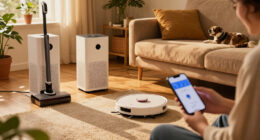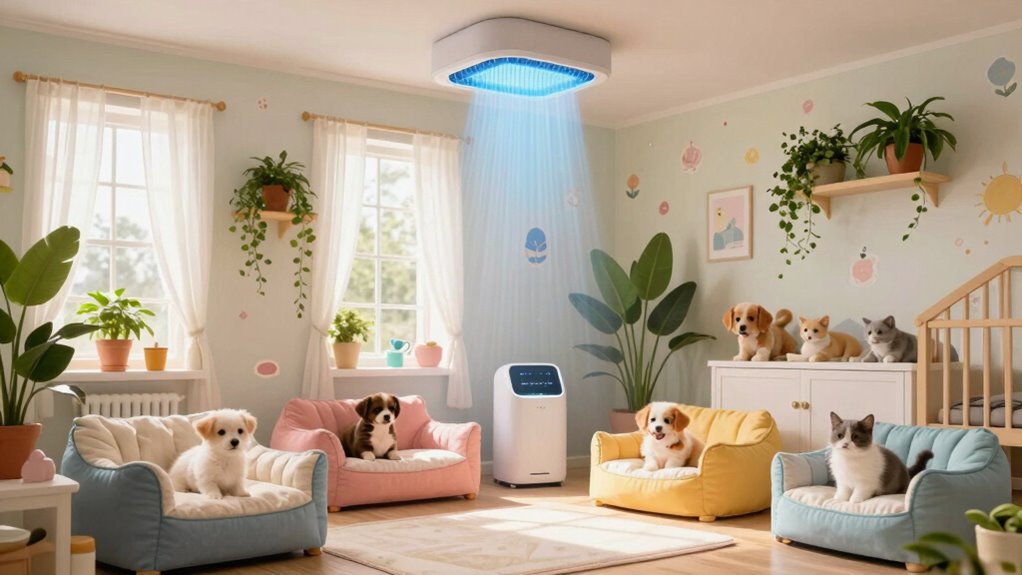

If your nursery has pets, you need a specialized air-cleaning plan to keep allergens in check. Use HEPA filters in air purifiers and HVAC systems to capture pet dander and dust mites constantly. Regular cleaning, especially vacuuming and washing soft toys and bedding, helps reduce allergen buildup. Good airflow and ventilation dilute indoor pollutants, and monitoring air quality helps you stay ahead. For more tips on creating a safe environment, you’ll find helpful strategies if you continue exploring.

Get home appliances delivered free with Prime
- Fast, free delivery on millions of items
- Prime Video, Amazon Music and more included
- Member-only deals all year
Key Takeaways
- Implement specialized high-efficiency air filtration systems, like HEPA filters, to continuously remove pet allergens from the air.
- Increase cleaning frequency of soft furnishings, bedding, and carpets to reduce allergen buildup and airborne particles.
- Limit pet access to nursery areas and encourage handwashing to minimize allergen transfer.
- Ensure proper ventilation and airflow management to dilute indoor allergens effectively.
- Regularly monitor indoor air quality to adjust cleaning and filtration strategies promptly.
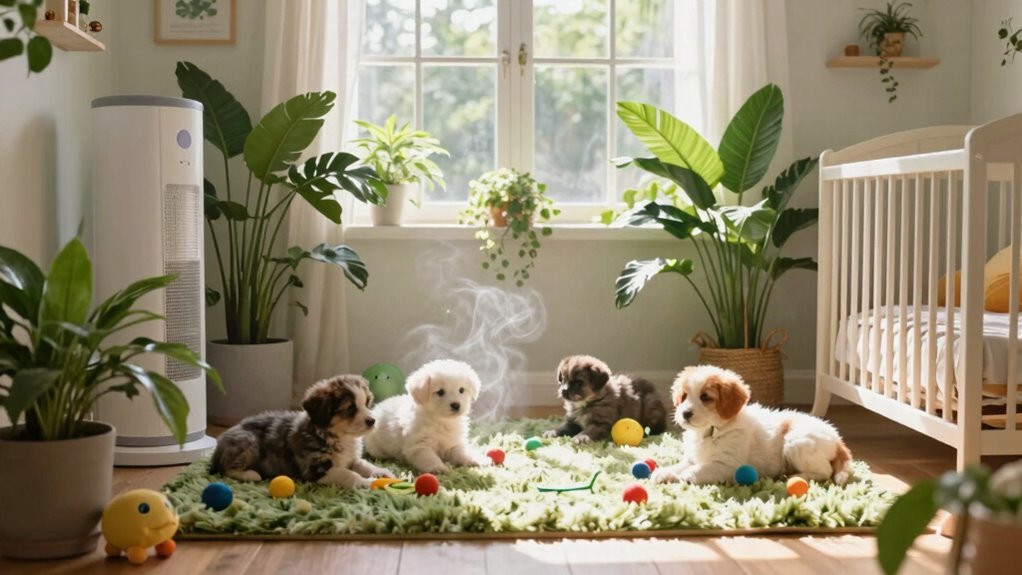
If your nursery includes pets, you need a clean-air strategy tailored to their unique needs. Pets bring joy and companionship, but they also introduce pet allergens and other airborne particles that can affect the health of children. To keep everyone safe, you have to focus on effective air filtration systems designed specifically to reduce pet allergens and improve indoor air quality. Regular cleaning alone isn’t enough; you need a proactive approach to manage airborne contaminants that pets shed or carry in from outside.
Air filtration is your first line of defense. High-efficiency particulate air (HEPA) filters are essential because they capture tiny particles like pet dander, dust mites, pollen, and other allergens that can trigger allergic reactions or asthma. Installing HEPA air purifiers in the nursery helps continuously clean the air, removing pet allergens before they settle on surfaces or get inhaled. Make sure these purifiers are appropriately sized for the space, and keep them running 24/7 for consistent air quality. Besides portable units, consider integrating air filtration into your HVAC system for whole-room coverage, especially if your nursery is larger or has multiple areas. Additionally, air filtration systems can be configured to target specific allergens, providing tailored solutions for your space. Incorporating air quality monitoring can also help you track allergen levels and adjust your strategies accordingly.
HEPA filters effectively remove pet dander and allergens, ensuring continuous, clean air in the nursery.
Beyond filtration, regular cleaning reduces the buildup of pet hair and dander that contribute to poor air quality. Vacuum carpets, rugs, and upholstery frequently using HEPA-filter vacuums to prevent allergens from becoming airborne during cleaning. Wash bedding, curtains, and soft toys often, as these items trap pet allergens and dust. Hard flooring surfaces are preferable over carpets because they’re easier to clean and don’t harbor allergens as much. Remember, the goal is to minimize the source of pet allergens as much as possible while maintaining a healthy environment. Additionally, proper ventilation** helps to further improve indoor air quality by diluting airborne pollutants and reducing allergen concentration. Implementing air exchange systems can significantly enhance airflow** and allergen removal, especially in spaces with limited natural ventilation.
Ventilation also plays a critical role. Good airflow helps dilute indoor pollutants, so ensure your nursery is well-ventilated with fresh outdoor air when weather permits. Use exhaust fans or air exchange systems to improve airflow, especially after activities that stir up dust or pet dander. Be cautious of outdoor pollution sources like pollen, which can also affect indoor air quality, and try to keep windows closed during high pollen seasons. Proper ventilation is essential not just for removing contaminants but also for maintaining a balanced indoor environment that minimizes allergen accumulation. Additionally, ensuring adequate air circulation prevents stagnant air and helps maintain a healthier space for children and pets alike. Regularly inspecting and maintaining your ventilation systems ensures they function effectively and continue to support a clean environment.
Finally, educate everyone involved in caring for the nursery about the importance of maintaining a clean, allergen-reduced environment. Encourage regular handwashing after handling pets and advise on minimizing pet access to the nursery when possible. With an all-encompassing approach that combines air filtration, diligent cleaning, proper ventilation, and awareness, you can create a safe, healthy space for children and pets alike.
Products Worth Considering

Blueair Blue Pure 311i Max Smart Air Purifier

Blueair Blue Pure 211i Max Smart Air Purifier for Large Rooms

Coway Mighty Air Purifier AP-1512HH(W), White
As an affiliate, we earn on qualifying purchases.
Frequently Asked Questions
How Do Pets Impact Indoor Air Quality in Nurseries?
Pets in nurseries introduce pet dander, which can greatly reduce indoor air quality. This dander often triggers allergic reactions in children and staff, making it harder to breathe and increasing discomfort. To maintain a healthy environment, you need to implement effective air filtration, regular cleaning, and ventilation strategies that reduce pet dander buildup. Staying vigilant helps guarantee everyone stays safe and comfortable while enjoying the benefits of having pets nearby.
What Specific Pollutants Are Most Concerning in Pet-Friendly Nurseries?
The most concerning pollutants in pet-friendly nurseries are pet allergens like dander, which can trigger allergies and asthma in children. To combat this, you should use effective air filtration systems that capture airborne pet allergens. Regular cleaning and vacuuming are essential, too. By focusing on these pollutants and maintaining proper air filtration, you help create a healthier environment where children can thrive safely around pets.
Are There Recommended Air Purifiers for Nurseries With Pets?
Yes, you should consider air purifiers with advanced air filter technologies like HEPA filters, which effectively trap pet dander, allergens, and pollutants. These purifiers also support pet allergy management by reducing airborne irritants. Look for models specifically designed for small spaces, easy to maintain, and capable of continuous operation. Regularly changing filters guarantees peak performance, helping create a healthier environment for children and pets alike.
How Often Should Air Quality Be Monitored in These Nurseries?
You should monitor air quality daily in nurseries with pets. Studies show indoor air can be up to five times more polluted than outdoor air, so consistent checks are essential. Focus on air filtration and ventilation standards, ensuring filters are replaced regularly and ventilation systems work effectively. Regular monitoring helps you detect issues early, keeping both children and pets safe from airborne contaminants and allergens.
What Training Is Necessary for Staff to Maintain Clean Air in Pet Nurseries?
You need thorough staff training on cleaning protocols to maintain clean air in pet nurseries. This includes proper handling of pet waste, regular cleaning schedules, and using air-purifying equipment correctly. Guarantee staff understand the importance of ventilation and allergen control. Ongoing education helps them stay updated on best practices. By implementing extensive training, you create a safer environment, reduce airborne contaminants, and promote healthier air quality for pets and staff alike.
Conclusion
In nurturing spaces where pets and children share close quarters, it’s wise to embrace a gentle, tailored approach to air quality. While the air may seem perfectly fine on the surface, subtle adjustments can create a more harmonious environment. Think of it as fine-tuning a delicate instrument—small changes can lead to a more comfortable, healthier atmosphere for everyone involved. By paying attention to these nuances, you guarantee your nursery remains a safe haven for both pets and little ones.