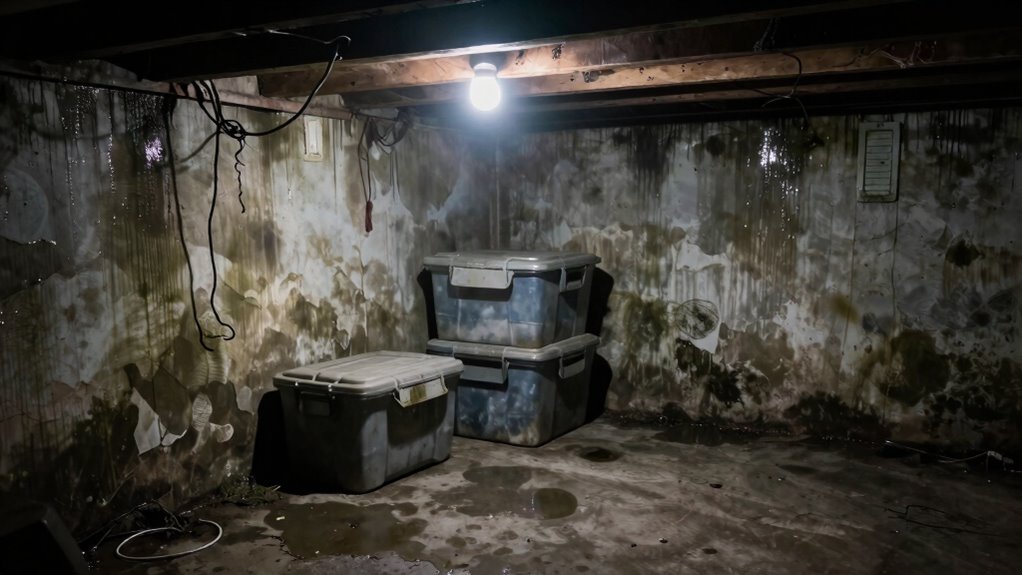

If you keep fixing your basement but the musty smell returns, it’s likely because you’re only addressing surface issues, not the underlying moisture problems. Mold and dampness often hide behind walls or floors, thriving in humid conditions. Temporary remedies like airing out the space or using air fresheners won’t stop mold spores from surviving. Keep exploring to discover how proper moisture management can finally put an end to that persistent odor.

Get home appliances delivered free with Prime
- Fast, free delivery on millions of items
- Prime Video, Amazon Music and more included
- Member-only deals all year
Key Takeaways
- Moisture infiltration and high humidity often persist despite superficial repairs, fueling ongoing mold growth and odors.
- Mold can survive hidden behind walls or floors, reappearing even after visible issues are addressed.
- Inadequate ventilation prevents moisture from drying out, causing musty smells to return.
- Sealing cracks or waterproofing alone doesn’t eliminate underlying moisture sources or prevent future dampness.
- Failing to control indoor humidity levels allows mold spores to thrive, leading to recurring musty odors.

Musty smells in your basement is often a sign of underlying moisture or mold issues that require immediate attention. Even if you’ve taken steps to eliminate the odor, it might keep returning because the root cause isn’t fully addressed. In areas with a humid climate, moisture tends to seep into basements more easily, creating the perfect environment for mold to thrive. Simply airing out the space or using air fresheners won’t solve the problem long-term. You need to understand why the smell persists and what it takes to prevent it from coming back.
First, it’s essential to recognize that moisture is the main culprit behind persistent musty odors. If you’ve tried sealing cracks or waterproofing, but the humidity remains high, mold spores can still find enough moisture to grow. High humidity levels, especially in humid climates, can keep walls and floors damp, even if visible water isn’t present. This ongoing dampness fuels mold growth, which is often invisible to the naked eye but responsible for that lingering smell. To break this cycle, you must implement mold prevention strategies that reduce moisture levels. Using dehumidifiers, improving ventilation, and ensuring gutters direct water away from your foundation are essential steps. Additionally, understanding indoor air quality and how it is affected by moisture can help you develop a comprehensive approach to keeping your basement dry. Proper moisture control techniques can significantly diminish the chances of mold returning. Recognizing the importance of ventilation systems and maintaining them properly can further enhance your efforts to prevent mold growth and odors.
Products Worth Considering

Sonos Era 100 SL Wireless Speakers, Black, Pack of 2

Shark Pet Cordless Stick Vacuum IX141

Sonos Era 300 Wireless Smart Speaker with Dolby Atmos, Black
As an affiliate, we earn on qualifying purchases.
Frequently Asked Questions
Can Persistent Musty Odors Indicate Hidden Mold Problems?
Persistent musty odors can definitely indicate hidden mold problems, as mold growth often causes those smells. If the odors keep returning, it’s likely because odor sources, like unseen mold, remain behind walls or under flooring. You should thoroughly inspect your basement for damp spots or discoloration, and consider professional testing. Addressing mold growth early prevents health issues and keeps odors from recurring, ensuring your space stays fresh.
Are There Specific Materials That Trap More Mold Spores?
Yes, porous materials and mold-prone materials trap more mold spores. Materials like drywall, carpeting, ceiling tiles, and fabric easily absorb moisture and provide ideal environments for mold growth. When you clean or fix your basement, these materials can hold onto spores, causing musty smells to return. To prevent this, focus on replacing or thoroughly drying and treating these porous surfaces, and use mold-resistant alternatives whenever possible.
How Long Should It Take for Odors to Completely Disappear?
Odors from basement dampness can take anywhere from a few days to several weeks to completely disappear, depending on the severity of the dampness and odor absorption. You should guarantee proper ventilation, reduce humidity, and clean affected areas thoroughly. Using dehumidifiers and odor absorbers can speed up the process. Keep monitoring the space, as persistent dampness allows mold spores to continue trapping smells, delaying odor removal.
Do HVAC Systems Spread Musty Smells Throughout the House?
Your HVAC system acts like a gust of wind, spreading musty smells throughout your house. Proper ventilation techniques help control these odors, but if your system isn’t well-maintained, smells can circulate. Dehumidifier effectiveness also plays an essential role—keeping humidity levels low prevents mold growth and reduces mustiness. Regularly cleaning filters and ensuring good airflow can help your HVAC system stop odors from lingering and spreading, keeping your home fresh.
Can Using Air Purifiers Eliminate Musty Basement Odors?
Air purifier effectiveness varies, but they can help reduce musty basement odors considerably. Use an air purifier with a HEPA filter and activated carbon to target airborne mold spores and odor-causing particles. However, for complete odor elimination, combine air purifiers with other odor elimination methods like proper ventilation, removing mold sources, and controlling moisture levels. These steps work together to keep your basement smelling fresh and prevent musty smells from returning.
Conclusion
Remember, the squeaky wheel gets the grease. If you’ve tried fixing your basement’s musty smell and it keeps returning, don’t give up. Persistent odors often signal hidden issues like moisture or mold you might have overlooked. Keep digging until you find the root cause, because ignoring it won’t make the problem go away. Address it thoroughly, and soon enough, your basement will smell fresh and clean—just like they say, “A problem shared is a problem halved.”