
If you create a DIY humidity corner without proper balance, your plants can quickly suffer. Too much humidity encourages mold, fungal growth, and root rot, especially if the soil stays soggy or the air becomes overly moist. Overwatering or poor drainage can drown roots and promote disease. To keep your plants healthy, you need to manage airflow, watering routines, and soil conditions carefully. Stay with us to discover how to avoid these pitfalls and keep your plants thriving.
Key Takeaways
- Excess humidity promotes mold, fungi, and root rot if not properly balanced with airflow and drainage.
- Overwatering or creating overly humid environments can drown roots and cause waterlogging.
- Poor drainage or inappropriate containers lead to soggy soil and compromised plant health.
- Lack of ventilation and overcrowding trap moisture, increasing fungal and disease risks.
- Ignoring proper watering routines and humidity control can quickly harm otherwise healthy houseplants.

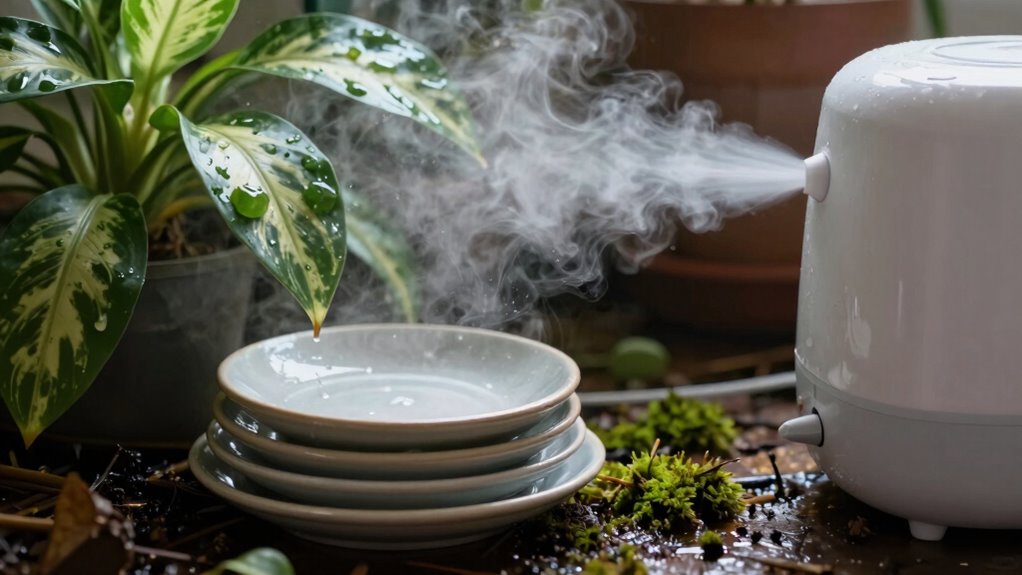
If your houseplants struggle with dry air, creating a dedicated humidity corner can make a big difference. But be careful—without proper balance, your efforts can backfire quickly. It’s tempting to think that raising humidity is just about adding water or misting plants, but neglecting other factors like plant watering and soil drainage can lead to problems. When you set up a humidity corner, you want to create a microenvironment that keeps plants happy without causing harm. Too much moisture in the air can lead to overwatering, root rot, and fungal issues, especially if the soil drainage isn’t adequate.
You might start by adding a tray of water or placing plants on pebble trays to boost humidity. While these can work, they must be used correctly. If you overdo it, the excess water can sit in the soil, leading to soggy roots. This is where plant watering comes into play—your plants should only be watered when their soil dries out slightly. Overwatering, particularly in a humid corner, can drown roots and promote mold growth. The key is to strike a balance: keep the humidity high enough to benefit your tropical plants but not so high that it hampers proper soil drainage.
Soil drainage is critical because it prevents water from pooling at the bottom of the pots. Even in a humidity corner, your plants’ roots need oxygen, and overly soggy soil cuts off that vital airflow. Use pots with drainage holes and well-draining soil mixes to avoid waterlogging. When you water, do so thoroughly, then allow excess water to escape, ensuring the soil doesn’t stay saturated. This prevents the roots from rotting and keeps plants healthy. Incorporating proper container choices that facilitate drainage is essential for a balanced environment. Additionally, choosing the right soil composition can significantly improve drainage and prevent water retention issues. Maintaining proper humidity levels also helps mitigate the risk of fungal growth caused by excess moisture.
Another mistake is placing plants too close together or in containers that trap moisture. While it’s good to create a humid environment, overcrowding can trap humidity around the plants, increasing risks of fungal diseases. Keep some space between your plants, and consider using a fan or ventilation to regulate excess moisture. Proper air circulation can help prevent the buildup of excess humidity and reduce the likelihood of fungal problems. Remember, a humidity corner is beneficial only if it’s balanced—too much humidity, coupled with poor plant watering habits and inadequate soil drainage, can quickly turn your lush setup into a breeding ground for problems.
Additionally, understanding the importance of proper humidity levels can help you maintain an optimal environment that benefits your houseplants without causing stress or disease. In short, focus on maintaining proper plant watering routines, ensure your pots have good soil drainage, and monitor the humidity levels carefully. When you do, your humidity corner will support healthy, thriving houseplants instead of causing them stress or disease.

Plant Pots Indoor with Drainage, 5 Pack Multi-Size Planters Set, White
- Versatile Plant Pots: Indoor and outdoor use
- Multiple Sizes Included: Extra Large to Extra Small
- Matching Saucers Provided: Complete set for plants
As an affiliate, we earn on qualifying purchases.
As an affiliate, we earn on qualifying purchases.
Frequently Asked Questions
Can a Humidity Corner Harm My Houseplants if Not Balanced Properly?
Yes, if your humidity corner isn’t balanced properly, it can harm your houseplants. Poor plant placement can cause excess moisture, leading to mold or root rot, while inadequate humidity control might dry out the plants or encourage pests. To keep your plants healthy, monitor humidity levels regularly and adapt your setup as needed. Proper humidity control and strategic plant placement ensure your plants thrive without risk of damage.
How Often Should I Check Humidity Levels in My DIY Corner?
You should check humidity levels daily to keep your plant health in verify. Think of it as a spa day for your plants—they love consistent humidity control. Ignoring this can cause stress or disease. Use a hygrometer to monitor, and make small adjustments as needed. Regular checks ensure your DIY humidity corner stays balanced, promoting lush, happy plants and preventing the chaos of over- or under-humidification.
What Are the Signs of Over-Humidification in Houseplants?
You’ll notice over-humidification in your houseplants if their leaves turn yellow or brown, and mold or mildew appears on the soil or pot surfaces. Excess moisture can lead to poor air circulation, promoting pests and disease. To prevent this, make sure good airflow around your plants and avoid overwatering. Regularly check for pests and mold, and adjust humidity levels to maintain a healthy balance.
Can DIY Humidity Setups Be Used Outdoors Safely?
You can use DIY humidity setups outdoors, but you need to focus on outdoor weatherproofing to protect your plants from rain and wind. Make certain your setup is sturdy and resistant to weather elements. Additionally, consider pest prevention—outdoor environments attract insects that could harm your plants. Use barriers or natural repellents to keep pests at bay. Properly weatherproofed and pest-protected DIY setups can thrive outside with careful planning.
What Materials Are Best for Building a Humidity Corner?
Building your humidity corner is like crafting a miniature rainforest; choose materials that hold moisture well. Use waterproof trays for humidity, and incorporate plant misting bottles for daily hydration. Opt for ceramic or plastic containers, as they resist water damage and help maintain consistent humidity. Avoid porous materials that can harbor mold. Together, these materials create a balanced environment, keeping your houseplants lush and thriving.

Pinkunn 2 Pcs Bonsai Humidity Tray Rectangular Drip Tray Plastic Plant Water Catcher Plant Saucers for Indoors and Outdoors Cactus,Succulents,Bonsai Tree,Stone Not Included (7.8 x 5.5 Inch)
- Package Includes: 2 bonsai humidity trays
- Suitable for Most Pots: Fits pots up to 7.8 x 5.5 inches
- Protects Furniture: Catches excess water and prevents damage
As an affiliate, we earn on qualifying purchases.
As an affiliate, we earn on qualifying purchases.
Conclusion
If you ignore the delicate balance in your DIY humidity corner, your houseplants might turn into desert-dwelling zombies overnight, wilting and despairing faster than you can say “watering can.” One tiny mistake—like overwatering or neglecting airflow—can transform your lush oasis into a barren wasteland. So, double-check your setup, keep a close eye on moisture levels, and don’t let your green friends suffer a tragic fate. Remember, harmony is the key to thriving houseplants!

Craft Organic Houseplant Potting Mix, Elite House Plant Soil, Chunky, Well Draining Potting Soil for All Indoor Plants, Tropical Plants & Flowers, Sustainable & Peat Free, Less Prone to Gnats, 2QT
- Complete Indoor Potting Soil: Supports healthy root growth and airflow
- Pre-Moistened for Reduced Shock: Settles roots quickly, minimizes transplant stress
- Enriched with Organic Worm Castings: Promotes vibrant, lush foliage growth
As an affiliate, we earn on qualifying purchases.
As an affiliate, we earn on qualifying purchases.

Tonree Grow Tent Fan, 5.5" Greenhouse Clip Fan with Brushless Motor and Non-Slip Clamp, Strong Airflow and Low Noise, 360° Tilt, Easy Mount for Plant Hydroponics Circulation Cooling Ventilation Shed
- 360° Rotatable and Adjustable Speed: Customizable airflow for various setups
- High Velocity, Low Noise: 3700 RPM, 260 CFM, below 40 dB
- Easy Mounting with Strong Clamp: Fits 0.5-2 inch poles, quick setup
As an affiliate, we earn on qualifying purchases.
As an affiliate, we earn on qualifying purchases.