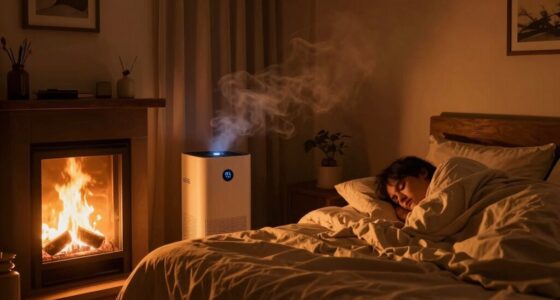
Using strong cleaning chemicals during spring cleaning can initially worsen your breathing. The fumes and airborne particles stir up dust, mold spores, and VOCs, which may cause tighter lungs, coughing, or dizziness. Ventilation helps, but chemical vapors can linger, making breathing uncomfortable even after cleaning. If you want to understand how to safer clean and protect your respiratory health, there’s more helpful information ahead.

Get home appliances delivered free with Prime
- Fast, free delivery on millions of items
- Prime Video, Amazon Music and more included
- Member-only deals all year
Key Takeaways
- Strong cleaning chemicals release VOCs that can cause immediate breathing difficulties and congestion.
- Stirred-up dust and mold during cleaning can worsen respiratory symptoms temporarily.
- Inadequate ventilation traps chemical fumes and airborne particles, prolonging breathing discomfort.
- Using natural, non-toxic products and proper ventilation reduces chemical exposure and respiratory irritation.
- Air purifiers and scheduled deep cleaning help improve indoor air quality and breathing recovery.

Spring cleaning often involves using strong chemicals that can temporarily worsen your breathing before things get better. When you’re scrubbing surfaces, disinfecting, or deodorizing, you might notice your lungs feel tighter or your nose becomes more congested. That’s because many cleaning products release volatile organic compounds (VOCs) into the air, which can considerably impact indoor air quality. If you have chemical sensitivity, these fumes can trigger immediate symptoms like coughing, throat irritation, or even dizziness. Even if you don’t usually react strongly, the buildup of chemical vapors can still make breathing uncomfortable during and after cleaning.
Strong cleaning chemicals can temporarily worsen breathing and cause congestion, especially for sensitive individuals.
Your indoor air quality is vital, especially during spring cleaning when dust, mold spores, and pet dander are stirred up along with cleaning agents. These airborne particles and chemicals can linger, worsening your breathing for hours or even days if not properly ventilated. For individuals with chemical sensitivity, this heightened exposure can be particularly problematic, intensifying symptoms or causing new ones to appear. It’s important to understand that your respiratory system may need time to recover after exposure to these harsh chemicals. You might find that your breathing feels worse immediately after cleaning, but with proper precautions, you can minimize these effects and restore a healthier indoor environment.
One way to reduce the impact is to choose cleaning products carefully. Look for natural or non-toxic options that are free from strong fragrances, ammonia, or bleach. Many brands now offer eco-friendly cleaners that produce fewer VOCs and are less likely to irritate your respiratory system. When you do use stronger chemicals, make sure to ventilate the space well. Open windows and doors, and run fans to help disperse fumes. Wearing a mask can also help limit inhalation of airborne chemicals, especially if you’re prone to sensitivity. Additionally, understanding indoor air quality and how cleaning chemicals affect it can help you make better choices for your home. Using an air purifier with a HEPA filter can also help reduce chemical vapors and airborne allergens, providing relief and cleaner air during and after cleaning. Regularly monitoring air quality levels can help you identify when indoor environments may need additional ventilation or treatment.
It’s also wise to schedule deep cleaning during times when you can leave the space for a while afterward, giving your indoor air quality a chance to improve. Regularly cleaning or replacing air filters can further reduce chemical residues and airborne particles. Investing in ventilation systems can significantly improve your home’s air quality during and after cleaning routines. Being aware of chemical sensitivities can help you recognize early signs of adverse reactions and take steps to prevent them. If you notice persistent breathing issues after cleaning, it might be time to consult a professional or consider an air purifier equipped with a HEPA filter to help remove chemical vapors and allergens from your indoor environment. Remember, your goal isn’t just a tidy home but a healthy one, and managing chemical exposure is key to ensuring your breathing feels easier once the cleaning is done.
Products Worth Considering

Levoit Core 400S-P Smart Air Purifier for Large Rooms

LEVOIT Vital 200S-P Smart Air Purifier for Large Rooms

Blueair Blue Pure 511i Max Smart Air Purifier
As an affiliate, we earn on qualifying purchases.
Frequently Asked Questions
Are Natural Cleaning Products Safer for Asthma Sufferers?
Yes, natural alternatives are generally safer for asthma sufferers because they often contain fewer chemicals that can trigger sensitivities. If you have chemical sensitivities, switching to natural cleaning products can reduce your asthma symptoms and make breathing easier. However, always check labels, as some natural ingredients might still cause reactions. It’s best to test a small area first and choose products specifically designed for sensitive users to guarantee safety.
How Long Do Cleaning Fumes Typically Linger?
Cleaning fumes typically linger for a few hours to a day, depending on the chemical lingering and ventilation. If you don’t ventilate well, fumes can stay longer and cause breathing discomfort. To reduce fume duration, open windows, use fans, and avoid mixing strong chemicals. Keep these precautions in mind so that chemical lingering doesn’t worsen your breathing and you can enjoy a healthier, cleaner home sooner.
Can Ventilation Reduce Chemical Exposure Effectively?
Yes, ventilation can effectively reduce chemical exposure during cleaning. By increasing air exchange, you help disperse harmful fumes and dilute airborne chemicals, making the environment safer. Opening windows and using fans accelerates chemical dispersion, decreasing the concentration of pollutants in the air. This process aids in clearing out lingering fumes quickly, so your breathing feels easier sooner, and minimizes health risks associated with inhaling cleaning chemicals.
Are There Specific Ingredients to Avoid During Spring Cleaning?
Avoid harsh fragrances and synthetic preservatives during spring cleaning to protect your lungs and overall health. These ingredients can irritate your respiratory system and worsen breathing issues. Instead, opt for natural, non-toxic cleaners that are free from overpowering scents and artificial additives. By choosing gentle, eco-friendly products, you create a safer, healthier environment, allowing you to breathe easier and enjoy a fresh, fragrance-free home this spring.
How Can I Tell if My Symptoms Worsen From Cleaning Chemicals?
If your breathing worsens, you might experience increased coughing, wheezing, or shortness of breath, indicating symptom escalation from chemical sensitivity. Pay attention to whether these symptoms appear or intensify after cleaning. Keep track of your reactions and note any specific chemicals that trigger discomfort. If symptoms continue or worsen, stop using those chemicals and consult a healthcare professional to manage your sensitivity effectively.
Conclusion
As you tackle your spring cleaning, remember that the chemicals you use can feel like a storm cloud before the sunshine—making your breathing worse before it improves. Take precautions, use natural alternatives, and ventilate your space well. Think of it like clearing out a foggy window; once you let fresh air in, everything becomes clearer and brighter. Your lungs will thank you for your effort to create a healthier, fresher home.