
PM2.5 particles are tiny airborne pollutants less than 2.5 micrometers across, so small you can’t see them. They come from sources like vehicle exhaust, factories, wildfires, and dust storms. Because of their small size, they can go deep into your lungs and even enter your bloodstream, causing health problems like asthma, heart issues, and respiratory diseases. Knowing how these particles form, where they come from, and how to protect yourself is important—there’s much more to uncover.
Key Takeaways
- PM2.5 are tiny airborne particles less than 2.5 micrometers, small enough to penetrate deep into lungs and bloodstream.
- They are composed of heavy metals, organic compounds, and toxins from combustion sources like vehicles and industry.
- Their small size allows them to stay airborne longer and travel further, increasing exposure risks.
- PM2.5 formation occurs naturally (wildfires, dust storms) and from human activities (burning fuels, industrial emissions).
- Exposure to PM2.5 is linked to respiratory and cardiovascular health problems, making it a dangerous component of smoke.
What Are PM2.5 Particles and Why Do They Matter for Your Health?
PM2.5 particles are tiny airborne pollutants measuring less than 2.5 micrometers in diameter—about 30 times smaller than a human hair. Their particle composition includes chemicals like heavy metals, organic compounds, and toxins from combustion sources such as vehicles and factories. Because of their small size, these particles can penetrate deep into your lungs and even enter your bloodstream. This can lead to serious health implications, including respiratory issues, cardiovascular problems, and increased risk of chronic diseases. Microplastics in dust can also contribute to indoor air pollution, adding another layer of concern for health. Additionally, their contrast ratio and chemical makeup influence how harmful they can be when inhaled. Understanding what PM2.5 particles are helps you recognize the health risks associated with air pollution. Proper gear care and measures to reduce exposure can significantly protect your health, especially if you belong to vulnerable groups like children, the elderly, or those with pre-existing health conditions. Recognizing the sources of PM2.5 can aid in taking targeted actions to minimize exposure and protect your well-being. Awareness of air purification technologies can further assist in effectively reducing indoor PM2.5 levels and safeguarding your health.
Just How Small Is a PM2.5 Particle? Understanding Its Size

PM2.5 particles are incredibly tiny, measuring 2.5 micrometers or less in diameter, making them invisible to the naked eye. To understand just how small they are, you can compare them to everyday objects, like a human hair or a red blood cell. Scientists use specialized measurement techniques to accurately determine their size and monitor their presence in the air. Vetted – Eat More Butter helps researchers develop innovative ways to study these particles more effectively. Additionally, understanding their airborne behavior is crucial for assessing health risks and implementing protective measures.
Particle Diameter Details
Because of their tiny size, particles measuring 2.5 micrometers or less are incredibly difficult to see with the naked eye. To determine their particle size, scientists use various measurement techniques like laser scattering and cascade impactors. These methods help quantify just how small PM2.5 particles are, often in nanometers, which are thousandths of a micrometer. Understanding particle diameter details is vital for evaluating health risks. Keep in mind:
- Particle size influences how deep particles penetrate into your respiratory system
- Measurement techniques vary in sensitivity and accuracy
- Smaller particles can stay airborne longer
- Particle diameter affects their ability to carry harmful chemicals
- Precise measurement is essential for regulation and health guidelines
Knowing these details helps you grasp why PM2.5 can be so dangerous to your health.
Comparing Particle Sizes
To truly grasp how tiny PM2.5 particles are, it helps to compare them to familiar objects and sizes. A typical grain of pollen is much larger than a PM2.5 particle, which measures about 2.5 micrometers in diameter—roughly 30 times smaller than a human hair. When you do a particle size comparison, you see just how minuscule these particles are. Microscopic measurement techniques allow scientists to see and analyze these tiny particles with precision, revealing their minute dimensions. This incredible smallness enables PM2.5 to penetrate deep into your lungs and even enter your bloodstream. Understanding just how small these particles are highlights why they pose such significant health risks, making their microscopic size critical to your health and safety.
Measurement Techniques Used
Ever wonder how scientists can measure particles so tiny that they’re invisible to the naked eye? They use specialized particle measurement techniques and advanced air quality sensors to detect PM2.5. These sensors analyze particles by drawing in air and using methods like laser scattering or beta attenuation to determine size and concentration. Here are some key approaches:
- Laser scattering sensors that measure light deflection caused by particles
- Beta attenuation monitors that assess particle mass through radiation absorption
- Optical particle counters that count and size individual particles
- Gravimetric samplers that collect particles on filters for lab analysis
- Real-time air quality sensors providing immediate data
Accurate detection methods are essential for monitoring air pollution levels precisely. These measurement techniques help monitor air quality, enabling timely responses to pollution levels and better understanding of tiny PM2.5 particles.
How Do PM2.5 Particles Form in the Environment?
PM2.5 particles form through a combination of natural processes and human activities. During particle formation, tiny particles originate from various sources, influenced heavily by environmental factors. Natural processes like wildfires, volcanic eruptions, and dust storms release particles into the air. Human activities, such as vehicle emissions, industrial processes, and burning fossil fuels, also contribute considerably. These activities release gases that react in the atmosphere, forming secondary particles through chemical reactions. Environmental factors like temperature, humidity, and sunlight affect how quickly and extensively these particles form and disperse. Changes in weather and pollution levels can either promote or inhibit particle formation. Additionally, air quality can significantly impact the extent and health effects of PM2.5 pollution. Understanding these processes helps you grasp how PM2.5 pollution originates and spreads in the environment, including the role of atmospheric chemistry in particle formation. The presence of pollutant sources in the environment also plays a critical role in the overall concentration of PM2.5 particles. Variations in environmental conditions can further influence the rate and distribution of particle formation and dispersion. Moreover, advances in monitoring technology are improving our ability to track and predict PM2.5 levels more accurately.
Where Do PM2.5 Particles Come From? Key Pollution Sources

Many of the key sources that contribute to PM2.5 pollution are linked to human activities, which release a variety of particles and gases into the air. Industrial emissions from factories and power plants are major contributors, emitting soot, sulfur compounds, and other pollutants. Transportation also plays a significant role, with vehicle exhaust releasing fine particles. Additionally, natural sources contribute to PM2.5 levels, such as wildfires, dust storms, and volcanic activity. You should also consider other sources like residential burning, construction activities, and agricultural processes. These diverse sources combine to elevate PM2.5 levels in the atmosphere, impacting air quality and health. Electric bikes are increasingly popular as an eco-friendly alternative for commuting, helping reduce emissions from traditional transportation sources. Moreover, implementing regulatory measures can significantly curb emissions from major pollution sources, leading to cleaner air. To further decrease PM2.5 levels, promoting public awareness about pollution sources and mitigation strategies is essential. Understanding exposure risks associated with PM2.5 can motivate communities to adopt healthier practices and support policy changes. Raising awareness about air quality monitoring can also empower individuals to take action to protect their health.
What Are the Health Risks of Breathing in PM2.5?
Breathing in PM2.5 can harm your respiratory system, causing issues like asthma and bronchitis. It also increases your risk of heart disease over time. Vulnerable groups, such as children and the elderly, are especially at risk of serious health effects. Understanding Free Floating particles can help you recognize the importance of air quality in your environment. Additionally, awareness of air pollution sources can assist in reducing exposure and protecting your health.
Respiratory System Impact
Have you ever wondered how tiny particles in the air can affect your lungs? PM2.5 can penetrate deep into your respiratory system, causing irritation and inflammation. Breathing in these particles may lead to symptoms like coughing, wheezing, and shortness of breath. Long-term exposure can worsen existing respiratory conditions or trigger new issues. To protect yourself, focus on improving indoor air quality and follow respiratory health tips. Here are some key points:
- Keep windows open when possible to circulate fresh air
- Use air purifiers with HEPA filters
- Avoid smoking indoors or near ventilation sources
- Regularly clean floors and surfaces to reduce dust
- Limit outdoor activities during high pollution days
Heart Disease Link
Exposure to PM2.5 doesn’t just harm your lungs; it also substantially increases your risk of heart disease. When you breathe in fine particles from indoor air or pollution, they can enter your bloodstream, triggering inflammation and arterial damage. This process raises your chances of developing heart problems, including heart attacks and strokes. To reduce this risk, effective pollution control inside your home is essential. Using air purifiers, maintaining good ventilation, and avoiding indoor sources of pollution can help. Even if outdoor air quality is poor, managing indoor air quality minimizes your exposure to PM2.5. Protecting your heart involves understanding how these tiny particles impact your cardiovascular system and taking steps to improve indoor air quality regularly.
Vulnerable Populations
Certain groups are more vulnerable to the health risks of PM2.5 because their bodies are less able to fight off the harmful effects. Vulnerable populations often face greater health disparities, making them more susceptible to pollution’s dangers. For example, children’s developing lungs are more sensitive, and older adults may have weakened immune systems. People with pre-existing conditions like asthma or heart disease are at higher risk of severe health impacts. Additionally, low-income communities often live in areas with higher pollution levels, compounding the risk. Vulnerable populations include:
- Children and infants
- Elderly individuals
- People with chronic illnesses
- Pregnant women
- Residents of high-pollution neighborhoods
Understanding these disparities helps prioritize protection for those most at risk.
How Does PM2.5 Affect Your Lungs and Heart?
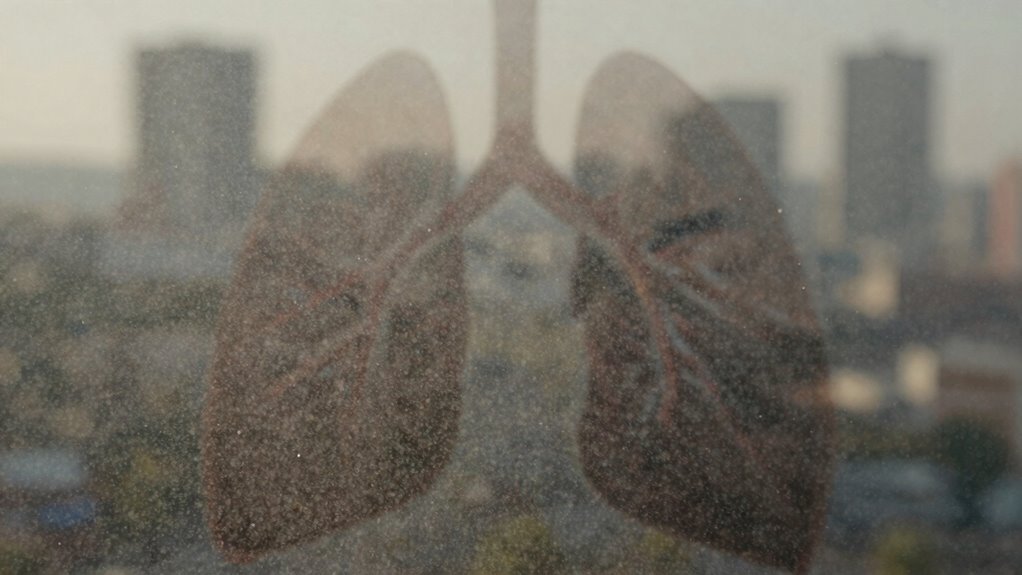
PM2.5 particles can penetrate deep into your lungs and enter your bloodstream, causing inflammation and damage. When inhaled, these tiny particles trigger lung inflammation, which can worsen respiratory conditions like asthma or COPD. The inflammation isn’t limited to your lungs; it can also lead to cardiovascular effects. PM2.5 promotes the formation of plaques in your arteries, increasing the risk of heart attacks and strokes. Over time, consistent exposure strains your heart and lungs, reducing their function. You might notice increased shortness of breath, chest tightness, or irregular heartbeat. Long-term exposure can cause chronic health issues, making your lungs and heart work harder to keep up. Protecting yourself from PM2.5 exposure is essential to maintaining overall cardiovascular and respiratory health.
How Does PM2.5 Compare to Other Air Pollutants?

While PM2.5 particles are particularly harmful due to their tiny size and ability to penetrate deep into your lungs and bloodstream, they are just one type of air pollutant that affects your health. Other pollutants, like nitrogen dioxide (NO₂), ozone (O₃), sulfur dioxide (SO₂), carbon monoxide (CO), and particulate matter larger than 2.5 micrometers, also contribute to air pollution’s health effects. Each has distinct sources and impacts:
- NO₂ from vehicle emissions causes respiratory issues.
- Ozone forms from sunlight reacting with pollutants and irritates lungs.
- SO₂ from burning fossil fuels triggers asthma attacks.
- CO interferes with oxygen transport in your blood.
- Larger particles can still cause breathing problems but are less likely to reach deep into your lungs.
Understanding these differences helps you grasp air pollution’s overall health effects.
How Can You Protect Yourself From PM2.5 Pollution?
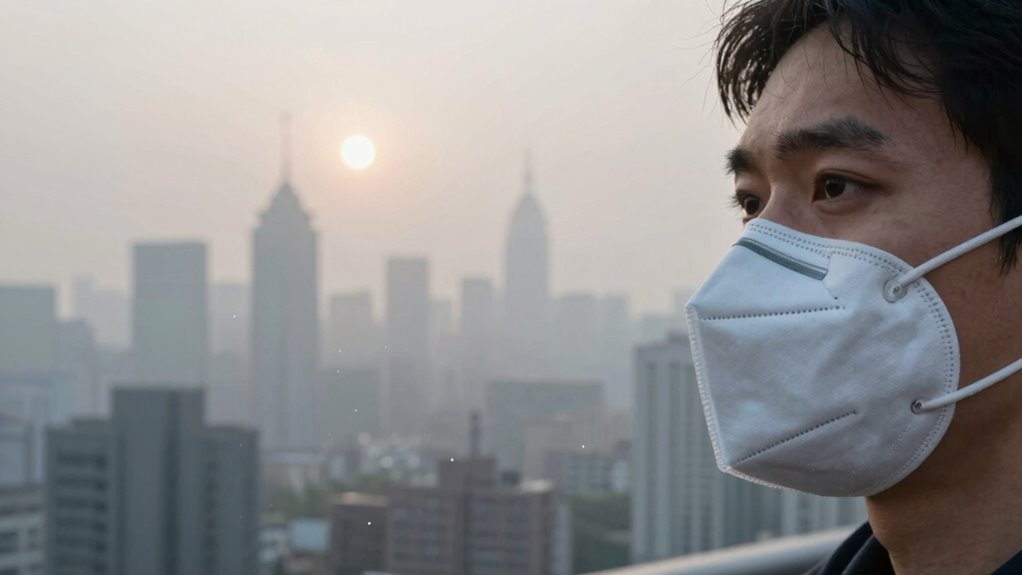
To protect yourself from PM2.5 pollution, you can wear protective masks and use air purifiers indoors. Limiting your outdoor activities during high pollution days also makes a big difference. Taking these steps helps reduce your exposure and keeps you safer.
Wear Protective Masks
Wearing protective masks is one of the most effective ways to reduce your exposure to PM2.5 pollution, especially during high pollution days. Proper mask safety guarantees you’re filtering out tiny particles that can harm your lungs. Choose masks designed for pollution prevention, such as N95 or KN95 respirators, which effectively block PM2.5 particles. Make sure your mask fits snugly over your nose and mouth without gaps. Avoid masks with valves, as they can release unfiltered air. Replace masks regularly to maintain their filtration efficiency. Remember, consistent use and correct fit are key to maximizing protection and minimizing health risks during pollution spikes.
Use Air Purifiers
Using air purifiers can substantially reduce your indoor exposure to PM2.5 pollution, especially on days when outdoor air quality is poor. To maximize protection, choose portable air cleaners with high-efficiency filters, such as HEPA filters, which are proven to improve air purifier effectiveness. These devices can quickly remove tiny particles from the air, lowering PM2.5 levels inside your home. Place air purifiers in frequently used rooms and run them continuously during pollution spikes. Keep filters clean and replace them regularly to maintain best performance. While air purifiers aren’t a complete solution, they are a practical way to reduce indoor PM2.5 exposure, helping you breathe easier and minimize health risks associated with smoke and pollution.
Limit Outdoor Activities
How can you protect yourself from PM2.5 pollution when outdoor air quality is poor? Limiting outdoor activities is essential. During high pollution days, follow outdoor restrictions and reduce activity limitations to minimize exposure. Stay indoors as much as possible, especially during peak pollution hours. If you must go outside, consider these tips:
- Check daily air quality reports before heading out
- Schedule outdoor activities during times of lower PM2.5 levels
- Wear a high-quality mask designed for pollution
- Keep windows and doors closed to prevent indoor infiltration
- Use air purifiers to improve indoor air quality
These steps help protect your lungs and overall health when outdoor conditions are hazardous. Remember, being proactive with outdoor restrictions and activity limitations can considerably reduce your risk of PM2.5-related health issues.
How Is PM2.5 Air Quality Monitored Near You?
Air quality monitoring for PM2.5 involves a network of specialized sensors and stations that continuously collect data on tiny particulate matter in the air. These air quality sensors are strategically placed across your community to track pollution levels in real-time. They send data to local environmental agencies, enabling accurate pollution monitoring. This information helps determine whether air quality is within safe limits or if pollution spikes are occurring. Many cities also provide public access to air quality indexes based on sensor data, so you can stay informed about current conditions. Regular monitoring allows authorities to identify pollution sources and issue health advisories when needed. Overall, these tools help ensure you’re aware of PM2.5 levels and can take appropriate precautions.
What Can Be Done to Reduce PM2.5 Pollution in Your Community?
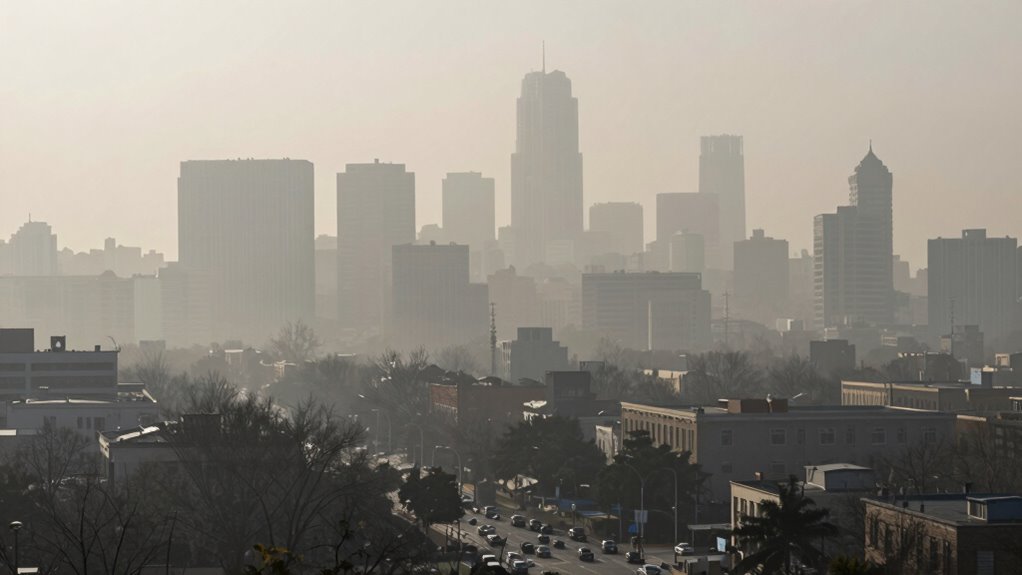
To reduce PM2.5 pollution in your community, you can support and participate in local initiatives aimed at cutting emissions. Improving air quality requires addressing pollution sources and encouraging cleaner practices. You can:
- Advocate for stricter vehicle emissions standards
- Support public transportation and carpool programs
- Promote the use of cleaner, renewable energy sources
- Participate in community tree-planting events
- Reduce burning of waste and other indoor pollution sources
Frequently Asked Questions
How Long Does PM2.5 Stay Suspended in the Air?
PM2.5 particles can stay suspended in the air for hours or even days, depending on wind, weather, and chemical reactions. Their small particle size allows them to remain airborne longer, as they’re less affected by gravity. These tiny particles often undergo chemical reactions that can change their properties, prolonging their suspension. So, your environment’s conditions and the particles’ chemical makeup influence how long PM2.5 stays in the air.
Can Indoor Activities Increase PM2.5 Levels?
You know what they say, “Where there’s smoke, there’s fire.” Indoor activities like smoking and cooking emissions can definitely increase PM2.5 levels. Indoor smoking releases tiny particles directly into the air, while cooking emissions from frying or grilling generate fine particles that linger. To protect yourself, ventilate well and avoid indoor smoking, especially when cooking. This way, you reduce indoor PM2.5 and keep your air safer to breathe.
Are Children More Vulnerable to PM2.5 Exposure?
Yes, children are more vulnerable to PM2.5 exposure because their developing lungs and immune systems can’t filter out pollutants as effectively. Their higher breathing rate means they inhale more particles relative to their size, increasing health risks. Factors like age, pre-existing health conditions, and outdoor activity levels further heighten their vulnerability. Protecting child health involves minimizing exposure and ensuring cleaner indoor environments whenever possible.
How Does Weather Influence PM2.5 Concentrations?
Imagine weather as a gentle conductor shaping air quality. meteorological factors like wind, temperature, and humidity directly influence PM2.5 levels. Wind disperses pollutants, reducing concentrations, while temperature inversions trap them near the ground, raising risks. Humidity can cause particles to grow, making air quality worse. So, when weather conditions shift, they can either clear the air or make pollution more persistent, affecting what you breathe in daily.
What Technologies Are Effective in Filtering PM2.5 Indoors?
You can effectively filter PM2.5 indoors with air purifiers that use HEPA filtration systems. These systems capture tiny particles like smoke and dust, improving indoor air quality. Look for models specifically designed for PM2.5 removal, and make sure they have proper coverage for your space. Using air purifiers regularly can considerably reduce your exposure to harmful particles, creating a healthier environment inside your home or office.
Conclusion
Think about it: those tiny PM2.5 particles could be silently harming your health every day. Some say wearing masks or checking air quality is enough, but real change starts with awareness and action. What if the theory that clean air isn’t just a luxury but a basic human right is true? Protect yourself and your community by staying informed and pushing for cleaner air—because everyone deserves to breathe safely.