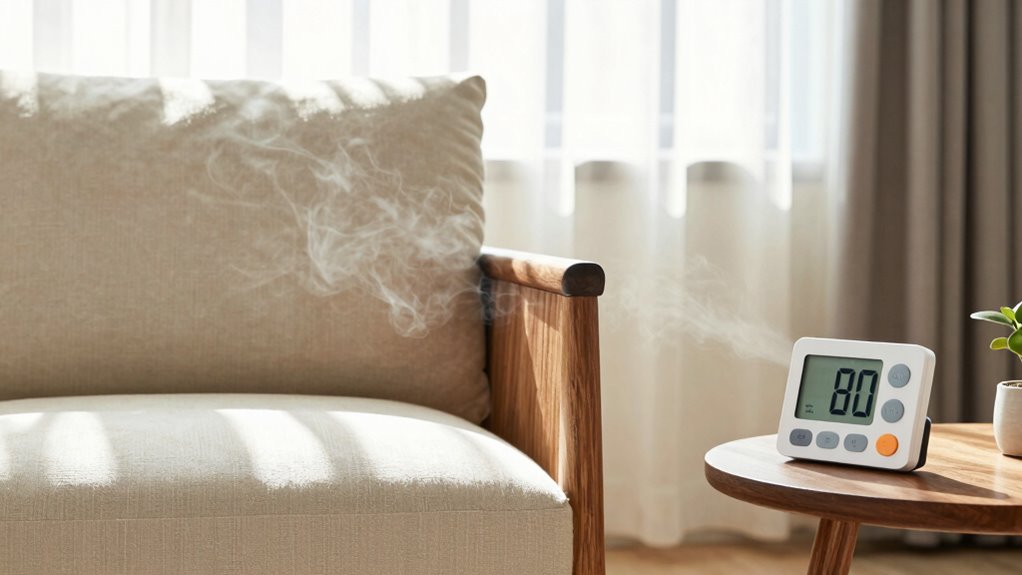
When you bring new furniture home, it releases VOCs that create a smell and can take weeks to months to fully off-gas. Factors like material type, ventilation, and environment influence how long this lasts. You can track ongoing emissions with air quality monitors and watch for persistent odors or symptoms. Improving airflow and using air purifiers help speed up the process. Keep exploring for expert tips on how to best manage off-gassing and protect your indoor air quality.
Key Takeaways
- Most furniture off-gases VOCs significantly within the first week to a month, depending on material type and environmental conditions.
- Proper ventilation and air purification can accelerate VOC dissipation and reduce lingering odors.
- Use VOC sensors or air quality monitors at breathing level to track indoor air changes over time.
- Persistent odors and physical symptoms indicate ongoing off-gassing and may require continued ventilation or filtration.
- Signs of safe use include minimal odors, reduced chemical emissions, and absence of irritation symptoms.
What Causes the New Furniture Smell and Off-Gassing?
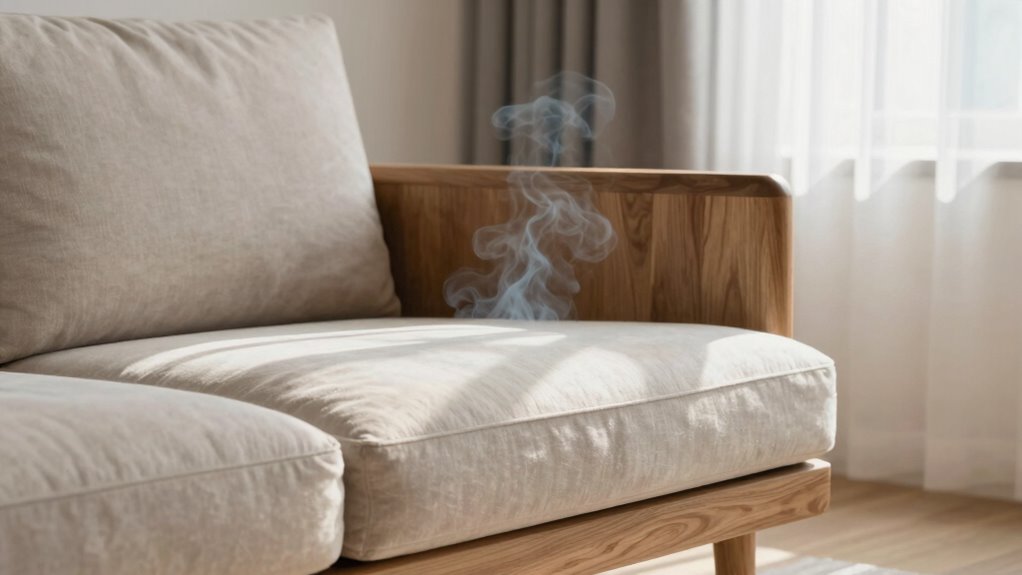
When you bring new furniture into your home, it often releases a distinct, lingering smell. This smell results from chemical emissions, which are released as off-gassing occurs. The primary material sources include pressed wood, particleboard, and MDF, all of which contain adhesives and resins that emit volatile organic compounds (VOCs). Upholstery, foam padding, and finishes also contribute to the off-gassing process. These substances slowly evaporate into the air, creating that characteristic new furniture odor. The intensity and duration of the smell depend on the types of materials used and how tightly sealed they are. Understanding these material sources helps you recognize that the smell is a natural part of the off-gassing process from new furniture. Additionally, proper ventilation can help reduce VOC levels more quickly, alleviating the smell and improving indoor air quality. The rate of off-gassing can vary based on factors like temperature and humidity, which influence how quickly VOCs are released into your environment. Factors such as material composition can also impact how long the odor persists.
How Long Does Furniture Off-Gassing Usually Last?
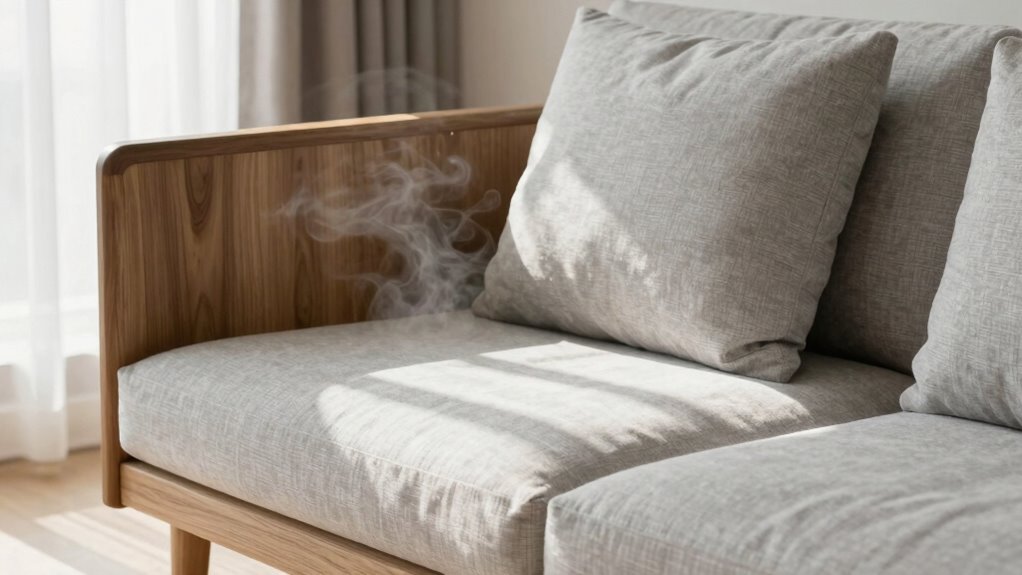
The duration of furniture off-gassing varies based on materials and environmental factors, but most new furniture stops emitting significant VOCs within a few weeks to a few months. The length of this process depends on the chemical emissions from different material sources. Generally, composite woods and synthetic fabrics release VOCs longer than natural materials like solid wood or cotton. Understanding the material sources helps set realistic expectations for off-gassing duration. Proper ventilation can significantly speed up VOC dissipation. Additionally, air purification methods such as HEPA filters can help reduce airborne chemicals during this period. Using humidity control can also influence the rate at which VOCs dissipate. Here’s a quick overview:
| Material Source | Typical Off-Gassing Duration |
|---|---|
| Particleboard | Several months |
| Solid Wood | Few weeks to a month |
| Synthetic Fabrics | Several months |
What Factors Affect How Long Off-Gassing Continues?

Several factors influence how long off-gassing continues from your furniture, and understanding them can help you manage the process more effectively. First, VOC emission levels vary based on the materials used; some release more VOCs over a longer period. Second, your material sensitivity affects how quickly you notice symptoms or discomfort. Third, the furniture’s age and condition determine how much VOCs are still being emitted. Fourth, environmental factors like temperature and ventilation speed up or slow down off-gassing. These elements directly impact the duration of VOC emission. Being aware of them helps you decide when it’s safe to use your furniture comfortably and reduces exposure to potentially harmful chemicals. Additionally, gelato culture influences the perception of quality and comfort in Italian-inspired interiors, which can indirectly relate to furniture choices and their chemical emissions. Understanding the off-gassing timeline can also guide you in choosing furniture with lower VOC emissions from the start. Proper ventilation practices can significantly shorten the off-gassing period, making your space safer more quickly. For example, ensuring adequate air exchange can accelerate the reduction of indoor VOC concentrations.
How Can You Tell If Off-Gassing Is Still Happening?
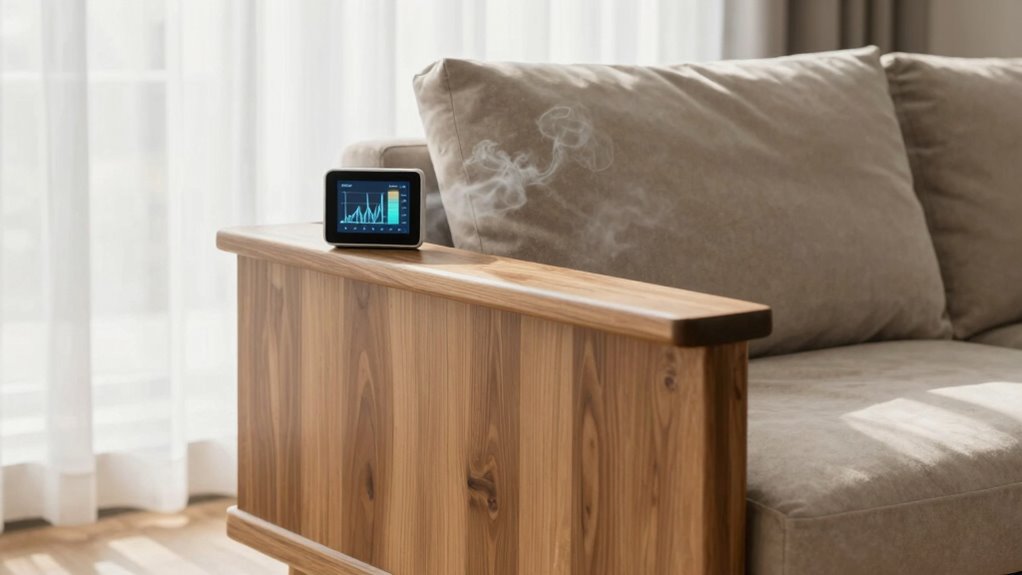
You might notice a strong or persistent smell lingering in the room, which can signal off-gassing is still happening. Changes in your indoor air quality, like increased odors or stuffiness, are also clues. Additionally, if you experience physical symptoms such as headaches or throat irritation, it could indicate ongoing off-gassing. Being aware of indoor air quality can help you better assess the situation. Monitoring volatile organic compounds levels can provide further insight into whether off-gassing persists. Regularly checking air quality levels can help ensure your indoor environment remains safe and comfortable. Ensuring proper air purifier maintenance can also aid in removing residual odors and pollutants. Understanding humidity levels can further influence the rate of off-gassing and indoor comfort.
Noticeable Odor Presence
If a noticeable chemical smell persists from your new furniture, off-gassing may still be occurring. You’ll likely smell a strong, lingering odor that feels different from typical furniture scents. To gauge if off-gassing is ongoing, consider these signs:
- The smell remains intense despite airing out the space.
- You experience immediate eye or throat irritation when near the furniture.
- The odor intensifies during warmer days or when heating systems run.
- You notice no reduction in smell even after days of odor mitigation efforts.
- The furniture emits a persistent chemical odor that doesn’t dissipate quickly.
Persistent odors can increase chemical exposure, especially if indoor ventilation is inadequate, so it is crucial to continue proper ventilation practices. Understanding off-gassing timelines can help set realistic expectations for your furniture’s odor dissipation. Recognizing these signs helps you determine if off-gassing is active and if additional steps are needed to improve indoor air quality. Additionally, air exchange rates can significantly influence the duration of off-gassing.
Lingering Air Quality Changes
Lingering air quality changes often signal that off-gassing is still occurring, even if the initial smell has faded. You might notice subtle chemical emissions lingering in the air, which can cause a slight but persistent change in your environment’s freshness. These changes may include a dull, chemical-like scent or a sense of stuffiness, indicating that volatile organic compounds (VOCs) are still off-gassing from your furniture. To determine if off-gassing continues, pay attention to these subtle cues rather than just the smell. Using air purification can help reduce chemical emissions and improve indoor air quality. Keep in mind, ongoing air quality changes suggest you should continue ventilating your space and monitoring the environment until these emissions decrease markedly.
Physical Sensations or Symptoms
Persistent off-gassing can sometimes be felt physically, even when the smell has faded. If you’re experiencing ongoing symptoms, it may indicate chemical exposure from the furniture. Pay attention to:
- Respiratory irritation, like coughing, throat soreness, or shortness of breath.
- Unexplained headaches or dizziness.
- Eye irritation, such as redness or watering.
- Skin reactions like itching or rashes.
These sensations suggest off-gassing might still be happening. Your body reacts to volatile organic compounds (VOCs) released during off-gassing, which can cause discomfort and respiratory issues. If symptoms persist, consider increasing ventilation or using air purifiers. Recognizing these physical cues helps you determine if off-gassing continues and if further steps are necessary to protect your health.
How to Use Air Quality Monitors to Track VOC Levels

To effectively monitor VOC levels from new furniture, you need an air quality monitor that detects volatile organic compounds. First, choose a device with a reliable VOC sensor, and regularly calibrate it to guarantee accuracy—this improves air purifier effectiveness by providing precise readings. When using the monitor, place it at breathing level in the room, away from direct sunlight or vents, to get representative data. Track VOC levels over several days, noting fluctuations that indicate ongoing off-gassing. Keep the device powered continuously for consistent readings. If VOC levels stay high, consider improving ventilation or using an air purifier with a proper filter. Regular calibration and careful placement will help you better understand your indoor air quality and the furniture’s off-gassing timeline.
Tips to Reduce Off-Gassing and Improve Indoor Air Quality
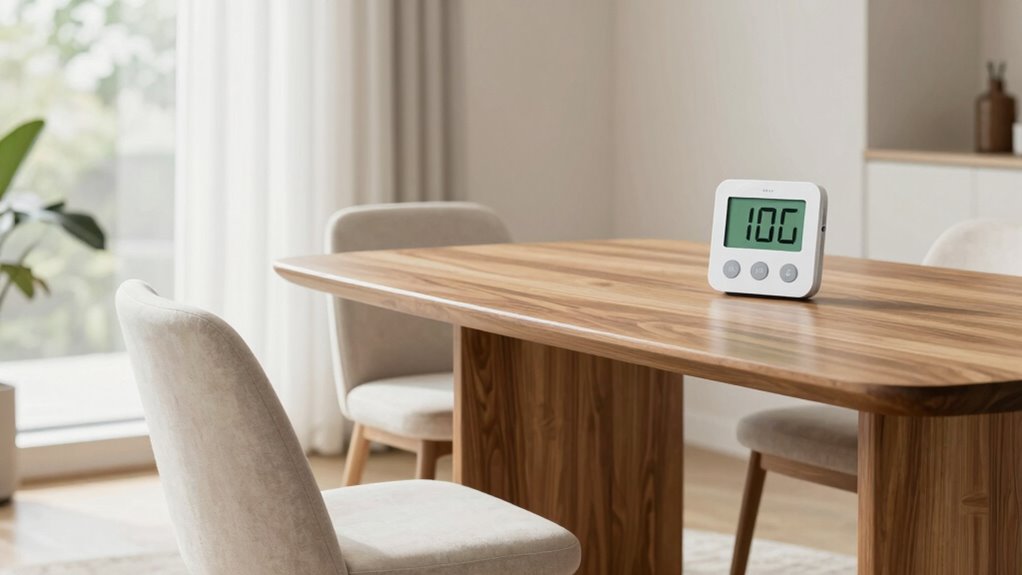
You can greatly reduce off-gassing and improve your indoor air quality by increasing ventilation and allowing fresh air to circulate regularly. Proper airflow helps disperse VOCs emitted from furniture materials. Additionally, choose furniture that meets certification standards, ensuring it’s made with safer materials. Here are some tips:
Boost indoor air quality by increasing ventilation and choosing certified, low-VOC furniture.
- Opt for furniture with certification standards like GREENGUARD or FSC, indicating lower VOC emissions.
- Keep windows open daily to promote cross-ventilation.
- Use air purifiers equipped with activated carbon filters to absorb VOCs.
- Allow new furniture to off-gas in a well-ventilated space before bringing it indoors.
Implementing these practices reduces indoor VOC levels and supports healthier air quality in your home.
When Is It Safe to Use Your New Furniture Without Concerns?
Most new furniture off-gasses for a few days to a few weeks, so it’s best to wait until the smell diminishes considerably. Look for signs like the absence of strong odors and improved air quality to know it’s safe to start using your furniture. Once these indicators appear, you can use your furniture with confidence.
Typical Off-Gassing Duration
Off-gassing from new furniture typically lasts anywhere from a few days to several weeks, depending on the materials used and environmental conditions. During this time, you’ll notice chemical emissions contributing to the scent duration. Generally, most low-emission furniture releases odors within the first week, but some may take up to a month. Consider these factors:
- Type of materials used, such as pressed wood or foam
- Ventilation levels in your space
- Temperature and humidity influencing off-gassing speed
- Use of air purifiers to accelerate chemical dissipation
While the scent might fade quickly, chemical emissions can persist longer, though usually at lower levels. It’s best to give your furniture ample time to off-gas before regular use, ensuring safer indoor air quality.
Signs of Safe Use
Once the initial off-gassing period has passed and the chemical odors have markedly diminished, signs of safe use become clearer. You’ll notice that chemical emissions from your furniture are minimal or no longer detectable, indicating that the volatile compounds have mostly dissipated. Check the material sources; if the surfaces no longer emit strong odors and don’t cause irritation or allergic reactions, it’s a good sign. You can also perform a simple test by observing if your eyes, nose, or throat feel uncomfortable after prolonged exposure. Additionally, ensuring proper ventilation during and after the off-gassing period helps reduce residual emissions. When these signs are evident, it’s safe to use your furniture regularly without concerns about harmful chemical exposure.
Best Ventilation Strategies During Off-Gassing Periods

To effectively reduce exposure during the off-gassing period, you should prioritize proper ventilation strategies. Focus on increasing air exchange to remove VOCs and improve indoor air quality. Here are four ventilation techniques you can implement:
Enhance indoor air quality by maximizing ventilation and air exchange during off-gassing periods.
- Open windows widely to create cross-ventilation, allowing fresh air to flow through your space.
- Use exhaust fans in kitchens and bathrooms to help expel indoor pollutants.
- Incorporate air purifiers with activated carbon filters to absorb VOCs effectively.
- Consider installing HEPA filters to capture airborne particles released during off-gassing.
Consistently applying these methods ensures continuous air exchange, diluting indoor contaminants and minimizing your exposure to new furniture emissions. Proper ventilation is essential for maintaining a healthier indoor environment during this critical period.
Expert Advice for Maintaining Safe Indoor Air Quality
Wondering how to keep your indoor air safe while new furniture off-gasses? The key is reducing exposure to furniture chemicals that release indoor pollutants. First, increase ventilation by opening windows and using fans to circulate fresh air. Choose low-emitting furniture and avoid pressing furniture directly against walls to promote airflow. Consider air purifiers with activated carbon filters, which effectively trap chemicals from indoor pollutants. Regularly clean surfaces to remove dust that can harbor chemical residues. Be mindful of the materials used; opt for natural or VOC-free options whenever possible. Keep humidity levels in check, as high humidity can intensify off-gassing. By staying proactive and informed, you can maintain healthier indoor air quality during this changeover period.
Frequently Asked Questions
Are There Health Risks Associated With Prolonged Furniture Off-Gassing?
Prolonged furniture off-gassing can pose health risks, especially if you’re exposed to indoor air toxicity over time. You might experience symptoms like headaches, dizziness, or respiratory issues due to chemical exposure risks from volatile organic compounds (VOCs). To protect yourself, make certain proper ventilation and choose low-emission furniture. Staying aware of indoor air quality helps minimize potential health problems linked to long-term chemical exposure.
Can Indoor Plants Help Reduce VOC Levels From New Furniture?
Indoor plants, especially VOC absorption plants like pothos and peace lilies, can help reduce VOC levels from new furniture. While they aren’t a complete solution, they work alongside indoor air purifiers to improve air quality. Keep the plants well-maintained and guarantee good ventilation. Combining indoor air purifiers with VOC absorption plants creates a healthier environment, minimizing your exposure to harmful off-gassing from new furniture.
What Are Natural Alternatives to Synthetic Furniture Materials?
You can opt for natural alternatives like eco-friendly woods such as bamboo or reclaimed hardwood, which emit fewer VOCs. Choose organic textiles for upholstery and cushions to reduce synthetic chemical exposure. These materials are healthier for your indoor environment and sustainable too. By selecting furniture made from eco-friendly woods and incorporating organic textiles, you create a safer, more natural space that minimizes harmful off-gassing and promotes better air quality.
How Often Should Air Quality Be Monitored During Off-Gassing?
You should monitor air quality regularly during off-gassing, ideally once a week, to guarantee you’re detecting any harmful VOCs early. The monitoring frequency depends on your furniture’s materials and ventilation conditions; if off-gassing is intense, increase checks to every few days. Consistent monitoring helps you track improvements and decide when it’s safe to fully enjoy your new furniture without health concerns.
Do Furniture Types Differ in Their Off-Gassing Timelines?
Yes, furniture types do differ in their off-gassing timelines due to material variations. For example, particleboard and pressed wood tend to off-gas longer than solid wood, with duration differences spanning weeks or months. Synthetic materials like foam or certain plastics may emit VOCs more quickly but can also persist longer. You should observe air quality accordingly, focusing on specific furniture materials to ensure safe indoor air levels.
Conclusion
Knowing how long furniture off-gassing lasts helps you breathe easier sooner. By understanding the timeline and using simple strategies, you can clear the air and keep your home safe. Don’t wait until the smoke clears completely—stay vigilant and proactive. Remember, patience is a virtue, and with the right steps, your space will be fresh and healthy in no time. Keep an eye on the signs and trust your instincts to create a safe haven.