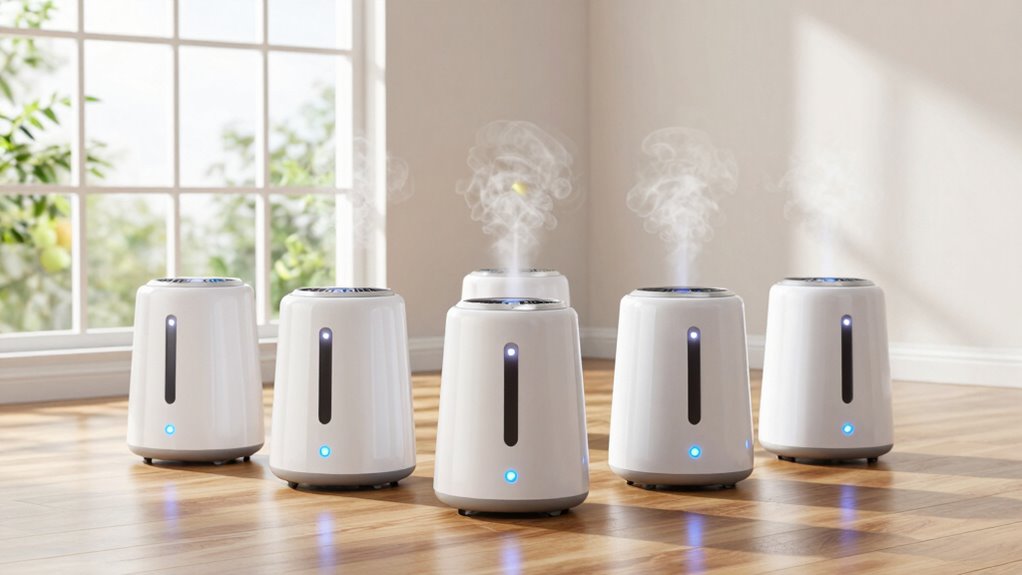
Choosing a hydroxyl generator for odor removal means matching the equipment to the space, odor problem, and people who may be present—not just picking the biggest coverage claim. My leading choices split into distinct jobs: the OdorStop OS3000H is the most fully specified option for large spaces, the 1000 Hydroxyl Generator offers a defined 10,000-cubic-foot treatment volume, and the Slimline Commercial is the clearest fit when occupied-space operation matters. Each has a different tradeoff: size and upkeep, dependence on room conditions, or a professional-first design.

Get home appliances delivered free with Prime
- Fast, free delivery on millions of items
- Prime Video, Amazon Music and more included
- Member-only deals all year
I’ve ranked these four by how clearly their listed features support odor-removal decisions, how well their intended use matches typical buyers, and how much practical information is available to compare them. They are not interchangeable. One adds an ozone mode intended for professional restoration work, another combines hydroxyl treatment with a UV air purifier and charcoal filter, and the Slimline emphasizes flexible placement. My picks below explain who each one suits—and who should pass.
Complete the kit


Key Takeaways
- The OdorStop OS3000H has the clearest large-space package here: a 500 CFM blower, charcoal filter, UV and TiO2 technology, and a stated area limit of up to 3,000 square feet.
- The 1000 Hydroxyl Generator gives buyers a specific 10,000-cubic-foot coverage figure, but its description says moisture is needed for effective operation.
- The Slimline Commercial is the lineup’s clearest choice for remediation work where the maker describes operation in occupied spaces; it is primarily aimed at professional users.
- The Sylvan HX-3000 is compact and portable, but its selectable 3,500 mg/hr ozone mode and professional-only positioning make it a poor match for casual home use.
- Coverage units differ: cubic feet and square feet are not directly comparable, so match the listed capacity to your room volume and follow each manufacturer’s instructions.
| OdorStop OS3000H Hydroxyl Generator and UV Air Purifier |  | Best Overall for Large Spaces | Coverage area: Up to 3,000 sq ft | Blower capacity: 500 CFM | Filter: Charcoal | VIEW ON AMAZON | See Our Full Breakdown |
| 1000 Hydroxyl Generator Professional Air Treatment System |  | Best for Defined Cubic-Foot Coverage | Coverage: Up to 10,000 cu ft | Technology: Photocatalytic | UVA wavelength: 365–385 nm | VIEW ON AMAZON | See Our Full Breakdown |
| Slimline Commercial Hydroxyl Generator, Black |  | Best for Occupied-Space Remediation | Technology: UV-based hydroxyl generation | Form factor: Slimline | Color: Black | VIEW ON AMAZON | See Our Full Breakdown |
| Sylvan HX-3000 Hydroxyl Generator with Optional Ozone Machine |  | Best Compact Option for Restoration Crews | Dimensions: 8.25 × 7 × 6 in | Net weight: 5 lb | Ozone output: 3,500 mg/hr | VIEW ON AMAZON | See Our Full Breakdown |
| hydroxyl generator for odor removal | Technology | Timer | Color |
|---|---|---|---|
| OdorStop OS3000H Hydroxyl Gene | Hydroxyl generator, UV, and TiO2 | 12-hour with hold option | — |
| 1000 Hydroxyl Generator Profes | Photocatalytic | — | Black |
| Slimline Commercial Hydroxyl G | UV-based hydroxyl generation | — | Black |
| Sylvan HX-3000 Hydroxyl Genera | — | One hour with hold function | — |
More Details on Our Top Picks
OdorStop OS3000H Hydroxyl Generator and UV Air Purifier
The OdorStop OS3000H takes my top spot because it gives large-space buyers the fullest set of decision-making details in this group. Its stated reach is up to 3,000 square feet, and the combination of a 500 CFM blower, charcoal filter, hydroxyl generation, UV, and TiO2 makes it a more rounded package than the simpler treatment descriptions attached to the 1000 and Slimline units. The charcoal filter and blower are relevant practical additions: they describe how air is moved and filtered, not just the chemistry used for odor treatment.
Compared with the 1000 model, this one provides floor-area coverage rather than cubic-foot coverage, so neither figure alone proves one is more powerful. The 1000 may be easier to match to a room if you know its volume and can account for its stated moisture requirement. The OS3000H is easier to assess if square footage is your starting point. Its 12-hour timer with hold option, no-assembly setup, and five-year limited warranty also make it the most clearly detailed choice for buyers who want a substantial unit without assembly.
The tradeoff is scale. A 3,000-square-foot rating makes this a poor fit for a small bedroom or a single minor odor issue, and its UV bulbs and filter require periodic cleaning. Unlike the Slimline, its supplied description does not make an occupied-space safety claim, so I would not assume that it can run around people or pets without checking the product instructions. For large residential or commercial odor jobs where airflow and filtration matter alongside hydroxyl treatment, it is my strongest all-around pick.
Pros:- States coverage up to 3,000 square feet
- 500 CFM blower with charcoal filtration
- Combines hydroxyl generation, UV, and TiO2
- No assembly required and includes a five-year limited warranty
Cons:- May be excessive for small rooms or isolated odor sources
- UV bulbs and filters need periodic cleaning
- The supplied description does not specify occupied-space use
Best for: Buyers addressing severe odors across a large residential or commercial space who want stated square-foot coverage, substantial airflow, and a charcoal filter.
Not ideal for: People treating a small room, buyers who want a compact portable unit, or anyone unwilling to clean bulbs and filters periodically.
- Coverage area:Up to 3,000 sq ft
- Blower capacity:500 CFM
- Filter:Charcoal
- Technology:Hydroxyl generator, UV, and TiO2
- Timer:12-hour with hold option
- Warranty:Five-year limited
- Assembly:No assembly required
- EPA establishment number:94721-CHN-1
Our verdict“I’d choose the OS3000H for a large odor-control job where its airflow, filter, and clearly stated floor-area capacity justify its larger-scale design.”
1000 Hydroxyl Generator Professional Air Treatment System
The 1000 Hydroxyl Generator is the most straightforward pick for buyers who prefer a room-volume target: it is listed for spaces up to 10,000 cubic feet. That can be useful when ceilings are high or room shapes make floor area an incomplete guide. Its photocatalytic approach pairs UVA lamps in the 365–385 nm range with a TiO2-coated reactor, which gives more technical detail than the broad UV-based description of the Slimline Commercial.
Against the OdorStop, the 1000 is less fully equipped on paper: the supplied specifications do not list a blower capacity, charcoal filter, timer, or warranty. Its advantage is a clearly stated cubic-foot capacity and a described professional-grade build for residential application. The major practical caveat is also explicit: moisture in the air is required for effective function. Buyers in dry environments should not treat the coverage figure as the whole story, and the listed wavelength range may limit compatibility with some environments.
I rank it just below the OdorStop because its treatment technology and capacity are clear, but the available details offer less help with airflow, maintenance, or day-to-day operation. It may suit a residential buyer who can match the unit to a 10,000-cubic-foot space and account for ambient moisture. Someone wanting an all-in-one purifier with specified airflow and filtration should compare it with the OS3000H instead. As with any hydroxyl system, I would follow the product’s use directions rather than infer performance from the coverage number alone.
Pros:- Lists capacity up to 10,000 cubic feet
- Uses UVA lamps and a TiO2-coated reactor
- Provides a stated UVA wavelength range of 365–385 nm
- Described for residential application
Cons:- Requires moisture in the air for effective operation
- Wavelength requirements may limit compatibility with some environments
- The supplied details do not state airflow, filter, timer, or warranty
Best for: Residential buyers who can calculate room volume, need a stated capacity up to 10,000 cubic feet, and can account for the listed moisture requirement.
Not ideal for: Buyers in consistently dry spaces, people who need specified airflow or filtration details, or anyone who prefers a product listing with more operating information.
- Coverage:Up to 10,000 cu ft
- Technology:Photocatalytic
- UVA wavelength:365–385 nm
- Catalyst:TiO2-coated reactor
- Application:Residential
- Color:Black
Our verdict“I’d pick the 1000 when cubic-foot coverage and its specific photocatalytic setup fit the room, but not when moisture or missing operating details are a concern.”
Slimline Commercial Hydroxyl Generator, Black
The Slimline Commercial Hydroxyl Generator has the clearest role when odor work is taking place in a space that remains occupied. Its product description says it is designed to operate safely in occupied spaces, unlike ozone generators, and targets smoke residue and other airborne contaminants at the molecular level. That stated use case sets it apart from the OdorStop, whose supplied description does not specify occupied-space operation, and from the Sylvan, which includes an ozone mode and is restricted to professional restoration work.
The slim form is another practical distinction. Flexible placement can help a restoration crew position equipment in different kinds of rooms or deploy units across a facility. The maker also describes faster neutralization than traditional methods, but gives no numeric coverage area, airflow figure, or timing data in the supplied specifications. I would treat the speed claim as a product claim, not a guarantee for a particular odor or space. Compared with the 1000, this model gives less technical detail about its light and catalyst setup, but it has clearer remediation positioning and an explicit occupied-space claim.
This is my best fit for professional odor control, not my broadest household recommendation. Its primary drawback is that it is designed for professional and commercial use rather than casual home use, and the listing provides little numerical information for matching it to a room. A homeowner looking for a defined coverage limit may find the 1000 or OS3000H easier to compare. For restoration teams that value a slim profile and the stated occupied-space operating approach, the Slimline’s distinct purpose earns it a place in this lineup.
Pros:- Described for use in occupied spaces
- Targets odors, smoke residue, and airborne contaminants
- Slimline form allows flexible placement
- Designed for restoration, remediation, and odor control
Cons:- Primarily intended for professional and commercial use
- No coverage area or airflow figure is supplied
- The listed details do not give a numeric neutralization time
Best for: Restoration and remediation professionals seeking a slim hydroxyl unit whose description specifically states that it can operate in occupied spaces.
Not ideal for: Casual household buyers who need a clear coverage figure, airflow specification, or a product aimed primarily at residential use.
- Technology:UV-based hydroxyl generation
- Form factor:Slimline
- Color:Black
- Applications:Restoration, remediation, and odor control
- Use setting:Described as safe for occupied spaces
- Target contaminants:Odors, smoke residue, and airborne contaminants
Our verdict“I’d choose the Slimline for professional jobs where its occupied-space positioning and flexible form matter more than a published coverage number.”
Sylvan HX-3000 Hydroxyl Generator with Optional Ozone Machine
The Sylvan HX-3000 is the specialist pick: at 8.25 by 7 by 6 inches and five pounds, it is the most clearly portable unit in the lineup. That small footprint may appeal to restoration crews moving equipment between jobs. It also has a selectable ozone function with a stated 3,500 mg/hr output, plus a one-hour timer with a hold function. Those details make it different from the other three, none of which lists an ozone mode.
That extra mode is not a universal advantage. The product is expressly intended for professional water and fire restoration companies and is not suitable for residential or non-industrial applications. Buyers seeking occupied-space use should look at the Slimline’s stated positioning instead; buyers wanting a large-area home unit should compare the OS3000H or 1000. Ozone capability adds a separate operating consideration, so I would not treat the HX-3000 as a casual household odor purifier or run it contrary to its instructions.
The main information gap is coverage: no room size or airflow figure is supplied, making it harder to compare against the area and volume claims of the other picks. Its compact dimensions and timer support portability and controlled operation, but they do not establish capacity. I rank it fourth for general odor-removal shoppers because its professional-only restriction narrows its audience sharply. For a restoration professional who specifically needs a small unit with selectable ozone functionality, though, that specialization may be exactly the point.
Pros:- Compact body measuring 8.25 by 7 by 6 inches
- Lightweight at five pounds
- Selectable ozone function with stated 3,500 mg/hr output
- One-hour timer with hold function
Cons:- Strictly intended for professional restoration companies
- Not suitable for residential or non-industrial applications
- No coverage area or airflow figure is supplied
Best for: Professional water and fire restoration crews who need a compact hydroxyl generator with a selectable ozone function and timer.
Not ideal for: Homeowners, casual odor-control buyers, or anyone looking for an occupied-space unit or a stated room-coverage figure.
- Dimensions:8.25 × 7 × 6 in
- Net weight:5 lb
- Ozone output:3,500 mg/hr
- Timer:One hour with hold function
- Intended use:Professional water and fire restoration
- Ozone mode:Selectable
Our verdict“I’d reserve the HX-3000 for restoration professionals who need its compact format and ozone option, not general household odor removal.”

How We Picked
I ranked these products around the actual odor-removal decision: where a unit is meant to work, what treatment approach it uses, what operating constraints the description identifies, and whether the available specifications let a buyer judge fit. I gave extra weight to a clear coverage figure, useful airflow or filtration details, and plainly stated use guidance. That is why the OdorStop leads for large-space buyers, while the 1000 model is a strong alternative for someone planning around cubic footage rather than floor area.
I also separated residential-oriented claims from equipment described for restoration and remediation professionals. The Slimline is compelling because its listing explicitly describes use in occupied spaces, but its commercial focus keeps it from being my default recommendation for a casual household. The Sylvan’s selectable ozone output earns it a specialized role, not a higher general-purpose ranking: ozone is a meaningful added operating consideration, and the product is expressly intended for professional water and fire restoration companies. I do not treat any single coverage claim as proof that every odor will be removed; source, ventilation, moisture, room layout, and operating instructions all affect the result.
Finally, I used only the features supplied for these models. Where a listing does not give a coverage area, airflow, or other detail, I treat that as a comparison limitation rather than filling the gap with an assumption. These are buying recommendations based on the stated specifications, not claims of independent performance testing.
| hydroxyl generator for odor removal | Technology |
|---|---|
| OdorStop OS3000H Hydroxyl Gene | Hydroxyl generator, UV, and TiO2 |
| 1000 Hydroxyl Generator Profes | Photocatalytic |
| Slimline Commercial Hydroxyl G | UV-based hydroxyl generation |
| Sylvan HX-3000 Hydroxyl Genera | — |
Factors to Consider When Choosing Hydroxyl Generator For Odor Removal
I’d start by defining the room and the odor source, then compare the unit’s intended setting and operating limits. A hydroxyl generator is not automatically the right answer for every smell: lingering odor can come from material that still needs cleaning or removal, and the supplied coverage claims use different units.Match coverage to the room
The 1000 lists 10,000 cubic feet, while the OS3000H lists up to 3,000 square feet. These measures cannot be compared directly without room height. To estimate volume, multiply floor area by ceiling height; then match that figure to the cubic-foot claim, while allowing for the manufacturer’s directions and room conditions. The Slimline and Sylvan listings provide no coverage figure, so I would ask the seller or manufacturer for sizing guidance before assigning either to a specific room.
Choose around the intended setting
For a professional remediation setting where people may remain present, the Slimline is the only product here whose description expressly claims occupied-space operation. I would still follow the manual and any site-specific safety requirements rather than treating that line as permission to ignore instructions. The Sylvan is different: it is explicitly for professional water and fire restoration and includes an ozone mode. Buyers who need a residential unit should favor a model described for residential application, such as the 1000, or review the OS3000H’s full use instructions.
Read the technology and maintenance details
The 1000 is the most specific about its photocatalytic setup: UVA at 365–385 nm with a TiO2-coated reactor. The OS3000H combines hydroxyl generation, UV, TiO2, a charcoal filter, and a 500 CFM blower, though its UV bulbs and filter need periodic cleaning. The Slimline’s listing identifies UV-based hydroxyl generation without comparable technical detail. I would weigh accessible maintenance instructions and replacement-part information alongside the technology labels, especially for equipment expected to run on repeat jobs.
Treat ozone as a separate decision
Only the Sylvan listing includes a selectable ozone mode, with output stated as 3,500 mg/hr. That makes it a specialized feature rather than a reason to rank it higher for everyday odor removal. Its own use description restricts it to professional restoration companies and excludes residential or non-industrial applications. If you are not buying for that professional setting, the other three options are a better match. For any unit, follow its operating instructions and do not infer safety conditions from a product category alone.
Check what the listing leaves out
Coverage is only one part of a useful comparison. The OS3000H gives a blower rating, filter type, timer, and warranty; the 1000 gives a coverage volume and light wavelength; the Slimline describes its form and occupied-space positioning; the Sylvan supplies dimensions, weight, ozone output, and timer details. Those differences explain my ranking. If your choice depends on a missing value—such as airflow, room capacity, or service requirements—get that information before buying rather than assuming that one model matches another.
Frequently Asked Questions
Which hydroxyl generator is the best fit for a large space?
I’d start with the OdorStop OS3000H when floor area is the main measure, since its stated coverage is up to 3,000 square feet and it lists a 500 CFM blower and charcoal filter. The 1000 is a credible alternative if you can size the room by volume and its 10,000-cubic-foot claim fits. The two coverage figures use different units, so I would not rank them by number alone.
Can I run these hydroxyl generators while people are in the space?
The Slimline Commercial description specifically says it is designed for occupied-space use. The other listings do not make the same clear claim, and the Sylvan includes an ozone mode while being restricted to professional restoration work. I would check the exact operating instructions for the model and mode you plan to use, and follow any precautions for people, pets, or sensitive materials.
Which model is most suitable for home use?
The 1000 Hydroxyl Generator is explicitly listed for residential application, though its description says moisture is needed for effective function. The OS3000H is described for residential and commercial spaces and is better suited to large areas. The Slimline is primarily professional and commercial, while the Sylvan is not intended for residential or non-industrial applications.
What makes the Sylvan HX-3000 different from the other options?
The HX-3000 is the only listed model with a selectable ozone mode, specified at 3,500 mg/hr, and it is also the smallest by stated dimensions and weight. That combination is aimed at professional water and fire restoration crews, not general household odor control. Its listing does not provide a coverage area, so I would not choose it for a room based on size without more guidance.
Will a hydroxyl generator remove every odor without other work?
No product details here support a promise that a generator will solve every odor on its own. The odor source, affected materials, room conditions, and operating method all matter; cleaning or removing contaminated material may still be needed. I’d treat the equipment as one part of an odor-control plan and follow the manufacturer’s directions for the specific space and problem.
Conclusion
For a large space with severe odors, I’d choose the OdorStop OS3000H for its stated 3,000-square-foot coverage, blower, charcoal filter, and more complete operating details. For a residential buyer who can work from room volume and account for moisture, the 1000 is the more focused alternative. If your priority is professional remediation in an occupied space, the Slimline is the clearest match based on its stated use. I’d reserve the compact Sylvan HX-3000 for restoration crews that specifically need its ozone option and portability. Matching the unit to your setting and reading the operating guidance matters more than choosing the model with the most impressive-sounding feature.