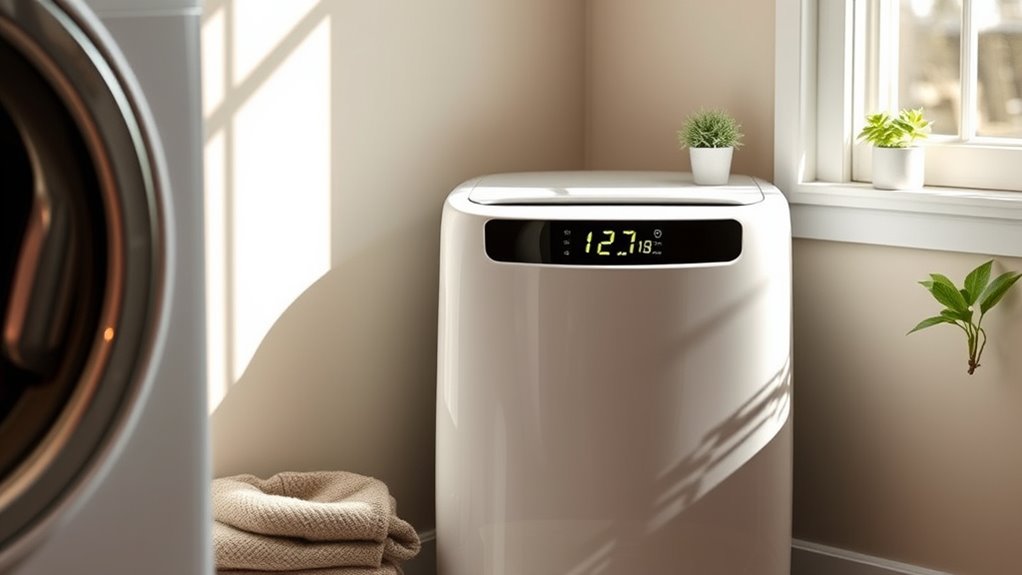

For an energy-efficient dehumidifier with auto defrost, my best overall pick is the AEOCKY 5000 Sq.Ft Energy Star Version 6.0, which pairs broad stated coverage with an efficiency-focused certification. The AEOCKY 5500 Sq.Ft Energy Star Most Efficient is the standout for buyers prioritizing its stated efficiency distinction, while the Waykar 150-pint model suits very large spaces where extraction capacity and a pump matter more than compactness. The main tradeoffs are capacity versus electricity use, drainage convenience versus setup, and stated coverage versus the room’s real moisture load. Auto defrost is useful in cool conditions, but it does not make every model equally suitable for an unheated space. Continue reading for the full breakdown and help matching a model to your home.

Get home appliances delivered free with Prime
- Fast, free delivery on millions of items
- Prime Video, Amazon Music and more included
- Member-only deals all year
Complete the kit


Key Takeaways
- AEOCKY 5000 Sq.Ft Version 6.0 ranks first because its Energy Star positioning and large stated coverage offer the strongest balance for buyers weighing efficiency against capacity.
- AEOCKY 5500 Sq.Ft Most Efficient is the efficiency-led alternative; its stated designation makes it the more targeted choice for shoppers who put energy performance ahead of other features.
- Waykar’s 150-pint capacity and built-in pump serve a different need from the 80-pint-class models: large moisture loads and drainage that may need to run uphill or to a distant outlet.
- The 80-pint Wi-Fi model puts convenience first with app connectivity and continuous drainage, but its listed capacity and coverage do not make it an automatic efficiency leader.
- Coverage figures are not interchangeable with room suitability; the Kesnos 2,500 Sq. Ft. model may be a better-scaled choice for a smaller area than a higher-capacity unit designed for a large basement.
| Shinco 80-Pint Wi-Fi Dehumidifier for Large Spaces up to 5,000 sq. ft. |  | Best for Remote Control | Dehumidification capacity: Up to 80 pints per day | Floor area coverage: Up to 5,000 sq. ft. | Auto defrost: Yes | VIEW ON AMAZON | See Our Full Breakdown |
| Kesnos 2,500 Sq. Ft. Energy Star Dehumidifier with Drain Hose |  | Best for Bedrooms and Moderate Spaces | Dehumidification capacity: Up to 30 pints per day | Floor area: Up to 2,500 sq. ft. | Wattage: 165 W | VIEW ON AMAZON | See Our Full Breakdown |
| AEOCKY Leo-Lite 5,000 Sq. Ft. Energy Star Version 6.0 Dehumidifier |  | Best for Cooler Basements | Coverage area: 5,000 sq. ft. | Auto defrost: Yes | Noise level: 44 dB at lowest fan speed | VIEW ON AMAZON | See Our Full Breakdown |
| Waykar 150-Pint Energy Star Dehumidifier with Pump |  | Best for Very Large or Persistently Damp Spaces | Dehumidification capacity: Up to 150 pints per day | Coverage area: Up to 7,000 sq. ft. | Tank volume: 1.88 gallons | VIEW ON AMAZON | See Our Full Breakdown |
| AEOCKY RHEA-001 5,500 Sq. Ft. Energy Star Most Efficient 2025 Dehumidifier |  | Best Efficiency-Certified Large-Space Pick | Dehumidification capacity: Up to 80 pints per day | Coverage area: Up to 5,500 sq. ft. | Temperature range: 65°F and above | VIEW ON AMAZON | See Our Full Breakdown |
| KNKA Energy Star 5500 Sq.Ft Dehumidifier for Basement, Max 80 Pint/Day |  | Best for Quiet, Large-Room Coverage | Coverage area: Up to 5,500 sq. ft. | Moisture removal: Up to 80 pints per day | Energy certification: Energy Star | VIEW ON AMAZON | See Our Full Breakdown |
| energyefficient dehumidifier with autodefrost | Dehumidification capacity | Noise level | Coverage area | Auto defrost |
|---|---|---|---|---|
| Shinco 80-Pint Wi-Fi Dehumidif | Up to 80 pints per day | — | — | Yes |
| Kesnos 2,500 Sq. Ft. Energy St | Up to 30 pints per day | 36 dB | — | — |
| AEOCKY Leo-Lite 5,000 Sq. Ft. | — | 44 dB at lowest fan speed | 5,000 sq. ft. | Yes |
| Waykar 150-Pint Energy Star De | Up to 150 pints per day | 40 dB | Up to 7,000 sq. ft. | — |
| AEOCKY RHEA-001 5,500 Sq. Ft. | Up to 80 pints per day | — | Up to 5,500 sq. ft. | Listed as a feature in the product description |
| KNKA Energy Star 5500 Sq.Ft De | — | 40–45 dB | Up to 5,500 sq. ft. | — |
More Details on Our Top Picks
Shinco 80-Pint Wi-Fi Dehumidifier for Large Spaces up to 5,000 sq. ft.
The Shinco pairs 80-pint daily capacity with Wi-Fi controls, making it a practical pick when you want to adjust humidity or schedule operation without walking to the unit. Its stated coverage matches the AEOCKY Leo-Lite’s 5,000 sq. ft., but Shinco’s app control and built-in tank give it a clearer convenience angle. Auto defrost supports use in cooler conditions, though the supplied information does not specify a temperature range, so I would not choose it over the AEOCKY models solely for cold-basement performance. The main compromise is the 1.32-gallon tank: at high moisture loads, expect regular emptying unless you set up continuous drainage. It also provides less documented energy-efficiency detail than the ENERGY STAR-certified alternatives.
Pros:- 80-pint daily capacity and stated coverage up to 5,000 sq. ft.
- Wi-Fi app control supports remote monitoring and scheduling.
- Offers both a removable tank and continuous-hose drainage.
- Wheels and a hideaway handle make it easier to move between rooms.
Cons:- The 1.32-gallon tank can need frequent emptying during heavy use.
- No ENERGY STAR certification or wattage figure is provided in the supplied specifications.
- Auto-defrost is listed, but its operating temperature range is not specified.
Best for: Owners of large basements or multiroom spaces who want app-based monitoring and can connect a drain hose for extended operation.
Not ideal for: Buyers prioritizing verified energy-efficiency credentials or those who need a large onboard tank and do not want to empty it often.
- Dehumidification capacity:Up to 80 pints per day
- Floor area coverage:Up to 5,000 sq. ft.
- Auto defrost:Yes
- Tank volume:1.32 gallons (5 L)
- Drainage options:Removable tank or continuous hose
- Wi-Fi connectivity:Yes
- Number of speeds:2
- Dimensions:9.45 × 13.5 × 20.16 in. (D × W × H)
Our verdict“Choose the Shinco if app control matters more to you than documented energy credentials and you can use continuous drainage.”
Kesnos 2,500 Sq. Ft. Energy Star Dehumidifier with Drain Hose
The Kesnos is the lineup’s more modest-capacity choice, but it makes a strong case for bedrooms and living areas with 165-watt operation, a stated 36 dB noise level, and ENERGY STAR certification. Unlike the 80-pint Shinco or AEOCKY RHEA-001, it is rated for 30 pints per day and up to 2,500 sq. ft.; that smaller reach can be a sensible match for a contained space rather than an oversized basement. Auto defrost and four modes add flexibility, while a hose can reduce tank-emptying chores. The tradeoff is a very small 0.39-gallon tank, so tank-based use may interrupt operation often in damp conditions. Its lower capacity also makes it a poor substitute for the high-output Waykar in a large, persistently wet area.
Pros:- ENERGY STAR certification and a stated 165-watt draw suit buyers watching energy use.
- 36 dB stated noise level is lower than the 40 dB Waykar and 44 dB AEOCKY Leo-Lite.
- Four modes and auto defrost offer flexibility for different operating needs.
- Continuous drainage and caster wheels support unattended use and repositioning.
Cons:- 30-pint daily capacity and 2,500 sq. ft. coverage are limited compared with the larger-capacity picks.
- The 0.39-gallon tank is small for high-humidity operation.
- The included hose may not fit every garden-hose connection.
Best for: Sleepers or remote workers managing a bedroom, apartment, or moderate basement who value low stated noise and certified efficiency.
Not ideal for: Owners of large or severely damp basements who need high moisture-removal capacity or want long intervals between tank emptying.
- Dehumidification capacity:Up to 30 pints per day
- Floor area:Up to 2,500 sq. ft.
- Wattage:165 W
- Noise level:36 dB
- Tank volume:0.39 gallons
- Modes:Dry, Turbo, Comfort, Continuous
- Drainage:Auto-shutoff tank with full indicator or continuous hose drainage
- Certifications:2025 ENERGY STAR, ETL, CEC, DOE
- Dimensions:11.02 × 7.68 × 15.2 in. (D × W × H)
Our verdict“Pick the Kesnos for a smaller occupied space where quiet operation and ENERGY STAR certification matter more than maximum capacity.”
AEOCKY Leo-Lite 5,000 Sq. Ft. Energy Star Version 6.0 Dehumidifier
The Leo-Lite earns its place through a combination that fits basement use: ENERGY STAR Version 6.0 efficiency, auto defrost, and components described for continuous operation in cooler environments. Compared with the Wi-Fi-enabled Shinco, it puts more emphasis on efficiency and cold-area suitability than remote controls; compared with the Kesnos, it offers a much larger stated coverage area of 5,000 sq. ft. Its lowest-fan-speed noise figure is 44 dB, so it is not as quiet on paper as the Kesnos at 36 dB. The supplied details also leave some buying questions open: capacity, wattage, tank size, and control layout are not specified here. I would shortlist it for a cool basement where defrost capability and efficiency credentials matter, but not if you need fully comparable operating specs before choosing.
Pros:- ENERGY STAR Version 6.0 compliance highlights efficiency as a central feature.
- Auto defrost is suited to operation in cooler environments.
- Stated coverage reaches 5,000 sq. ft., more than the Kesnos’s 2,500 sq. ft.
- 44 dB at the lowest fan speed is a stated noise figure for planning placement.
Cons:- The supplied product data does not state pint-per-day capacity or wattage.
- Tank capacity, drainage details, and control options are not specified.
- Its 44 dB low-speed figure is higher than the Kesnos’s stated 36 dB.
Best for: Homeowners with a cool, damp basement who want ENERGY STAR Version 6.0 efficiency and auto-defrost capability.
Not ideal for: Buyers who need a clearly stated pint-per-day capacity, tank size, power draw, or detailed control information before purchasing.
- Coverage area:5,000 sq. ft.
- Auto defrost:Yes
- Noise level:44 dB at lowest fan speed
- Efficiency certification:ENERGY STAR Version 6.0
- Core components:High-Efficiency Rotor Compressor Pro+
- Heat-exchange structure:3+2 structure evaporator and condenser
- Tubing:7 mm pure copper tubes
Our verdict“Choose the Leo-Lite for a cool basement where efficiency certification and auto defrost take priority over fully documented capacity and controls.”
Waykar 150-Pint Energy Star Dehumidifier with Pump
For a sprawling basement or demanding commercial space, the Waykar’s 150-pint daily capacity and stated 7,000 sq. ft. coverage separate it from the 80-pint Shinco and AEOCKY RHEA-001. It is the highest-capacity option in this group, with a 250 CFM airflow figure and a 40 dB noise rating that may help it serve large areas without the louder operation some buyers expect from high-output equipment. ENERGY STAR certification and smart humidity control add efficiency and convenience, while the listing identifies pump-assisted drainage. The tradeoff is scale: at 40.8 pounds, this is less convenient to move than the Kesnos, and the 783-watt figure is substantially higher than the Kesnos’s 165 watts. Its capacity is most useful when the moisture load justifies running a larger unit.
Pros:- 150-pint daily capacity and 7,000 sq. ft. stated coverage lead this lineup.
- ENERGY STAR certification and smart humidity control support managed operation.
- Pump-assisted drainage and a 5-meter hose can reduce manual water handling.
- 40 dB stated noise level is relatively restrained for a high-capacity unit.
Cons:- At 40.8 pounds, it is heavier and less convenient to move than the Kesnos.
- The stated 783-watt draw is much higher than the Kesnos’s 165 watts.
- The large capacity and multiple modes may require more setup and careful placement.
Best for: Owners of large homes, expansive basements, or commercial areas with persistent moisture who need high daily removal capacity and pump-assisted drainage.
Not ideal for: People dehumidifying a bedroom or small apartment, or buyers who need a lightweight unit with a low stated wattage.
- Dehumidification capacity:Up to 150 pints per day
- Coverage area:Up to 7,000 sq. ft.
- Tank volume:1.88 gallons
- Wattage:783 W
- Airflow:250 CFM
- Noise level:40 dB
- Drain hose length:5 m
- Weight:40.8 lb
- Operation modes:Auto Comfort, Continuous, Standard
Our verdict“Choose the Waykar when a very large, persistently damp space needs its unusually high capacity and pump drainage.”
AEOCKY RHEA-001 5,500 Sq. Ft. Energy Star Most Efficient 2025 Dehumidifier
The RHEA-001 is the efficiency-led large-space option: it pairs 80-pint daily capacity with ENERGY STAR Most Efficient 2025 certification and stated coverage up to 5,500 sq. ft. That makes it a stronger fit for buyers comparing energy credentials than the Shinco, whose supplied data does not list a certification or wattage. It also claims low-temperature operation and includes auto-defrost in its feature description, giving it a basement-oriented advantage over models without a stated cold-weather focus. The Waykar removes more moisture and covers a larger area, but its 150-pint capacity and 783-watt specification point to a different, heavier-duty use case. RHEA-001’s main limit is its stated temperature range of 65°F and above, which does not establish suitability for colder rooms. At 31 pounds, it is also substantial enough to need a planned spot.
Pros:- ENERGY STAR Most Efficient 2025 certification makes efficiency a clear differentiator.
- 80-pint daily capacity and 5,500 sq. ft. stated coverage suit large home spaces.
- Auto-defrost feature and low-temperature operation are aimed at basement use.
- At 31 pounds, it is lighter than the 40.8-pound Waykar.
Cons:- The stated temperature range begins at 65°F, limiting its documented fit for colder rooms.
- Its 80-pint capacity is well below the Waykar’s 150 pints per day.
- The supplied specifications do not list wattage, tank volume, or drainage details.
Best for: Energy-conscious owners of large basements or home spaces kept at or above 65°F who want high capacity with a strong efficiency certification.
Not ideal for: Buyers managing colder-than-65°F spaces, those needing more than 80 pints per day, or anyone seeking a compact unit for frequent room-to-room moves.
- Dehumidification capacity:Up to 80 pints per day
- Coverage area:Up to 5,500 sq. ft.
- Temperature range:65°F and above
- Auto defrost:Listed as a feature in the product description
- Efficiency certification:ENERGY STAR Most Efficient 2025
- Dimensions:14.45 × 8.66 × 24.09 in. (D × W × H)
- Weight:31 lb
Our verdict“Pick the RHEA-001 for an efficiency-prioritized large space kept at 65°F or warmer, but not for a genuinely cold basement.”
KNKA Energy Star 5500 Sq.Ft Dehumidifier for Basement, Max 80 Pint/Day
The KNKA pairs 80-pint daily capacity with coverage rated for spaces up to 5,500 sq. ft., making it a strong fit for a large basement or connected living area. Its Energy Star certification and quiet 40–45 dB operation suit buyers who want moisture control without a loud appliance dominating the room. Compared with the 80-Pint Wi-Fi Dehumidifier for 5,000 sq. ft., the KNKA offers a larger stated coverage area, while the other model’s Wi-Fi feature may appeal more to buyers who want app-based control. The KNKA has Auto, Dry, and Set modes, plus hose drainage for continuous operation. Its 1.45-gallon internal tank means frequent emptying may be needed without a drain, and the larger optional external tank is sold separately. It also needs to stand upright for 24 hours before first use, and its humidity readings can differ slightly from a separate hygrometer.
Pros:- Energy Star certified for energy-conscious operation.
- Rated to cover spaces up to 5,500 sq. ft. with moisture removal up to 80 pints per day.
- 40–45 dB noise level is suited to bedrooms and shared living areas.
- Hose drainage supports continuous operation without routine tank emptying.
Cons:- The 1.45-gallon internal tank may require frequent emptying in damp conditions.
- The optional 2.64-gallon external tank is sold separately.
- Requires 24 hours upright before first use, and humidity readings may vary from an external hygrometer.
Best for: Homeowners managing a large basement or open-plan area who prioritize Energy Star efficiency, quieter operation, and the option of continuous hose drainage.
Not ideal for: Buyers who need app-based controls, want a large included reservoir, or need a dehumidifier they can set up immediately after transport.
- Coverage area:Up to 5,500 sq. ft.
- Moisture removal:Up to 80 pints per day
- Energy certification:Energy Star
- Drainage hose length:6.56 ft.
- Tank capacity:1.45 gallons internal; optional 2.64-gallon external tank sold separately
- Noise level:40–45 dB
- Control modes:Auto, Dry, Set
- Humidity range:30%–80%
- Timer:12 hours
Our verdict“Choose the KNKA for quiet, energy-conscious moisture control across a large space, provided you can accommodate its startup wait and modest internal tank.”

How We Picked
I compared the six models through the lens of energy efficiency with auto defrost, not capacity alone. The ranking weighs stated Energy Star or efficiency credentials, moisture-removal capacity and stated coverage, drainage options, and features that affect day-to-day use. I also looked at whether each model’s scale and feature set seem matched to a distinct buyer need, from a smaller space to a large basement that may need a pump.
The top positions go to balanced choices that pair efficiency-oriented positioning with useful coverage, while specialized picks rank higher for buyers with a specific need than as all-purpose recommendations. A large pint rating or square-foot claim alone does not prove lower energy use, and auto defrost is not a substitute for checking a model’s stated operating temperature range. Product information supplied here does not provide comparable measured energy consumption or low-temperature limits for every model, so I avoid claiming an exact efficiency winner based on figures that are not available across the lineup.
| energyefficient dehumidifier with autodefrost | Dehumidification capacity | Auto defrost |
|---|---|---|
| Shinco 80-Pint Wi-Fi Dehumidif | Up to 80 pints per day | Yes |
| Kesnos 2,500 Sq. Ft. Energy St | Up to 30 pints per day | — |
| AEOCKY Leo-Lite 5,000 Sq. Ft. | — | Yes |
| Waykar 150-Pint Energy Star De | Up to 150 pints per day | — |
| AEOCKY RHEA-001 5,500 Sq. Ft. | Up to 80 pints per day | Listed as a feature in the product description |
| KNKA Energy Star 5500 Sq.Ft De | — | — |
Factors to Consider When Choosing Energyefficient Dehumidifier With Autodefrost
Choosing well means matching a dehumidifier to the moisture problem, the space, and the way you can drain it. I would compare energy credentials and operating guidance before treating capacity or coverage claims as a guarantee of performance in a particular home.
Match Capacity to the Moisture Load, Not Just Floor Area
A square-foot coverage claim is a starting point, not a full description of how hard a dehumidifier will need to work. A cool, shaded basement with persistent dampness can challenge a unit more than a larger, warmer room with occasional humidity. Think about how often the space feels damp, whether condensation appears, and whether laundry or water intrusion adds moisture. A very high pint rating can help with heavy loads, but it may add bulk and may be unnecessary for a modest room. Choosing too small a unit can mean longer run times, while choosing far beyond the need can mean paying for capacity you rarely use. Compare the manufacturer’s coverage guidance with the room’s conditions and the unit’s intended temperature range.
Read Energy Claims as Comparisons, Not Guarantees
Energy Star or another stated efficiency designation can help narrow the field, but it does not tell you exactly how much electricity a unit will use in your home. Actual consumption depends on humidity, temperature, target setting, run time, and how freely air can circulate around the appliance. Compare certified models using the same published measure when one is available, rather than assuming that a larger capacity automatically means better efficiency. A more efficient unit can still use substantial electricity if it runs constantly against an ongoing moisture source. Check whether the product information gives a clear efficiency metric and the conditions behind it. If comparable figures are missing, treat efficiency labels as useful screening evidence rather than a promise of a particular bill.
Treat Auto Defrost as Cold-Weather Protection, Not a Cold-Room Rating
Auto defrost typically helps limit frost buildup on the coils when a unit operates in cooler conditions. That feature can reduce interruptions caused by ice, but it does not mean every model can dehumidify effectively at any temperature. Before buying for an unheated basement, garage, or seasonal property, check the specified operating temperature range and any cold-weather guidance. A machine that pauses to defrost may remove less moisture during a given period than it would in a warmer room. Buyers often confuse the presence of auto defrost with a guarantee of strong low-temperature performance. If the space stays cold for long periods, temperature suitability should carry more weight than a broad coverage claim.
Choose Drainage Around the Room Layout
Drainage affects how much attention the appliance demands after setup. A tank is simple where the unit is easy to reach, but it needs emptying and may interrupt operation when full. A gravity drain hose can support continuous removal if the drain sits lower than the outlet and the hose can follow a suitable path. A built-in pump is more useful when water must travel upward or to a drain farther away, though it adds another feature and setup requirement. Check hose compatibility, drain height, and where the water can safely go before deciding that continuous drainage will work. For a rarely visited basement, the right drainage arrangement may matter more to convenience than a small difference in stated capacity.
Separate Peak Capacity From Everyday Efficiency
Maximum pint-per-day figures describe capacity under specified conditions, not necessarily normal daily output in a typical home. A unit may remove less moisture when the room is cooler or less humid than the conditions used for its rating. Bigger capacity can shorten recovery after a very damp spell, but it is not proof that the machine uses less energy to maintain a steady humidity level. Consider whether your goal is to dry a persistently wet basement, control seasonal humidity, or protect a smaller room. For routine use, an appropriate size, sensible humidity setting, and well-sealed space can matter more than chasing the largest rating. Ask for comparable operating data if energy use is a deciding factor.
Plan for Noise, Placement, and Maintenance
A high-capacity appliance needs room for airflow and may be more noticeable in a living area than in a utility space. Leave the clearances specified by the manufacturer, and avoid placing the unit where furniture or stored items block its intake or exhaust. Filter cleaning and tank handling are recurring tasks, so check how accessible the filter and water container are before settling on a location. Wi-Fi controls can be convenient when the unit is out of sight, but connectivity does not replace checking drainage or maintaining the filter. If the dehumidifier will operate near bedrooms or a home office, seek sound information rather than assuming all models are equally quiet. A well-placed, maintained unit is more likely to run as intended than one chosen by coverage claims alone.
Frequently Asked Questions
Does auto defrost mean a dehumidifier will work well in a cold basement?
No. Auto defrost is intended to help manage frost on the coils, but it does not establish how effectively a model removes moisture at low temperatures. Check the manufacturer’s operating temperature range and guidance for cold rooms before buying. Also account for defrost pauses, which can reduce active moisture removal during colder periods. If the space is unheated for much of the year, the rated temperature range may be a more useful deciding factor than the unit’s advertised coverage.
Should I choose the Waykar 150-pint model over an 80-pint option?
Choose by moisture load and drainage needs rather than the larger number alone. The Waykar’s stated 150-pint capacity and pump make it a fit to investigate for very large or persistently damp spaces where pumped drainage is useful. An 80-pint-class model may be a more sensible scale for a less demanding area, and a high maximum capacity does not by itself establish lower electricity use. Compare operating conditions, energy information, room temperature, and drain layout before deciding. If your space is not unusually damp or large, the extra capacity may not address your main need.
Is an Energy Star designation enough to identify the most efficient choice?
It is a useful screening point, but it does not give a complete picture of how much power a specific model will use in your home. Runtime, room conditions, humidity settings, and moisture sources all affect consumption. Look for comparable efficiency data and confirm that the model’s test conditions are relevant to your intended use. In this lineup, the AEOCKY models make efficiency a central part of their stated positioning, but buyers should still compare available specifications rather than infer exact savings from labels alone. A unit that is oversized or runs against a persistent leak can still consume more than expected.
When is a built-in pump worth choosing instead of a drain hose?
A pump is useful when the water must move upward or cannot reach a drain through a downhill hose route. If a floor drain sits close to the appliance and below its outlet, a gravity hose may offer simpler continuous drainage. Check the pump’s discharge setup and the manufacturer’s limits before relying on it for a particular route. A pump can reduce routine tank emptying, but it adds setup and another component to maintain. The right choice depends more on drain location and access than on the room’s square footage.
Can I use a large dehumidifier in a smaller room to make it more energy efficient?
Not automatically. A larger unit may reach a target humidity more quickly under some conditions, but its capacity rating does not prove that it will use less energy in a smaller room. Check whether the manufacturer supports that room size and whether the unit offers suitable humidity controls or operating modes. Placement, airflow, and the room’s moisture sources can affect how often it runs. If a smaller model such as the Kesnos fits the space and moisture load, it may avoid paying for capacity you do not need; compare energy information when available before choosing.
Conclusion
For most buyers, I recommend the AEOCKY 5000 Sq.Ft Energy Star Version 6.0 as the best overall, based on its blend of efficiency-focused positioning and broad stated coverage. The Kesnos 2,500 Sq. Ft. model is my best value-style fit for buyers with a smaller area who do not need a large-capacity appliance, while the AEOCKY 5500 Sq.Ft Most Efficient is the best premium-style choice for shoppers drawn to its stated efficiency distinction. For beginners, I would start with the model whose coverage and drainage arrangement match the room and are easiest to manage; the 80-pint Wi-Fi model stands out for remote convenience and continuous drainage. Choose the Waykar 150-pint with pump for a specific need: a large moisture load and a drain route that benefits from pumping. The KNKA 5500 Sq.Ft model is another large-area option, but I would compare its detailed energy and operating specifications with the AEOCKY alternatives before making a final choice.