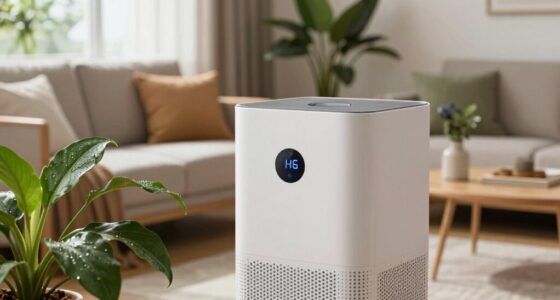
A dehumidifier with continuous drain and timer can reduce the need to empty a tank, but the right choice depends on moisture levels, room size, and how you plan to drain it. My best overall pick is the Yaufey 150-pint model with pump, which stands out for high-capacity moisture removal and a pump for drainage flexibility. The 120-pint ENERGY STAR model is a strong alternative for large basements, while the 95-ounce compact model is better suited to smaller spaces where quiet operation and a timer matter more than bulk capacity. These options trade capacity and drain convenience against size, energy use, and how much hands-on setup they require. Read on for the full comparison and guidance on matching a unit to your space.

Get home appliances delivered free with Prime
- Fast, free delivery on millions of items
- Prime Video, Amazon Music and more included
- Member-only deals all year
Complete the kit


Key Takeaways
- The Yaufey 150-pint pump model is the clearest choice for demanding basement moisture because its pump can move water without relying on gravity alone.
- The 120-pint and 80-pint ENERGY STAR models prioritize different scales of use: the 120-pint model suits larger moisture loads, while the 80-pint option offers a lower-capacity route for sizable spaces.
- Drain hose listings do not all mean the same thing in practice. A hose usually needs a downhill route; a pump, as listed on the Yaufey and Avylo models, offers more placement flexibility.
- The 95-ounce model is the outlier for small-space convenience, adding a timer and quiet-use features but offering far less tank capacity than the pint-rated basement units.
- Timer availability is not equally clear across these listings. Buyers should verify timer controls and scheduling behavior in the full product details rather than infer them from drain-hose or capacity claims.
| Yaufey 150 Pint Dehumidifier with Pump for Basement 8500 Sq. Ft. |  | Best for Very Large Basements | Coverage area: 8,500 sq. ft. | Dehumidification capacity: 150 pints per day | Tank volume: 1.85 gallons | VIEW ON AMAZON | See Our Full Breakdown |
| 30-Pint Dehumidifier for Home and Basement with Drain Hose |  | Best for Quiet, Timed Everyday Use | Dehumidification capacity: 30 pints per day (95°F, 90% RH) | Coverage area: 2,000 sq. ft. | Tank volume: 2.5 liters | VIEW ON AMAZON | See Our Full Breakdown |
| Avylo Dehumidifier for Basement with Pump and Hose, Max 90 Pints/Day, White |  | Best for Pump Drainage with Lower Listed Wattage | Dehumidification capacity: 90 pints per day | Floor area: 4,500 sq. ft. in specifications; description states up to 5,000 sq. ft. | Pump lift: 15 feet | VIEW ON AMAZON | See Our Full Breakdown |
| 26-Pint Dehumidifier for Basement and Home with Drain Hose, Covers 2600 sq ft |  | Best Lightweight Pick for Simple Room-to-Room Use | Dehumidification capacity: 26 pints per day | Floor area: 2,600 sq. ft. | Tank volume: 0.52 gallons | VIEW ON AMAZON | See Our Full Breakdown |
| Dehumidifier for Home, 95 oz Water Tank, Quiet, with Drain Hose, Aromatherapy, 1000 sq.ft, Timer, Auto Shut-Off, 7-Color Light, Grey & White |  | Best Compact Pick for Bedrooms | Dehumidification capacity: 1.2 liters per day | Room coverage: 1,000 sq. ft. | Water tank capacity: 95 oz (2.8 liters) | VIEW ON AMAZON | See Our Full Breakdown |
| 21-Pint Dehumidifier for Basement with Drain Hose, 1600 sq ft, White |  | Best for Smaller Living Areas | Moisture removal: 21 pints per day | Listed coverage: 1,600 square feet | Tank volume: 0.52 gallons | VIEW ON AMAZON | See Our Full Breakdown |
| 120 Pint Dehumidifier for Basement up to 6,000 Sq. Ft. with Drain Hose, ENERGY STAR Certified |  | Best for Very Large, Damp Spaces | Moisture removal: 120 pints per day | Listed coverage: 6,000 square feet | Tank volume: 1.06 gallons | VIEW ON AMAZON | See Our Full Breakdown |
| 80 Pint Dehumidifier for Basement 5500 Sq. Ft. with Drain Hose, ENERGY STAR | | Best Balance of Capacity and Controls | Moisture removal: 80 pints per day | Listed coverage: 5,500 square feet | Tank volume: 1.06 gallons | VIEW ON AMAZON | See Our Full Breakdown |
| 81 Pint Dehumidifier for Basement – 5500 Sq.Ft Capacity with Drain Hose |  | Best for Longer Tank Intervals | Moisture removal: 81 pints per day | Listed coverage: 5,500 square feet | Tank capacity: 1.6 gallons | VIEW ON AMAZON | See Our Full Breakdown |
| dehumidifier with continuous drain and timer | Tank volume | Dimensions | Dehumidification capacity | Weight |
|---|---|---|---|---|
| Yaufey 150 Pint Dehumidifier w | 1.85 gallons | 15.47 × 11.73 × 24.37 inches | 150 pints per day | 39.7 pounds |
| 30-Pint Dehumidifier for Home | 2.5 liters | 16.3 × 6.7 × 11.4 inches | 30 pints per day (95°F, 90% RH) | — |
| Avylo Dehumidifier for Basemen | 2.11 gallons | 23.11 × 11.18 × 15.19 inches | 90 pints per day | 38.6 pounds |
| 26-Pint Dehumidifier for Basem | 0.52 gallons | 6.89 × 10.13 × 16.1 inches | 26 pints per day | 16.1 pounds |
| Dehumidifier for Home | — | 5.51 × 9.06 × 12.99 inches | 1.2 liters per day | — |
| 21-Pint Dehumidifier for Basem | 0.52 gallons | 6.89 x 9.65 x 15.94 inches | — | 15.3 pounds |
| 120 Pint Dehumidifier for Base | 1.06 gallons | 13.86 x 10.71 x 19.49 inches | — | 31.8 pounds |
| 80 Pint Dehumidifier for Basem | 1.06 gallons | — | — | — |
| 81 Pint Dehumidifier for Basem | — | — | — | — |
More Details on Our Top Picks
Yaufey 150 Pint Dehumidifier with Pump for Basement 8500 Sq. Ft.
For a large basement where a smaller unit could struggle to keep up, the Yaufey 150 Pint offers the highest stated daily capacity in this group and coverage up to 8,500 square feet. Its pump drainage is the key match for a continuous-drain setup when the drain sits above the unit; it also supports gravity drainage and tank collection. The timer, humidity sensors, and digital display add control, though the listed 3.28-foot hose may limit placement. Compared with the Avylo 90-pint model, Yaufey is aimed at a larger moisture load, but it is heavier and uses more power at 500 watts versus Avylo’s 235 watts. I’d choose it for a demanding space, not a small room where its capacity and footprint are excessive.
Pros:- Rated to remove up to 150 pints daily and cover 8,500 square feet.
- Pump, gravity-drain, and tank options support different drainage layouts.
- Timer and humidity sensors provide adjustable, automatic operation.
- Universal castors and handles help with repositioning.
Cons:- At 39.7 pounds, it is cumbersome to carry between floors.
- The 500-watt rating is higher than the Avylo’s listed 235 watts.
- The included drain hose is only 3.28 feet long, which may restrict placement.
Best for: Owners of large, persistently damp basements who need high moisture-removal capacity and pump-assisted drainage.
Not ideal for: People dehumidifying a bedroom or small apartment, or anyone prioritizing a lightweight unit and lower listed wattage.
- Coverage area:8,500 sq. ft.
- Dehumidification capacity:150 pints per day
- Tank volume:1.85 gallons
- Drain hose length:3.28 feet
- Wattage:500 watts
- Airflow:159 CFM
- Humidity range:30%–80% RH
- Dimensions:15.47 × 11.73 × 24.37 inches
- Weight:39.7 pounds
Our verdict“Choose the Yaufey when a very large, damp basement calls for maximum stated capacity and pump drainage, and skip it for smaller rooms.”
30-Pint Dehumidifier for Home and Basement with Drain Hose
This 30-pint model is the most straightforward choice here for routine home use: it pairs a stated 24-hour timer with a supplied 2-meter continuous-drain hose, so buyers can schedule operation and avoid regular tank emptying when a suitable drain is nearby. Sleep mode, child lock, and a washable filter make it better suited to shared living spaces than the larger Yaufey 150 Pint, which is built for a much heavier basement load. Its stated coverage reaches 2,000 square feet, but that figure should not obscure the lower 30-pint daily capacity. The maker also calls for 24 hours upright before first use and 12 inches of clearance around the air openings. I’d favor it for moderate dampness; for severe basement moisture, compare it with the 26-pint model’s compact format or a higher-capacity compressor option.
Pros:- Includes a 2-meter hose for continuous drainage.
- 24-hour timer supports scheduled operation.
- Sleep mode and child lock suit homes with bedrooms or children nearby.
- Washable filter and auto-defrost reduce routine upkeep.
Cons:- Requires 24 hours upright before initial use.
- Needs at least 12 inches of clearance around its air inlet and outlet.
- Its 30-pint daily capacity is far below the Yaufey’s 150-pint rating.
Best for: Households seeking a timer, included drain hose, and sleep-oriented features for a moderately damp home or basement.
Not ideal for: Owners of persistently wet, very large basements who need high daily extraction capacity or a built-in pump for an elevated drain.
- Dehumidification capacity:30 pints per day (95°F, 90% RH)
- Coverage area:2,000 sq. ft.
- Tank volume:2.5 liters
- Drain hose length:2 meters
- Power consumption:130 watts
- Fan speeds:2
- Dimensions:16.3 × 6.7 × 11.4 inches
- Timer:24-hour
Our verdict“Pick this model for scheduled, quieter everyday moisture control with a supplied drain hose, rather than for severe basement dampness.”
Avylo Dehumidifier for Basement with Pump and Hose, Max 90 Pints/Day, White
The Avylo’s clearest advantage for this roundup is its built-in pump with a 15-foot lift: it can move collected water toward a drain above the unit, giving it more flexible placement than gravity-only setups. A timer is listed among its features, and its 90-pint daily capacity fits substantial basement dampness without matching the Yaufey 150 Pint’s larger, 500-watt specification. The Avylo lists 235 watts and a low operating noise of 41 dB, making it a more restrained option for spaces used regularly. There is a catch for continuous drainage: the floor drain hose is not included, so check what the package supplies and budget for the missing hose if needed. Its 38.6-pound weight also makes frequent repositioning a chore. I’d choose it over the 30-pint model when pump reach and stronger extraction matter more than having every drainage part included.
Pros:- Built-in pump provides a stated 15-foot lift for elevated drainage.
- Rated for up to 90 pints per day.
- Listed at 235 watts, less than the Yaufey’s 500-watt rating.
- Timer and operation as low as 41 dB suit scheduled use in occupied spaces.
Cons:- Floor drain hose is not included.
- Weighs 38.6 pounds, making stair transport difficult.
- Its listed coverage differs between the product description and specifications.
Best for: Basement owners who need pump-assisted drainage to reach an elevated outlet and want more capacity than a compact home unit.
Not ideal for: Buyers who need a ready-to-connect gravity drain hose in the box or who frequently carry a dehumidifier between rooms.
- Dehumidification capacity:90 pints per day
- Floor area:4,500 sq. ft. in specifications; description states up to 5,000 sq. ft.
- Pump lift:15 feet
- Tank volume:2.11 gallons
- Wattage:235 watts
- Voltage:115 volts
- Noise level:As low as 41 dB
- Dimensions:23.11 × 11.18 × 15.19 inches
- Weight:38.6 pounds
Our verdict“Choose the Avylo for a substantial basement moisture load and an elevated drain, provided you are prepared to source a hose.”
26-Pint Dehumidifier for Basement and Home with Drain Hose, Covers 2600 sq ft
At 16.1 pounds, this 26-pint model is the easiest option in this batch to move between a basement, laundry area, and other damp rooms. It offers continuous, dry, and dehumidify modes with automatic humidity control, but the listing does not specify a timer or give a drain-hose length. That makes it a less certain match for buyers whose main requirement is scheduled drainage than the 30-Pint Dehumidifier, which explicitly includes a 24-hour timer and a 2-meter hose. Its 0.52-gallon tank is also small for a unit rated at 26 pints per day, so continuous draining matters if it runs hard. Compared with the Yaufey, it gives up substantial capacity and pump features, but takes up less space and weighs far less. I’d pick it when mobility matters more than hands-free scheduling details.
Pros:- Weighs 16.1 pounds, substantially less than the Yaufey and Avylo.
- Rated for coverage up to 2,600 square feet.
- Automatic humidity control and multiple operating modes.
- Handles and wheels support moving it around the home.
Cons:- The 0.52-gallon tank may need frequent emptying without continuous drainage.
- Product details do not specify a timer or the included hose length.
- No listed pump for drainage where the outlet is above the unit.
Best for: People who want a relatively lightweight dehumidifier to move among moderately damp rooms and can confirm the drain-hose setup before buying.
Not ideal for: Buyers who require a clearly specified timer, included hose length, or pump drainage for an elevated outlet.
- Dehumidification capacity:26 pints per day
- Floor area:2,600 sq. ft.
- Tank volume:0.52 gallons
- Power:130 watts
- Fan speeds:2
- Operation modes:Continuous, Dry, Dehumidify
- Dimensions:6.89 × 10.13 × 16.1 inches
- Weight:16.1 pounds
Our verdict“Choose this lighter model for moving between rooms, but verify the timer and hose details if scheduled continuous drainage is a must.”
Dehumidifier for Home, 95 oz Water Tank, Quiet, with Drain Hose, Aromatherapy, 1000 sq.ft, Timer, Auto Shut-Off, 7-Color Light, Grey & White
This compact unit is the bedroom-oriented choice, with a stated 20 dB noise level, timer, auto shut-off, and a 95-ounce tank. Continuous drainage is available, but the description says it needs manual setup and does not give the hose length, so it is less plug-and-play than the 30-Pint Dehumidifier’s specified 2-meter hose. Its stated extraction is only 1.2 liters per day, which puts it in a different class from the Avylo’s 90-pint capacity: this is for light moisture control, not a persistently wet basement. The aromatherapy feature and seven-color lighting add bedroom-friendly extras, though they do not improve moisture removal. I’d choose it for a small, quiet space where a timer and gentle operation matter more than fast drying; skip it if dampness is heavy or widespread.
Pros:- Listed 20 dB operation suits quiet rooms.
- Timer and auto shut-off support unattended use.
- 95-ounce tank is relatively large for this compact format.
- Continuous-drain option, aromatherapy, and adjustable ambient lighting.
Cons:- Rated to remove only 1.2 liters per day, far below the Avylo’s 90-pint capacity.
- Continuous drainage requires setup, and hose length is not specified.
- Aromatherapy and lighting add features without increasing moisture-removal capacity.
Best for: Light sleepers and RV or bedroom owners looking for a compact unit with a timer, quiet operation, and optional continuous drainage.
Not ideal for: People tackling heavy basement dampness or anyone who needs a clearly specified, ready-to-connect hose and high daily extraction.
- Dehumidification capacity:1.2 liters per day
- Room coverage:1,000 sq. ft.
- Water tank capacity:95 oz (2.8 liters)
- Noise level:20 dB
- Timer:Included; duration not specified
- Continuous drainage:Available; setup required
- Dimensions:5.51 × 9.06 × 12.99 inches
- Material:ABS
Our verdict“Pick this for quiet, light-duty bedroom or RV moisture control, not for a damp basement that needs high-capacity extraction.”
21-Pint Dehumidifier for Basement with Drain Hose, 1600 sq ft, White
For a bedroom, nursery, or modest basement, this 21-pint model is easier to place than the much larger 80- and 120-pint units in this group. Its stated coverage reaches 1,600 square feet, and its handles and wheels make it simpler to move between rooms. The listed 120-watt draw is also lower than the larger-capacity options, though the product data does not establish how its energy use compares under identical conditions.
Its continuous mode and drain hose suit longer runs, but the 0.52-gallon tank is small if you rely on manual emptying during humid spells. The supplied details do not specify a timer, so I would not choose it if scheduled operation is a must. Its quiet-operation claim may appeal to light sleepers, although the stated 34 dB can still be audible.
Pros:- Rated for spaces up to 1,600 square feet
- Continuous mode and drain hose support ongoing moisture removal
- At 15.3 pounds, it is lighter than the large-area units in this roundup
- Two speeds and three modes offer flexibility for different rooms
Cons:- The 0.52-gallon tank can need frequent emptying when the hose is not used
- A timer is not listed in the supplied product details
- The 34 dB noise figure may still bother especially sensitive sleepers
Best for: People managing dampness in a bedroom, nursery, or smaller basement who want a lightweight unit with a hose-drain option.
Not ideal for: Buyers who need a confirmed timer, high-capacity moisture removal, or a large tank for long stretches without checking drainage.
- Moisture removal:21 pints per day
- Listed coverage:1,600 square feet
- Tank volume:0.52 gallons
- Operation modes:Dehumidify, Dry, Continuous
- Speeds:2
- Power:120 watts
- Dimensions:6.89 x 9.65 x 15.94 inches
- Weight:15.3 pounds
Our verdict“Choose this for a smaller living area and easier room-to-room movement, but skip it if a verified timer or heavy-duty capacity is your priority.”
120 Pint Dehumidifier for Basement up to 6,000 Sq. Ft. with Drain Hose, ENERGY STAR Certified
When a single unit needs to cover a large basement or broad open-plan area, this is the most powerful listed option here: it is rated for 120 pints per day and up to 6,000 square feet. That extra capacity separates it from the 80-pint Yaufey unit, which is specified for a smaller area and lower daily removal. This model also includes a timer, digital display, humidity sensor, and three fan speeds, giving buyers more control over scheduled operation and humidity settings.
Its ENERGY STAR certification is a useful efficiency credential, but it does not make this the easiest unit to place. At 31.8 pounds, it is heavier than the 21-pint model, and the 1.06-gallon tank is modest relative to its stated capacity. The drain options matter most for buyers prepared to set up a hose; without that, tank emptying may interrupt operation.
Pros:- Highest stated daily capacity in this four-product group at 120 pints
- Timer, humidity sensor, and digital display provide useful operating controls
- ENERGY STAR certified
- Auto defrost, auto restart, and multiple drainage options support ongoing use
Cons:- Its 31.8-pound weight makes frequent repositioning less convenient
- The 1.06-gallon tank is small compared with the stated daily removal capacity
- Large coverage and capacity may be unnecessary for a single bedroom or small room
Best for: Owners of large, persistently damp basements who want high stated extraction capacity, a timer, and hose-drain flexibility.
Not ideal for: People dehumidifying one small room, frequently moving the unit up stairs, or unwilling to arrange a continuous-drain hose.
- Moisture removal:120 pints per day
- Listed coverage:6,000 square feet
- Tank volume:1.06 gallons
- Power:355 watts
- Fan speeds:3
- Airflow:106 cfm
- Dimensions:13.86 x 10.71 x 19.49 inches
- Weight:31.8 pounds
- Controls and safeguards:Timer, digital display, humidity sensor, auto shutoff, auto defrost, auto restart, overload protection
Our verdict“Pick this for a large basement where high capacity and timer control matter more than portability or a generous tank.”
80 Pint Dehumidifier for Basement 5500 Sq. Ft. with Drain Hose, ENERGY STAR
This Yaufey sits between the compact 21-pint unit and the 120-pint model: it is rated for 80 pints per day and 5,500 square feet, with a timer and humidity sensor for more managed operation. That makes it a sensible middle ground for a large basement where the 120-pint unit may be more capacity than needed. Its ENERGY STAR listing, washable filter, auto defrost, and four operating modes add practical features for regular use.
The tradeoff is that its stated coverage is close to the 120-pint model’s while its extraction rating is lower, so buyers with severe or persistent moisture may prefer the stronger unit. Like that larger option, it weighs over 30 pounds and has a 1.06-gallon tank, making hose setup more appealing than repeated manual emptying. The control panel may also take more attention than a simple small-room unit.
Pros:- 80-pint daily capacity and 5,500-square-foot listed coverage suit large spaces
- Timer and humidity sensor support scheduled, more controlled operation
- ENERGY STAR listed, with a washable filter and auto defrost
- Four operating modes and three fan speeds allow adjustment to changing needs
Cons:- Lower stated extraction capacity than the 120-pint model despite similar coverage claims
- The 30.4-pound body is not convenient for frequent carrying
- The 1.06-gallon tank makes continuous hose drainage preferable during extended operation
Best for: Homeowners with a large basement who want timer and humidity controls, but do not need the lineup’s highest stated daily capacity.
Not ideal for: Buyers with severe moisture problems requiring maximum listed extraction, or anyone seeking a lightweight unit with simple controls.
- Moisture removal:80 pints per day
- Listed coverage:5,500 square feet
- Tank volume:1.06 gallons
- Power:275 watts
- Fan speeds:3
- Operation modes:4
- Airflow:106 cfm
- Dimensions and weight:13.86 x 10.71 x 19.49 inches; 30.4 pounds
- Features:Timer, digital display, humidity sensor, auto shutoff, auto defrost, washable filter
Our verdict“Choose this as the middle-capacity pick for a large basement if its timer and controls matter more than maximum extraction.”
81 Pint Dehumidifier for Basement – 5500 Sq.Ft Capacity with Drain Hose
The most distinctive choice here is its 1.6-gallon tank, larger than the 1.06-gallon tanks listed for the 80- and 120-pint models. That can mean fewer tank emptying trips when a hose cannot reach a drain, while its two-way drainage also supports continuous hose use. Rated at 81 pints per day for up to 5,500 square feet, it is close in stated capacity to the Yaufey 80-pint model, rather than competing with the 120-pint unit for maximum extraction.
Its 40 dB noise rating gives buyers a concrete reference, though it is not silent, and its 480-watt power figure is higher than the 275 watts listed for the 80-pint option. Auto defrost and humidity control support ongoing operation, but the supplied specs do not list a timer. For this roundup’s timer-focused purpose, that omission makes the Yaufey 80-pint a clearer choice for scheduled use.
Pros:- 1.6-gallon tank is larger than the tanks listed for the 80- and 120-pint models
- Two-way drainage offers tank use or continuous hose drainage
- Rated for spaces up to 5,500 square feet
- Auto defrost and humidity control support sustained operation
Cons:- A timer is not listed in the supplied product data
- Listed 480-watt power draw is higher than the 80-pint Yaufey’s 275 watts
- 40 dB operation may be noticeable in quiet rooms
Best for: People with a large basement who want a larger onboard tank as a backup to hose drainage and do not require a listed timer.
Not ideal for: Timer-dependent buyers, energy-conscious shoppers comparing listed wattage, or anyone who needs to move a dehumidifier often.
- Moisture removal:81 pints per day
- Listed coverage:5,500 square feet
- Tank capacity:1.6 gallons
- Power:480 watts
- Noise level:40 dB
- Drainage:Two-way: tank or hose
- Temperature range:Down to 41°F
Our verdict“Choose this for large-area coverage and a bigger tank, but select the Yaufey 80-pint instead if a timer is a deciding feature.”

How We Picked
I compared the nine listings around the needs expressed in the search: reliable moisture removal, a practical continuous-drain setup, and useful timer control. Capacity and stated coverage helped indicate which units are aimed at a small room versus a large basement, while drain design mattered because a hose that depends on gravity is less flexible than a pump. I also weighed energy labeling, tank size, noise and convenience details where the listing supplied them.
The order favors options whose listed features most directly address high-volume, low-maintenance drainage, then separates large-area units from smaller and more specialized choices. The Yaufey leads for its listed pump and 150-pint capacity; the 120-pint ENERGY STAR model follows for large-space capacity and energy certification. I treat timer claims carefully: only the 95-ounce listing explicitly names a timer, so buyers should confirm this feature for other models before choosing. Product descriptions do not provide enough consistent information to claim equal timer functions, noise levels, or operating costs across the lineup.
Factors to Consider When Choosing Dehumidifier With Continuous Drain And Timer
Continuous drainage and timer controls solve different problems: one manages collected water, while the other helps schedule operation. I would choose a model only after checking that both features work the way the room and drain location demand.
Match capacity to the moisture load, not just the room-size claim
Coverage figures are useful as a rough filter, but they cannot describe how wet a basement gets or how often moisture enters. A cool, damp cellar with recurring seepage may need more removal capacity than a similarly sized finished room with occasional humidity. Higher pint ratings can shorten run time under suitable conditions, yet a larger unit may also take more space and draw more power. Avoid treating the largest listed square-foot figure as a guarantee of performance in every climate. Compare capacity claims with the conditions specified by the manufacturer, then leave room for seasonal changes and unusually damp periods.
Check whether the drain route needs gravity or a pump
A continuous-drain hose is most convenient when the unit can sit above a floor drain and the hose can run downhill without kinks. If the outlet is higher than the dehumidifier or far across a room, gravity drainage may not work, even if a hose is included. A pump can move water upward or across a longer route, but it adds a component that needs correct setup and occasional attention. Measure the height difference and route before buying instead of assuming any drain hose permits placement anywhere. Also confirm the hose connection size and whether a hose is included, since listings can differ on both points.
Treat timer controls as a separate feature to verify
A timer might delay startup, set a shutoff period, or support a repeating schedule; those functions are not interchangeable. For a basement that needs steady humidity control, an on/off timer may be less useful than adjustable humidity settings with automatic cycling. For a bedroom or occasional-use room, scheduled operation can help limit runtime when the space is empty. Check whether the timer resets after a power interruption and whether it can run alongside continuous drainage. In this lineup, timer details are not consistently stated, so confirm the control behavior in the manual or full listing before making it a deciding feature.
Balance rated capacity against energy use and run time
A high-capacity unit can be helpful where moisture enters quickly, but it is not automatically the least costly choice to operate. ENERGY STAR certification, listed for two of the larger models here, gives buyers a useful efficiency signal, though actual consumption still depends on humidity, temperature, and runtime. A smaller model may run for longer if it is undersized for a wet basement, reducing the appeal of its lower capacity. Compare efficiency information alongside capacity instead of focusing on either number alone. If the unit will run for long stretches, look for clear power-use data and operating guidance before deciding.
Plan for placement, noise, and maintenance access
Continuous drainage reduces tank emptying, but it does not remove routine upkeep. Filters need cleaning, the hose needs to stay clear, and a pump-equipped model adds another part to monitor. Leave enough clearance around the air intake and outlet, and make sure the control panel remains accessible after the unit is positioned. Noise can matter more in a living area than in an unfinished basement, so seek a stated sound level rather than relying on vague quietness claims. A compact model may fit a small room more easily, while a large-capacity basement unit needs a stable location and a safe route for its drain line.
Frequently Asked Questions
Does a drain hose mean the dehumidifier can drain uphill?
Usually not: a basic hose relies on gravity, so its outlet generally needs to sit below the unit’s drain connection. A pump-equipped model can move water to a higher outlet or across a route that gravity cannot manage, within the pump’s stated limits. Check the manual for maximum lift and hose length before planning installation. If you cannot route the hose downhill, prioritize a model that clearly lists a built-in pump.
Can I leave a dehumidifier running continuously with the hose attached?
Many units support continuous drainage, but the hose connection does not by itself confirm that a particular model is intended for uninterrupted operation. Check the manufacturer’s directions for operating temperature, drain setup, filter care, and automatic restart behavior. Keep the hose unkinked and confirm that water reaches a suitable drain rather than pooling near the appliance. A timer or humidity control can limit unnecessary runtime, but it does not replace periodic checks and maintenance.
Will a timer keep humidity at a set level?
A timer typically controls when a unit starts or stops; it may not measure or maintain a target humidity. Humidity sensing and automatic cycling are separate functions, so look for those controls in the specifications if maintaining a stable level is your goal. Scheduled operation can suit a room used at predictable times, but it may allow moisture to return while the unit is off. Confirm what the timer actually does instead of treating the word “timer” as a humidity-control feature.
Should I choose a pump model or an ENERGY STAR model?
Choose based on the problem you need to solve first: a pump offers more drain-placement flexibility, while ENERGY STAR certification provides an efficiency signal. If the only available drain is above the unit, a pump may be the deciding feature. If gravity drainage works and the appliance will run for long periods, energy efficiency may carry more weight. Some listings combine useful capacity with certification, but compare the exact drain design and operating details rather than assuming one feature covers the other.
Is a higher pint rating always better for a basement?
No. A higher rating can suit a large or persistently damp basement, but it may be unnecessary for a smaller room with modest moisture. Room conditions, temperature, air circulation, and moisture sources all affect how a unit performs. A small-capacity model may run too often in a wet space, while an oversized choice can take up more room and may not match your intended use. Use capacity as one part of the decision, alongside coverage guidance, energy information, drainage needs, and the source of the dampness.
Conclusion
For the broadest basement use, I recommend the Yaufey 150-pint pump model as best overall: its listed capacity and pump address both heavy moisture and less convenient drain placement. The 120-pint ENERGY STAR model is my best premium-style pick for buyers prioritizing large-space capacity with an efficiency certification, while the 80-pint ENERGY STAR model is a practical value-oriented choice for buyers who do not need the highest listed capacity. Beginners with a smaller room may prefer the 95-ounce model for its clearly listed timer and quiet-use focus, but should accept its much smaller tank and capacity profile. For drain routes that require water to move uphill, compare the Yaufey with the Avylo pump model; for ordinary gravity drainage, the 30-, 26-, and 21-pint hose models may fit more modest needs. Before ordering, verify timer behavior and hose requirements in the product details, since those features are not described consistently across the lineup.