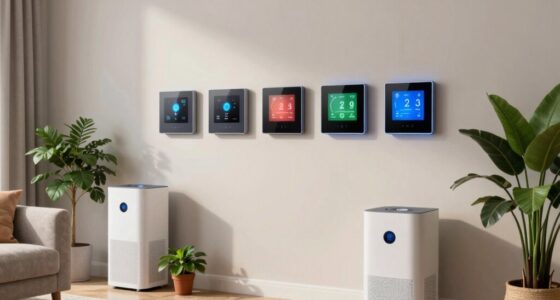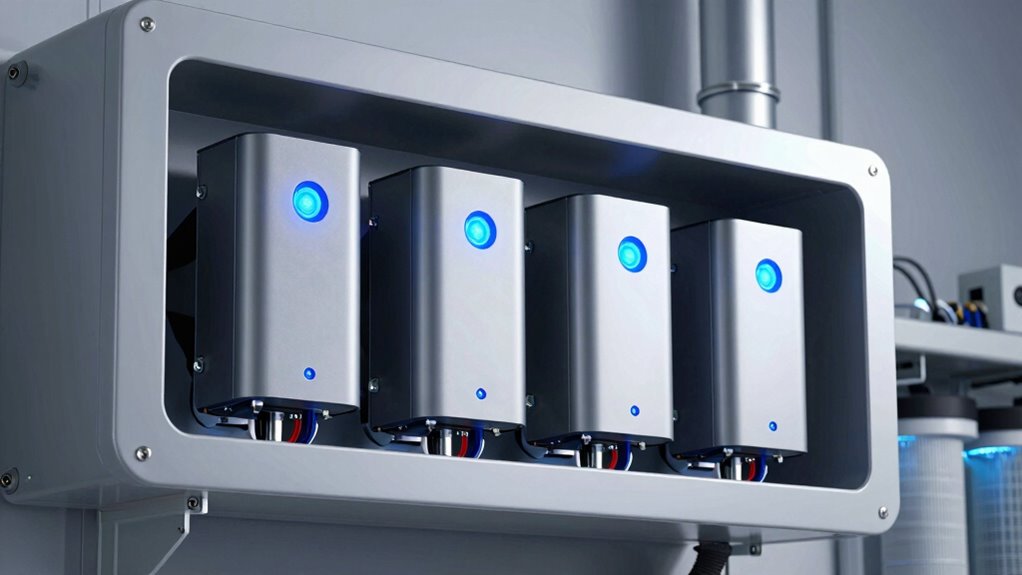

As air quality concerns continue to rise, bipolar ionization devices are gaining popularity for their ability to neutralize pollutants, viruses, and odors in HVAC systems. Among the leading picks, the Bipolar Ion Generator Module stands out for its compact design and high ion output, making it ideal for retrofit projects. The Duct Bipolar Ionizer Air Purifier offers a versatile, high-capacity option with self-cleaning features, suitable for large spaces. For those seeking a maintenance-free, commercial-grade solution, the Nu-Calgon iWave-C excels with its proven effectiveness and ease of use. Each of these options balances performance, ease of installation, and maintenance considerations, but they also come with tradeoffs that matter depending on your specific needs.

Get home appliances delivered free with Prime
- Fast, free delivery on millions of items
- Prime Video, Amazon Music and more included
- Member-only deals all year
Key Takeaways
- High ion output enhances air purification but can vary significantly between models.
- Self-cleaning features reduce maintenance but may add to upfront costs or complexity.
- Voltage requirements influence installation compatibility and portability.
- Design suitability varies from compact replacements to large-scale commercial systems.
- Tradeoffs often involve balancing ease of use, system compatibility, and performance.
| Bipolar Ion Generator Module, DC 12V Replacement Component for HVAC and VAV Equipment |  | Best for Retrofit and Compact Installations | Model: TFB-YD1278 | Input Voltage: 12V DC | Positive Ion Output: above 4 million ions/cm3 at 15 cm | VIEW ON AMAZON | See Our Full Breakdown |
| Duct Bipolar Ionizer Air Purifier, 24-240VAC, Self-Cleaning, VOC Control, HVAC Ion Generator |  | Best for Large Spaces and Versatile HVAC Integration | Voltage: 24-240VAC | Cleaning: Self-cleaning | Airflow: 4800 CFM | VIEW ON AMAZON | See Our Full Breakdown |
| Nu-Calgon 4900-10 iWave-C Commercial Air Cleaner |  | Best for Commercial, Light System Purification | Power Source: Battery Powered | Control Method: Remote | Filter Type: Ionizer | VIEW ON AMAZON | See Our Full Breakdown |
| Nu-Calgon iWave-R Ion Generator |  | Best for Maintenance-Free Operation | Brand: Nu-Calgon | Special Feature: Self-Cleaning, No-Maintenance | Engine Type: 4 Stroke | VIEW ON AMAZON | See Our Full Breakdown |
| Bipolar Ionization Air Purifier Module – 220V Positive & Negative Ion Generator for HVAC |  | Best for 220V Systems and High Ion Output | Model: TFB-YA2102 | Input Voltage: 220VAC | Positive Ion Output: >1.5 million ions/cc | VIEW ON AMAZON | See Our Full Breakdown |
More Details on Our Top Picks
Bipolar Ion Generator Module, DC 12V Replacement Component for HVAC and VAV Equipment
This bipolar ion generator module excels in high ion output within a compact form factor, making it ideal for retrofit projects or systems with limited space. Its high ion production can significantly improve air quality, especially in smaller or existing HVAC setups. Compared with larger, more complex systems, this module’s straightforward design offers ease of installation, but it requires careful verification of electrical compatibility and fitment before purchase. It is well-suited for technicians looking for a reliable, high-output replacement component, though it may be less ideal for large-scale commercial systems that demand higher airflow capacity.
Pros:- High ion output for effective air purification
- Compact and easy to install
- Suitable for various HVAC and VAV systems
Cons:- Requires verification of fitment and electrical compatibility
- Limited information on long-term durability
Best for: HVAC technicians or facility managers seeking a high-output, easy-to-install replacement for existing systems.
Not ideal for: Large commercial systems or users unfamiliar with electrical specifications requiring extensive customization.
- Model:TFB-YD1278
- Input Voltage:12V DC
- Positive Ion Output:above 4 million ions/cm3 at 15 cm
- Negative Ion Output:above 8 million ions/cm3 at 15 cm
- Positive Output Voltage:+3.0±0.5kV
- Negative Output Voltage:-3.0±0.5kV
- Working Current:below 20mA
- Insulation Resistance:10 MΩ minimum
- Operating Frequency:7.5 Hz
Our verdict“A solid choice for retrofit projects requiring high ion output in a compact package.”
Duct Bipolar Ionizer Air Purifier, 24-240VAC, Self-Cleaning, VOC Control, HVAC Ion Generator
This model offers a broad voltage range, making it compatible with various HVAC systems, from 24VAC to 240VAC. Its self-cleaning feature reduces ongoing maintenance, which is a significant advantage for busy facilities. The high airflow capacity of 4800 CFM makes it suitable for large commercial spaces, air handling units, or ducted systems. However, installation may require technical expertise, especially considering electrical connections and airflow integration. It’s a strong option for those prioritizing capacity and low maintenance, but less suited for smaller or simpler systems where installation complexity might outweigh benefits.
Pros:- Wide voltage compatibility
- Self-cleaning reduces maintenance
- High airflow capacity for large spaces
Cons:- Installation can be complex
- Lack of detailed filter or replacement info
Best for: Facility managers or HVAC professionals handling large commercial spaces with high airflow demands.
Not ideal for: DIY installers or systems where electrical expertise is limited, or for small residential setups.
- Voltage:24-240VAC
- Cleaning:Self-cleaning
- Airflow:4800 CFM
- Application:HVAC duct or air handler
Our verdict“Ideal for large-scale HVAC setups needing high airflow and minimal maintenance.”
Nu-Calgon 4900-10 iWave-C Commercial Air Cleaner
The iWave-C is designed for small to medium commercial systems, offering effective bipolar ionization with a focus on reducing mold, bacteria, and odors. Its self-cleaning feature and digital controls make it user-friendly, while its compatibility with systems up to 12 tons makes it suitable for light commercial use. Compared with more industrial options, this device provides a reliable, ozone-free purification method, but it might fall short in larger or more demanding environments where higher airflow and ion output are necessary. It’s best suited for businesses seeking effective, low-maintenance air cleaning for modest spaces.
Pros:- Self-cleaning reduces ongoing maintenance
- Effective against mold, bacteria, and odors
- No ozone or harmful byproducts
Cons:- Limited to light commercial systems
- Ion emitters need periodic replacement
- Less suitable for large or complex systems
Best for: Small commercial facilities or light-duty HVAC systems requiring reliable air purification.
Not ideal for: Large industrial or high-capacity HVAC setups where higher airflow and more robust systems are needed.
- Power Source:Battery Powered
- Control Method:Remote
- Filter Type:Ionizer
- Features:Programmable self-cleaning, waterproof housing, digital display
- Dimensions:30″D x 8″W x 6″H
- Weight:4 pounds
Our verdict“A dependable, low-maintenance option for small commercial spaces seeking effective air quality improvement.”
Nu-Calgon iWave-R Ion Generator
The iWave-R emphasizes maintenance-free operation, employing needlepoint bipolar ionization technology to continually purify indoor air. Its simplicity and self-cleaning design make it appealing for users who want effective air quality improvement without ongoing upkeep. However, the limited technical details available can make it harder to assess its performance relative to more detailed models. It’s a practical choice for those prioritizing ease of installation and operation in smaller or less complex systems, though it may not satisfy users needing high ion output or large-scale capacity.
Pros:- Self-cleaning, maintenance-free operation
- Effective bipolar ionization
- Ease of installation and use
Cons:- Limited specifications provided
- May lack capacity for large spaces
- Performance details are sparse
Best for: Users seeking a plug-and-play, maintenance-free bipolar ionization solution for small or medium systems.
Not ideal for: Large commercial or industrial environments that require high ion densities or extensive airflow capacity.
- Brand:Nu-Calgon
- Special Feature:Self-Cleaning, No-Maintenance
- Engine Type:4 Stroke
Our verdict“Excellent for small systems where ease of use and maintenance are the top priorities.”
Bipolar Ionization Air Purifier Module – 220V Positive & Negative Ion Generator for HVAC
This bipolar ion generator operates at 220VAC, producing high concentrations of positive and negative ions, making it suitable for various applications including HVAC and air purifiers. Its high ion output can significantly enhance air quality, especially in environments where electrical infrastructure supports 220V. The device’s complex technical specs might be intimidating for some users, but it offers reliable, durable performance for those with compatible systems. It’s less portable but excels in environments where high ion production and system compatibility are priorities.
Pros:- High ion output for maximum air purification
- Durable construction with high-quality materials
- Suitable for various HVAC and air purification systems
Cons:- Requires 220V power, limiting portability
- Technical complexity may be a barrier for some users
Best for: Professionals installing or upgrading systems with 220V power supplies, requiring high ion output.
Not ideal for: Residential users or systems with lower voltage requirements or limited technical expertise.
- Model:TFB-YA2102
- Input Voltage:220VAC
- Positive Ion Output:>1.5 million ions/cc
- Negative Ion Output:>2.5 million ions/cc
- Positive Voltage:+2.0±0.5KV
- Negative Voltage:-2.5±0.5KV
- Working Current:<0.5mA
- Insulation Resistance:10 MΩ
Our verdict“A strong choice for professional installations demanding high ion concentrations and system compatibility with 220V supplies.”

How We Picked
Our selection process focused on devices specifically designed for bipolar ionization in HVAC systems, considering factors such as ion output, ease of installation, maintenance needs, and system compatibility. We prioritized products with proven effectiveness, good user reviews, and features that support long-term operation, including self-cleaning and durability. We also balanced price points and technical complexity to recommend options suitable for both novice and professional installers.
Factors to Consider When Choosing Bipolar Ionization Device For Hvac
Choosing the right bipolar ionization device for your HVAC system involves weighing several key factors. The primary considerations include the size of your space, system compatibility, maintenance requirements, and desired ion output. Understanding these factors can help you narrow down the options and select a device that balances performance with ease of use, ensuring you get the best air quality improvements without unnecessary complexity or cost.
System Compatibility and Voltage Requirements
Ensure the device matches your HVAC system’s voltage and connection types. Some options, like the Bipolar Ion Generator Module, operate on low voltage DC and are suitable for retrofit or small systems, while others like the Bipolar Ionization Air Purifier Module require higher AC voltages, limiting portability but offering higher output. Compatibility is critical to avoid installation issues and ensure optimal functioning.
Performance and Ion Output
Look for devices with high ion production if air purification is your priority. The Duct Bipolar Ionizer provides high airflow and ion output suitable for large spaces, whereas smaller units like the Nu-Calgon iWave-C excel in targeted, effective purification for modest environments. Consider your space size and air quality needs to determine the right ion density for your system.
Maintenance and Ease of Use
Devices with self-cleaning features, such as the Nu-Calgon iWave-R and Duct Bipolar Ionizer, reduce ongoing maintenance, saving time and effort. However, self-cleaning units may come at a higher initial cost or require periodic component replacements. Non-maintenance options are ideal for users prioritizing simplicity, but they might offer less control or lower longevity.
Installation Complexity and Cost
Some units, especially those with broad voltage ranges or high airflow capacities, may require professional installation. The Duct Bipolar Ionizer and high-voltage models like the Bipolar Ionization Module are best handled by trained technicians. Simpler, plug-and-play models like the Nu-Calgon iWave-R suit smaller systems and less technical users, but may have limitations in capacity.
Frequently Asked Questions
How does bipolar ionization improve air quality?
Bipolar ionization works by emitting both positive and negative ions that attach to airborne particles, viruses, bacteria, and odors. This process neutralizes pollutants and reduces static electricity, leading to cleaner, healthier indoor air without producing ozone or harmful byproducts. It effectively targets a wide range of indoor contaminants, enhancing overall air quality.
Is bipolar ionization safe for all HVAC systems?
Generally, bipolar ionization is safe for most HVAC systems when properly installed and maintained. However, compatibility depends on your system’s electrical characteristics and design. Some units, especially those operating at high voltages, may require professional assessment to ensure safe integration. It’s advisable to verify manufacturer recommendations before installation.
How often do ion emitters need replacement?
The frequency of replacing ion emitters varies by device. Many units, like the Nu-Calgon iWave-C, feature replaceable ion emitters designed for periodic maintenance, often annually or as recommended by the manufacturer. Self-cleaning models tend to require less frequent intervention but still benefit from regular checks to maintain optimal performance.
Can bipolar ionization eliminate all indoor pollutants?
While bipolar ionization significantly reduces many common indoor pollutants, including mold, bacteria, viruses, and odors, it should not replace other filtration or purification methods in environments with extremely high contaminant levels. It works best as part of a layered approach to indoor air quality, complementing filters and ventilation systems.
What are the main tradeoffs when choosing a bipolar ionization device?
The key tradeoffs involve balancing ion output, system compatibility, maintenance requirements, and cost. High-output units provide better purification but may require more complex installation or higher voltage power. Self-cleaning models reduce ongoing maintenance but might come at a premium. Understanding your specific needs and system constraints will help determine the best fit.
Conclusion
For small to medium commercial systems or retrofit projects, the Bipolar Ion Generator Module offers high ion output in a compact form. Larger facilities with high airflow demands should consider the Duct Bipolar Ionizer for its capacity and versatility. Small business owners or those new to bipolar ionization will find the Nu-Calgon iWave-R an easy, maintenance-free solution. Meanwhile, professionals handling high-voltage systems requiring maximum ion density might prefer the Bipolar Ionization Air Purifier Module. Your choice depends on your system size, technical comfort, and long-term maintenance preferences.