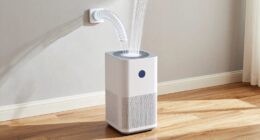
Healthy indoor air depends on more than a single appliance. Purifiers, humidifiers, ventilation fans, air-quality monitors, sensors, and smart-home controls each address a different part of the indoor environment. The right combination can help you identify pollutants, manage moisture, improve airflow, and respond to changing conditions without relying on guesswork.
This guide explains how the main categories fit together, what to consider before buying equipment, and where specialized solutions make sense. Whether you want a more comfortable home office, better control of smoke and odors, safer professional air testing, or a smarter whole-home setup, the goal is the same: understand the problem first, then choose a device designed to address it.
Start by Understanding Indoor Air Quality
Indoor air quality is shaped by particles, gases, moisture, temperature, and ventilation. These factors interact, but they are not interchangeable. A purifier that captures airborne particles does not necessarily control humidity, while a humidifier does not remove smoke or improve ventilation.
Common indoor air concerns include:
- Dust, pollen, pet dander, and other suspended particles
- Smoke from tobacco, cooking, fireplaces, or outdoor events
- Volatile organic compounds released by paints, furnishings, cleaners, and building materials
- Humidity that is too low or too high
- Stale air caused by limited outdoor-air exchange
- Heat buildup in attics and poorly ventilated areas
Begin by identifying when and where the issue occurs. A bedroom that feels dry overnight calls for a different response than a workshop with possible chemical vapors. Note whether symptoms or odors are tied to cooking, cleaning, weather, occupancy, renovation work, or a particular room. This basic investigation can prevent you from buying an appliance that treats the wrong variable.

Temtop Air Quality Monitor PM2.5 PM10 Particle Counter, Formaldehyde, Temperature, Humidity, TVOC AQI Tester for Indoor/Outdoor Air Pollution Detection w/Data Export
- All-in-One Air Quality Monitoring: Measures PM2.5, PM10, formaldehyde, VOCs, humidity, temperature, AQI
- Data Export & Historical Data: Exports data to Excel, displays 12-hour PM2.5 histogram, supports 3 months recording
- Durable & Precise Sensor: Laser sensor lasts 20,000 hours with high accuracy
As an affiliate, we earn on qualifying purchases.
As an affiliate, we earn on qualifying purchases.
Measure Before You Automate
Monitoring turns an invisible problem into usable information. Depending on the device, an air-quality monitor may track particulate matter, volatile organic compounds, carbon dioxide, temperature, or relative humidity. Not every monitor measures every pollutant, so its sensor list matters more than a long set of app features.
Choosing a monitor for the setting
For everyday household use, look for measurements that relate directly to your concerns. A humidity reading can help you decide whether a humidifier is needed, while particle data may reveal changes during cooking or when outdoor pollution enters the home. Carbon dioxide can serve as a useful indicator of how well an occupied room is being ventilated, although it is not a complete measure of air quality.
If you want to check conditions in hotels, rental properties, vehicles, or changing work locations, portability becomes more important. Battery life, charging method, screen readability, size, and data logging can affect whether a monitor is genuinely useful away from home. Explore the guide to portable air quality monitors for travel for options suited to mobile use.
Professional inspections and contracting work may require more specialized VOC measurement. Instrument range, response time, calibration procedures, sensor technology, and recordkeeping can matter when readings inform a jobsite decision. The comparison of handheld VOC meters for contractors is a useful starting point for more demanding applications.
Interpret readings in context
A single reading rarely tells the entire story. Watch for patterns across time and compare similar conditions. For example, observe what happens before, during, and after cooking, cleaning, opening windows, or running a purifier. Sensor placement also matters: avoid positioning a monitor directly beside an appliance, open window, vent, stove, or source of steam unless you are deliberately investigating that source.
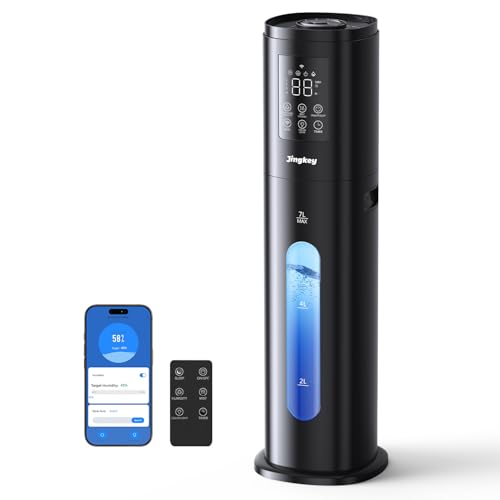
Humidifiers for Bedroom Large Room Humidifiers for Home,7L/1.85Gal Large Humidifier with Smart App & Remote Control, 4 Mist Levels Cool Mist Humidifiers Black
- Large Capacity Water Tank: 7L/1.85Gal for 60 hours use
- High Moisture Output: 350mL/h for up to 500 sq.ft
- Multiple Mist Levels: 4 adjustable mist settings
As an affiliate, we earn on qualifying purchases.
As an affiliate, we earn on qualifying purchases.
Use Air Purifiers for Airborne Contaminants
Air purifiers circulate room air through one or more filtration stages. Their practical effectiveness depends on the pollutants being targeted, the size and layout of the room, airflow, operating speed, filter condition, and placement.
Before choosing one, consider:
- The type of particle, smoke, or odor problem you want to address
- The room size and whether doors usually remain open or closed
- Noise at the speeds you expect to use
- Filter availability and the effort required for routine replacement
- Energy use during the hours the unit will operate
- Whether sensors and automatic controls support your routine
Sensors and automatic operation
Purifiers with built-in sensors can adjust fan speed as measured conditions change. Auto mode is convenient in spaces where pollution varies throughout the day, such as a living area affected by cooking or an office with changing occupancy. However, automatic performance depends on what the unit senses. A particle sensor cannot fully characterize every gas, odor, or ventilation issue.
The guide to air purifiers with sensors and auto mode can help you compare models designed for more responsive operation. Even with automation, periodically check the filter, air inlets, settings, and monitor trends rather than assuming the appliance is managing every air-quality factor.
Smoke requires a targeted strategy
Smoke presents both particles and gaseous compounds, making it a demanding indoor-air problem. Choose equipment with the room, smoke source, and intended operating schedule in mind. Placement near the affected area may help, but the purifier needs unobstructed airflow and should not become a substitute for controlling the source.
For a dedicated room, consult the guide to air purifiers for smokers’ rooms. Filtration should be part of a broader plan that may include source reduction, isolation from other rooms, appropriate ventilation, surface cleaning, and attention to fabrics that retain odors.

VOOPNU Air Purifiers for Home, High Efficiency Filter Up to 1076 Ft², White
- Easy-to-Use Control Panel: Intuitive design for effortless operation
- Compact Yet Powerful: Covers 1076 ft² in a small size
- Portable and Space-Saving: Fits on desks or in corners easily
As an affiliate, we earn on qualifying purchases.
As an affiliate, we earn on qualifying purchases.
Manage Humidity for Comfort and Building Health
Humidity affects comfort, static electricity, condensation, and how a room feels at a given temperature. Dry air may be uncomfortable, while excessive moisture can encourage condensation and create conditions favorable to mold. Because needs vary with climate, season, building construction, and occupancy, measure relative humidity before adding moisture.
Small spaces and home offices
A compact humidifier can be practical when the concern is limited to a desk, office, or small personal area. Capacity, runtime, noise, cleaning access, refill method, and the direction of mist are more important than simply choosing the smallest unit available. Place it where moisture will disperse without wetting electronics, paperwork, walls, or furniture.
For workspace-friendly choices, see the guide to compact humidifiers for an office desk. Clean the reservoir and wetted components according to the manufacturer’s instructions, use appropriate water, and stop operation if nearby surfaces become damp.
Larger and industrial applications
Warehouses, production spaces, plant rooms, and other large facilities have very different moisture requirements. Output capacity, distribution, drainage, installation, controls, maintenance access, and water quality can become central design considerations. A portable household humidifier is not a realistic substitute for properly sized equipment in these environments.
The guide to high-output industrial humidifiers covers options intended for substantial moisture demand. For critical processes, valuable inventory, or large occupied spaces, sizing and installation may require input from a qualified HVAC or building professional.

Amico 10" Shutter Exhaust Fan, Remote Thermostat & Humidity 13W DC 1068 CFM
- Smart Temperature and Humidity Control: Automates ventilation based on climate thresholds
- 8-Speed Auto & Manual Modes: Adjust airflow with auto or manual settings
- 24-Hour Timer for Scheduling: Set daily operation times easily
As an affiliate, we earn on qualifying purchases.
As an affiliate, we earn on qualifying purchases.
Improve Ventilation and Control Heat Buildup
Ventilation exchanges or redistributes air; filtration cleans air that passes through a device. Homes often benefit from both, but ventilation decisions should account for outdoor pollution, humidity, temperature, and the building’s heating and cooling system.
Simple actions such as using a kitchen exhaust fan while cooking or a bathroom fan during and after bathing can help control pollutants and moisture near their sources. Opening windows may be useful when outdoor conditions are favorable, but it can be counterproductive during high pollen, smoke, extreme heat, or high-humidity periods.
Attic ventilation
Attic fans are designed to move hot air from an attic space, not to purify occupied rooms. Roof-mounted models may support an attic-ventilation strategy, but they must be matched with adequate intake venting and compatible roofing and building conditions. Poorly planned exhaust can create unwanted pressure effects or draw conditioned air from the home.
Review the guide to roof-mounted attic fans to understand available configurations. Before installation, consider roof penetrations, weather resistance, electrical requirements, intake area, insulation, air sealing, local codes, and whether professional assessment is appropriate.
Build a Useful Smart-Home Air System
Smart features are most valuable when they support a clear air-quality goal. App control, schedules, alerts, remote readings, voice control, and automations can reduce manual work, but connectivity does not improve filtration or moisture output by itself.
A practical system might use a monitor to reveal recurring patterns, a purifier to respond to particle events, and a humidifier controlled by measured humidity. Ventilation can then be adjusted according to indoor and outdoor conditions. Keep safety limits within each appliance rather than depending entirely on a cloud service, phone, or third-party automation.
When comparing connected appliances, check:
- Whether core controls still work without internet access
- Which measurements and historical data are visible
- Whether alerts can be customized
- Compatibility with the smart-home platform you already use
- Account, privacy, update, and data-sharing requirements
- How easily household members can operate the device manually
Know When Consumer Appliances Are Not Enough
Some air hazards require protective equipment, professional investigation, or source remediation rather than ordinary household appliances. Persistent chemical odors, visible mold, combustion concerns, unexplained health symptoms, or suspected hazardous materials deserve careful evaluation.
Powered air-purifying respirators are personal protective equipment intended for specific workplace or hazardous-task contexts. Selecting a PAPR involves the contaminant, cartridge or filter type, fit and configuration, assigned protection needs, work environment, and applicable safety requirements. A consumer room purifier does not replace respiratory protection, and a respirator does not clean the surrounding room.
For an overview of equipment categories, see the guide to powered air-purifying respirator options. Employers and workers should follow applicable occupational safety rules, training requirements, medical evaluations, and respiratory-protection programs.
Create a Room-by-Room Plan
A whole-home strategy is easier to manage when broken into zones. Start with the rooms where people spend the most time or where pollutant sources are strongest.
- Bedroom: prioritize quiet operation, particle control, comfortable humidity, and low-light settings.
- Kitchen: use source exhaust, then monitor how cooking affects nearby rooms.
- Home office: focus on comfort, equipment noise, desk-safe humidification, and ventilation during long occupied periods.
- Living room: consider open-plan airflow, pets, fireplaces, outdoor pollution, and changing occupancy.
- Basement: monitor moisture and address water entry or dampness at the source.
- Garage or workshop: isolate fumes from living areas and use task-appropriate ventilation and protective equipment.
- Attic: address insulation, air sealing, intake venting, and heat management as a building system.
Maintain the System You Choose
Even well-selected appliances lose usefulness when maintenance is neglected. Create a simple schedule for filters, sensor cleaning, humidifier sanitation, vent inspection, and battery charging. Follow manufacturer instructions because service intervals and cleaning methods vary.
Reassess performance after seasonal changes, renovations, new furniture, wildfire smoke, the arrival of a pet, or changes in household occupancy. Compare monitor trends, comfort, visible dust, odors, and appliance runtime. If conditions do not improve, reconsider the source, placement, capacity, or type of equipment instead of automatically adding another device.
A Practical Path Forward
Begin with the specific room and concern, gather measurements when possible, and choose the simplest intervention that directly addresses the cause. Control pollutant sources first, use ventilation when conditions allow, apply filtration to airborne contaminants, and manage humidity separately. Add smart controls only where automation makes the system easier to operate and understand.
The most effective home air setup is not necessarily the one with the most devices. It is a coordinated system in which every monitor, purifier, humidifier, fan, or protective device has a defined purpose—and where regular maintenance keeps that equipment ready to perform it.