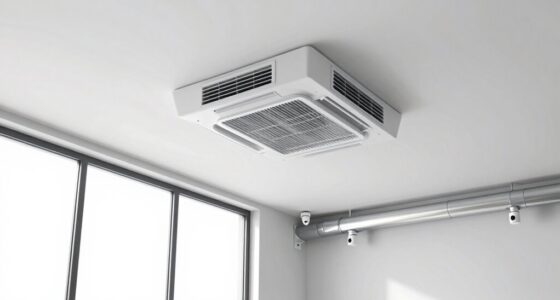

To keep your indoor air healthy, your purifier should cycle air roughly 4 to 6 times per hour, depending on room size and occupancy. This rate, called Air Changes per Hour (ACH), balances removing pollutants without causing discomfort or wasting energy. Larger or more contaminated spaces need faster turnover, while smaller areas require less. For personalized guidance on achieving ideal ventilation, continue exploring how to set your purifier just right for your space.
Key Takeaways
- Room air turnover rates typically range from 4 to 8 ACH, depending on space use and air quality needs.
- Higher ACH (air changes per hour) improves air quality but may increase energy consumption.
- Use a room air turnover calculator to determine the optimal ventilation rate based on room size and occupancy.
- Match your air purifier’s capacity to the calculated ACH to ensure effective air cleaning without over- or under-cycling.
- Proper cycling speeds balance pollutant removal, occupant comfort, and energy efficiency for healthier indoor environments.
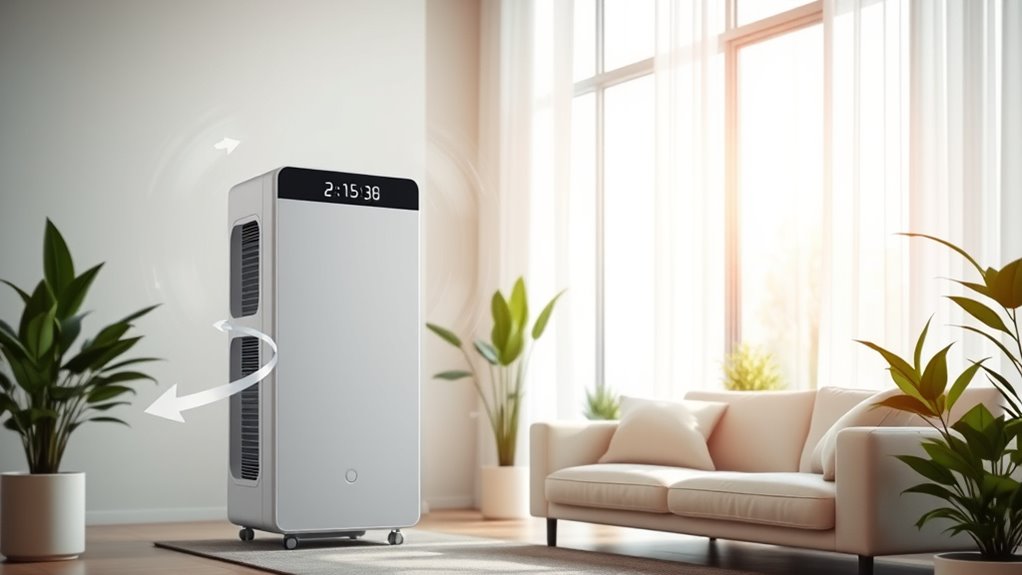
A Room Air Turnover Calculator is a valuable tool that helps you determine how quickly air is replaced in a space. Understanding this is essential because air quality hinges on proper ventilation rates. When your room’s air turns over too slowly, pollutants, allergens, and airborne viruses can accumulate, reducing the overall air quality. Conversely, if the air cycles too rapidly, it may cause discomfort or unnecessary energy consumption. Using a calculator allows you to find the right balance, ensuring your space maintains healthy air without wasteful ventilation.
Ventilation rates are fundamental to controlling air quality. They refer to the amount of fresh air introduced into a room relative to its size, usually measured in air changes per hour (ACH). For example, a higher ACH means the air is refreshed more frequently, which can substantially improve air quality, especially in crowded or contaminated environments. When you use a Room Air Turnover Calculator, you input details like room dimensions, occupancy, and appliance use. The calculator then estimates the most suitable ventilation rate needed to maintain a healthy environment. This way, you know exactly how often your air purifier or ventilation system should cycle to keep pollutants at bay.
It’s important to recognize that different spaces require different ventilation rates. For instance, a healthcare facility or a crowded classroom needs higher ACH to ensure proper air quality, while a quiet office or bedroom might need less. The calculator helps you customize these rates based on your specific needs. It’s not just about quantity but also about quality—air must be replaced often enough to remove indoor pollutants but not so much that it causes drafts or energy loss. This balance ensures your air purifier or HVAC system works efficiently, providing clean, fresh air without wasting energy.
Furthermore, knowing your room’s ideal air turnover rate helps you select the right equipment. For example, if your space has poor ventilation, you might need a more powerful air purifier or an upgraded ventilation system to meet the calculated turnover rate. Conversely, for well-ventilated areas, a smaller or less frequent cycle might suffice. The calculator offers actionable insights, guiding you to optimize your ventilation setup. Proper air turnover not only improves air quality but also enhances comfort and can reduce your energy bills. Additionally, understanding the recommended ventilation standards ensures compliance with health guidelines and promotes a healthier indoor environment.
Frequently Asked Questions
How Often Should I Run My Air Purifier Daily?
You should run your air purifier at least 12-24 hours daily to meet air quality standards, especially if you have allergies or asthma. Keep in mind that longer cycles help maintain cleaner air, but consider purifier noise levels during quiet hours. Adjust the settings based on your room size and needs, ensuring consistent operation for ideal air quality without disturbing your comfort.
Does Room Size Affect Air Purifier Cycle Time?
Think of your room size as the canvas that determines how quickly your air purifier can work magic. Yes, room volume directly affects air exchange rates; larger spaces need longer or more frequent cycles to keep air fresh. To optimize efficiency, match your purifier’s cycle time to your room’s size, ensuring clean air flows seamlessly. Bigger rooms demand patience and power, but the result is a healthier, more comfortable space.
Can Air Purifiers Eliminate All Indoor Pollutants?
Air purifiers can’t eliminate all indoor pollutants, but they greatly improve air quality through effective air purification and pollutant removal. They target common pollutants like dust, pet dander, smoke, and VOCs, reducing allergy and asthma triggers. However, some pollutants, such as gases or viruses, may require specialized filters or additional ventilation. To maximize benefits, choose a purifier suited to your space and regularly maintain it for ideal pollutant removal.
What Maintenance Is Required for Optimal Performance?
Ever wondered how to keep your air purifier working at its best? You should regularly replace the filters to maintain peak HEPA efficiency. Check manufacturer recommendations for filter replacement intervals, typically every 6 to 12 months. Keep the unit clean and clear of dust, and make sure the fan and filters are in good shape. Doing this guarantees your purifier effectively removes indoor pollutants and keeps your air fresh and healthy.
How Do I Choose the Right Air Purifier for My Room?
To select the right air purifier, first consider your room size to guarantee adequate coverage. Look for models that meet air quality standards for your needs, whether for allergies or pollution. Pay attention to purifier noise levels to keep your space comfortable. Select a device with efficient filtration, like HEPA, and easy maintenance. This way, you’ll improve indoor air quality without sacrificing comfort or quietness.
Conclusion
Now that you know how quickly your air should turn over, your space can breathe easier like a calm lake after a storm. Think of your purifier as a diligent dance partner, swirling and spinning the air to keep it fresh and lively. When you match the right cycle, you’re conducting a symphony of clean, healthy air — turning your room into a sanctuary rather than a stagnant pond. Breathe deep, and enjoy the clarity!