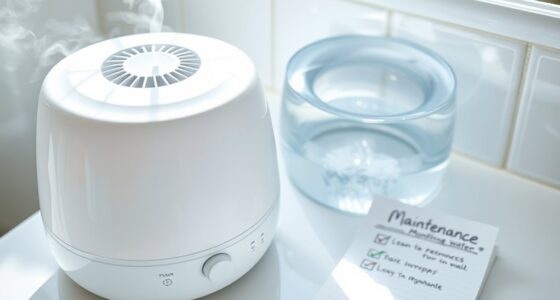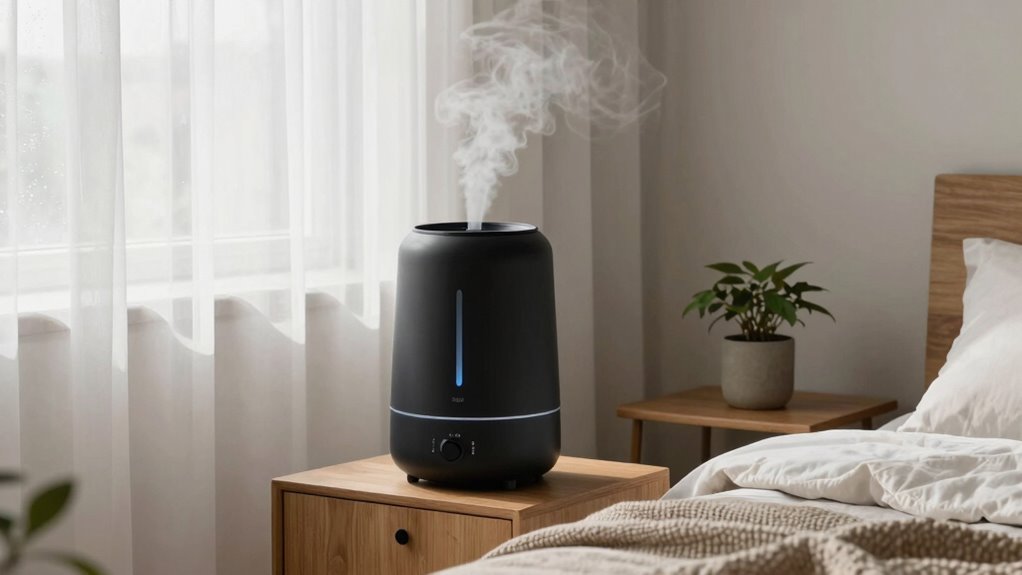

Even with a large humidifier, your room can still feel dry if the air quality is poor or the device is poorly placed. Bad airflow, dust, pet dander, or drafts can block moisture from spreading evenly. Incorrect settings or faulty sensors might also cause the humidifier to underperform. Regular cleaning and proper placement help, but environmental factors play a big role. Keep exploring to find the hidden reasons behind your dry space.

Get home appliances delivered free with Prime
- Fast, free delivery on millions of items
- Prime Video, Amazon Music and more included
- Member-only deals all year
Key Takeaways
- Poor air circulation and pollutants can prevent proper humidity distribution, making the room feel dry despite the humidifier.
- Incorrect placement, such as near walls or in corners, limits effective moisture spread.
- Large or irregularly shaped rooms may require multiple humidifiers for even humidity.
- Faulty sensors or low humidity settings can result in insufficient moisture output.
- Inadequate ventilation or air quality issues hinder humidity retention and overall comfort.
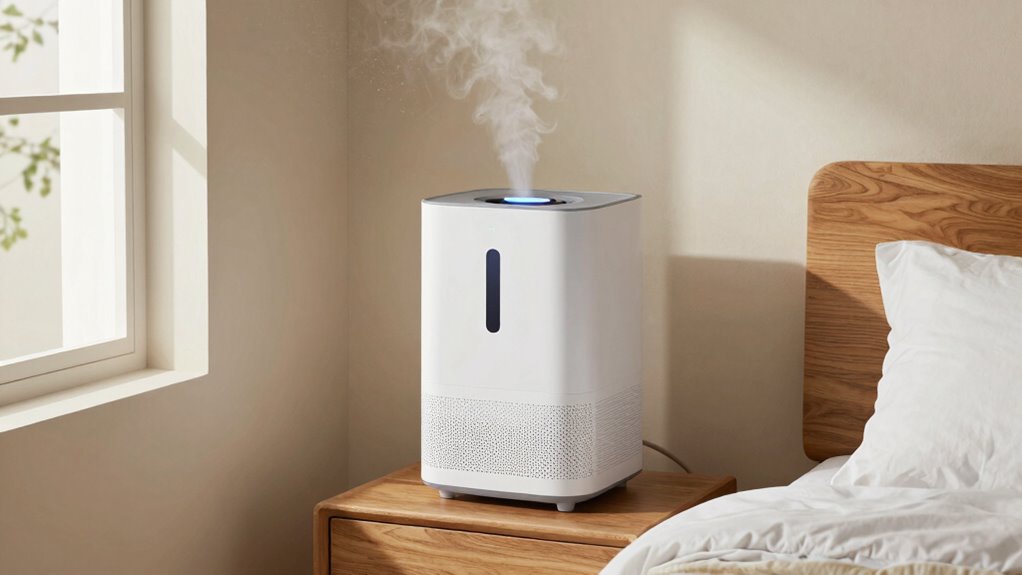
Even with a large humidifier running nonstop, your room can still feel dry. If you’ve invested in a powerful unit but notice the air remains uncomfortably crisp, it’s time to evaluate factors beyond just the size of your humidifier. The air quality in your space plays a significant role—if your room has poor air circulation or contains pollutants, it can hinder the humidity from evenly spreading. Dust, pet dander, and other airborne particles can also interfere with your efforts, making the environment feel drier even when humidity levels are technically adequate.
One of the most common mistakes is humidifier placement. If your device is tucked away in a corner or near a wall, it won’t distribute moisture effectively throughout the room. Instead, place your humidifier in a central location where air can circulate freely. Elevating it slightly above the ground—such as on a table or shelf—can also help improve airflow and ensure the moisture disperses evenly. Avoid placing it near vents, open windows, or drafts, as these can cause rapid changes in humidity levels and render your efforts futile.
Another aspect to ponder is the room’s size and layout. Large or oddly shaped rooms may require multiple humidifiers or strategic placement to maintain consistent air quality. If your space is sprawling, one unit may not be enough to cover the entire area effectively. Additionally, keep in mind that open doors and windows drastically impact humidity; they allow dry air to enter and moist air to escape, making it harder for your humidifier to maintain desired levels. Keeping doors closed and windows sealed helps your humidifier work more efficiently.
Furthermore, check the humidity settings on your device. If it’s set too low or if the sensor isn’t functioning correctly, your humidifier might not be producing enough moisture. Using a hygrometer can help you monitor the actual humidity levels in your room, giving you a clearer picture of whether your device is operating as intended. Regular cleaning of your humidifier is also essential to prevent mold and bacteria growth, which can worsen air quality and compromise your health. Ensuring proper air circulation and ventilation is crucial for maintaining the right humidity levels effectively.
In addition, proper air filtration can help improve overall air quality, making it easier for your humidifier to work efficiently and maintain comfortable levels. In the end, even a large humidifier can fall short if it’s not positioned properly or if the air quality in your room isn’t conducive to moisture distribution. Adjust your humidifier’s placement, ensure your space is sealed from drafts, and monitor humidity levels closely. These small tweaks can make a big difference in transforming dry air into a comfortably humid environment.
air purifier with humidifier combo
As an affiliate, we earn on qualifying purchases.
As an affiliate, we earn on qualifying purchases.
Frequently Asked Questions
How Do I Know if My Humidifier Is Working Properly?
To know if your humidifier works properly, check the humidity levels with a hygrometer—aim for 40-60% for comfort. If levels stay below that range, do some humidifier troubleshooting, like cleaning the filter and ensuring it’s set correctly. You’ll notice better moisture in your room, and your skin and airways will thank you. Regular maintenance helps keep your humidifier functioning at its best.
Can Indoor Plants Affect Humidity Levels?
Indoor plants can definitely affect humidity levels because plant transpiration releases moisture into the air, increasing humidity. Soil moisture also plays a role; when the soil is moist, plants transpire more, adding extra humidity to your room. However, the impact varies based on plant size and number. If you want to boost humidity, adding more plants with moist soil can be an effective, natural way to do so.
Does Using a Humidifier Affect My Health?
Like a knight wielding a trusty sword, using a humidifier can positively affect your health. It helps with allergy relief and skin hydration, especially in dry environments. However, be cautious—overusing it might cause mold or dust mites, which can worsen allergies. Keep the humidity balanced, and you’ll notice better breathing and healthier skin. Proper maintenance is key to enjoying these benefits without any health risks.
How Often Should I Clean My Humidifier?
You should clean your humidifier at least once a week to prevent mold and bacteria buildup. Regular humidifier maintenance involves thoroughly rinsing and disinfecting it, especially if you notice mineral deposits or water discoloration. Using good water quality, like distilled or filtered water, reduces mineral buildup and makes cleaning easier. Consistent cleaning guarantees your humidifier runs efficiently, improves air quality, and keeps your room feeling comfortable and healthy.
What Room Size Is Suitable for a Humidifier?
Ever wondered what room size suits your humidifier? You should pick a humidifier based on your room’s dimensions and its capacity. For smaller spaces, a compact model works well, but larger rooms need a humidifier with higher capacity to effectively add moisture. Measure your room accurately and choose a device rated for that size. Isn’t it better to have the right-sized humidifier for consistent comfort?
room hygrometer for humidity monitoring
As an affiliate, we earn on qualifying purchases.
As an affiliate, we earn on qualifying purchases.
Conclusion
Even with a big humidifier, your room can feel dry if you’re not sealing the leaks or balancing air circulation. Think of your space like a sponge—if you don’t keep it sealed tightly, moisture slips out, leaving everything feeling parched. To truly quench your room’s dryness, address those leaks, optimize humidity levels, and guarantee good airflow. Only then will your space become a cozy oasis, not a desert in disguise.
air circulation fan for large rooms
As an affiliate, we earn on qualifying purchases.
As an affiliate, we earn on qualifying purchases.
air quality monitor for indoor air
As an affiliate, we earn on qualifying purchases.
As an affiliate, we earn on qualifying purchases.
Halloween Picks
halloween
As an affiliate, we earn on qualifying purchases.