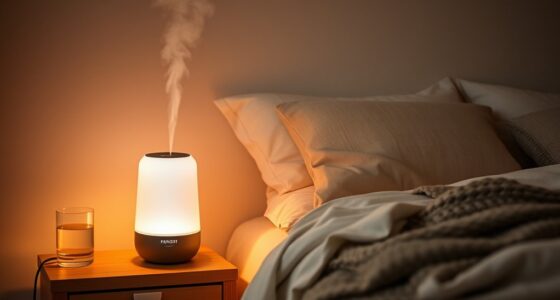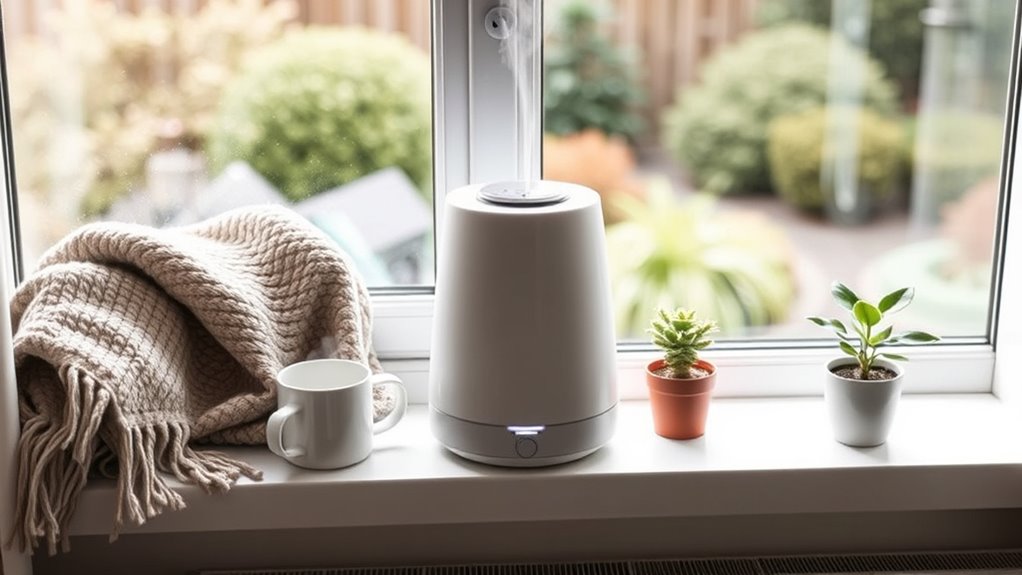

To adjust your humidifier settings by season, you should increase humidity levels during colder months to combat dryness and prevent respiratory issues, while lowering or turning off the device in humid summer months to avoid mold and dust mites. Monitoring indoor moisture with a hygrometer helps keep humidity between 30-50%. Proper seasonal adjustments improve comfort, protect your home, and save energy—stick around to discover simple tips for perfect indoor air quality all year round.
Key Takeaways
- Adjust humidifier settings seasonally to maintain optimal indoor humidity levels of 30-50%, preventing dryness or excess moisture.
- Increase humidity during winter to counteract indoor dryness caused by cold outdoor air and heating systems.
- Reduce or turn off humidifiers in summer when outdoor air is naturally humid, avoiding over-humidification.
- Use a hygrometer to monitor indoor moisture, ensuring proper seasonal adjustments for comfort and air quality.
- Regularly clean and maintain humidifiers to ensure efficient operation aligned with seasonal climate changes.
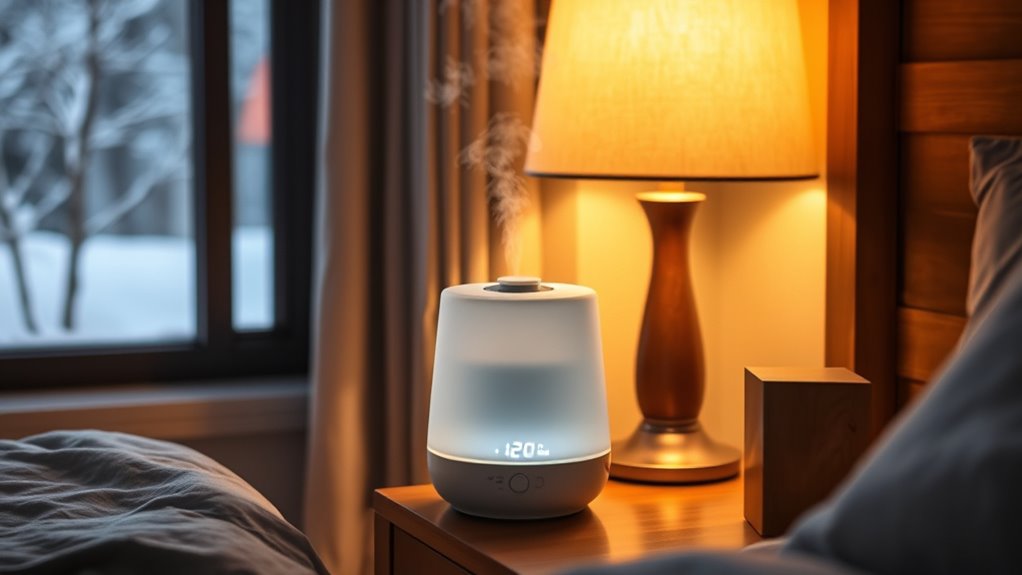
Humidifiers play an essential role in managing indoor climate, especially as weather patterns fluctuate throughout the year. As temperatures change with the seasons, your home’s air quality can be impacted considerably. During colder months, dry indoor air can cause discomfort, respiratory issues, and even damage to wood furniture and musical instruments. Conversely, in humid months, excess moisture can lead to mold growth and dust mites. Adjusting your humidifier settings seasonally helps maintain ideal air quality, ensuring you breathe easier and protect your home’s interior. Proper humidity levels not only improve comfort but also support better health by reducing airborne irritants and allergens.
Adjust your humidifier seasonally to optimize air quality, comfort, and energy efficiency throughout the year
When you set your humidifier according to the season, energy efficiency becomes a key consideration. During winter, running your humidifier at a lower setting can save energy while still delivering enough moisture to combat dryness. This prevents overworking the device and reduces electricity consumption. In summer, when outdoor humidity is often higher, you might need to turn the humidifier off or set it to a minimal level, as the natural air tends to be more humid. By adjusting the settings appropriately, you prevent unnecessary energy use, which not only lowers your utility bills but also reduces your environmental impact.
In addition to seasonal adjustments, it’s important to monitor indoor humidity levels. Using a hygrometer allows you to keep tabs on the air’s moisture content. Aim for a humidity level between 30% and 50% year-round. During winter, if you notice the air is too dry, increasing your humidifier’s output can alleviate dry skin, sore throats, and respiratory discomfort. In summer, if the air feels overly humid, reducing or turning off the humidifier helps prevent excess moisture that could foster mold growth or dust mites, both of which can compromise air quality. Regular maintenance of your device, including cleaning and replacing filters, ensures it functions efficiently, further supporting energy savings. Additionally, understanding seasonal climate variations can guide optimal humidifier use and settings.
Frequently Asked Questions
Can Humidifier Settings Harm Indoor Plants During Different Seasons?
Yes, if you set your humidifier improperly, it can harm your indoor plants’ health. Too much humidity may lead to mold or root rot, while too little can cause dehydration. Adjusting the settings based on the season helps maintain ideal plant health. Remember, consistent watering frequency and proper humidity levels are key to preventing stress and ensuring your plants thrive year-round.
How Do Humidity Levels Affect Allergy Symptoms Year-Round?
You find that ideal humidity levels improve your air quality and support respiratory health, reducing allergy symptoms year-round. When humidity is too low, allergens like dust and pollen become airborne, aggravating allergies. Conversely, excessive humidity fosters mold and dust mites, worsening symptoms. Maintaining balanced humidity helps you breathe easier, minimizes allergy triggers, and promotes overall well-being by creating a healthier indoor environment.
Are There Safety Concerns With Portable Humidifiers in Winter?
Portable humidifier safety is important during winter, so you should take winter precautions to avoid issues like mold or bacteria growth. Always keep the device clean and use distilled water to prevent mineral buildup. Guarantee proper placement to avoid water spills and maintain ideal humidity levels. Regularly check for any malfunctions, and follow manufacturer instructions to keep safe during winter use. Staying vigilant helps you enjoy comfort without safety concerns.
Do Different Climate Zones Require Unique Humidifier Maintenance Routines?
You should tailor your humidifier maintenance to your climate zone, as different areas demand unique care. Imagine your humidifier working efficiently in a dry desert versus a humid coastal region; each needs climate-specific maintenance to prevent mold and mineral buildup. Adjust your zone-based humidity settings accordingly, cleaning filters and reservoirs regularly to keep your device safe and effective. Proper maintenance ensures ideal humidity levels and healthier indoor air quality.
How Does Changing Seasons Impact Mold Growth in Humidifier Reservoirs?
Changing seasons can increase mold growth in your humidifier reservoir if you don’t follow seasonal mold prevention practices. During warmer or more humid months, mold thrives more easily, so you should adjust your reservoir cleaning schedules accordingly. Regularly clean and disinfect your humidifier, especially when seasons shift, to prevent mold buildup. Proper maintenance guarantees clean, safe air and avoids health issues caused by mold spores.
Conclusion
By adjusting your humidifier settings with the seasons, you’re like a skilled captain steering your home’s comfort through changing weather. When winter’s chill arrives, crank it up to keep the air from becoming a dry desert; in summer, dial it down to prevent excess moisture. Think of your humidifier as a trusted compass, guiding you to a cozy, balanced environment year-round. With these smart adjustments, you’ll weather any season with comfort and ease.