Maintaining the right bedroom humidity is often more essential for snorers than most realize. Too dry air irritates your throat and nasal passages, making snoring worse, while overly humid air promotes mold and dust mites, which can also obstruct breathing. Keeping humidity between 40-60% helps keep airway tissues moist and reduces vibrations that cause snoring. Small adjustments could considerably improve your sleep quality—stay with us to discover how to optimize your environment effectively.

Get home appliances delivered free with Prime
- Fast, free delivery on millions of items
- Prime Video, Amazon Music and more included
- Member-only deals all year
Key Takeaways
- Maintaining 40-60% humidity keeps airway tissues moist, reducing vibration and snoring severity.
- Proper humidity levels prevent nasal and throat irritation that can worsen snoring.
- Balanced humidity minimizes mold and dust mites, improving overall breathing during sleep.
- Using hygrometers and humidifiers/dehumidifiers helps sustain optimal sleep environment conditions.
- Controlling bedroom humidity enhances sleep quality and reduces daytime fatigue caused by snoring.
If you snore regularly, paying attention to your bedroom humidity levels can make a significant difference. Many people overlook this simple factor, but it plays a crucial role in improving your sleep quality and overall air quality. When the air in your room is too dry, your throat and nasal passages tend to become irritated and dehydrated, which can worsen snoring. Conversely, overly humid air can promote mold growth and dust mites, both of which also interfere with breathing and sleep. Striking the right balance is key to creating an environment that promotes restful sleep and reduces snoring episodes.
Balancing bedroom humidity improves sleep, reduces snoring, and enhances air quality for better rest.
Maintaining optimal humidity levels—ideally between 40% and 60%—can help keep your airway tissues moist and less prone to irritation. When these tissues stay hydrated, they vibrate less during breathing, which reduces the intensity and frequency of snoring. This, in turn, can lead to better sleep quality for both you and anyone sharing your bed. You may notice fewer awakenings, less daytime fatigue, and an overall more restful night. Proper humidity also improves air quality by preventing the air from becoming too dry, which can cause respiratory discomfort, dry eyes, and sore throats. Additionally, controlling humidity levels can help reduce the proliferation of dust mites and mold, further supporting healthier breathing environments. Good air quality is essential for healthy breathing, especially during sleep when your body is most vulnerable to disruptions.
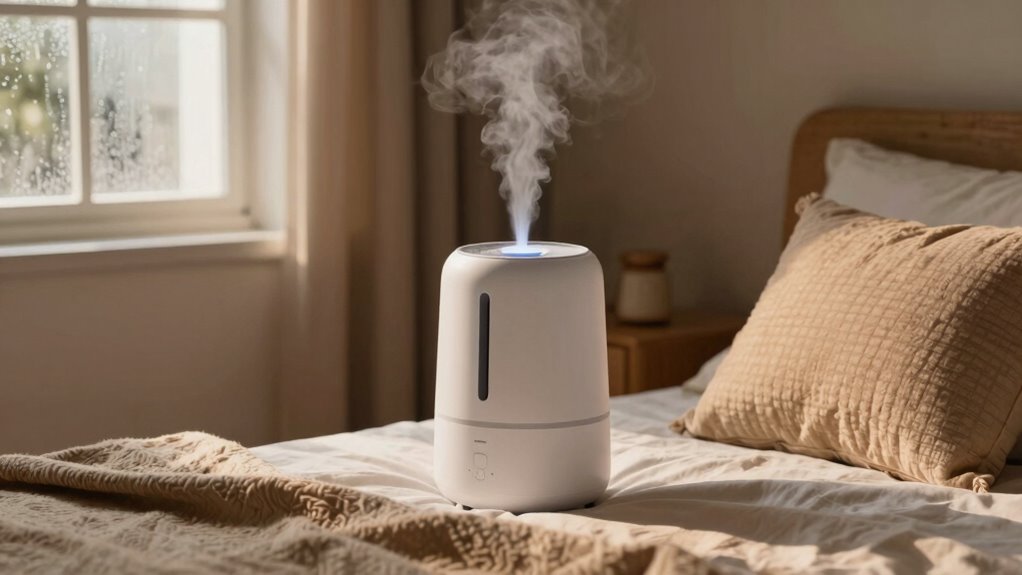
Monitoring humidity levels with a hygrometer can help you maintain the ideal balance more precisely. Adjusting your bedroom’s humidity isn’t complicated. Using a humidifier or dehumidifier allows you to fine-tune the environment to your needs. If your room feels dry, especially in winter months or in heated spaces, a humidifier can add moisture to the air, making it easier to breathe and reducing snoring. On the other hand, if you notice condensation, mold, or musty odors, a dehumidifier can help remove excess moisture and prevent health issues related to poor air quality. It’s also helpful to keep your bedding clean and ventilate your room regularly to improve air circulation. Proper ventilation and consistent air circulation are equally important for maintaining a healthy environment. Ensuring proper air exchange can help prevent stale air buildup and improve overall indoor air quality.
In the end, paying attention to your bedroom humidity isn’t just about comfort; it’s about actively improving your sleep quality and air quality. When you control these elements, you’re creating an environment that supports easier breathing, reduces snoring, and promotes restorative sleep. Don’t underestimate the power of this simple adjustment—small changes can lead to significant improvements in how well you sleep and how refreshed you feel in the morning.
Products Worth Considering

Ring Battery Doorbell Plus (2nd Gen) and Chime Plus Bundle, Nickel Silver and White

eufy Security SoloCam S340 3K Dual-Lens Solar Security Camera

Philips Hue Bridge Pro Starter Kit with 4 A19 E26 Color Smart Bulbs
As an affiliate, we earn on qualifying purchases.
Frequently Asked Questions
Can Humidity Levels Directly Cause Snoring?
Yes, humidity levels can directly cause snoring by affecting your air quality and sleep quality. When the air is too dry, your throat and nasal passages dry out, leading to irritation and increased snoring. Conversely, overly humid air can promote congestion. Maintaining ideal humidity helps keep your airways moist, improving air quality and sleep quality, which can reduce snoring and promote a more restful night.
What Is the Ideal Humidity Range for Snorers?
Did you know that maintaining a humidity level between 40-50% can considerably reduce snoring? You should aim for this range to keep your airway moist and comfortable. Using air purifiers can improve air quality, and choosing the right mattress type can also help reduce snoring caused by allergies or poor sleep posture. Keep humidity steady, and you’ll notice a difference in your sleep quality and snoring intensity.
How Does Humidity Affect Nasal Congestion During Sleep?
Humidity directly impacts nasal congestion during sleep by affecting air moisture levels. When the air is too dry, your nasal passages dry out, causing congestion and making it harder to breathe. Vapor therapy can help by adding moisture to the air, relieving nasal blockages. Maintaining proper humidity keeps your nasal passages moist, reducing snoring caused by congestion, and improving overall sleep quality.
Are There Specific Humidity Levels for Different Age Groups?
You might think everyone’s humidity needs are the same, but climate variations and air quality demand different levels for different ages. Babies, for example, thrive in higher humidity to prevent dry air issues, while older adults benefit from slightly lower levels to avoid mold growth. It’s ironic how adjusting humidity based on age can create a healthier sleep environment, ensuring each generation breathes easier and sleeps better regardless of climate changes.
Can Humidity Control Reduce Sleep Apnea Symptoms?
Yes, controlling bedroom humidity can help reduce sleep apnea symptoms. By maintaining ideal humidity levels, you decrease airborne allergens and mold growth, both of which can worsen breathing issues during sleep. Keeping the air between 40-50% humidity ensures a healthier environment, lessening inflammation and airway irritation. This simple adjustment supports better airflow, reduces snoring, and helps you breathe more easily throughout the night.
Conclusion
So, next time you hit the hay, remember that your bedroom humidity isn’t just a tiny detail—it’s a game-changer. Think of it as the silent conductor, guiding your breathing and snoring patterns in harmony. When you keep the humidity just right, you’re not only creating a cozy oasis but also giving yourself the best chance for peaceful, restful sleep. After all, isn’t a good night’s sleep worth a little extra care?