
TL;DR
Lowe’s has started a drone delivery pilot to explore faster, contactless home delivery options. The program aims to assess feasibility and customer response. The initiative is in early testing stages with limited scope.
Lowe’s has initiated a drone delivery pilot program aimed at testing rapid, contactless delivery options for customers. The move signals a significant step in retail logistics innovation, with the company exploring how drone technology can enhance service speed and efficiency. While details are still emerging, the pilot is currently in early stages, with limited geographic scope and operational parameters.

Get home appliances delivered free with Prime
- Fast, free delivery on millions of items
- Prime Video, Amazon Music and more included
- Member-only deals all year
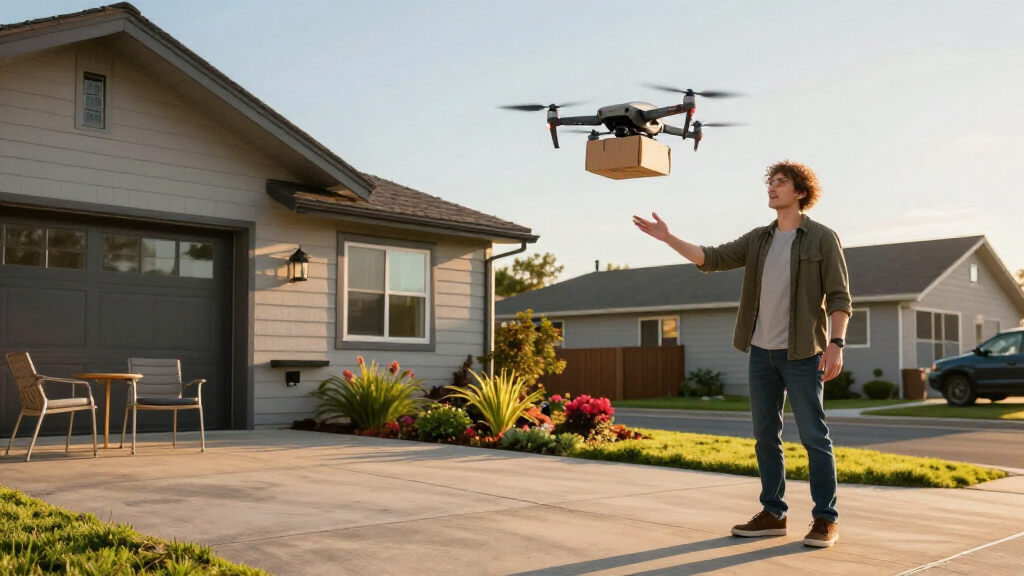
According to sources familiar with the initiative, Lowe’s began the drone delivery pilot in select markets earlier this month, focusing on specific product categories like small hardware items and tools. The program involves using unmanned aerial vehicles (UAVs) to deliver orders directly to customers’ homes, bypassing traditional ground transportation methods.
While Lowe’s has not publicly disclosed the full scope or timeline of the pilot, industry experts note that such programs are part of broader efforts by retail chains to incorporate emerging technologies, including autonomous vehicles and drone systems, to meet consumer demand for faster, contactless service. The pilot’s success could influence future logistics strategies for Lowe’s and similar retailers.
Officials from Lowe’s declined to comment extensively but confirmed that the pilot is currently active and being closely monitored for operational challenges and customer feedback. The company emphasizes that safety, regulatory compliance, and customer satisfaction are key priorities during this testing phase.
Potential Impact of Lowe’s Drone Delivery Pilot
This development is significant because it represents a tangible move toward integrating drone technology into mainstream retail logistics. If successful, Lowe’s could significantly reduce delivery times and improve contactless service, especially in suburban and rural areas where traditional delivery options may be slower or less reliable. The pilot also signals a broader industry trend toward automation and innovative delivery methods, which could reshape supply chains and customer expectations in the coming years.
However, the program’s success remains uncertain at this stage. Regulatory hurdles, safety concerns, and logistical challenges could influence its scalability. Nonetheless, Lowe’s initiative underscores the increasing interest among retailers to experiment with drone delivery as a competitive differentiator in a crowded market.
Products Worth Considering

Levoit Core 300S-P Smart Wi-Fi Air Purifier

Hisense E6 Cinema Series 85-Inch 4K UHD Hi-QLED Smart Fire TV

Philips Hue Play Floor Lamp, RGBWWIC LED, 53 Inch, Black
As an affiliate, we earn on qualifying purchases.
Retail Industry’s Growing Interest in Drone Delivery
Over the past few years, several major retailers and logistics companies have explored drone delivery concepts, driven by the need for faster, contactless options amid changing consumer behaviors. Companies like Amazon, Walmart, and UPS have conducted pilot programs or received regulatory approvals to test drone-based deliveries. However, widespread commercial deployment remains limited due to technical, regulatory, and safety challenges.
Lowe’s entering this space indicates a growing confidence in the technology’s potential. The company has previously expressed interest in innovation and digital transformation, but this is among the first confirmed efforts to pilot drone delivery at scale. The initiative follows broader retail trends emphasizing convenience, speed, and contactless service, accelerated by recent shifts in shopping habits.
Unconfirmed Details and Regulatory Challenges
It is not yet clear how extensive the pilot will become or when a broader rollout might occur. Details about the geographic scope, product categories, and delivery volume are still emerging. Additionally, regulatory approval processes and safety protocols could influence the program’s future development. The pilot’s operational success and customer acceptance are also still unknown, as data from the ongoing testing phase has not been publicly disclosed.
Next Steps and Evaluation of Pilot Outcomes
Lowe’s is expected to continue monitoring the pilot’s performance over the coming months, collecting data on delivery times, safety incidents, and customer feedback. The company may expand the program to additional markets or product categories if initial results are positive. Industry observers will be watching for any official updates or announcements regarding scaling or commercial deployment.
Key Questions
How does Lowe’s drone delivery pilot work?
Details are still emerging, but the pilot involves using unmanned aerial vehicles to deliver selected products directly to customers’ homes in specific test areas. The process aims to provide faster, contactless service while ensuring safety and regulatory compliance.
When will drone delivery become available to all Lowe’s customers?
It is too early to determine a timeline. The current pilot is in early testing stages, and broader availability depends on pilot success, regulatory approvals, and operational scalability.
What products are included in the drone delivery pilot?
Initial testing appears focused on small hardware items, tools, and similar products that are suitable for drone transport. The full product range has not been publicly disclosed.
Are there safety concerns with drone deliveries?
Yes, safety and regulatory compliance are key considerations. Lowe’s and other companies involved in drone delivery pilots work closely with authorities to address these issues, but full safety protocols are still being tested and refined.
Could drone delivery reduce delivery times significantly?
Potentially, yes. If scalable, drone delivery could cut delivery times, especially in areas where ground transportation is slower or less efficient. The actual impact will depend on pilot results and regulatory factors.
Source: rss