
Improving your indoor air quality can greatly reduce migraines caused by airborne triggers. You should guarantee proper ventilation by opening windows when outdoor air is clean and using exhaust fans in kitchens and bathrooms. Regularly maintain air purifiers with HEPA filters to trap irritants, and keep humidity levels between 30-50% to prevent mold. Avoid indoor smoking and use low-VOC products. Continuing here will reveal more simple ways to create a migraine-friendly environment at home.
Key Takeaways
- Poor indoor air quality can trigger or worsen migraines by increasing pollutants and allergens.
- Regular ventilation and fresh air exchange help reduce indoor irritants linked to migraines.
- Using HEPA-filter air purifiers and maintaining them properly decreases airborne migraine triggers.
- Prevent indoor triggers by controlling humidity, avoiding smoking, and reducing dust and VOCs.
- Monitoring outdoor air quality and timing ventilation improve indoor environment safety for migraine sufferers.
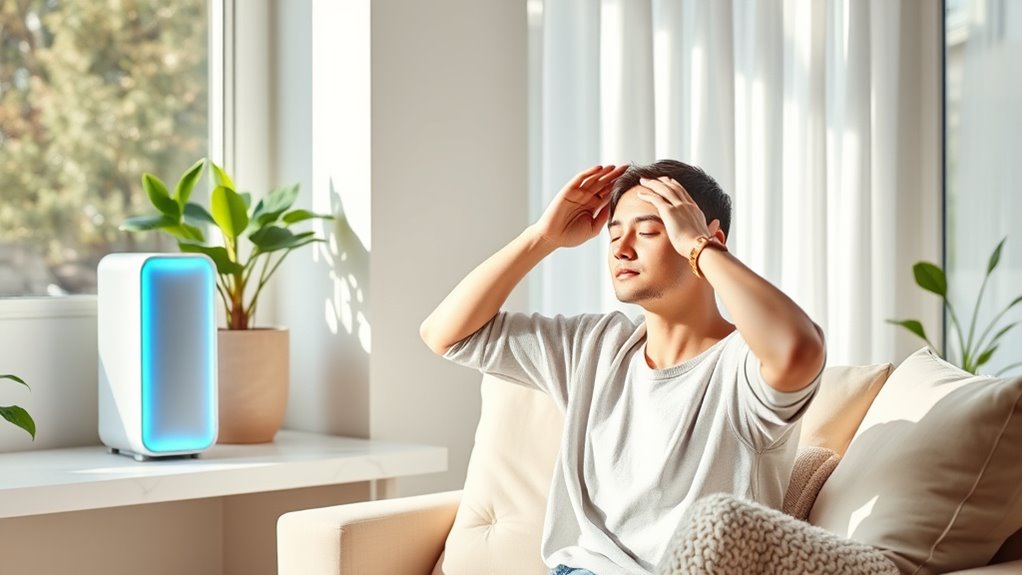
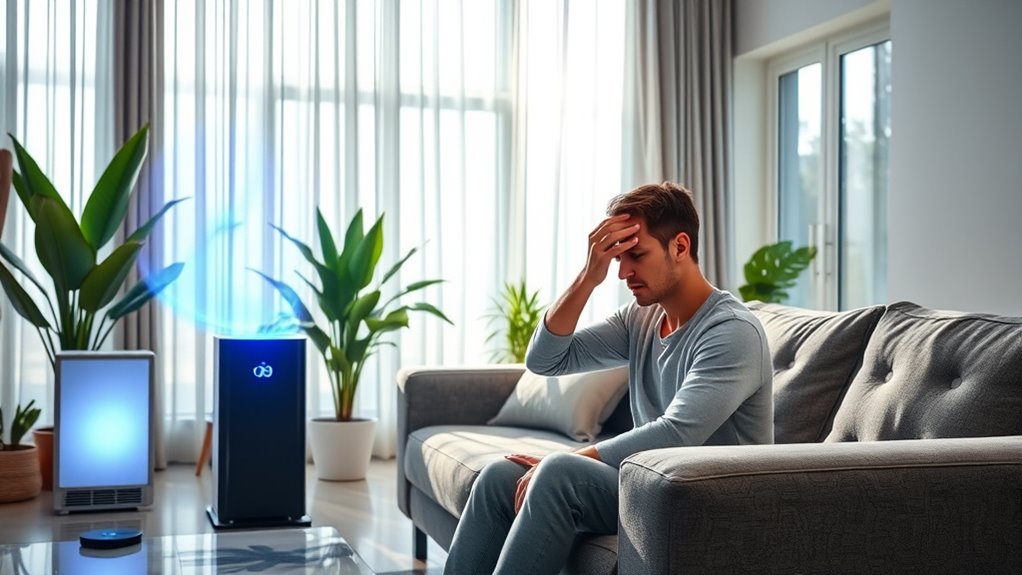
Indoor air quality profoundly impacts your health, especially if you suffer from migraines. Poor air quality can be a vital trigger, making your symptoms worse and increasing the frequency of migraine attacks. To improve your indoor environment, you need to focus on effective ventilation strategies and evaluate how well your air purifier works. Proper ventilation helps remove indoor pollutants, allergens, and stale air, creating a fresher and healthier space. You might consider opening windows regularly, especially when outdoor air quality permits, or investing in exhaust fans in areas like the kitchen and bathroom. These strategies are essential to prevent indoor air from becoming stagnant, reducing the buildup of irritants that can trigger migraines.
Improving ventilation and using air purifiers can significantly reduce migraine triggers indoors.
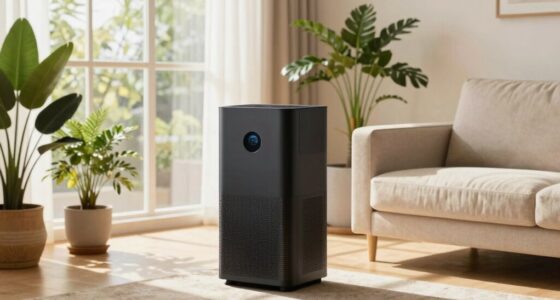
Air purifier effectiveness is essential in maintaining good indoor air quality. Not all purifiers are created equal, so it’s vital to select one designed to target common indoor pollutants such as dust, pet dander, mold spores, and volatile organic compounds (VOCs). Look for models with HEPA filters, as they trap tiny particles that often provoke migraines. Regularly changing or cleaning the filters is a must to keep the purifier functioning at peak performance. When used correctly, air purifiers can considerably reduce airborne triggers, helping you breathe easier and lessen migraine severity.
In addition to choosing the right ventilation and air purifiers, you should also be mindful of other indoor air quality factors. Avoid smoking indoors, as tobacco smoke contains numerous irritants that can spark migraines. Keep humidity levels in check, ideally between 30-50%, because excessive moisture fosters mold growth, another common trigger. Regular cleaning minimizes dust accumulation, and choosing low-VOC paints and cleaning products reduces the presence of harmful chemicals.
It’s also worthwhile to assess outdoor air quality regularly. On days with high pollution levels, limit outdoor activities and keep windows closed to prevent pollutants from entering your home. When outdoor air quality improves, ventilate your space to dilute indoor contaminants. Using indoor plants can help improve air quality naturally, but be cautious if mold or pollen sensitivities are an issue, as some plants release allergens.
Ultimately, maintaining good indoor air quality is about creating a balanced environment. Combining effective ventilation strategies with a high-efficiency air purifier can make a tangible difference in reducing migraine triggers. This proactive approach not only improves your overall health but also enhances your comfort and well-being at home. Remember, small adjustments in your indoor air management can lead to notable relief from migraines over time.
Frequently Asked Questions
Can Specific Indoor Plants Improve Air Quality and Reduce Migraines?
Yes, specific indoor plants can improve air quality and help reduce migraines. Choose plants like snake plants, peace lilies, or pothos for effective air purification. These plants filter toxins and increase oxygen, creating a healthier environment. By selecting the right plants, you can enhance indoor air quality, potentially alleviating migraine triggers caused by pollutants, and creating a more comfortable space that supports your well-being.
How Long Does It Take to Notice Improvements After Changing Indoor Air Quality?
You might notice improvements in your migraines within a few days to a couple of weeks after changing your indoor air quality. Timing expectations vary depending on the specific triggers you’ve addressed, like reducing pollutants or increasing ventilation. Be patient, as some relief may take longer. Keep monitoring your symptoms, and you’ll better understand how your environment impacts your migraine frequency and severity over time.
Are Air Purifiers Effective Against All Migraine Triggers Indoors?
Imagine a fog clearing from your room, revealing fresh air—air purifiers can help, but they have limitations. While they effectively reduce airborne pollutants and allergens, they don’t eliminate noise pollution or chemical odors that might trigger migraines. So, yes, they’re helpful, but not a complete solution. To truly prevent migraines, you need a thorough approach that includes managing noise levels and other indoor triggers alongside using an air purifier.
Do Different Types of Indoor Heating or Cooling Systems Impact Migraine Frequency?
Different types of heating systems and cooling methods can impact your migraine frequency. For example, forced-air heating may circulate allergens or dry out your air, triggering migraines. Conversely, radiant heating or natural cooling methods like fans can reduce these risks. You should pay attention to how your body reacts to various systems, and consider making adjustments or upgrades to minimize triggers and improve your indoor environment.
What Role Do Indoor Humidity Levels Play in Migraine Prevention?
Maintaining proper indoor humidity levels is key to preventing migraines. When you control humidity, you reduce mold growth, which can trigger headaches. Aim for 40-50% humidity with a dehumidifier or humidifier as needed. Proper humidity control keeps your air comfortable, prevents mold, and minimizes migraine triggers. Regularly monitor your indoor environment to guarantee ideal humidity, creating a healthier, headache-free space.
Conclusion
By improving your indoor air quality, you can turn your home from a silent trigger into a sanctuary of relief. Don’t let unseen pollutants fuel your migraines—take action now, because your environment is the stage where your health unfolds. Remember, every breath you take should be a step toward well-being, not pain. Clear the air, reclaim your comfort, and let fresh air be your ally in this battle against migraines.