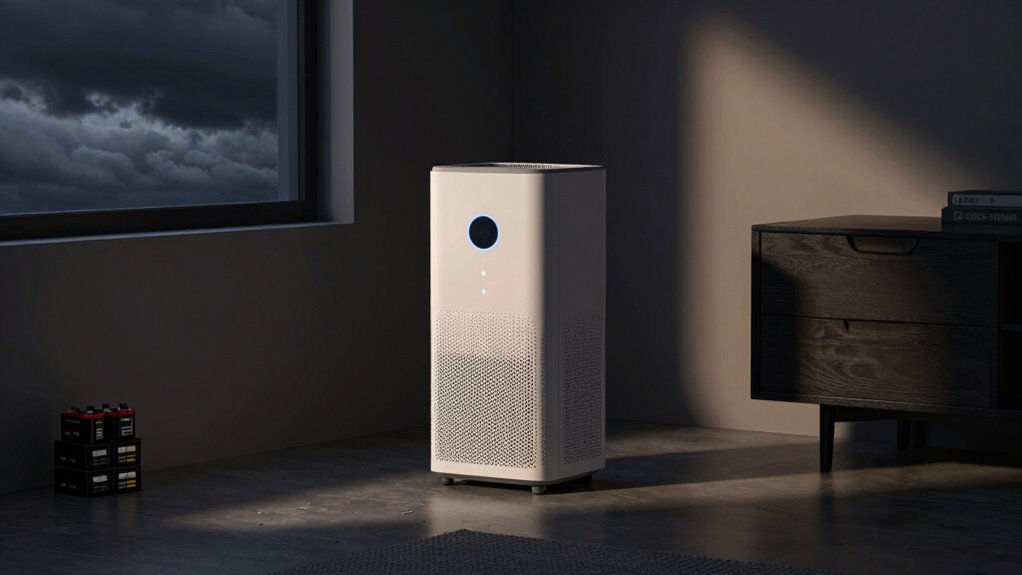

During a power outage, your indoor air quality can quickly decline, so you need a plan to keep filtration systems running when it matters most. Regularly check and replace filters, test backup power devices like generators, and use portable HEPA air purifiers powered by batteries or generators. Keep windows closed and monitor indoor air quality to prevent pollutant buildup. If you want to make certain your system stays effective during outages, there’s more to contemplate—so keep exploring.
Key Takeaways
- Regularly maintain and test backup power systems and portable air purifiers to ensure readiness during outages.
- Keep spare filters, replacement parts, and emergency supplies like masks and batteries accessible.
- Use battery or generator-powered HEPA purifiers and close windows/doors to prevent outdoor pollution entry.
- Cross-ventilate indoor spaces safely, keep ventilation pathways clear, and monitor indoor air quality continuously.
- Establish communication plans, update contacts, and prepare for rapid response to restore filtration and air safety.
Why Power Outages Threaten Your Indoor Air Quality

Power outages can considerably harm your indoor air quality because they often disable your home’s ventilation systems and air purifiers. Without proper airflow, pollutants like dust, mold spores, and airborne viruses can accumulate indoors. This decline in air quality increases health risks, especially for those with allergies, asthma, or respiratory issues. When ventilation stops, indoor pollutants become concentrated, making the air unsafe to breathe over time. Regular maintenance of your air purifier helps ensure it continues to protect your indoor environment during such times. Ensuring your devices are properly maintained enhances their effectiveness when you need them most. Incorporating natural filtration methods can also help mitigate poor air quality during power outages. Additionally, understanding emergency backup solutions can provide peace of mind and continuous air quality protection during outages. Being aware of power backup options allows you to keep your filtration systems running seamlessly during outages. Protecting your indoor environment helps reduce health risks and keeps the air safer to breathe.
How to Check Your Air Filtration System and Backup Power

When your home faces a power outage, checking your air filtration system and backup power options becomes essential to maintaining indoor air quality. Start by inspecting your air filter for dirt, dust, and damage—regular air filter maintenance guarantees ideal filtration. Replace filters as needed to keep airflow clean and efficient. Next, review your backup power options, such as generators or uninterruptible power supplies (UPS). Test these devices to confirm they activate properly and can support your filtration system during an outage. Keep spare filters and necessary equipment handy. Ensuring your filtration system is functioning and your backup power is ready will help you maintain healthy indoor air, even when the power’s out. Regular checks are key to preventing system failure and emergency preparedness, ensuring continuous air quality during unexpected outages. Additionally, consider backup power capacity to confirm it can handle your filtration needs during prolonged outages. Regularly reviewing your energy management strategies can help optimize your backup power performance and extend its runtime when needed. Understanding your halal-friendly energy options might also aid in making sustainable and culturally respectful choices for your backup systems.
Essential Equipment and Supplies for Emergency Air Cleaning
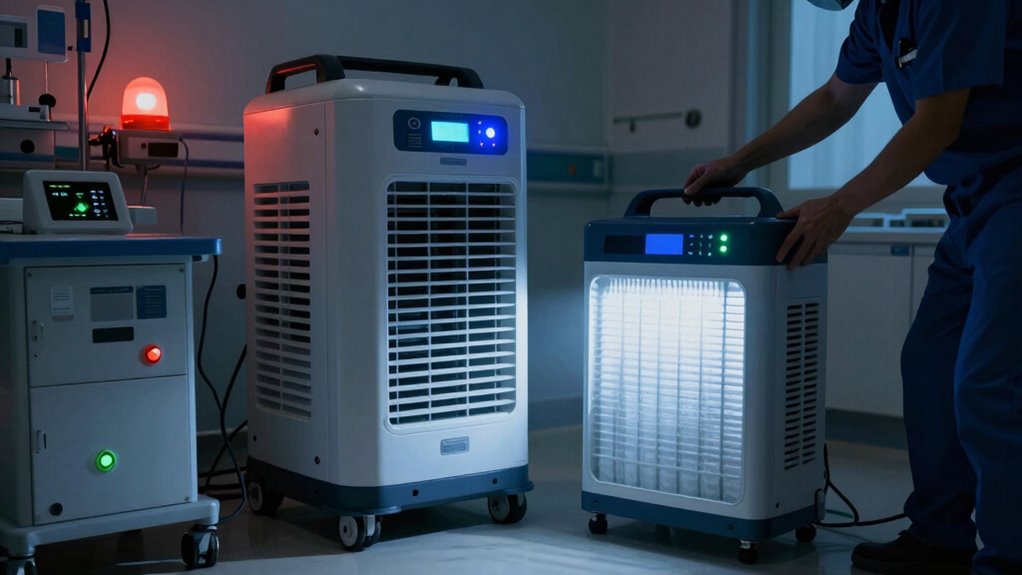
Having the right equipment on hand is essential for effective emergency air cleaning during outages. You need supplies that guarantee continuous filtration and quick response. First, keep a portable air purifier with easy-to-maintain filters ready—regular air purifier maintenance is crucial to keep it functioning at its best. Second, have a backup generator selected specifically for powering your filtration systems; it should provide sufficient wattage and reliability. Third, stock extra filters and replacement parts so you’re prepared for extended outages. These supplies guarantee your air stays clean when power is out, minimizing airborne pollutants. Proper equipment selection and maintenance make all the difference in maintaining safe indoor air quality during emergencies, helping you breathe easy no matter the situation. Additionally, understanding microplastics in dust can help you choose filtration options that effectively reduce such pollutants during power outages. Being aware of regional flavor profiles can also guide you toward selecting filters that target specific pollutants common in your area. Furthermore, selecting appropriate filter types ensures optimal removal of particulate matter like microplastics during critical times. Regularly updating your knowledge about airborne pollutants can enhance your ability to respond effectively in emergencies. Incorporating advanced filtration technologies can further improve your indoor air quality during prolonged outages.
How to Keep Your Indoor Air Safe During Power Outages

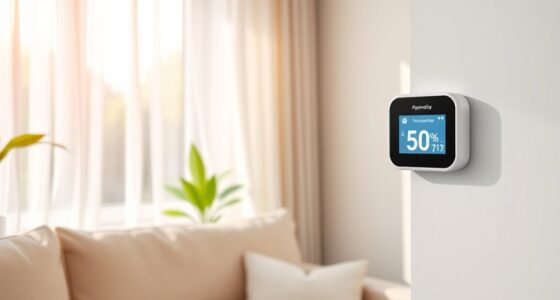
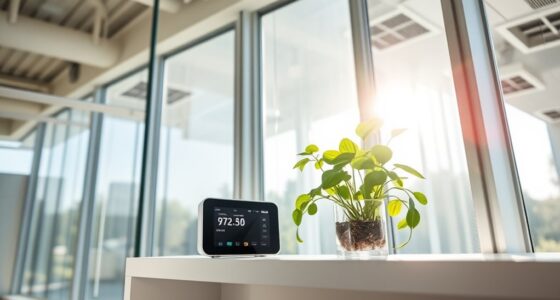
During a power outage, maintaining indoor air quality requires proactive measures. You should minimize indoor allergens by reducing dust and mold exposure. Use manual air purification methods like HEPA filters and air purifiers powered by batteries or generators. Keep windows closed to prevent outdoor pollutants from entering. Ventilate with fresh air when power returns, but avoid opening windows during the outage. Additionally, monitoring indoor air quality levels can help you better assess and respond to potential issues. Regularly checking air quality indicators can provide early warnings of deteriorating conditions. Understanding air filtration options available during outages can further enhance your protection. Being aware of portable filtration devices helps ensure continuous air purification even during power interruptions. Incorporating air quality monitoring tools can aid in maintaining a safe environment. Staying proactive helps protect your indoor air when power’s out.
Test Your Air Quality Plan to Ensure It Works

Before relying on your air quality plan during a power outage, it’s essential to test it thoroughly. This guarantees your backup systems will operate effectively when needed most. To verify your plan’s success, consider these steps:
- Run a full system test to confirm backup power sources activate and support your filtration equipment.
- Measure indoor air quality before and after testing to identify any gaps or improvements.
- Simulate a blackout to ensure sensors, alarms, and backup systems coordinate properly.
- Remember that digital monitoring tools can help continuously assess your indoor air quality during tests and actual outages.
Regular testing helps you catch issues early, so your filtration continues uninterrupted during outages. Keep in mind, a well-tested air quality plan guarantees your indoor environment stays safe, even when the power’s out. Trust that your backup systems work seamlessly when you need them most.
Safety Tips for Your Family or Team During Blackouts

During blackouts, it’s vital to establish emergency communication so everyone stays informed. You should also secure safe ventilation paths and prepare emergency supplies in advance. These steps help keep your family or team safe and ready to respond effectively. Additionally, understanding how to maintain whole-home water systems can prevent water-related issues during extended outages.
Establish Emergency Communication
Establishing a reliable emergency communication plan is essential to keeping your family or team safe during a blackout. With power outages, staying connected can be challenging, so prepare in advance. Use communication devices like battery-powered radios, satellite phones, or walkie-talkies to guarantee contact if cell service fails. Consider remote monitoring options to keep an eye on critical systems and relay alerts quickly. To maximize effectiveness, create a list of key contacts, including neighbors, emergency services, and team members, and make sure everyone knows how to reach each other. Additionally, keep spare batteries and chargers on hand. Regularly test your communication devices and update contact info. Being proactive helps you respond swiftly and maintain safety when power is out.
Secure Safe Ventilation Paths
Ensuring safe ventilation paths is crucial to maintaining a healthy environment during a blackout. Proper airflow management prevents buildup of indoor pollutants and guarantees fresh air reaches everyone. Check your ventilation system to confirm it’s unobstructed and functioning correctly. Keep doors and windows open when safe to do so, creating natural airflow pathways. Use the table below to visualize airflow management:
| Indoor Space | Ventilation Strategy |
|---|---|
| Living Room | Open windows, use fans |
| Kitchen | Ventilate while cooking |
| Bedrooms | Keep doors open for cross-breeze |
| Bathroom | Use exhaust fans if available |
| Storage Areas | Avoid sealing off vents |
Prepare Emergency Supplies
Are you prepared to keep your family safe during a blackout? Emergency supplies are essential, especially when it comes to maintaining air quality. Stock up on items like portable air purifiers and backup batteries to keep indoor plants thriving, which naturally aid air purification. These plants help filter toxins and improve air circulation when power is out. Also, gather essentials such as bottled water, non-perishable food, and first aid kits. Consider including masks to protect against dust or debris. Keep flashlights and extra batteries nearby to monitor indoor air conditions and ensure safety. Preparing these supplies in advance guarantees you can maintain clean, breathable air and stay comfortable until power is restored. Staying proactive helps your family breathe easier during unexpected blackouts.
Frequently Asked Questions
How Long Can Backup Power Realistically Sustain Filtration Systems During Outages?
Your backup power can realistically maintain filtration systems for about 4 to 8 hours, depending on battery backup capacity and power duration. If you have a high-capacity battery backup, you might extend this window, but most standard systems are designed for short-term outages. To guarantee continuous filtration during longer outages, consider additional power sources or backup solutions that can provide sustained power when needed most.
Are There Portable Air Purifiers Suitable for Emergency Use?
Yes, portable purifiers are ideal for emergency filtration during power outages. For example, a family used a compact HEPA portable purifier during a recent blackout, effectively maintaining indoor air quality. These devices are lightweight, battery-operated, and easy to deploy, making them perfect for quick emergency use. They provide reliable filtration when stationary systems fail, ensuring your indoor air stays clean and safe until power is restored.
What Are Signs That Indoor Air Quality Is Deteriorating During a Blackout?
During a blackout, you’ll notice air quality indicators like increased dust, odors, or stuffiness, signaling deterioration. Ventilation signals, such as a stale or heavy feel in the room, also show poor air circulation. If you see or smell these signs, it’s time to activate portable air purifiers, open windows if possible, and enhance airflow to maintain healthier indoor air until power is restored.
How Often Should I Test My Backup Power and Filtration Systems?
You should test your backup power and filtration systems at least once every three to six months. During these tests, perform generator maintenance to guarantee it runs smoothly, and check your filter replacement schedule to maintain air quality. Regular testing helps identify issues early, so you can address them before a blackout, ensuring your filtration system keeps running when it matters most and maintains healthy indoor air.
Can DIY Modifications Improve Filtration Efficiency During Power Failures?
Yes, DIY enhancements and filtration upgrades can boost your system’s efficiency during power failures. You can add portable filters, upgrade existing filters with higher MERV ratings, or create backup power sources like battery-powered fans. These modifications help maintain clean air, guaranteeing safety and comfort. Just make sure your DIY solutions are safe, compatible, and tested beforehand to guarantee they work effectively when you need them most.
Conclusion
Stay prepared, or risk your indoor air turning into a toxic nightmare you’ll wish you never ignored! Power outages can transform your safe home into a hazardous fog faster than you can say “air purifier,” so don’t wait until it’s too late. Keep your filtration systems running, check your backup plans, and stay vigilant — because when the lights go out, you want clean air to be your superhero, saving you from an indoor disaster of epic proportions!