
TL;DR
An article from Family Handyman explains that the hole near the end of many rulers is mainly for hanging them on a hook, nail or pegboard. It also describes a historical use involving slate boards and cloths, along with specialty holes for binders, circle drawing and crafts.
The hole near the end of many rulers is mainly there to make the tool easier to hang and store, according to a Family Handyman report. The opening can also reflect older classroom practices or serve specific functions on specialty rulers, but it does not improve ordinary measuring accuracy.

Get home appliances delivered free with Prime
- Fast, free delivery on millions of items
- Prime Video, Amazon Music and more included
- Member-only deals all year
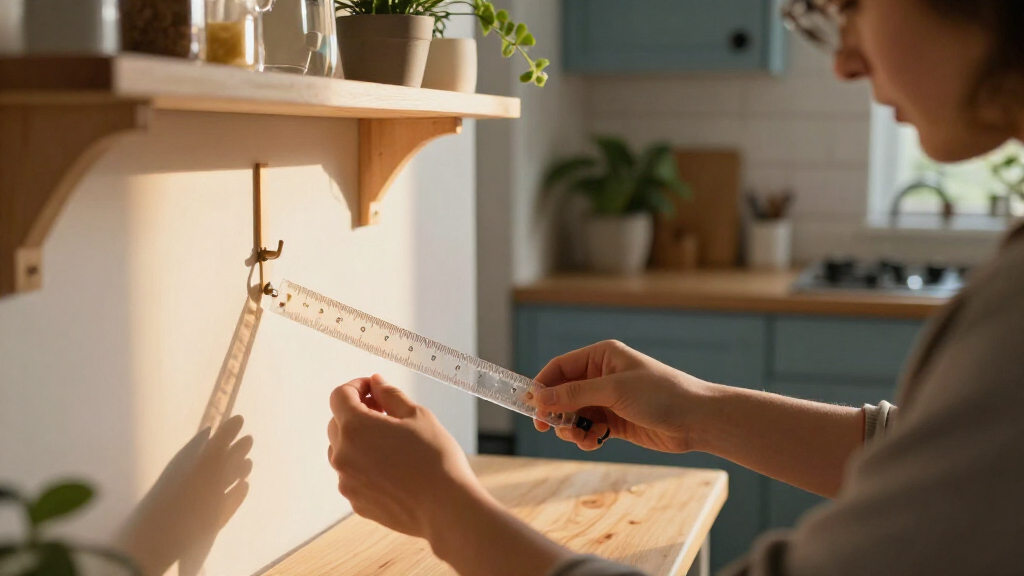
A ruler’s end hole provides a place to hang it on a hook, nail or pegboard, keeping it accessible rather than loose in a drawer or on a workbench. The arrangement can be particularly useful for long metal rulers that may not fit easily in a toolbox. The report describes hanging as the main present-day purpose for the familiar single hole.
Family Handyman also recounts an earlier classroom use. Before paper notebooks became common, students practiced writing on reusable slate boards, wiping them clean with a damp cloth. According to the report, some students threaded string through the ruler’s hole to keep a cleaning cloth close at hand. The cited University of Wisconsin–Madison resource concerns slate’s history, while the specific account of cloths tied to rulers is presented in the Family Handyman article.
Other openings depend on the ruler’s design. Three holes along some school rulers can align with a three-ring binder. On certain specialty models, a pin can hold a ruler in place while a pencil in another opening traces a circle. Craft and quilting tools may include holes or slots for marking fabric, guiding cuts or laying out stitch patterns. These are task-specific features, not a standard function of every ruler hole.
A Small Feature With Practical Uses
For everyday users, the main takeaway is simple: the hole is a storage feature, not part of the ruler’s measuring scale. It gives people a way to keep a ruler visible and within reach, particularly when the tool is too long to store conveniently in a box or drawer.
Knowing that the opening may have different purposes also helps explain why rulers do not all look alike. A basic plastic school ruler may have no hole, while a longer metal ruler may have one at an end. A binder ruler or a quilting template may have several openings shaped for a particular task. The source says these choices largely reflect how a manufacturer expects the ruler to be used.
The distinction matters when choosing a tool: a hole does not make a standard ruler more accurate, and a plain ruler can measure just as accurately. For drawing a circle, the report says a specialty ruler can help, but recommends a compass when exact measurements matter.
Products Worth Considering

Bose SoundLink Max Portable Bluetooth Speaker, IP67 Waterproof and Dustproof, Up to 20 Hours of Battery Life, Black

Hisense 40-Inch QD4SR Series Hi-QLED FHD Roku Smart TV

Bose TV Speaker Compact Soundbar with Bluetooth and HDMI-ARC, Black
As an affiliate, we earn on qualifying purchases.
From Slate Classrooms to Storage Hooks
The reported slate-board story places the ruler hole in a classroom setting that predates the widespread use of paper notebooks. Students could reuse slate by wiping it clean, and a cloth tied to a ruler would have kept that cleaning tool nearby. Family Handyman describes this as an earlier use of the opening; the provided material does not give a date for when the practice began or how common it was.
As school materials and storage habits changed, the opening remained useful for hanging rulers. Manufacturers also make purpose-built rulers for school, technical drawing, sewing and crafts. The source list includes material from STAEDTLER, Kapro and Westcott on rulers, as well as the University of Wisconsin–Madison’s resource on slate. The article’s central point is that openings vary by model: not every hole has the same job.
“The hole at the end of a ruler is mainly there for storage.”
— Family Handyman report
How Common Was the Slate Practice?
The source material does not establish when students began tying cloths to rulers, how widespread the practice was or whether it directly led manufacturers to keep adding holes. The historical explanation is reported by Family Handyman, but the supplied slate reference does not include further detail about that particular classroom habit.
The purpose of an opening also cannot be determined from its appearance alone. Some rulers have holes for hanging, while openings on specialty tools may support binder storage, circle drawing, fabric marking or cutting. The source does not identify every model or manufacturer that uses each design. It also does not claim that all ruler holes share one origin or purpose.
Check the Ruler’s Intended Use
No further product announcement or scheduled development is described in the source. For readers looking at a particular ruler, the practical next step is to check its packaging or manufacturer’s instructions: those should clarify whether openings are intended for hanging, binder storage, drawing or a craft technique. For standard measurement, users can continue to rely on the ruler’s marked scale; the hole itself is not needed.
Anyone using a ruler opening to draw circles should treat it as a convenience rather than a precision guarantee. As the Family Handyman report states, a compass is the better option for exact circles. Specialty cutting or sewing rulers should likewise be used according to their intended design and instructions.
Key Questions
What is the hole at the end of a ruler for?
On many ordinary rulers, it is mainly for hanging the ruler on a hook, nail or pegboard so it is easier to store and reach.
Did students use ruler holes with slate boards?
Family Handyman reports that some students tied a damp cleaning cloth to a ruler through its hole, keeping the cloth nearby to wipe reusable slate boards. The supplied source does not say how common or widespread this practice was.
Are holes on every ruler meant for hanging?
No. Some rulers have holes for three-ring binders, circle drawing or craft tasks such as marking fabric. The intended use depends on the ruler’s design.
Does a hole make a ruler more accurate?
No. The report says a ruler with no holes can measure just as accurately as one with them. The opening is for storage or a task-specific function, not measurement precision.
Can a ruler hole replace a compass for drawing circles?
Some specialty rulers use openings to help trace circles, but Family Handyman says a compass is better when exact measurements matter.
Source: familyhandyman.com