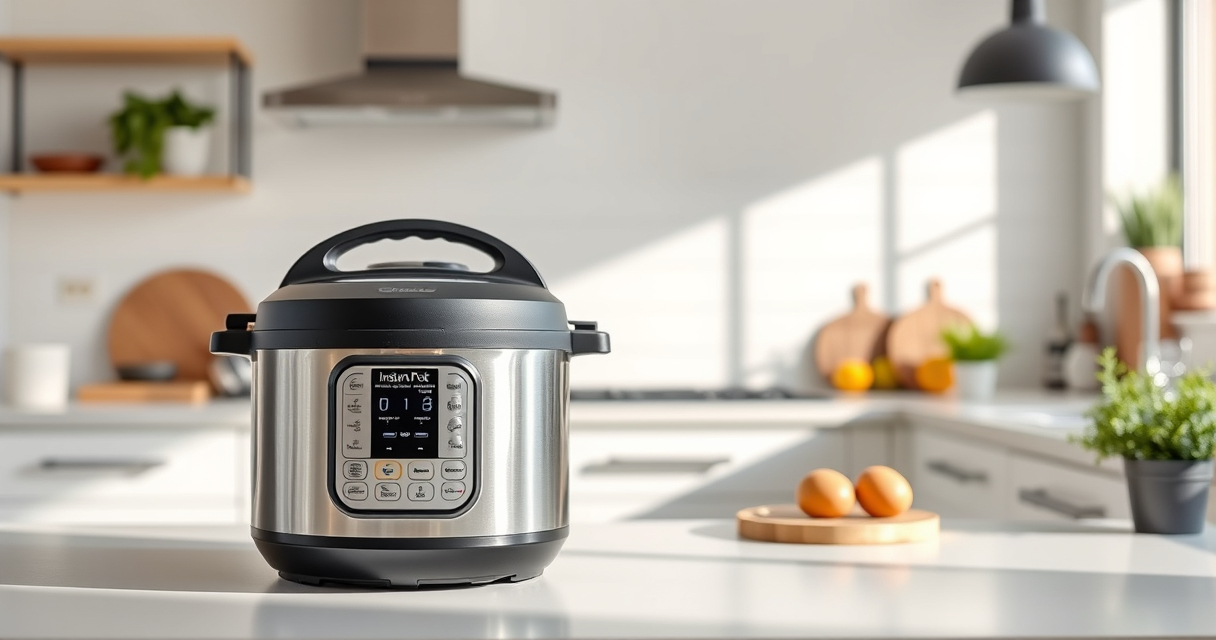

If your Instant Pot pressure cooker isn’t sealing properly, it can prevent the cooker from building pressure, leading to failed recipes or safety concerns. Fortunately, many sealing issues are fixable with simple troubleshooting steps. This guide offers clear, safe instructions to help you restore your Instant Pot’s sealing function quickly and efficiently.

Get home appliances delivered free with Prime
- Fast, free delivery on millions of items
- Prime Video, Amazon Music and more included
- Member-only deals all year
Before you start, ensure your device is unplugged and cooled down. We’ll walk through common causes, including sealing ring problems, lid alignment, and valve issues, providing practical solutions to get your pressure cooker working again.
Key Takeaways
| Check the sealing ring | A worn or misplaced sealing ring is a common cause of sealing failure. |
| Inspect the lid alignment | Properly aligned lid ensures a tight seal and pressure buildup. |
| Examine the pressure release valve | Clogged or blocked valves can interfere with sealing. |
| Ensure the lid is locked correctly | Lid not fully closed or locked prevents sealing. |
| Replace damaged parts | Worn or cracked sealing rings or valves need replacing. |
Step 1: Check the Sealing Ring
- Open the lid and remove the inner pot from the cooker.
- Inspect the sealing ring (the silicone gasket) for cracks, tears, or deformation.
- Ensure the ring is properly seated in the lid groove without twists or gaps.
- If damaged or deformed, replace it with a new one, such as the Instant Pot Sealing Ring (ASIN: B008FUUQJW).
Step 2: Verify the Lid Alignment and Locking
- Close the lid firmly, ensuring it clicks into place.
- Align the lid handle with the locking indicator if your model has one.
- Make sure the steam release handle or valve is set to the ‘Sealing’ position.
- Check that the lid is not warped or misaligned, which can prevent sealing.
Step 3: Inspect and Clean the Pressure Release Valve
- Remove the silicone or metal pressure release valve according to your model’s instructions.
- Clean out any food debris or buildup that might block pressure release or sealing.
- Reinstall the valve securely, ensuring it fits snugly.
Step 4: Test the Seal
Fill the inner pot with a small amount of water, close the lid properly, and set the cooker to pressure cook. Observe if the lid seals and the pressure indicator rises. If it still doesn’t seal, repeat the inspection steps or try replacing the sealing ring.
Additional Tips and Warnings
- Always use genuine replacement parts, like the Instant Pot Sealing Ring (ASIN: B008FUUQJW), for safety and compatibility.
- Never force the lid closed or lock if it’s not aligned properly, as this could damage the device.
- Regularly inspect and replace the sealing ring every 12-18 months for optimal performance.
- Ensure no food debris or residue is blocking the lid or sealing area before each use.
The Products in This Guide

Instant Pot 4QT RIO Mini 7-in-1 Multi-Cooker
- ✔ Power: 1000W
- ✔ Dimensions: 11 x 11 x 12 inches
- ✔ Warranty: 1-year

Instant Pot Sealing Ring 5 & 6-Qt
- ✔ Size: 8.7 inches inside diameter
- ✔ Material: Food-grade silicone
- ✔ Use: Replacement or spare
Instant Pot 4QT RIO Mini 7-in-1 Multi-Cooker
The Instant Pot 4QT RIO Mini 7-in-1 Multi-Cooker is a versatile and space-saving appliance ideal for small households. Its simple controls and multiple functions make it a great choice for quick, healthy meals.
Pros:
- 7-in-1 functionality
- Compact size fits small kitchens
- Easy to use and clean
- Multiple cooking options
Cons:
- Limited capacity for larger families
- Lacks some advanced features of bigger models
- May need replacement parts over time
Best for: Singles, small families, and space-conscious cooks
Not ideal for: Large families or those needing bigger capacity
Bottom line: A compact, versatile cooker perfect for small kitchens and quick meals.
Instant Pot Sealing Ring 5 & 6-Qt
Replacing your sealing ring with the Instant Pot Sealing Ring (ASIN: B008FUUQJW) guarantees a proper seal and safe pressure cooking every time. It’s easy to clean and dishwasher safe.
Pros:
- Authentic replacement part
- Made from BPA-free, non-toxic material
- Easy to clean
- Ensures proper sealing
Cons:
- Needs replacement every 12-18 months
- Only fits 5 & 6 qt models
- Additional sealing rings may be needed for different models
Best for: Maintaining optimal sealing performance
Not ideal for: If your cooker has other sealing issues beyond the ring
Bottom line: A reliable replacement sealing ring for consistent pressure cooking.
Frequently Asked Questions
Why won’t my Instant Pot seal properly even with a new sealing ring?
It could be due to improper lid alignment, a damaged lid, or a clogged pressure valve. Check all these components and ensure the lid is locked correctly.
Can I reuse the sealing ring after cleaning?
Yes, as long as it shows no cracks, tears, or deformations. Regularly inspect and replace it as needed for safe operation.
How often should I replace the sealing ring?
Typically every 12-18 months, depending on usage and condition, to maintain a proper seal.
What safety precautions should I take when troubleshooting?
Always unplug the cooker, allow it to cool completely, and handle parts carefully to avoid burns or damage.
Restoring Your Instant Pot’s Sealing Power
By systematically inspecting and cleaning the sealing ring, lid, and pressure release valve, you can often resolve sealing issues without professional help. Regular maintenance and using genuine replacement parts will ensure your Instant Pot operates safely and efficiently for years to come. If problems persist, consult the manufacturer’s guide or seek professional assistance.
Affiliate disclosure: As an Amazon Associate we earn from qualifying purchases. Prices and availability are accurate as of the time of publishing.