Many homeowners make the mistake of choosing between ERVs and HRVs without fully understanding how climate affects their efficiency and indoor air quality. ERVs are ideal in humid climates because they transfer moisture to prevent mold, while HRVs work best in cold, dry areas to conserve heat. Picking the wrong system can lead to energy waste or indoor issues. Keep exploring to learn how to select the best ventilation system for your home’s needs.
Key Takeaways
- Many homeowners choose systems based solely on climate without considering moisture transfer needs, leading to inefficient ventilation.
- Overlooking indoor humidity control can cause mold in humid areas or dryness in cold climates, affecting indoor air quality.
- Misjudging home size and layout often results in undersized or oversized systems, reducing effectiveness and energy efficiency.
- Failing to assess climate-specific demands (humid vs. dry, hot vs. cold) causes improper system selection and higher energy costs.
- Neglecting regular maintenance and correct installation diminishes system lifespan and compromises indoor air quality.
What Are ERVs and HRVs : The Basics You Need to Know
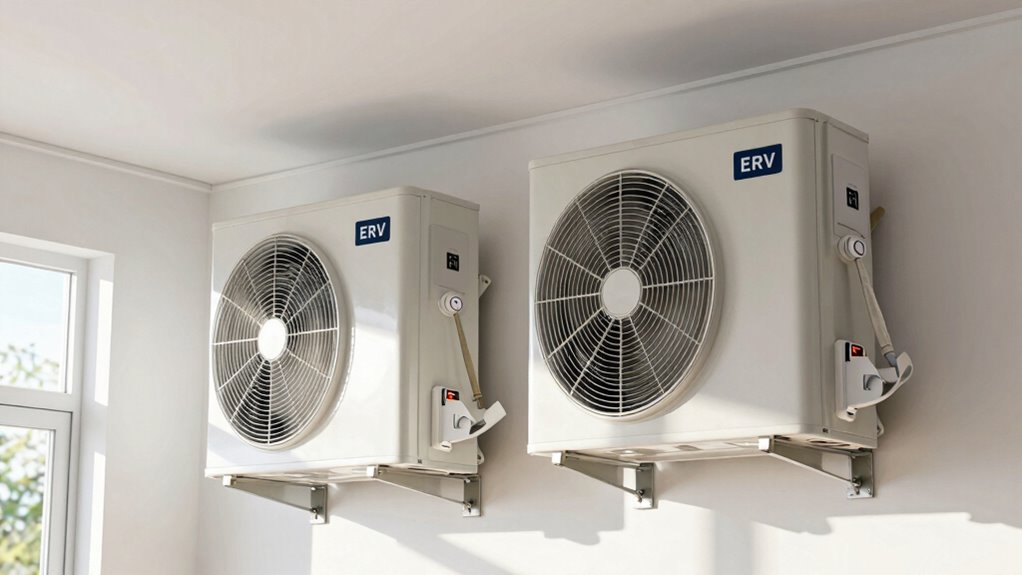
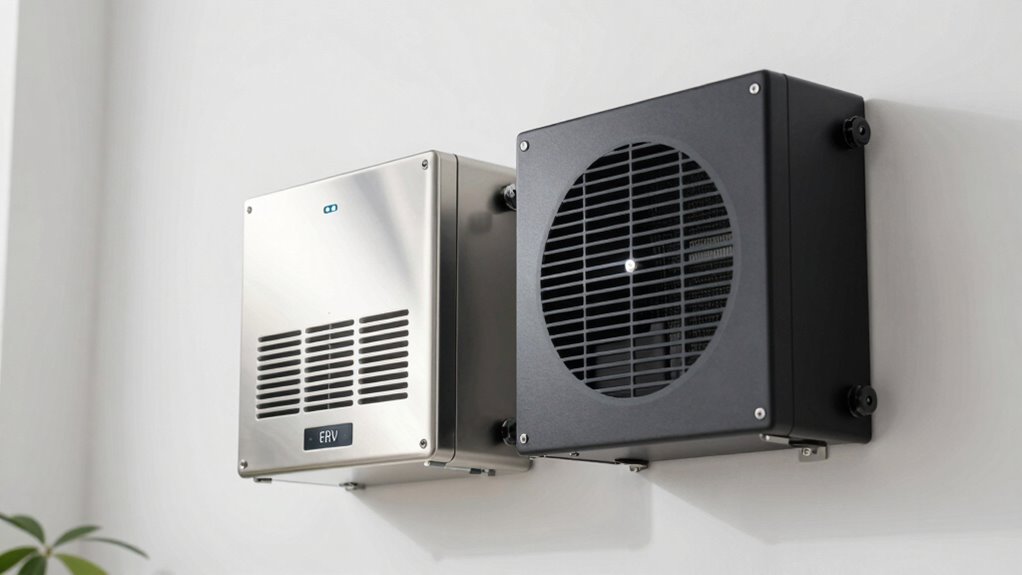
Ever wondered how your home stays fresh without wasting energy? It’s because ERVs and HRVs manage air exchange efficiently while controlling moisture levels. Both systems bring in fresh air from outside and remove stale indoor air, helping you breathe easier. An ERV (Energy Recovery Ventilator) transfers heat and moisture between incoming and outgoing air, improving moisture control and energy efficiency. An HRV (Heat Recovery Ventilator), on the other hand, mainly focuses on heat exchange, with less emphasis on moisture. These systems help maintain indoor air quality and prevent issues like mold or dryness. Moisture control is especially important in climates with high humidity or dry winters. Proper ventilation system operation can significantly impact your home’s comfort and efficiency. Additionally, understanding air exchange rates can help optimize system performance and indoor comfort. By balancing air exchange and air filtration, ERVs and HRVs keep your home healthier and more comfortable all year round, without wasting energy. Understanding ventilation system differences can help you choose the right option for your home’s needs.
How Do ERVs and HRVs Work? Key Differences Explained
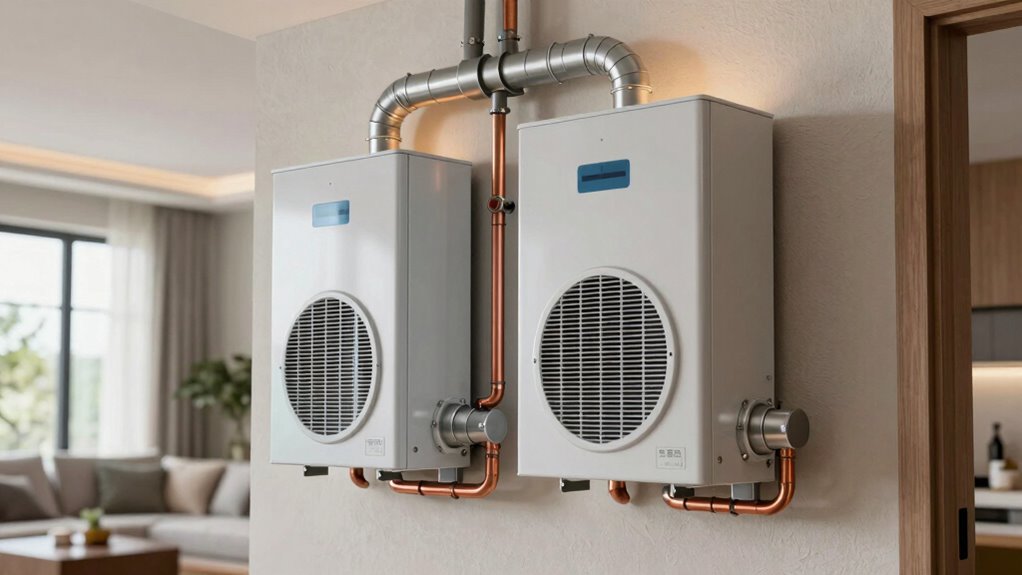
Understanding how ERVs and HRVs operate helps you see their benefits clearly. Both systems facilitate air exchange, bringing fresh air into your home while exhausting stale air. An HRV primarily transfers heat between incoming and outgoing air, helping to improve energy efficiency without much regard for humidity levels. In contrast, an ERV also transfers moisture, offering humidity control by exchanging humidity as well as heat, which helps maintain balanced indoor humidity. Inside each unit, fans and heat exchange cores work together to move air efficiently. This heat exchange process is central to how these systems function and impacts overall performance. The key difference lies in humidity management: ERVs help control humidity levels, while HRVs focus mainly on temperature exchange. Humidity transfer is a crucial feature that influences overall indoor air quality and comfort. Additionally, energy efficiency can be significantly impacted by choosing the right system for your climate and home design. Proper maintenance of these systems ensures optimal performance and longevity over time.
Which Ventilation System Is Best for Your Climate and Air Quality?

Choosing the right ventilation system depends on your climate and air quality needs. You’ll want to think about how your environment affects indoor air and which system offers better energy efficiency for your home. Understanding these factors helps you pick the best option for a healthier, more comfortable space. Considering how air circulation impacts hive health can also provide insights into optimal ventilation choices. Selecting the appropriate system can also influence performance parts like fans and filters, ensuring your home maintains optimal airflow. Additionally, evaluating long-term benefits can help you choose a system that supports sustainable and cost-effective indoor air management. Being aware of climate-specific requirements can further refine your decision-making process for optimal ventilation performance. Incorporating natural airflow strategies can enhance indoor comfort while reducing reliance on mechanical systems.
Climate Compatibility Considerations
Selecting the right ventilation system depends heavily on your climate and air quality needs. If you live in a humid area, an ERV can help with humidity control by exchanging moisture-laden air, reducing mold risk. In colder climates, HRVs are often better because they recover heat efficiently, keeping indoor air warm without losing energy. For hot and humid regions, controlling moisture is essential to prevent mold and mildew, making ERVs a solid choice. Conversely, in dry or moderate climates, both systems can work effectively, but your specific air quality concerns will influence your choice. Additionally, understanding your local climate helps guarantee your ventilation system maintains ideal humidity levels and prevents mold growth, creating a healthier, more comfortable indoor environment. Recognizing climate compatibility is essential for choosing the most effective system tailored to your environment. Additionally, considering air quality factors such as pollutants and allergens can further refine your choice, ensuring better indoor air health. Moreover, assessing local humidity levels can assist in selecting the system that best manages moisture and indoor comfort. A proper understanding of ventilation technology can also enhance your decision-making process by highlighting the latest advancements suited for your climate. Being aware of energy efficiency is also crucial to ensure your chosen system minimizes operational costs while maintaining performance.
Indoor Air Quality Impact
Have you ever wondered which ventilation system best improves your indoor air quality based on your climate? Both ERVs and HRVs enhance air filtration, helping remove dust, allergens, and pollutants. An ERV, with its ability to transfer moisture alongside heat, maintains humidity levels, reducing mold growth and preventing mold-related issues. In humid climates, this moisture control is vital for mold prevention. Conversely, HRVs excel in colder climates by focusing on heat recovery, but they may not manage humidity as effectively, potentially allowing excess moisture to promote mold. Your choice impacts indoor air quality directly—selecting the right system guarantees cleaner air and minimizes mold risks. Proper ventilation tailored to your climate promotes healthier indoor environments and better air filtration. Additionally, understanding moisture control capabilities of each system is essential for optimizing indoor air quality and preventing mold growth.
Choosing the appropriate system also depends on climate-specific needs, ensuring your home remains comfortable and healthy year-round. Understanding ventilation system features can help you make more informed decisions for your indoor environment.
Energy Efficiency Benefits
When it comes to energy efficiency, understanding how ERVs and HRVs perform in different climates helps you make the right choice for your home. ERVs generally offer better energy savings in humid climates because they transfer both heat and moisture, improving thermal performance and reducing energy loss. HRVs excel in dry, cold climates by focusing on heat transfer alone, which helps maintain indoor warmth without adding humidity. Choosing the right system based on your climate ensures you maximize thermal performance and reduce energy costs. An ERV can lower your heating and cooling bills in humid areas, while an HRV is more efficient in colder regions. Both systems improve air quality, but their energy efficiency benefits depend on matching the technology to your specific climate conditions.
Common Mistakes When Choosing Between ERV and HRV : And How to Avoid Them
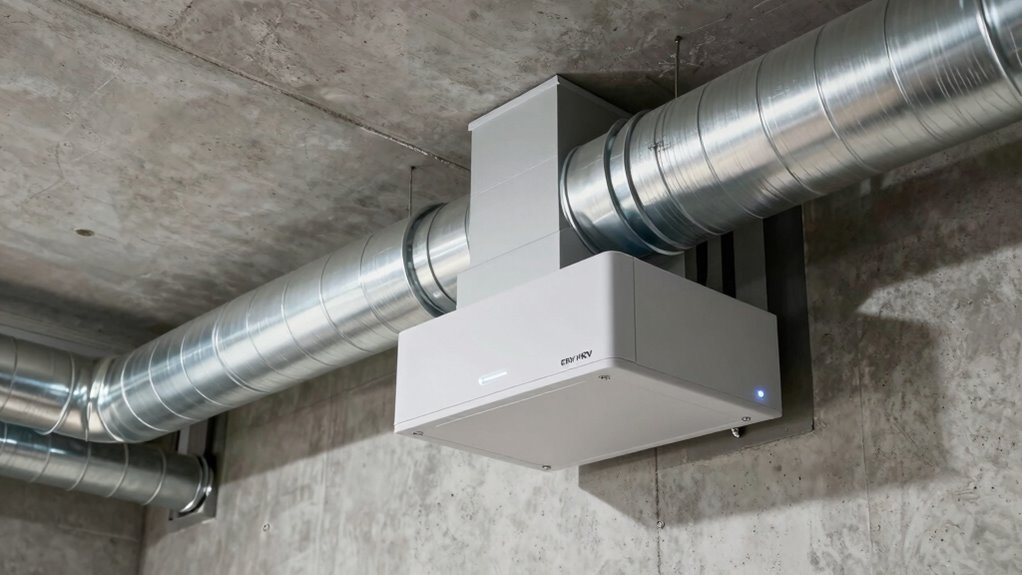
Choosing between an ERV and an HRV can seem straightforward, but many make mistakes that harm indoor air quality and energy efficiency. One common error is ignoring humidity control; HRVs are better for dry climates, while ERVs help in humid environments. Another mistake is underestimating noise levels, which can be disruptive if the system isn’t properly installed. Additionally, selecting a system without considering your home’s specific needs can lead to poor ventilation.
| Mistake | Consequence | Solution |
|---|---|---|
| Overlooking humidity control | Mold or dryness issues | Choose based on climate |
| Ignoring noise levels | Disrupted comfort | Check decibel ratings |
| Not evaluating home size | Ineffective ventilation | Match system capacity to home size |
| Skipping professional advice | Improper installation | Consult experts before buying |
How to Pick the Right System for Your Home’s Needs
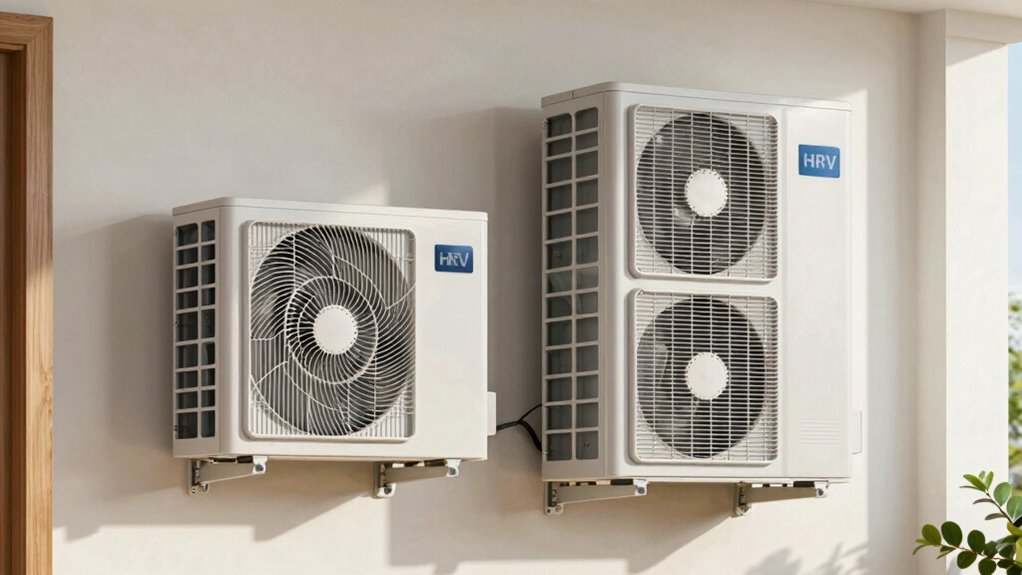
To choose the right system, start by considering your climate—hot, cold, or humid conditions can influence whether an ERV or HRV is better. Next, evaluate your home’s size and layout to determine the airflow capacity you need. Making these assessments helps make certain you select a system that efficiently meets your home’s specific ventilation needs.
Choosing System Based on Climate
Climate plays a crucial role in determining whether an ERV or HRV is the appropriate ventilation system for your home. In colder climates, an HRV is often preferred because it efficiently removes excess moisture and maintains warmth. If you live in a humid area or experience high indoor humidity, an ERV can assist with humidity control by balancing moisture levels while ventilating. Additionally, consider noise levels—some systems operate more quietly, which is important if your home has open living spaces or bedrooms nearby. Temperature fluctuations and outdoor conditions influence your choice, so assess your climate carefully. Selecting the right system based on climate ensures better comfort, energy efficiency, and indoor air quality. Tailoring your choice prevents issues like excess humidity or heat loss.
Assessing Home Size and Layout
When evaluating whether an ERV or HRV suits your home, considering its size and layout is key. Your home’s layout influences which system performs best and how effectively it ventilates. To determine the right choice, focus on:
- Room size: Larger rooms may require higher airflow capacity, favoring systems with greater CFM (cubic feet per minute).
- Home layout: Open floor plans promote better air circulation, while segmented layouts might need zoned or more powerful ventilation.
- Number of rooms: More rooms mean increased demand for balanced ventilation, impacting your system’s capacity.
Installing and Maintaining Your Ventilation System for Long-Term Efficiency
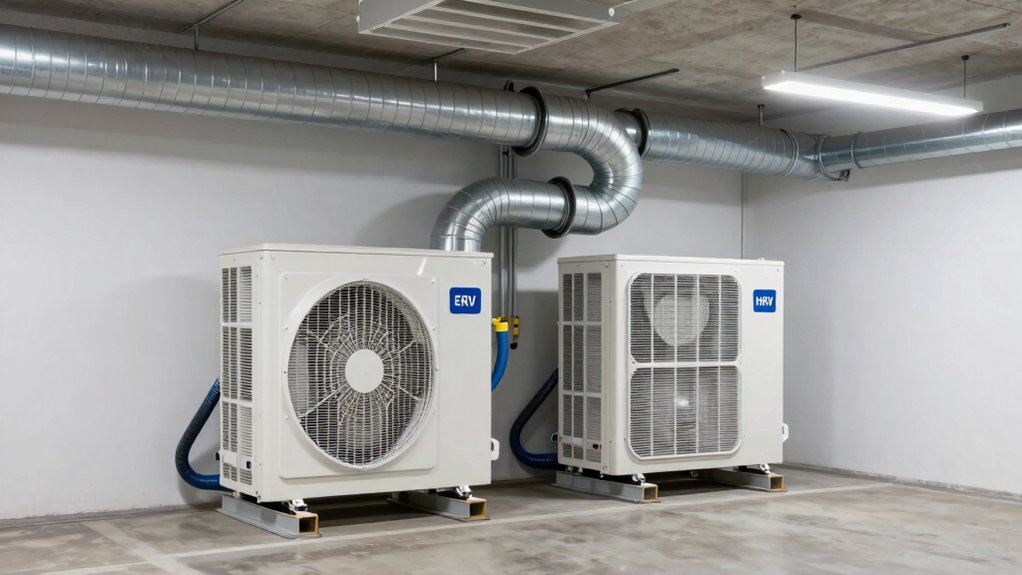
Proper installation and regular maintenance are essential to guarantee your ventilation system operates efficiently over the long term. Start by ensuring your system is installed correctly, following manufacturer guidelines and professional recommendations. Regular ventilation maintenance, such as cleaning filters and inspecting ducts, keeps airflow ideal and prevents issues. Keep an eye on system performance and be proactive about system upgrades when needed, like replacing outdated components or improving insulation around vents. Upgrading your system can enhance energy efficiency and indoor air quality. Schedule routine checkups to catch potential problems early and maintain peak performance. By investing in proper installation, ongoing ventilation maintenance, and timely system upgrades, you’ll maximize your system’s lifespan and ensure consistent, effective air exchange in your home.
Frequently Asked Questions
Can ERVS and HRVS Improve Energy Efficiency in My Home?
Yes, ERVs and HRVs can improve your home’s energy efficiency by reducing the load on your HVAC system, leading to energy savings. They also enhance air quality by exchanging stale indoor air with fresh outdoor air while conserving energy. Installing an ERV or HRV helps maintain a balanced humidity level and provides cleaner air, making your home more comfortable and healthier without increasing energy costs.
What Are the Initial Costs of Installing ERVS Versus HRVS?
Did you know ERV installation costs can range from $2,000 to $4,000, while HRV systems typically start around $1,500? Your choice impacts system pricing, with ERVs often being pricier due to their advanced moisture control. Both require professional installation, but initial costs vary based on home size and complexity. Budget around these figures to plan your investment wisely, knowing that quality ventilation improves air quality and energy savings over time.
Are ERVS or HRVS More Effective in Removing Indoor Pollutants?
You’ll find that ERVs are generally more effective at removing indoor pollutants because they incorporate heat exchange and air filtration systems. This combination improves pollutant removal and air quality, especially in humid or cold climates. HRVs focus primarily on heat recovery, so they may not filter pollutants as efficiently. For better indoor air quality, choose an ERV if pollutant removal and air filtration are your top priorities.
How Do Climate Changes Affect the Performance of ERVS and HRVS?
Climate impact can influence the ventilation effectiveness of both ERVs and HRVs. Hot or humid weather may reduce their efficiency by affecting moisture transfer and heat exchange processes. You might notice decreased performance during extreme temperatures or high humidity. To maintain ideal ventilation, verify your system is properly sized and maintained, especially in changing climates. Regular checks help your ERV or HRV adapt and continue providing effective indoor air quality.
Do I Need Professional Assistance to Choose the Right Ventilation System?
You definitely need professional assistance to choose the right ventilation system. A professional assessment provides ventilation expertise, ensuring you select an ERV or HRV tailored to your home’s specific needs. They evaluate factors like climate, home size, and existing systems, helping you make an informed decision. Relying on experts saves you time, money, and guarantees ideal performance, so don’t hesitate to seek professional guidance for this important choice.
Conclusion
Choosing between an ERV and HRV is like picking the right key for a door—you need the one that fits your home’s climate and air needs. I once saw a homeowner struggle with constant drafts and humidity issues until they switched systems, and everything clicked into place. Remember, the right ventilation system isn’t just about comfort; it’s about protecting your home’s health. Make an informed choice, and your home will breathe easier for years to come.