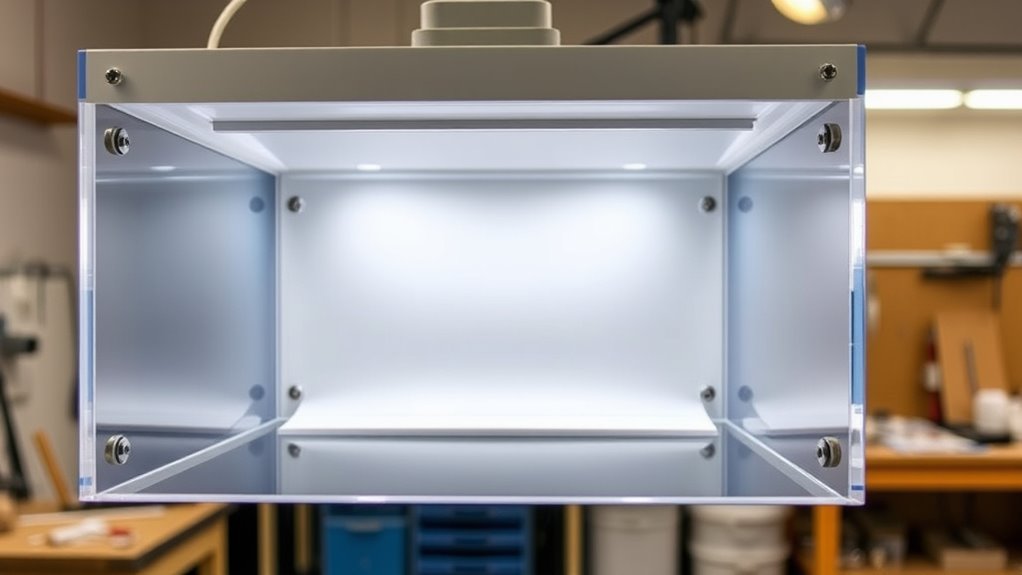

To build a simple laminar flow hood at home, start by selecting a suitable enclosure and attaching a HEPA filter that captures 99.97% of particles over 0.3 microns. Securely mount the filter to direct clean air downward and seal all connections tightly to prevent leaks. Then, install a reliable fan or blower behind the filter to generate a steady, laminar airflow. Keep safety in mind, and with proper setup, you’ll have an effective contaminant-free workspace—continue for more detailed steps.

Get home appliances delivered free with Prime
- Fast, free delivery on millions of items
- Prime Video, Amazon Music and more included
- Member-only deals all year
Key Takeaways
- Select a suitable enclosure and secure a HEPA filter to direct clean, unidirectional airflow downward.
- Attach the HEPA filter firmly, sealing all edges to prevent air bypass.
- Use a compatible blower or fan to generate consistent laminar airflow behind or below the filter.
- Test airflow with lightweight paper to ensure steady, turbulence-free flow before use.
- Regularly inspect and replace filters, and ensure all components are properly sealed for optimal performance.
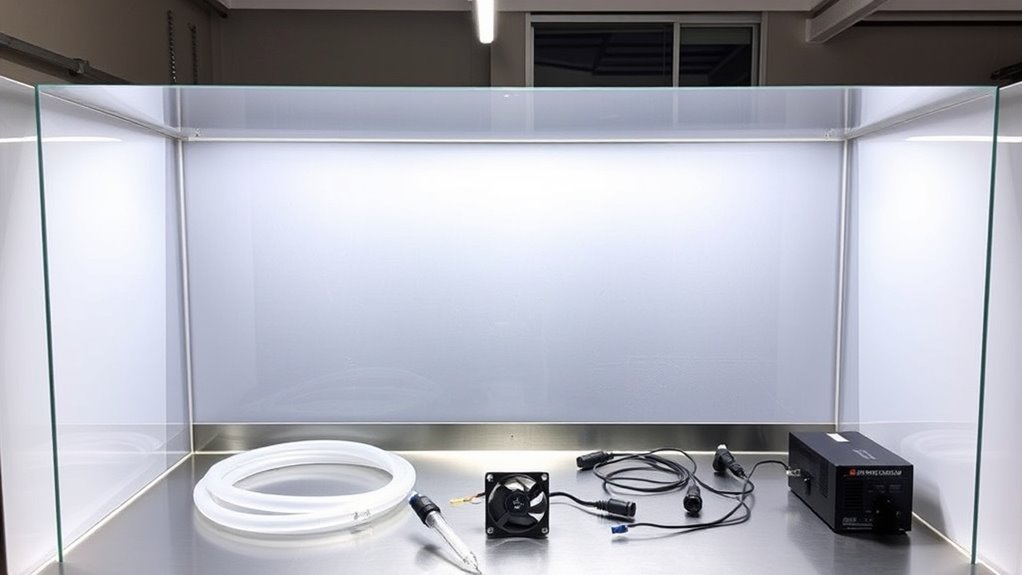
Building a laminar flow hood is a practical way to create a sterile workspace for sensitive tasks. To do this effectively, you need to focus on proper air filtration and safety precautions to guarantee the environment remains contaminant-free. The core idea is to direct a steady, unidirectional flow of filtered air over your workspace, which prevents airborne particles from settling on your work surface. This requires selecting the right materials and understanding airflow dynamics to establish an efficient and safe system.
Start by choosing a suitable enclosure or workspace where you’ll set up your hood. The main component is a high-efficiency particulate air (HEPA) filter, which captures 99.97% of particles as small as 0.3 microns. This filter is essential for air filtration, as it guarantees the air entering your workspace is free of contaminants. Attach the HEPA filter securely in a position where it can direct clean air downward across your work surface. Make sure the filter is sealed properly to prevent unfiltered air from bypassing the filtration system, as this would compromise the sterile environment.
Choose a suitable enclosure and securely attach a HEPA filter to ensure sterile, contaminant-free airflow.
Next, you need a reliable blower or fan to draw air through the HEPA filter. The fan should be powerful enough to produce a consistent laminar flow without creating turbulence or disruptions. Position the fan behind or below the filter, depending on your setup, and connect it securely. Remember, safety precautions are critical during this step—always disconnect power when assembling parts, and handle filters carefully to avoid damage or inhaling dust particles. Use gloves and a mask if needed, especially when dealing with filters containing residual dust or particles.
Once your filtration system is assembled, guarantee the airflow is smooth and unidirectional. You can test this by holding a small piece of tissue or lightweight paper near the output zone; it should flow steadily in a single direction without swirling or turbulence. If airflow is irregular, check your connections, seals, and fan operation. Proper airflow not only maintains sterility but also prevents the buildup of pressure that could cause leaks or dislodgment of components, so regular testing and adjustments are essential.
Additionally, understanding airflow dynamics is crucial for optimizing your hood’s performance and ensuring it remains contaminant-free during operation. Finally, implement safety precautions like working in a well-ventilated area, avoiding clutter around the hood, and wearing protective gear. Remember, even a simple DIY laminar flow hood must be treated with respect due to the risk of contamination if not correctly assembled or maintained. Regularly clean your workspace and replace filters as needed, and always verify airflow and filtration efficiency before starting critical tasks. By following these steps, you can build a reliable, safe, and effective laminar flow hood at home for your sensitive projects.
HEPA filter for laminar flow hood
As an affiliate, we earn on qualifying purchases.
As an affiliate, we earn on qualifying purchases.
Frequently Asked Questions
What Safety Precautions Should I Take During Construction?
You should prioritize ventilation requirements and electrical safety during construction. Make certain proper ventilation to prevent inhaling harmful fumes or dust, and work in a well-ventilated area. Always turn off power before handling electrical components, and double-check wiring to avoid shocks or shorts. Wear safety gear like gloves and goggles, and follow safety guidelines to protect yourself from accidents. Taking these precautions ensures a safer building process.
Can I Use a Standard Household Fan for Airflow?
You shouldn’t rely on a standard household fan for airflow in your laminar flow hood. Household fans are designed for general use and don’t provide the steady, uniform airflow needed for a laminar flow system. They often lack the airflow efficiency required, which can compromise the cleanliness and safety of your workspace. Instead, use a dedicated blower or a high-quality fan designed for airflow precision to guarantee the best performance.
How Often Should I Replace the HEPA Filter?
Did you know that HEPA filters typically last between 6 to 12 months? For ideal HEPA maintenance, you should replace your HEPA filter when airflow decreases considerably or if it becomes visibly dirty. Filter longevity depends on how often you use your laminar flow hood and the environment’s cleanliness. Regular checks ensure your hood stays effective, preventing contamination and maintaining a safe workspace.
Is There a Specific Size Recommended for Home Use?
For home use, choose a HEPA filter size that fits your hood’s dimensions, typically around 24×12 inches, to maximize airflow and maintain efficient airflow. Proper filter maintenance is essential, so regularly check for clogging and replace the filter when airflow diminishes. Selecting a size that matches your setup guarantees ideal airflow, making your laminar flow hood more effective and easier to maintain.
What Materials Are Best for Constructing the Hood Frame?
Back in the day, folks used wood, but for DIY ventilation and better material durability, opt for sturdy aluminum or stainless steel frames. These materials resist corrosion and are easy to clean, ensuring your laminar flow hood lasts longer. Avoid flimsy plastics, which can warp or break. Choose a frame that provides stability and support, making your setup safer and more effective for your needs.
As an affiliate, we earn on qualifying purchases.
Conclusion
Building your own laminar flow hood is a rewarding project that empowers you to create a safer, cleaner workspace. With a little patience and effort, you can turn your home into a haven of purity and precision. Remember, this isn’t just about equipment—it’s about safeguarding your work and passions. Like a guardian watching over your creations, your homemade hood stands as a proof of your dedication and ingenuity. Embrace the process, and let your craftsmanship shine.
high efficiency particulate air filter
As an affiliate, we earn on qualifying purchases.
As an affiliate, we earn on qualifying purchases.
As an affiliate, we earn on qualifying purchases.
NFL season / tailgating Picks
team gear
As an affiliate, we earn on qualifying purchases.