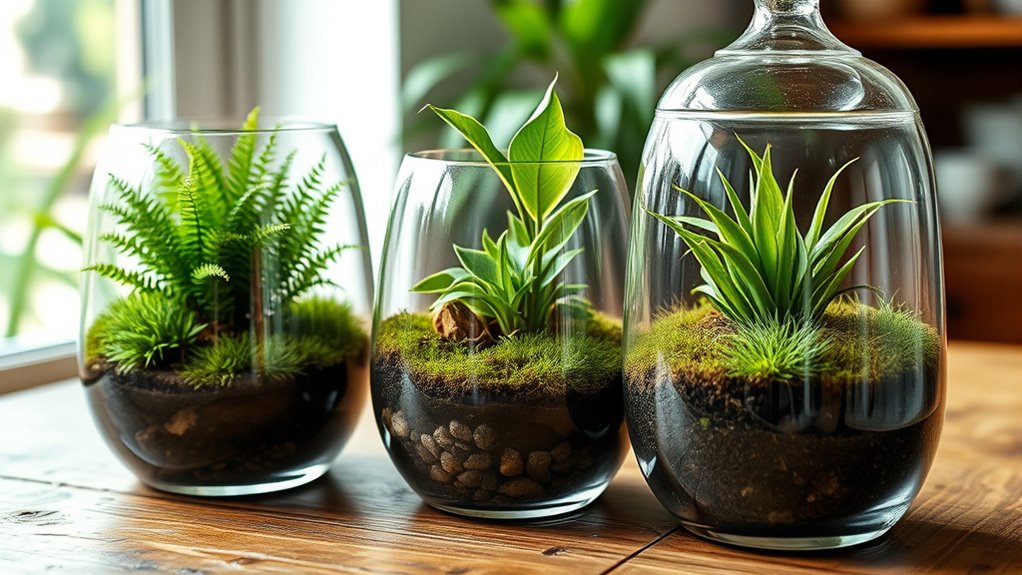
Creating an air-purifying terrarium is a simple yet effective way to naturally improve indoor air quality. Choose resilient, low-maintenance plants like pothos or snake plants that are known for filtering pollutants such as formaldehyde and benzene. Use activated charcoal, well-draining soil, and guarantee proper light to support healthy growth. Regular care keeps your mini ecosystem thriving, transforming your space into a lush, fresh environment. Keep exploring to discover how to make your own thriving, air-purifying terrarium.
Key Takeaways
- Select air-purifying plants like pothos or snake plants suited for enclosed terrarium environments.
- Use well-draining soil and incorporate activated charcoal to enhance toxin absorption and odor control.
- Ensure optimal light conditions with bright, indirect sunlight to promote healthy plant growth and filtration.
- Maintain proper watering routines, avoiding overwatering to prevent mold and root issues.
- Regularly prune and monitor plants to sustain their air-purifying effectiveness and overall terrarium health.

Have you ever wondered how to improve your indoor air quality naturally? Creating an air-purifying terrarium is an excellent way to do just that. These miniature ecosystems not only add a touch of greenery to your space but also actively filter the air around you. To maximize their effectiveness, focus on air filtration through strategic plant selection. Choosing the right plants is vital because different species have varying abilities to clean the air. Look for plants known for their air-purifying qualities, such as pothos, snake plants, and peace lilies. These plants are not only resilient and easy to care for but also excel at removing common indoor pollutants like formaldehyde, benzene, and trichloroethylene. When selecting plants for your terrarium, consider their growth habits and light needs to guarantee they thrive in the enclosed environment. Opt for low-maintenance plants if you’re new to terrarium building, and make sure they can tolerate the humidity levels inside your container. Incorporating air filtration properties into your plant choices can further enhance your terrarium’s ability to purify indoor air.
Once you’ve chosen your plants, consider how to set up your terrarium for maximum air filtration. Use a well-draining soil mix that supports healthy root growth and prevents excess moisture, which can lead to mold. Incorporate activated charcoal into the soil or beneath the layer of gravel at the bottom of your terrarium. Activated charcoal is a powerful natural filter that absorbs odors and toxins, boosting your terrarium’s air-purifying capacity. Be mindful of the size of your container and the number of plants you include—overcrowding can hinder airflow and plant health. Position your terrarium in a spot with adequate indirect light, as most air-purifying plants flourish in bright, indirect sunlight. Proper lighting not only keeps your plants healthy but also enhances their ability to filter air effectively.
Maintaining your air-purifying terrarium involves regular watering—avoiding overwatering is essential to prevent mold and root rot. Keep an eye on leaf health; yellowing or wilting leaves can indicate overwatering or inadequate light. Prune dead or yellowing foliage to encourage new growth and maintain the aesthetic appeal of your mini garden. Regularly check the soil and plant health to guarantee your terrarium continues to function as a natural air filter. When set up and cared for properly, your DIY terrarium becomes more than just a decorative piece—it transforms into a living, breathing air purifier that enhances your indoor environment naturally. By paying attention to plant selection, air filtration properties, and proper maintenance, you’ll create a sustainable, attractive solution to improve your home’s air quality while enjoying the calming presence of lush greenery.
Frequently Asked Questions
How Often Should I Water My Air-Purifying Terrarium?
You should water your air-purifying terrarium every 1 to 2 weeks, depending on its moisture levels. Check the soil regularly; if it feels dry to the touch, it’s time to water. Avoid overwatering, which can lead to mold or root rot. Keep an eye on the humidity and adjust your watering schedule accordingly, ensuring the environment stays balanced for your plants to thrive and purify the air effectively.
Can I Use Any Type of Soil for the Terrarium?
Choosing soil for your terrarium is like finding the perfect dance partner; it needs to match your plants’ rhythm. Not all soils are suitable—opt for a well-draining, nutrient-rich mix that supports your plants’ roots. Prioritize soil selection based on plant compatibility, ensuring each species gets the right balance of moisture and aeration. This way, your terrarium stays healthy, vibrant, and thriving.
What Are the Best Plants for Low-Light Environments?
You should choose shade lovers and low light plants like pothos, snake plants, and ZZ plants for low-light environments. These low light plants thrive in dim conditions and require minimal sunlight, making them perfect for shaded corners or rooms with limited natural light. By selecting these low light plants, you’ll create a vibrant, healthy terrarium that stays lush and beautiful without needing direct sunlight.
How Do I Prevent Mold Growth Inside the Terrarium?
Think of your terrarium as a delicate ecosystem that needs balance. To prevent mold growth, you must maintain proper terrarium hygiene by removing dead leaves and excess moisture. Guarantee good airflow and avoid overwatering, as these are key to mold prevention. Regularly check for signs of mold and clean affected areas promptly. With mindful care, your terrarium stays fresh, vibrant, and healthy, thriving as a symbol of your attentive nurturing.
Are Air-Purifying Terrariums Safe for Pets?
Air-purifying terrariums can be safe for pets if you choose non-toxic plants and avoid any that are known for pet toxicity. Always research plant safety before setting up your terrarium, and keep it out of your pet’s reach to prevent accidental ingestion. While many plants are pet-safe, some can cause illness, so it’s best to verify plant safety to ensure your pet stays healthy and happy.
Conclusion
Creating your own air-purifying terrarium is a simple, eco-friendly way to improve your space’s air quality. Did you know that indoor plants can reduce airborne toxins by up to 87%? By building and maintaining your terrarium, you not only enjoy fresh, natural decor but also promote a healthier environment around you. So go ahead, get crafting—your indoor oasis awaits, and cleaner air is just a terrarium away!