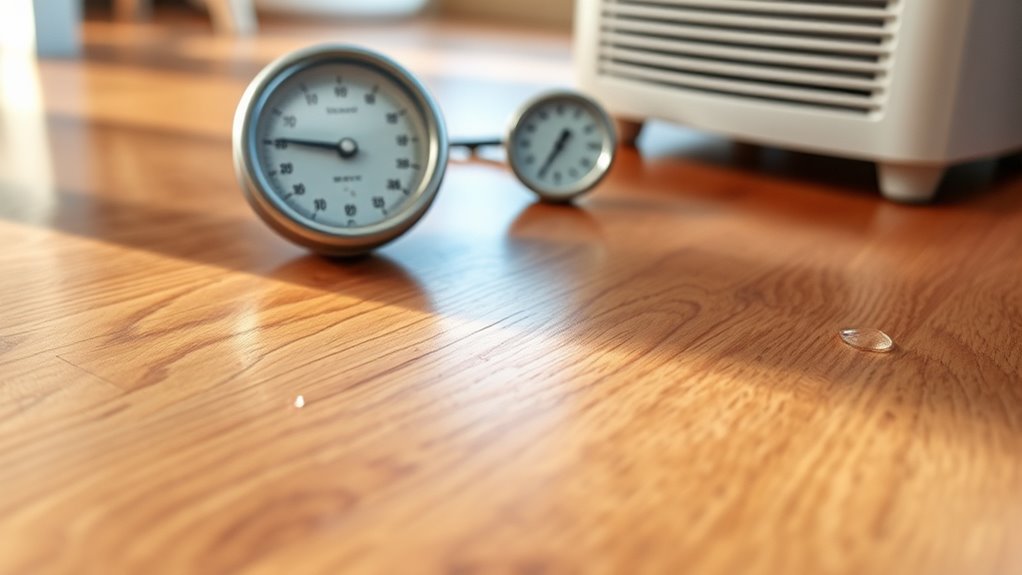

Maintaining proper humidity levels is key to protecting your hardwood floors from damage. Keep moisture in check by using humidifiers in winter and dehumidifiers during humid months, and regularly monitor levels with a hygrometer. Quick action on spills, minimizing water during cleaning, and sealing drafts help prevent issues like warping or gaps. Using moisture-resistant finishes and vapor barriers adds extra protection. Stay tuned to learn more about effective strategies to keep your floors looking their best.
Key Takeaways
- Maintain indoor humidity between 35% and 55% to prevent wood expansion, contraction, and damage.
- Use a hygrometer regularly to monitor humidity levels and respond promptly to fluctuations.
- Employ humidifiers in winter and dehumidifiers in summer to keep humidity consistent.
- Quickly clean spills and avoid excessive water during cleaning to prevent moisture damage.
- Install vapor barriers and seal drafts to stabilize indoor climate and protect hardwood floors.
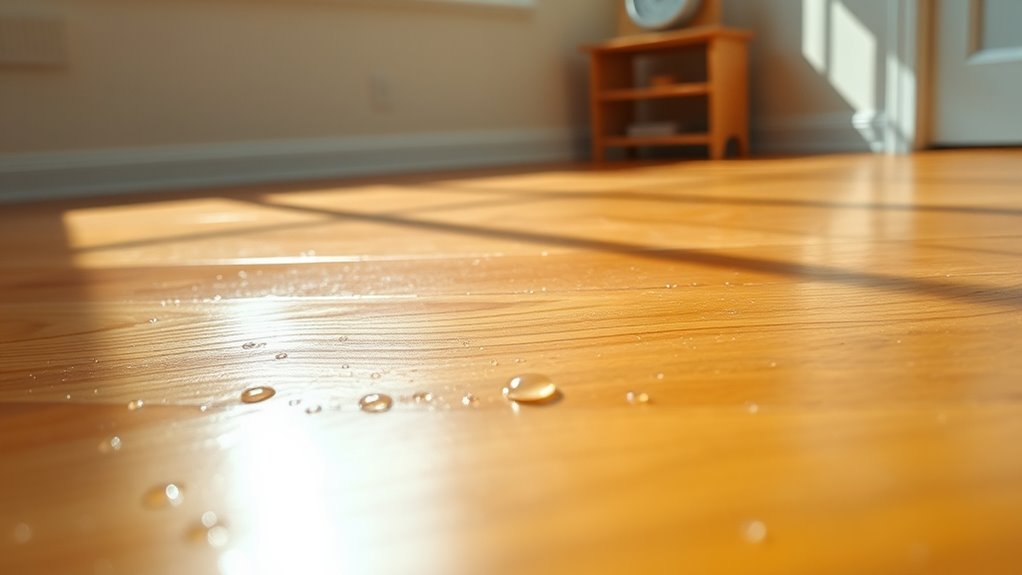
Maintaining proper humidity levels is essential to protect your hardwood floors from damage. When the air is too humid or too dry, it can cause your wood floors to expand or contract, leading to unsightly gaps, buckling, or warping. Wood floor expansion occurs when excess moisture enters the wood, causing it to swell and push against neighboring planks. Conversely, low humidity can make the wood dry out and shrink, creating gaps and cracks. To prevent these issues, you need effective moisture control techniques that help keep your indoor environment stable. This involves monitoring the humidity levels regularly and making adjustments as needed to maintain an ideal range, typically between 35% and 55%. Using a hygrometer allows you to track these levels accurately and respond promptly to any fluctuations.
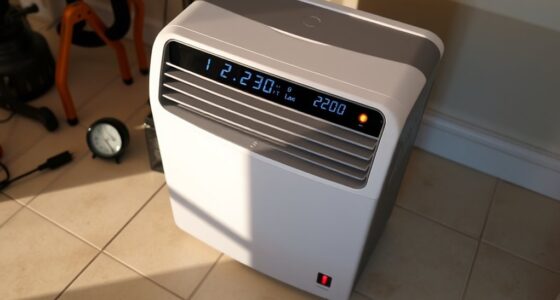
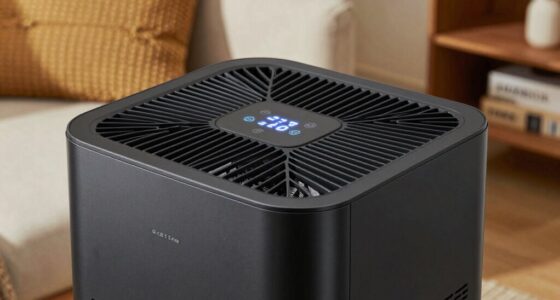
One of the most effective moisture control techniques is using a humidifier or dehumidifier, depending on your home’s climate. During winter months, when heating systems tend to dry out the air, a humidifier adds moisture back into the environment, preventing your wood floors from shrinking. Conversely, in humid summer months, a dehumidifier reduces excess moisture in the air, minimizing the risk of wood floor expansion. Additionally, maintaining consistent temperature levels can help stabilize humidity, since rapid changes tend to accelerate wood movement. Installing insulation and sealing drafts around windows and doors also reduces drafts that can cause humidity fluctuations, further protecting your floors. Incorporating technology in automation can also help manage humidity levels more efficiently in smart homes.
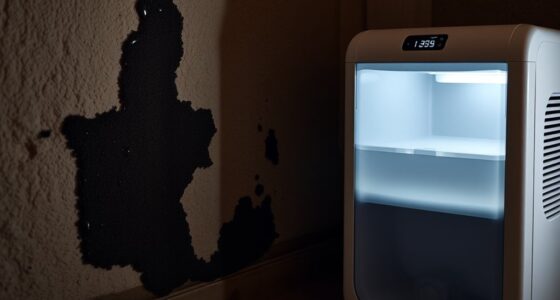
Another important step is to avoid excessive exposure to water or moisture. Spills should be cleaned immediately, and you should never use excessive water when cleaning your floors. Instead, opt for damp, not wet, cleaning methods. Using mats at entryways can also help trap moisture and dirt that might otherwise be tracked onto your floors. If you live in an area with high humidity, consider installing a vapor barrier beneath your flooring or using moisture-resistant finishes to add an extra layer of protection. These measures help regulate moisture levels and minimize the risk of wood floor expansion or contraction.
Frequently Asked Questions
Can Humidity Levels Cause Hardwood Floor Warping?
Yes, humidity levels can cause hardwood floor warping. When the air is too moist, wood absorbs moisture, leading to wood expansion that can cause buckling or warping. Conversely, low humidity causes the wood to lose moisture, making it shrink and crack. Maintaining consistent humidity helps prevent moisture damage, keeping your floors stable and beautiful. Use a humidifier or dehumidifier to control indoor moisture and protect your hardwood floors from warping.
How Often Should I Check Indoor Humidity?
Did you know that maintaining proper humidity can extend your hardwood floors’ lifespan by up to 50%? You should check indoor humidity levels at least once a month using humidity sensors. Seasonal adjustments are essential because humidity can fluctuate greatly between summer and winter. Regular monitoring helps prevent warping or cracking, ensuring your floors stay beautiful and durable. Stay proactive, and your hardwood will thank you!
Do Humidifiers Help Protect Hardwood Floors?
Yes, humidifiers help protect hardwood floors by maintaining ideal humidity levels. They offer benefits like reducing cracks and gaps caused by dryness, and they also aid in mold prevention by controlling excess moisture. Using a humidifier consistently keeps your floors stable and prevents damage from fluctuations in humidity. Just make sure to monitor and adjust the settings to avoid over-humidifying, which could lead to other issues like mold growth.
What Is the Ideal Humidity Range for Hardwood Floors?
Did you know that maintaining the right humidity can reduce wood expansion and moisture absorption by up to 30%? The ideal humidity range for hardwood floors is between 35% and 55%. Staying within this range helps prevent warping, gaps, and cracks caused by fluctuating moisture levels. Use a hygrometer to monitor your home’s humidity and keep your floors looking their best, avoiding costly repairs.
Can Excessive Dryness Damage Hardwood Flooring?
Excessive dryness can definitely damage your hardwood flooring by causing wood floor expansion and shrinkage. When the air is too dry, your floors lose moisture, making the wood brittle and prone to gaps or cracks. To prevent this, maintain proper humidity levels, which help control moisture absorption and keep your floors stable. Regularly using a humidifier during dry seasons can save your floors from damage caused by excessive dryness.
Conclusion
If you ignore humidity and neglect your hardwood floors, you’ll risk turning your beautiful space into a war zone of warping, cracking, and irreversible damage. Think about it—your floors could go from stunning to disastrous in the blink of an eye! But if you stay vigilant, control the moisture, and care for your hardwood, you’ll preserve its beauty forever. Don’t let humidity be the villain—be the hero your floors deserve and protect them at all costs!