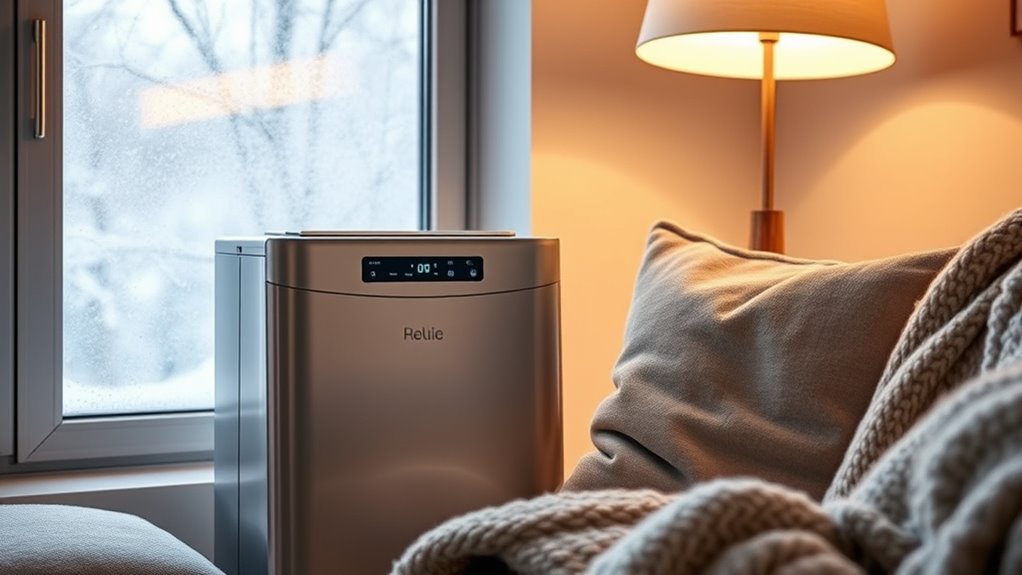
Yes, you should run a dehumidifier in winter to control indoor moisture levels and prevent mold growth, even when it’s cold outside. Cold air holds less moisture, but activities like cooking and showering still add humidity indoors. Using a dehumidifier helps reduce condensation, musty odors, and dampness that can damage your home. Proper humidity control also makes your space feel warmer and more comfortable. To learn more, consider the best ways to optimize dehumidifier use year-round.
Key Takeaways
- Maintaining indoor humidity between 30-50% prevents mold, musty odors, and wall or furniture damage during winter.
- Dehumidifiers help reduce condensation on windows and walls caused by indoor moisture, even in cold weather.
- Modern units are energy-efficient and adjust operation based on humidity levels, making winter use cost-effective.
- Proper humidity control in winter improves home comfort and can lower heating costs by making the air feel warmer.
- Regular use and correct placement of dehumidifiers ensure effective moisture control and prevent dampness year-round.

Many people assume dehumidifiers are only useful during humid summer months, but they’re just as beneficial in winter. When temperatures drop outside, indoor humidity levels can still rise due to activities like cooking, showering, or even indoor plants. High humidity indoors creates a damp environment, which can lead to mold growth, musty odors, and damage to furniture or walls. Using a dehumidifier in winter helps maintain ideal humidity levels, typically between 30% and 50%, making your home more comfortable and healthier. You might think that since it’s cold outside, there’s less need to control moisture, but that’s a misconception. Cold air holds less moisture, so when it enters your warm home, it can cause condensation on windows and walls, creating a perfect environment for mold and mildew. Running a dehumidifier during the winter can prevent this buildup by actively removing excess moisture from the air. Additionally, modern dehumidifiers are equipped with energy-efficient features, which help reduce electricity consumption while maintaining optimal humidity levels.
However, a common concern is energy consumption. Many worry that running a dehumidifier in winter will considerably increase their electricity bill. The truth is, modern dehumidifiers are designed to be energy-efficient, especially those with built-in humidity sensors that automatically adjust their operation to maintain desired humidity levels. If you set your dehumidifier to a target humidity, it will only run when needed, which minimizes unnecessary energy use. This way, you keep humidity levels in check without overburdening your electricity consumption. Additionally, maintaining proper humidity can actually save energy overall; dry indoor air makes your heating system work less hard, reducing your heating costs. When excess moisture is removed, your home feels warmer and more comfortable at lower temperatures, so you don’t have to crank up the heat.
In winter, you also want to think about the placement and size of your dehumidifier. Larger rooms or areas prone to dampness may require a more powerful unit, but always choose one that matches your space and humidity needs. Running a dehumidifier isn’t just about removing moisture; it’s about creating a healthier environment and preventing costly damage caused by excess humidity. So, yes, it’s a good idea to run your dehumidifier in winter, especially if you notice condensation or musty smells. It’s a simple step to improve indoor air quality and protect your home from moisture-related issues, all while keeping energy consumption in check.
Frequently Asked Questions
Can Dehumidifiers Prevent Mold Growth During Winter?
Yes, dehumidifiers can help prevent mold growth during winter by controlling humidity levels. When you use a dehumidifier, you reduce excess moisture that mold spores need to thrive. Keep humidity around 30-50%, especially in damp areas like basements or bathrooms. By actively managing humidity control, you create an environment less conducive to mold prevention, protecting your home from mold damage and ensuring healthier indoor air quality.
Are Portable Dehumidifiers Effective in Large Winter Spaces?
Think of portable dehumidifiers as your trusty allies in a large winter space—they can be surprisingly effective when chosen wisely. While they may not cover as vast an area as built-in systems, high-capacity portable dehumidifiers do a good job of reducing excess moisture and preventing mold. If you select one designed for large spaces and maintain it properly, you’ll find it a valuable tool to keep your environment comfortable and dry.
Do Dehumidifiers Increase Heating Costs in Winter?
Yes, dehumidifiers can increase heating costs in winter, but their impact depends on energy efficiency and humidity control. If you choose an energy-efficient model, it uses less power, helping you save on expenses. Proper humidity control reduces moisture, making your space feel warmer without cranking up the heater. So, while they do add to energy use, a high-quality dehumidifier helps maintain comfort efficiently during winter months.
How Often Should I Run My Dehumidifier in Winter?
You should run your dehumidifier daily during winter, especially if humidity levels exceed 50%. Studies show that maintaining ideal moisture control can improve indoor air quality and prevent mold growth. Check your humidity levels regularly with a hygrometer, and run the dehumidifier until moisture stabilizes at a comfortable, healthy level. Consistent operation helps prevent dampness, ensuring your home stays dry and comfortable all season long.
Are There Winter-Specific Dehumidifiers Available?
Yes, winter-specific dehumidifiers are available, featuring seasonal dehumidifier models designed for colder months. These models often include winter-specific filters that help manage increased humidity from indoor activities and outdoor moisture. You should consider these units if you want ideal performance during winter, as they are built to handle lower temperatures without freezing or malfunctioning. Using a seasonal model ensures you maintain healthy humidity levels efficiently all winter long.
Conclusion
So, should you run your dehumidifier in winter? Absolutely! It keeps mold and dampness in check, making your home healthier and more comfortable. Some might worry it’ll cost too much or dry out the air too much, but with a little adjustment, you can enjoy all the benefits without those concerns. Just set it at a reasonable level, and you’ll stay cozy, dry, and happy all season long.