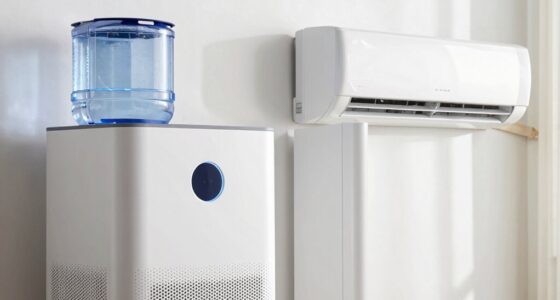
Choosing between water collection and continuous drainage for your dehumidifier depends on your space and needs. Water collection involves a portable tank that’s easy to move but requires regular emptying, ideal for small areas. Continuous drainage connects to a drain hose for uninterrupted operation, perfect for larger, humid spaces. Understanding both options helps you select the best fit for hassle-free humidity control. Keep exploring to discover which method suits your environment best.
Key Takeaways
- Portable dehumidifiers collect water in a tank, requiring manual emptying, ideal for small spaces or occasional use.
- Continuous drainage systems connect directly to a drain, providing automated water removal for ongoing, large-scale humidity control.
- Water collection units offer mobility and simplicity, while continuous drainage ensures uninterrupted operation with minimal maintenance.
- Choice depends on space, humidity levels, and user convenience; portable units suit small areas, while continuous drainage benefits large, humid environments.
- Proper setup is essential for continuous drainage, whereas portable units are more flexible and easier to operate without external plumbing.

Choosing the right dehumidifier can make a significant difference in maintaining a comfortable and healthy indoor environment. When considering your options, one of the key decisions revolves around water collection methods—whether to rely on a portable unit with a water collection tank or opt for continuous drainage. Portable units are popular because they’re flexible and easy to move around your space. They often come with built-in features like automatic shut-off when the water tank is full, making them user-friendly. These features prevent overflow and protect your floors, giving you peace of mind. With portable models, you simply fill the tank when it’s full, which is straightforward but requires regular attention, especially in high-humidity environments. If you prefer a hands-off approach, some units include indicators that alert you when the tank needs draining, so you’re not caught off guard.
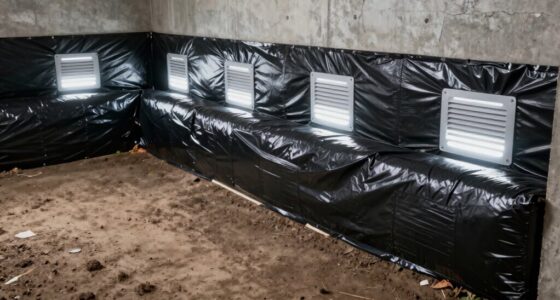
However, if you’re dealing with large spaces or prolonged humidity issues, continuous drainage might be the better choice. This option involves connecting your dehumidifier to a drain hose, allowing water to flow out automatically. With continuous drainage, you don’t have to remember to empty the tank, which is ideal for 24/7 operation. Many dehumidifiers with this feature come with built-in capabilities that facilitate easy setup, such as drain ports and compatible hoses. This setup ensures uninterrupted operation, making it especially suitable for basements, laundry rooms, or commercial spaces where humidity levels are consistently high. It also reduces the risk of overflows or water damage caused by neglected tank emptying. Additionally, understanding dehumidifier safety standards and proper installation practices can help prevent potential hazards associated with water drainage systems.
When comparing these options, think about your lifestyle and the space you’re trying to dehumidify. Portable units with water collection tanks are convenient for smaller areas and situations where occasional maintenance isn’t a problem. Meanwhile, continuous drainage systems excel in scenarios demanding constant operation without frequent intervention. Both options have their strengths, but the key is choosing one aligned with your needs. If you opt for a portable unit, look for models with reliable built-in features like auto shut-off and indicator lights. For continuous drainage, ensure your setup includes compatible hoses and that your space allows for drain placement. Whichever you select, understanding the water collection method helps you maintain a dry, comfortable environment with minimal hassle.
Frequently Asked Questions
How Often Should I Empty the Water Collection Tank?
You should empty the water collection tank when it’s full, which depends on its capacity and your humidity levels. Typically, check the tank every few days to prevent overflow. If your dehumidifier has a small tank, you might need to dispose of water daily, while larger tanks allow for less frequent disposal. Regularly monitoring the tank guarantees peak performance and avoids unnecessary mess or damage.
Which Dehumidifier Type Is Best for Large Spaces?
For large spaces, an industrial capacity dehumidifier is your best choice because it handles extensive areas efficiently and quickly. Look for models with high energy efficiency to save on power costs while maintaining ideal humidity levels. These dehumidifiers often have larger water tanks or continuous drainage options, reducing the need for frequent emptying. Choose a unit with sufficient capacity to cover your space comfortably, ensuring consistent, effective moisture control.
Can I Switch Between Water Collection and Continuous Drainage?
Yes, you can switch between water collection and continuous drainage with many dehumidifiers. Most models feature automatic switching, so you can set it to drain continuously via a hose or collect water manually. User control allows you to choose the mode that suits your needs. Just guarantee your unit supports both options, and follow the manufacturer’s instructions for easy switching between water collection and continuous drainage.
Is There a Risk of Water Damage With Continuous Drainage?
There’s a minimal water damage risk with continuous drainage if your setup is properly installed and the drainage hose is secure. However, drainage concerns like leaks or clogging can occur, so always check connections regularly. Keep an eye out for any leaks or moisture around the dehumidifier to prevent water damage. Proper maintenance and correct installation considerably reduce the chance of water damage when using continuous drainage.
What Maintenance Is Required for Dehumidifiers With Water Collection Tanks?
You need to regularly clean the water collection tank to prevent mold and bacteria buildup, which can affect air quality. Additionally, you should replace or clean the filters as recommended by the manufacturer to keep the dehumidifier operating efficiently. Inspect the tank for any cracks or leaks, and ensure it’s properly reinstalled after cleaning. Routine maintenance keeps your dehumidifier running smoothly and prevents potential water damage.
Conclusion
Choosing between water collection and continuous drainage depends on your space and needs. Did you know that over 70% of homeowners prefer continuous drainage for convenience? It saves you the hassle of emptying a water tank regularly, making it ideal for long-term use. Whether you opt for collection or drainage, understanding these options helps you keep your indoor air dry and comfortable effortlessly. Make the choice that fits your lifestyle and enjoy a healthier home environment.