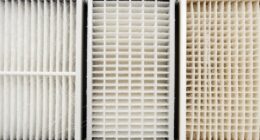
High MERV ratings might seem impressive, but they can be overkill for most homes. If your goal is basic allergy relief or improved indoor air quality, filters rated MERV 8 to 13 usually do the job well. Using higher MERV filters can restrict airflow and strain your HVAC system, leading to higher energy costs and more frequent changes. To find the right balance, it’s helpful to understand when high ratings are necessary and when they’re excessive.
Key Takeaways
- Higher MERV ratings capture smaller particles but can restrict airflow, risking HVAC system strain and inefficiency.
- MERV ratings beyond 13 often provide minimal benefits for typical residential indoor air quality.
- Overly high-rated filters tend to clog faster, requiring more frequent replacements and increasing maintenance costs.
- Most homes don’t need filters above MERV 13 unless dealing with severe allergies or specific airborne contaminants.
- Selecting a MERV rating should balance filtration needs with system performance and filter lifespan.
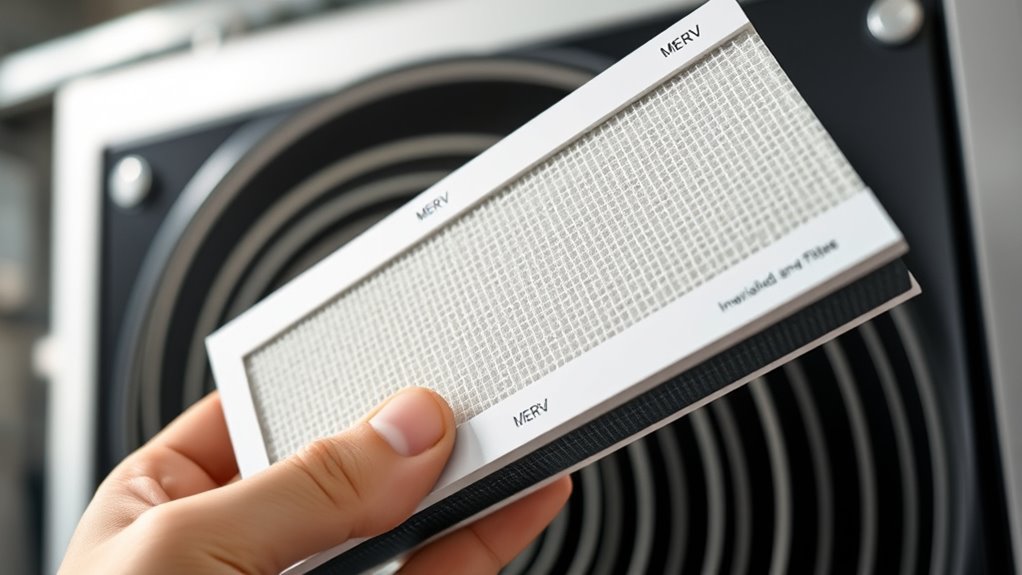
If you’re looking to improve your indoor air quality, understanding MERV ratings is essential. MERV, or Minimum Efficiency Reporting Value, measures how effectively an air filter captures airborne particles. Choosing the right MERV rating can make a significant difference in your home’s air quality, but it also involves balancing filtration needs with the air filter’s lifespan. Higher-rated filters tend to trap smaller particles more efficiently, which is great for allergy filtration, but they can also restrict airflow more and may need replacing sooner. Conversely, lower-rated filters last longer and allow better airflow but might not catch enough allergens or pollutants to keep your air clean.
When it comes to allergy filtration, a filter with a MERV rating between 8 and 13 usually hits the sweet spot. These filters effectively trap common allergens like pollen, dust mites, pet dander, and mold spores, helping to reduce allergy symptoms and improve respiratory health. However, as you increase the MERV rating beyond 13, filters become more efficient at capturing tiny particles, such as bacteria and viruses. While this sounds beneficial, these higher-rated filters can also become clogged more quickly, which shortens the air filter lifespan. This means you’ll need to replace them more often to maintain ideal performance, and they can also put additional strain on your HVAC system, potentially leading to higher energy costs.
Many people don’t realize that choosing a filter with too high a MERV rating can be overkill for residential use. If your primary goal is allergy filtration and maintaining good indoor air quality, a MERV rating of 8 to 13 is typically sufficient. Going beyond that might not offer meaningful benefits and could cause unnecessary wear and tear on your system. It’s important to take into account your specific needs; for example, if someone in your household has severe allergies or respiratory issues, opting for a higher MERV filter might be justified, but for most homes, a moderate rating provides the best balance of air filtration and filter longevity. Additionally, some Honda tuning components, like performance air intakes, are designed to optimize airflow, which highlights the importance of proper filtration to prevent system strain.
Frequently Asked Questions
Can MERV Ratings Indicate Filter Lifespan?
MERV ratings don’t directly indicate filter lifespan, but they help you choose the right filter for your air quality needs, which impacts filter maintenance. A higher MERV rating captures more particles but may clog faster, requiring more frequent changes. To keep your air clean and your system running efficiently, monitor your filter regularly and replace it when airflow decreases or it looks dirty, regardless of the MERV rating.
How Do MERV Ratings Compare to HEPA Filters?
You might wonder how MERV ratings compare to HEPA filters. MERV filters generally allow better airflow and require less maintenance, but they capture fewer tiny particles than HEPA filters, which have higher efficiency. HEPA filters provide superior air quality but can cause airflow restrictions and need more frequent maintenance. So, choose based on your needs—HEPA for cleaner air, MERV for better airflow and easier upkeep.
Are Higher MERV Ratings Better for All Homes?
Higher MERV ratings aren’t always better for your home. While they can improve air quality and allergen removal, they might restrict airflow if your HVAC system isn’t designed for them. You should consider your home’s specific needs and system capabilities. Opt for a MERV rating that balances effective filtration with proper airflow, ensuring good air quality without overburdening your system. Always check with a professional before upgrading.
Do MERV Ratings Affect HVAC Energy Efficiency?
Think of your HVAC system like a race car—airflow restrictions from high MERV filters can slow it down. Higher MERV ratings improve filtration but may reduce airflow, making your system work harder and use more energy. Regular filter maintenance prevents clogging, ensuring efficiency. So, yes, MERV ratings do affect energy efficiency, but choosing the right level balances filtration and airflow to keep your system running smoothly without overexertion.
Can MERV Ratings Filter Viruses and Bacteria Effectively?
You might wonder if MERV ratings effectively filter airborne pathogens like viruses and bacteria. Higher-rated filters can trap smaller particles, including some microbes, but they aren’t foolproof. To maximize protection, you need regular filter maintenance and possibly additional air purifiers. Keep in mind, even high-MERV filters have their limits, so supplementing with other measures is essential for better indoor air quality and reducing airborne pathogens.
Conclusion
Knowing when MERV ratings are overkill helps you make smarter choices for your air quality. For example, higher-rated filters like MERV 13 can trap tiny particles, but overusing them in a standard home might waste money without added benefit. Did you know that most homes only need a MERV 8 to 11? Choosing the right filter saves you money, extends filter life, and keeps your air clean without unnecessary overkill.