
In shared apartments, multiple occupants and activities lead to higher pollutant levels from dust, pet dander, and VOCs, so a tailored purifier approach is essential. You should place multiple devices in high-traffic areas or near pollution sources like kitchens and pet zones to guarantee thorough coverage. Regular maintenance and using smart purifiers help keep the air clean and responsive to fluctuations. If you continue exploring, you’ll learn how to optimize your air quality strategy for your shared space.

Get home appliances delivered free with Prime
- Fast, free delivery on millions of items
- Prime Video, Amazon Music and more included
- Member-only deals all year
Key Takeaways
- Shared apartments have multiple occupants and sources, requiring targeted placement and multiple purifiers for comprehensive coverage.
- Real-time air quality monitoring helps identify pollution hotspots unique to shared living environments.
- Different zones may need individualized purifiers to address diverse needs, unlike uniform solutions in family homes.
- Maintenance responsibility must be collectively managed, considering varied usage patterns and schedules.
- Data-driven adjustments and smart technology optimize purifier performance in complex, multi-occupant spaces.
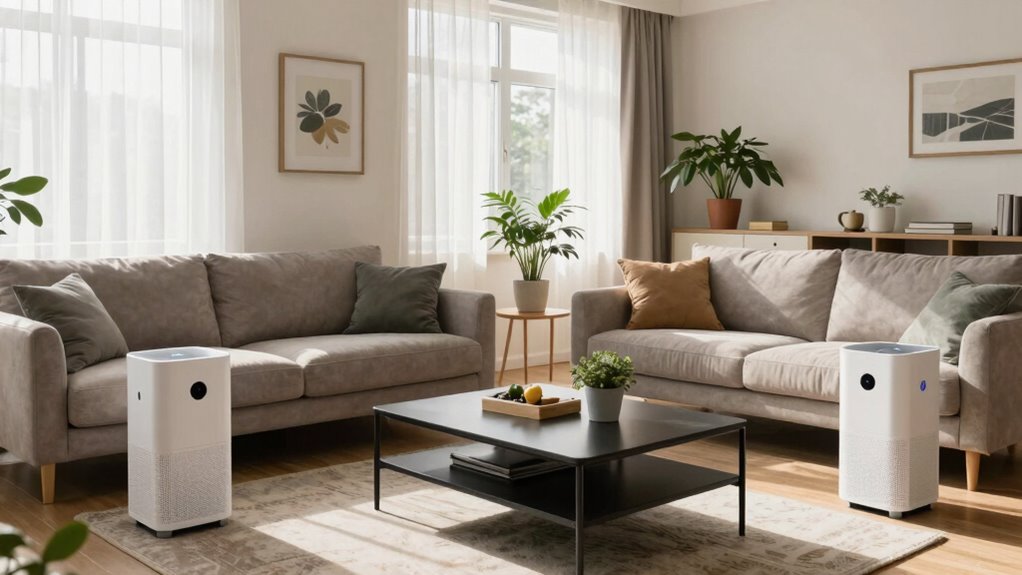
When it comes to air purification, shared apartments demand a different approach than family homes. Unlike family households, where you usually have consistent routines and fewer people moving around, shared living spaces often involve multiple individuals with varying schedules, habits, and cleanliness standards. This variability makes it essential to adopt specific strategies for maintaining good air quality. One of the most effective ways to do this is through air quality monitoring. By regularly checking the air in your shared apartment, you can identify pollutants like dust, pet dander, or volatile organic compounds (VOCs) that may accumulate quickly due to multiple occupants or shared activities. Air quality monitors provide real-time data, helping you understand which areas are most affected and when to increase filtration efforts. This feedback allows you to maximize your purifier use, ensuring it runs when and where it’s needed most. Proper placement of air purifiers is also crucial to ensure optimal air circulation and pollutant removal.
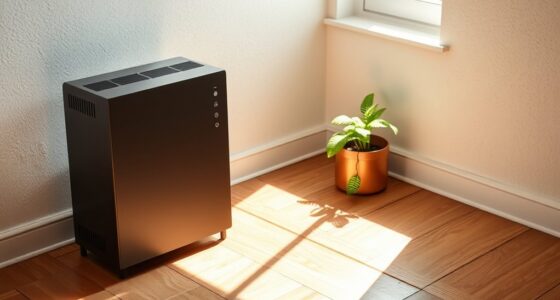
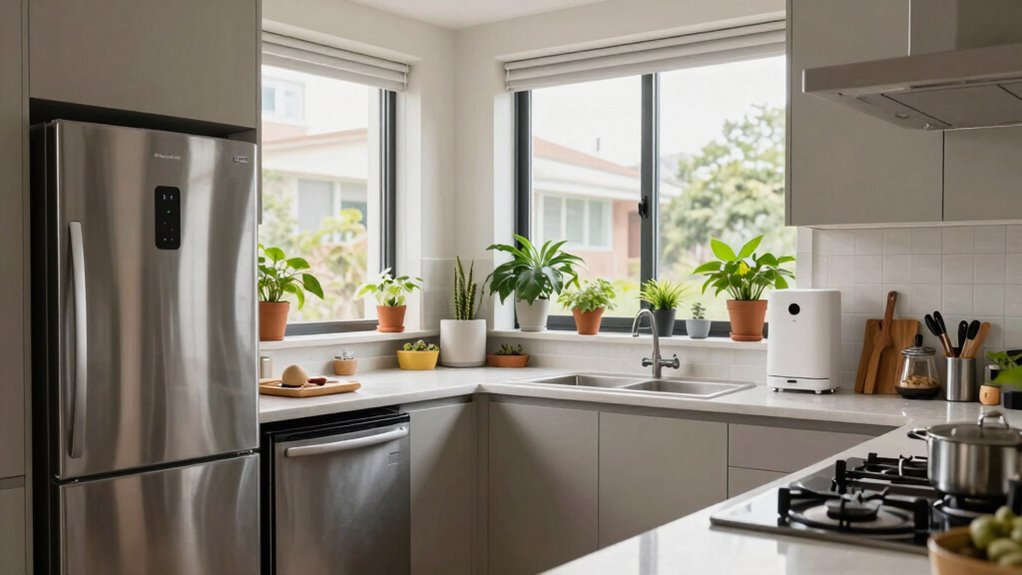
Purifier placement strategies are equally vital in a shared apartment setting. You can’t just toss a device into a corner and hope for the best, because airflow, room size, and furniture placement all influence how well the purifier works. Ideally, you want to position air purifiers in high-traffic zones or near sources of pollution, such as kitchens or pet areas. In shared spaces, placing a purifier centrally—like in a living room or common area—can help circulate clean air more effectively throughout the apartment. If multiple rooms tend to have different issues, consider using multiple smaller purifiers instead of one large unit. This way, each occupant can have a dedicated purifier in their personal space, addressing individual concerns without compromising the overall air quality of the apartment. Additionally, understanding the air quality levels in different parts of your home can guide better placement and operation of your devices. Incorporating air quality data into your routine can also help detect sudden changes or spikes in pollutants, prompting timely action. Regularly assessing air quality levels helps in making informed decisions about the most effective placement and operation of purifiers.
Another key aspect is ensuring that purifiers are accessible and easy to maintain. In a shared environment, it’s important to establish collective responsibility for filter changes and cleaning schedules. Clear signage or reminders can help everyone stay on top of maintenance, ensuring the devices function effectively. Additionally, investing in smart air purifiers that can connect to your smartphone app allows you to monitor air quality levels remotely and adjust settings as needed. This tech integration simplifies managing multiple devices across different rooms, giving everyone peace of mind and a healthier living environment. Regular filter replacements and cleaning are essential for maintaining device efficiency, especially in environments with fluctuating air quality.
Products Worth Considering

Blueair Blue Pure 211i Max Smart Air Purifier

Blueair Blue Pure 511i Max Smart Air Purifier

Levoit Core 300S-P Smart Wi-Fi Air Purifier
As an affiliate, we earn on qualifying purchases.
Frequently Asked Questions
How Often Should Shared Apartment Air Purifiers Be Replaced?
You should replace your shared apartment air purifier filters every 3 to 6 months, depending on usage and air quality. Regular air quality monitoring helps you determine when filters need changing. To maximize efficiency, use effective purifier placement strategies—placing units in high-traffic areas and away from obstructions. Keep an eye on filter indicators and air quality levels to guarantee your space stays fresh and healthy.
What Is the Most Energy-Efficient Purifier for Shared Living Spaces?
For the most energy-efficient purifier in shared spaces, pick one with precise air quality sensors and smart purifier placement. You’ll save energy by choosing models with low power consumption and automatic adjustment features. Look for compact, energy-efficient units that seamlessly adapt to changing air quality. Proper placement guarantees ideal airflow, reducing run time and energy use. This way, you maintain clean air while keeping your energy bills low.
Do Shared Apartments Need Additional Filters Compared to Family Homes?
Yes, shared apartments often need additional filters to maintain ideal air quality in the shared space. Since more people generate more pollutants, adding extra filters helps trap common allergens, dust, and odors effectively. You should consider a purifier with multi-stage filtration, including HEPA and activated carbon filters. This guarantees cleaner air for everyone, reducing health risks and creating a more comfortable environment in your shared living space.
How Do Purifier Maintenance Needs Differ in Shared Versus Family Homes?
You’ll find purifier maintenance more chaotic in shared apartments, where personal air quality varies wildly. Unlike family homes, you need to prioritize purifier placement to maximize efficiency and reduce constant filter changes. Expect more frequent maintenance, as roommates neglect filters or block vents. It’s a constant balancing act to keep the air breathable, ensuring your purifier isn’t just a decorative piece gathering dust while everyone’s health hangs in the balance.
Can a Single Purifier Effectively Serve Multiple Bedrooms in a Shared Apartment?
A single purifier can serve multiple bedrooms in a shared apartment, but its effectiveness depends on room size and purifier placement. If the purifier is powerful enough and placed centrally, it can improve air quality across several rooms. However, for larger spaces or multiple bedrooms, you might need to evaluate a larger-capacity purifier or multiple units. Proper placement guarantees ideal air circulation, helping the purifier cover more area efficiently.
Conclusion
In a shared apartment, your air purifier isn’t just a gadget—it’s the ultimate superhero battling an army of odors, germs, and airborne chaos every single day. You can’t just use any purifier and hope for the best; you need a powerhouse designed for constant, heavy-duty action. Think of it as your personal shield against the airborne villains lurking in every corner. Without it, your shared space would be a breeding ground for chaos—so choose wisely, and breathe like a hero!