Particulate matter, like PM2.5 and PM10, are tiny airborne particles from sources such as pollution and indoor activities. PM2.5 is small enough to reach your lungs and bloodstream, increasing health risks. Air purifiers with HEPA filters and activated carbon can effectively capture these particles and reduce indoor pollution. By understanding how these filters work and which technologies are most effective, you can improve your indoor air quality and protect your health. Keep exploring to learn more.
Key Takeaways
- PM2.5 and PM10 are tiny airborne particles that can penetrate deep into lungs and bloodstream, causing health issues.
- Composition of particulate matter includes organic compounds, metals, soot, dust, and biological contaminants, affecting toxicity and health risks.
- Air purifiers with HEPA filters effectively remove PM2.5 and PM10, reducing indoor pollution and protecting respiratory health.
- Particle size determines filtration efficiency; smaller particles require advanced filters like HEPA for effective removal.
- Improving indoor air quality involves using air purifiers, proper ventilation, regular cleaning, and indoor plants to decrease particulate matter exposure.
Understanding Particulate Matter and Its Composition

Particulate matter (PM) refers to tiny particles suspended in the air that can pose health risks when inhaled. These particles vary in size, composition, and source. The particulate composition includes a mix of organic compounds, metals, soot, dust, and other microscopic materials. Understanding their chemical properties helps you grasp how they interact with your body. For example, some particles contain toxic metals like lead or arsenic, while others are made up of carbon compounds that can trigger inflammation. Their chemical properties influence how long they stay airborne and how deeply they penetrate your respiratory system. Recognizing these aspects allows you to better appreciate the importance of filtration and air purification in reducing exposure to harmful particles. Additionally, the sources of particulate matter—such as vehicle emissions, industrial processes, and natural events—play a significant role in their composition and concentration in the air.
Differentiating Between PM2.5 and PM10

Have you ever wondered why air quality reports specify different sizes of particles? It’s because particle size influences how deeply they penetrate your respiratory system and their health impact. PM2.5 particles are tiny, less than 2.5 micrometers, and can reach your lungs and bloodstream, posing serious health risks. PM10 particles are larger, up to 10 micrometers, and mainly affect your upper respiratory tract. To visualize:
| Particle Size (micrometers) | Penetration Depth | Typical Sources |
|---|---|---|
| Less than 2.5 | Deep lungs, bloodstream | Combustion, industrial |
| 2.5 to 10 | Upper respiratory tract | Dust, pollen |
| Larger than 10 | Usually trapped in nose/mouth | Pollen, skin flakes |
Understanding these differences helps you grasp the health impacts and how air purifiers target these particles. Additionally, effective air purification often relies on HEPA filtration, which is capable of capturing particles as small as 0.3 microns, including PM2.5.
Sources of Indoor and Outdoor Particulates
Many sources contribute to indoor and outdoor particulate levels, with some from natural processes and others from human activities. Outdoors, vehicle emissions, industrial pollution, and natural events like wildfires and dust storms release particles into the air. Indoors, activities such as cooking, smoking, and cleaning generate particulates, while indoor plants can trap some particles, improving air quality. Additionally, the use of air quality sensors helps you monitor particulate levels in real time, providing insights into pollution sources and helping you take action. Dust from carpets, furniture, and even building materials also adds to indoor particulate levels. Understanding these sources enables you to better manage your environment, reduce exposure, and improve overall air quality. The effectiveness of air purifiers largely depends on their ability to filter particles like PM2.5 and PM10, which are influenced by air filtration technology and device specifications.
How Particulate Matter Affects Human Health
Since inhaling tiny particles can penetrate deep into your lungs and even enter your bloodstream, particulate matter poses serious health risks. It can cause respiratory issues, worsen asthma, and increase cardiovascular disease risk. Many indoor air myths suggest that air quality isn’t a concern at home, but particulate matter regulation aims to reduce these dangers. Being exposed to pollution indoors can be just as harmful as outdoors. You might not feel immediate effects, but long-term exposure can lead to chronic health problems. Air purifier features and technology play a crucial role in minimizing these risks.
- You may develop breathing difficulties
- Your immune system could weaken
- Children and the elderly are especially vulnerable
- Indoor pollutants can trigger allergies
- Air purifiers help reduce these health risks
Methods for Measuring Airborne Particles

Measuring airborne particles accurately is essential for evaluating indoor air quality and understanding pollution levels. You can use aerosol sampling techniques to collect particles from the air, providing representative samples for analysis. Particle counters are commonly employed tools that quickly quantify particles in real time, distinguishing sizes such as PM2.5 and PM10. These devices use laser or light-scattering technology to count and size particles, giving immediate insights into air quality. Aerosol sampling involves drawing air through filters or impactors, capturing particles for laboratory analysis if needed. Both methods help you identify pollution sources and assess the effectiveness of air purification systems. Precise measurement guarantees informed decisions for improving indoor environments and protecting health. Exploration of air quality challenges often highlights the importance of accurate measurement techniques to foster healthier living spaces.
The Role of Air Purifiers in Improving Air Quality
Air purifiers play a key role in improving your indoor air quality by enhancing filtration efficiency and reducing pollutants. As they remove particulate matter and other harmful substances, your environment becomes healthier and safer. These improvements can lead to noticeable health benefits over time. Additionally, incorporating air purifiers that utilize advanced filtration technologies can further optimize pollutant removal and support overall well-being.
Filtration Efficiency Improvements
Advancements in filtration technology have considerably enhanced the ability of air purifiers to remove particulate matter more effectively. These filtration upgrades boost filtration efficiency, ensuring cleaner indoor air. Modern filters now trap smaller particles like PM2.5 and PM10 more reliably. You’ll notice better performance in removing allergens, dust, and pollutants with these improvements. Key enhancements include:
- Use of advanced HEPA filters with higher ratings
- Incorporation of activated carbon layers for odor removal
- Improved seal designs to prevent air bypass
- Multi-stage filtration systems for all-encompassing cleaning
- Increased filter lifespan and durability
These innovations mean your air purifier works smarter, not harder, providing you with fresher, healthier indoor air by consistently capturing even the tiniest particles.
Reducing Indoor Pollutants
Thanks to recent improvements in filtration technology, your air purifier can now do a better job of reducing indoor pollutants that affect your health and comfort. By capturing fine particles like PM2.5 and PM10, it minimizes airborne contaminants. Incorporating indoor plants offers additional benefits, as they can naturally filter certain pollutants and boost air quality. Regular air quality monitoring helps you identify pollution sources and adjust purifier settings for ideal results. Combining high-efficiency filters with indoor plants creates a healthier environment. Make sure your purifier is properly maintained and monitor air quality levels frequently. This proactive approach reduces dust, allergens, and other pollutants, making your indoor space safer and more comfortable. Using air quality indicators can help you track the effectiveness of your filtration efforts and ensure optimal performance. Together, technology and natural solutions vastly improve your indoor air quality.
Health Benefits Enhancement
When your air purifier effectively removes harmful particles, it directly enhances your health and well-being. Cleaner air reduces respiratory issues, allergies, and asthma symptoms, making your indoor environment safer. Using air quality sensors helps you monitor real-time improvements and adjust settings accordingly. Incorporating indoor plants can further boost air purification naturally, complementing your device’s efforts. Regularly maintaining your purifier guarantees peak performance, maximizing health benefits. These combined strategies create a healthier, more comfortable space. For example, understanding AI’s role in cybersecurity can help you recognize emerging digital threats and protect your information more effectively.
Technologies Used in Air Purification Devices
Air purification devices utilize a variety of technologies to efficiently remove particulate matter from the air you breathe. UV sterilization is one such method that uses ultraviolet light to kill bacteria, viruses, and mold spores, helping to reduce biological contaminants. Ionizer technology works by releasing negative ions that attach to airborne particles, causing them to clump together and fall out of the air or be attracted to charged plates for collection. These technologies often work in tandem with filters, enhancing overall air cleaning performance. UV sterilization is particularly effective against microorganisms, while ionizers help reduce fine particles like PM2.5 and PM10. Additionally, some devices incorporate essential oils to provide aromatic cleaning benefits and improve indoor air quality. Together, they offer all-encompassing solutions to improve indoor air quality, making your environment healthier and safer.
Effectiveness of Different Filtration Systems
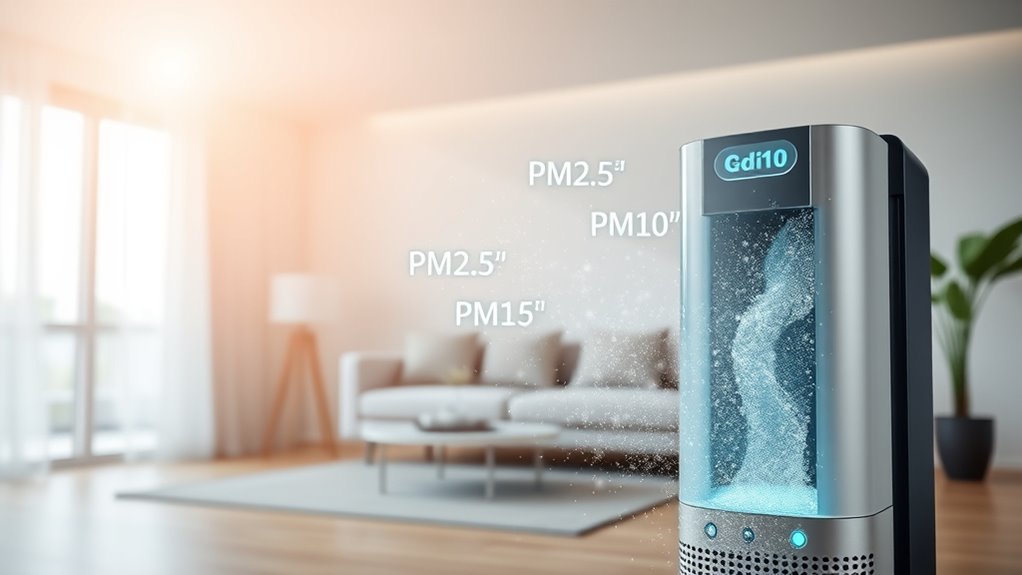
You’ll want to compare how well HEPA filters trap tiny particles and their overall efficiency. Activated carbon filters can absorb odors and gases, adding another layer of protection. Electrostatic precipitators use electric charges to remove particles, but their performance varies depending on the environment. Additionally, some advanced models incorporate air ionization technology to further enhance particle removal and improve overall air quality.
HEPA Filtration Efficiency
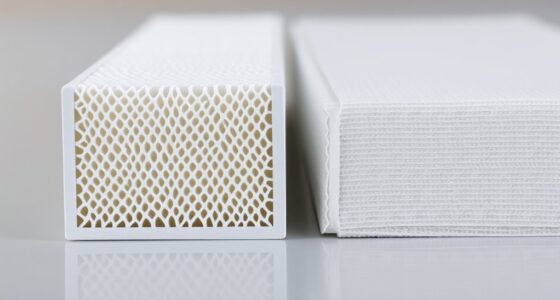
How effective are HEPA filters at capturing airborne particles? They’re highly efficient, removing at least 99.97% of particles as small as 0.3 microns. This makes them ideal for trapping PM2.5 and PM10. But, remember, HEPA efficiency depends on proper maintenance and filter lifespan. Over time, filters can become clogged, reducing their effectiveness and airflow. To keep your air purifier working at its best:
- Regularly check and replace filters as recommended
- Avoid waiting too long to change filters, as efficiency drops
- Ensure your unit’s seal is tight for maximum performance
- Choose filters with a high MERV rating for better filtration
- Keep the purifier in a central location for even coverage
- Proper Kia Tuning can improve overall vehicle performance, just as proper filter maintenance optimizes air quality.
Maintaining these factors helps ensure your HEPA filtration remains effective and reliable.
Activated Carbon Benefits
Activated carbon filters are highly effective at removing odors, volatile organic compounds (VOCs), and certain gases from the air. When you use activated carbon in your air purifier, it traps molecules through a process called adsorption, where pollutants stick to the surface of the carbon. This makes activated carbon especially useful for odor removal from cooking, pets, smoke, and other sources. Unlike filters that target particulates, activated carbon specifically addresses gaseous pollutants, improving indoor air quality. Its porous structure provides a large surface area for trapping contaminants, making it a crucial component in extensive air purification systems. By combining activated carbon with other filters, you guarantee your space stays fresh, odor-free, and healthier overall. Additionally, integrating cybersecurity measures in your smart air purifier devices can protect them from potential hacking threats.
Electrostatic Precipitators Performance
Electrostatic precipitators (ESPs) offer a different approach to air purification by using electrical charges to remove particles from the air. Their effectiveness depends heavily on proper electrostatic precipitator maintenance and thoughtful electrostatic precipitator design. When maintained well, ESPs can efficiently capture fine particles like PM2.5 and PM10, reducing airborne pollutants markedly. Additionally, understanding the impact of airflow and charge distribution can optimize the rustic decor of the system for better performance. However, if neglected, their performance drops, and they may produce ozone or become less effective over time. The design influences airflow, collection plates, and charge distribution, all critical for ideal operation. Regular cleaning of collection plates and monitoring of electrical systems are essential. A well-designed ESP can be a reliable, low-maintenance filtration system, especially in industrial settings. Understanding these factors helps ensure you get the most benefit from this technology.
Tips for Maintaining a Healthy Indoor Environment
Maintaining a healthy indoor environment requires consistent effort and attention to detail. One simple step is adding indoor plants, which offer benefits like natural air purification and increased humidity. Just remember, some air quality myths suggest plants alone can substantially reduce pollutants; while helpful, they shouldn’t replace proper ventilation or air purifiers. Keep your space well-ventilated by opening windows when possible and using exhaust fans. Regularly clean surfaces, vacuum with HEPA filters, and change filters in your air purifier as recommended. Avoid clutter that traps dust and allergens. Maintain humidity levels between 30-50% to prevent mold growth and dust mites. Additionally, understanding the role of air quality advertising can help you make better choices for your indoor environment. Small, consistent actions make a big difference in improving indoor air quality and creating a healthier living space.
Future Developments in Air Quality Improvement
Advancements in air purification technology are poised to revolutionize how we improve indoor air quality. Future developments will focus on integrating renewable energy sources to make devices more sustainable and energy-efficient. Expect smarter purifiers that adapt to your environment, using sensors for real-time air quality monitoring. Innovations may also include filters that target a broader range of pollutants, helping combat climate change by reducing harmful emissions. Additionally, compact, portable units will become more powerful yet energy-conscious, ideal for homes and workplaces. Researchers are exploring bio-inspired filtration systems, mimicking nature’s ways to clean air naturally. These innovations aim to create healthier indoor environments while supporting global efforts to reduce our carbon footprint. Moreover, understanding the role of creative practice can inspire innovative approaches to developing these advanced technologies. Ultimately, technology will make cleaner air more accessible and eco-friendly for everyone.
Frequently Asked Questions
How Do Different Air Purifier Filters Target Specific Particulate Sizes?
You might wonder how air purifier filters target specific particles. Different filter types, like HEPA and activated carbon, excel at particle targeting because of their unique structures. HEPA filters capture fine particles such as PM2.5 and PM10 through dense fibers that trap particles effectively. By choosing the right filter type, you guarantee your air purifier targets the specific particulate sizes you want to reduce, improving your indoor air quality.
Can Air Purifiers Remove Gaseous Pollutants Along With Particulate Matter?
You might wonder if air purifiers can handle gaseous pollutants too. Many models with activated carbon filters can remove VOCs, odors, and some gaseous pollutants like ozone. Look for purifiers specifically designed for VOC removal and ozone filtration, as standard HEPA filters mainly target particulate matter. By choosing the right purifier, you’ll improve indoor air quality and reduce harmful gases effectively.
What Are the Best Practices for Selecting an Air Purifier for a Large Space?
Choosing an air purifier for a large space is like finding a reliable teammate. Look for one with enough area coverage to handle your space’s size, ensuring it filters the entire room effectively. Check noise levels to keep your environment comfortable and quiet. Prioritize features like filter types and CADR ratings, which indicate cleaning power. A well-chosen purifier will keep your air fresh without being disruptive.
How Often Should Filters Be Replaced to Maintain Optimal Purification?
You should replace your air purifier filters based on the recommended filter lifespan, usually every 6 to 12 months. Sticking to a regular maintenance schedule guarantees peak purification and prevents reduced airflow or efficiency. Keep an eye on indicator lights or check the filters periodically. Regular maintenance not only extends the lifespan of your device but also keeps your air clean and safe for you and your family.
Are There Health Risks Associated With Improperly Maintained Air Purifiers?
Oh, the irony—thinking your air purifier is working flawlessly just because it’s on. Neglecting filter maintenance can actually harm your health, as clogged or dirty filters release trapped particles back into the air. This creates serious health implications, especially for allergy sufferers or those with respiratory issues. Keep up with filter maintenance to guarantee your purifier protects rather than risks your well-being. Don’t let neglect turn it into a health hazard.
Conclusion
So, next time you’re blaming your sneezing fits on “something in the air,” remember: it’s probably tiny particles playing hide and seek. Invest in an air purifier, keep your space clean, and don’t pretend you’re immune. After all, breathing shouldn’t feel like a gamble. With a little effort, you can turn your home into a fortress against invisible invaders—because no one wants to be the unwitting host to a microscopic party. Stay smart, breathe better!