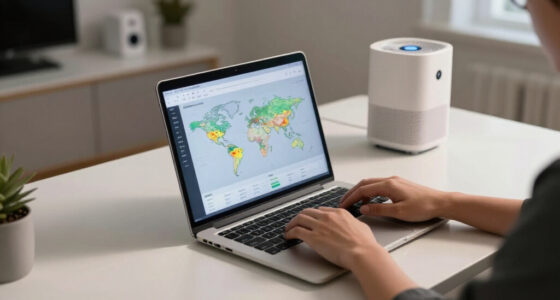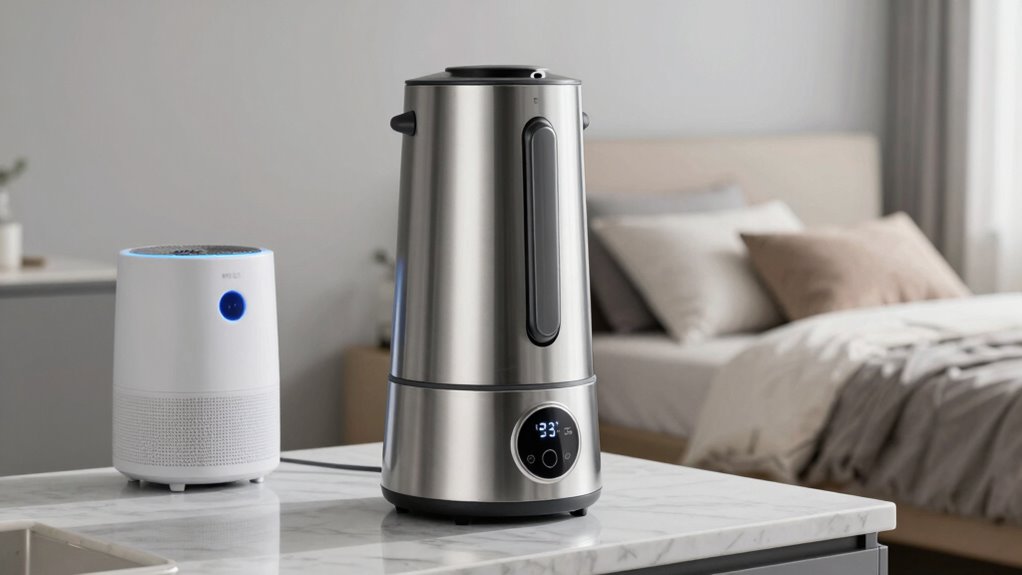
A kitchen purifier works very differently from a bedroom purifier because it needs to quickly handle smoke, cooking fumes, grease, and strong odors, often requiring high airflow and powerful filters. In contrast, a bedroom purifier focuses on steady, quiet removal of allergens like dust mites, pet dander, and pollen for a good night’s sleep. Understanding these differences can help you choose the right device for each space; keep exploring to learn more.

Get home appliances delivered free with Prime
- Fast, free delivery on millions of items
- Prime Video, Amazon Music and more included
- Member-only deals all year
Key Takeaways
- Kitchen purifiers require high airflow and powerful filters to rapidly remove cooking fumes, smoke, and grease.
- Bedroom purifiers focus on quiet operation and steady filtration to maintain low-level pollutants without disturbing sleep.
- Kitchen devices often feature activated carbon filters for odor and chemical absorption, while bedroom purifiers prioritize HEPA filters for allergens.
- The design of kitchen purifiers emphasizes quick cleaning and high capacity, whereas bedroom purifiers are compact and energy-efficient.
- Operational demands differ: kitchens need fast pollutant clearance, bedrooms require continuous, unobtrusive air purification.
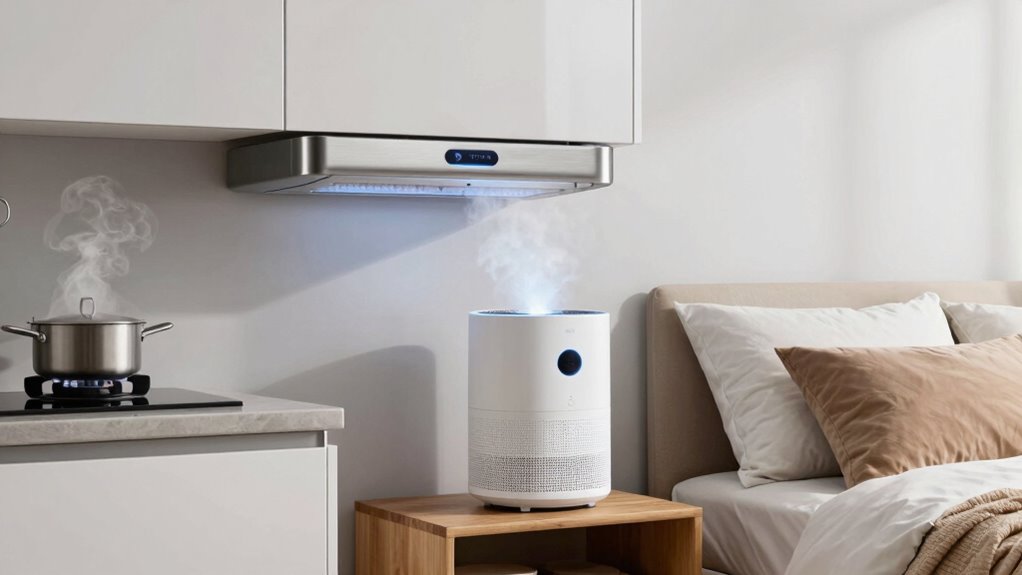
When choosing air purifiers for your home, it’s important to take into account the specific needs of different spaces, such as the kitchen and bedroom. These areas have distinct requirements when it comes to maintaining ideal air quality, which directly impacts device efficiency. A kitchen purifier works very differently from a bedroom purifier because each is designed to handle different types of airborne pollutants and challenges.
In the kitchen, air quality can change rapidly due to cooking fumes, smoke, grease, and odors. Here, your device needs to be powerful enough to quickly filter out particles and chemical compounds that can linger and cause discomfort or health issues. A kitchen purifier often incorporates high-efficiency filters like activated carbon and HEPA filters to target smoke, odors, and airborne grease. Its design emphasizes high airflow capacity to ensure rapid purification, so you don’t have to wait long for cleaner air after cooking. Because of these demanding conditions, device efficiency is critical; a less capable purifier might struggle to keep up with the volume of pollutants, leading to poor air quality. Additionally, many kitchen purifiers come with features like odor control and easy-to-clean filters to maintain performance over time.
In contrast, your bedroom requires a different approach. The air quality here is more about ongoing, subtle pollution, including dust mites, pet dander, pollen, and other allergens. Since you spend many hours sleeping, you want a purifier that runs quietly and maintains consistent air quality without disrupting your rest. The device efficiency in a bedroom purifier revolves around continuous operation at lower noise levels, and it often relies on HEPA filters that effectively trap small particles. These purifiers are designed to be compact and energy-efficient, so they can run throughout the night without increasing your electricity bill. They do not need to handle rapid influxes of pollutants like in the kitchen but focus instead on maintaining a steady, healthy environment. Additionally, considering indoor air quality improvements can significantly benefit overall health and comfort, especially in spaces where people spend a lot of time.
Furthermore, the importance of air purification technology in both settings cannot be overstated, as advancements continually improve the ability to remove diverse pollutants efficiently.
kitchen air purifier with activated carbon filter
As an affiliate, we earn on qualifying purchases.
As an affiliate, we earn on qualifying purchases.
Frequently Asked Questions
How Do Purifier Maintenance Needs Differ Between Kitchens and Bedrooms?
You’ll notice that purifier maintenance needs differ between kitchens and bedrooms mainly regarding airflow optimization and noise levels. In kitchens, you should clean or replace filters more frequently to handle grease and odors, ensuring proper airflow. In bedrooms, focus on quiet operation by checking for clogged filters or dust buildup, which can affect noise levels. Regular maintenance keeps both purifiers running smoothly and efficiently in their respective environments.
Are Specific Filter Types Better for Kitchen Versus Bedroom Air Purification?
Think of filters like tools in your toolbox—they need the right fit for the job. For kitchens, activated carbon filters excel at removing odors and gases, while HEPA filters effectively trap airborne particles. In bedrooms, HEPA filters are ideal for airflow optimization and capturing allergens. Choosing the right filter extends the lifespan of your purifier and guarantees it works efficiently, whether fighting smoke or dust.
Can a Purifier Designed for One Room Effectively Serve Another?
You can use a purifier designed for one room in another, but airflow patterns and noise levels matter. Kitchen purifiers often have stronger airflow to handle cooking odors, which may be noisy or disruptive in a bedroom. Conversely, bedroom purifiers prioritize quiet operation. If you choose to use a purifier outside its intended space, make sure it’s quiet enough for your needs and that airflow suits the room’s size and air quality.
What Safety Considerations Are Unique to Kitchen Purifiers?
You should prioritize safety when using a kitchen purifier, especially due to cooking fumes and grease buildup. Make certain it’s properly vented and regularly cleaned to prevent fire hazards and maintain air quality. Avoid blocking air intake or exhaust vents, which can cause overheating. Use the purifier only as intended, and keep flammable materials away from it. Proper maintenance minimizes risks associated with grease and fumes, keeping your kitchen safe.
How Does Room Size Influence Purifier Selection in Kitchens and Bedrooms?
Think of choosing a purifier like fitting a glove—size matters. For larger kitchens, you need a device with strong airflow patterns to cover more area effectively, and noise levels should be manageable to avoid disruptions. In bedrooms, quieter purifiers with smaller coverage work best for comfort and better sleep. Picking the right size guarantees your purifier efficiently cleans the air without becoming a bothersome noise.
quiet HEPA air purifier for bedroom
As an affiliate, we earn on qualifying purchases.
As an affiliate, we earn on qualifying purchases.
Conclusion
Just like a skilled chef selects the right tools for each recipe, understanding how kitchen and bedroom purifiers work guarantees your home’s air stays fresh and balanced. Think of them as guardians with different roles—one clearing the chaos of cooking, the other offering a peaceful sanctuary. When you choose wisely, you’re planting seeds of health that bloom into a sanctuary of clarity. Your home becomes a gentle breeze, whispering calm amid life’s storms.
high airflow kitchen air purifier
As an affiliate, we earn on qualifying purchases.
As an affiliate, we earn on qualifying purchases.
energy-efficient bedroom air purifier
As an affiliate, we earn on qualifying purchases.
As an affiliate, we earn on qualifying purchases.
Fall yard work Picks
leaf blowers
As an affiliate, we earn on qualifying purchases.