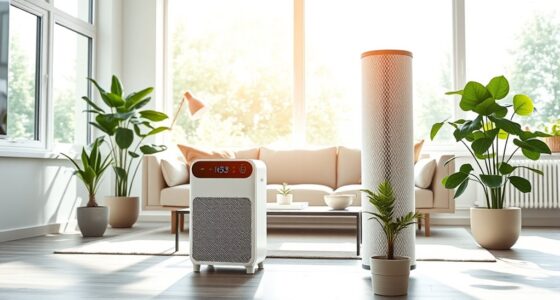
Ionizer air purifiers can improve your indoor air quality by releasing negative ions that attach to dust, pollen, and smoke, causing these particles to settle or be captured nearby. They operate quietly and are low-maintenance, making them appealing options. However, some models emit ozone, which can irritate your lungs and worsen health issues. Additionally, electromagnetic interference may disrupt electronics. To balance these benefits and risks, it’s smart to explore how different models work—just keep going to learn more.
Key Takeaways
- Ionizer purifiers effectively reduce airborne particles by releasing negative ions that cause contaminants to settle or be captured nearby.
- They operate quietly and are energy-efficient, requiring less maintenance than filter-based air purifiers.
- Some models emit electromagnetic waves that may interfere with electronic devices and sensitive medical equipment.
- Many ionizers produce ozone as a byproduct, which can irritate lungs and exacerbate respiratory issues if levels are high.
- Choosing low-ozone and EM-compliant models, along with proper research, ensures safe and effective air purification.

Are ionizer air purifiers the right choice for improving indoor air quality? If you’re contemplating an ionizer, it’s important to understand both its benefits and potential risks. Ionizers work by releasing negatively charged ions into the air, which attach to airborne particles like dust, pollen, and smoke. These particles then become heavy enough to settle on surfaces or be captured by nearby surfaces, effectively reducing airborne contaminants. This process can lead to noticeable improvements in air clarity, especially in spaces where traditional filters might struggle with certain pollutants.
However, as you evaluate ionizers, you should be aware of electromagnetic interference. Some models emit electromagnetic waves that can interfere with electronic devices like computers, radios, or medical equipment. If you have sensitive electronics or rely on medical devices, this interference could cause disruptions or malfunctions. It’s worth researching specific models for electromagnetic compatibility standards or choosing devices designed to minimize such interference. Being aware of this aspect helps you ensure your environment remains safe and functional while enjoying cleaner air.
Be aware of electromagnetic interference from some models to protect your electronic devices and ensure a safe environment.
Another critical factor to consider is ozone emission. Many ionizer air purifiers produce ozone as a byproduct during their operation. While ozone can help neutralize certain odors and bacteria, excessive ozone levels in enclosed spaces can be harmful. Ozone is a known respiratory irritant, capable of aggravating asthma, reducing lung function, and causing throat or chest discomfort. If you’re sensitive to air quality issues or have children, elderly family members, or pets, high ozone emission could pose health risks. When selecting an ionizer, look for models that specify low or zero ozone emission, and always follow manufacturer guidelines to operate the device safely.
Despite these concerns, ionizer air purifiers can be effective in certain scenarios. They tend to be quiet, energy-efficient, and easy to maintain since they don’t require regular filter replacements like HEPA units. Many users notice improvements in indoor air comfort and a reduction in dust accumulation on surfaces. Additionally, some models are designed with air quality monitoring features to help you optimize their operation. Still, it’s essential to weigh these benefits against potential electromagnetic interference and ozone emissions. Properly researching products and understanding their specifications helps you make an informed decision.
Frequently Asked Questions
Do Ionizer Air Purifiers Produce Ozone?
Yes, ionizer air purifiers do produce ozone through chemical reactions. When they generate negative ions, these ions can react with oxygen molecules in the air, creating small amounts of ozone. While some models produce minimal ozone, higher ozone levels can be a concern for sensitive individuals. It’s essential to select ionizers designed to limit ozone production and ensure proper ventilation to reduce potential health risks.
Are Ionizer Purifiers Effective Against Allergens?
Like a magnet pulling in metal shavings, ionizer purifiers use electrostatic attraction to capture airborne particles. They can be effective against allergens, especially pollen, dust, and pet dander, by charging particles and making them stick to surfaces or filters. However, their efficiency varies, so you might want to combine them with other air cleaning methods for better allergy relief.
How Do Ionizers Compare to HEPA Filters?
Ionizers use electrostatic attraction to remove particles, but their air purification efficiency often falls short compared to HEPA filters. HEPA filters physically trap airborne allergens, dust, and particles more effectively. Ionizers may produce ozone and other byproducts, which can pose risks. If you’re aiming for better allergen control, HEPA filters generally outperform ionizers, providing a safer and more reliable air purification solution.
Can Ionizers Eliminate Viruses and Bacteria?
Yes, ionizers can help eliminate viruses and bacteria through air purification. They work by creating electrostatic attraction, which causes airborne pathogens to stick to charged plates or surfaces. While this process can reduce the number of microbes in the air, it’s not completely effective at sterilizing all pathogens. Use ionizers alongside other air purification methods for better overall protection against viruses and bacteria.
Are Ionizer Air Purifiers Safe for Pets and Children?
Ionizer air purifiers can be safe for pets and children if used properly, as they improve indoor air quality by reducing airborne pollutants. However, you should guarantee the device has good ventilation and is well-maintained to minimize ozone production, which can pose health risks. Always prioritize child safety by placing the purifier out of reach and following manufacturer guidelines to keep your indoor environment healthy and secure.
Conclusion
Ionizer air purifiers can be your breath of fresh air, sweeping away pollutants like a gentle breeze. But remember, they might also release invisible clouds of ozone, lurking like shadows in your space. Weigh their benefits against the risks, and choose wisely. Like a delicate dance, your air quality depends on harmony—embrace the clean, but stay cautious of the unseen. In this dance, balance is your best partner for a healthier, clearer home.