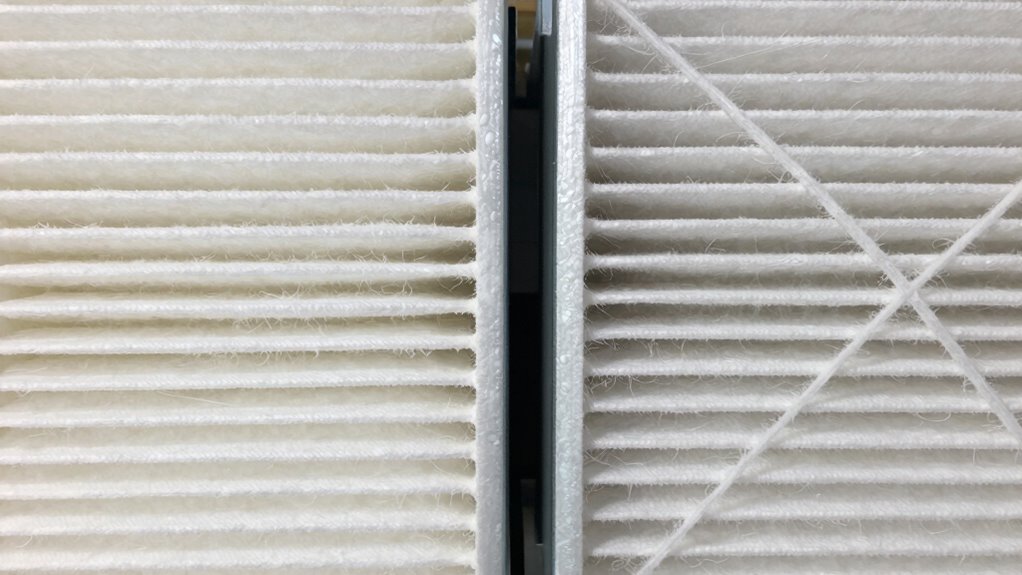
H13 and H14 HEPA filters both meet medical-grade standards, but H14 offers higher filtration efficiency, trapping at least 99.995% of 0.3-micron particles compared to H13’s 99.95%. This makes H14 more suitable for environments needing extra protection, like hospitals or labs. Medical-grade filters meet strict standards like EN 1822 or UL Class 1, ensuring safety and reliability. To understand how to choose the right filter for your needs, keep exploring further.
Key Takeaways
- ‘Medical-grade’ HEPA filters meet strict standards like EN 1822 or UL Class 1, ensuring high filtration efficiency and safety.
- H13 filters trap ≥99.95% of 0.3-micron particles, while H14 filters trap ≥99.995%, offering higher contaminant removal.
- Certification by independent labs verifies that filters meet specific performance and safety criteria required for medical environments.
- Medical-grade filters are designed for consistent performance, including durability and lifespan, crucial in sensitive settings.
- Proper management and timely replacement of these filters maintain their safety standards and optimal air filtration.
What Are HEPA Filters and How Do They Work?

HEPA filters are high-efficiency air filters designed to remove tiny particles from the air, including airborne pathogens. When air passes through a HEPA filter, it traps particles as small as 0.3 microns, effectively capturing bacteria, viruses, and dust. This process helps reduce the spread of illnesses and improves indoor air quality. The filter’s lifespan depends on usage and environment; a heavily contaminated area can shorten its effectiveness. Regular maintenance and timely replacement guarantee the filter continues to perform at its best. HEPA filters are essential in settings requiring high air purity, such as hospitals and cleanrooms. By trapping airborne pathogens, they considerably lower health risks. Understanding the filtration efficiency of HEPA filters helps you select the right product for your needs and ensures optimal performance. Proper understanding of their operation helps you maximize their lifespan and maintain a healthier environment.
How Do H13 and H14 HEPA Filters Differ in Performance?

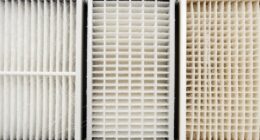
While both H13 and H14 HEPA filters are designed to remove airborne particles effectively, they differ particularly in their filtration efficiency. H14 filters trap at least 99.995% of particles as small as 0.3 microns, compared to H13’s 99.95%. This difference impacts performance, especially when filtering very tiny particles. The filtration level is a critical factor in choosing the appropriate filter for specific environments. H14 filters typically have higher airflow resistance, which means they may require more energy to operate but provide better filtration. The key distinctions include:
H14 HEPA filters offer higher efficiency and better filtration of tiny particles than H13 filters.
- Particle size removal efficiency
- Filtration level (H13 vs. H14)
- Airflow resistance
- Suitability for high-demand environments
- Overall filtration performance
Additionally, the Filtration technology continues to advance, improving how effectively these filters perform in real-world applications. Understanding these differences helps you choose the right filter for your needs, ensuring ideal air quality and system efficiency.
What Does ‘Medical-Grade’ Mean for HEPA Filters?

When a HEPA filter is labeled as “medical-grade,” it meets specific certification standards that guarantee safety and effectiveness. These standards set clear requirements for filtration efficiency and quality control, giving you confidence in their performance. Understanding these certifications helps you choose filters that are reliable for sensitive environments. Additionally, support networks for new fathers can provide valuable guidance on maintaining health and well-being during transitional periods. Recognizing filtration efficiency ensures you select the right filter for your specific needs. Moreover, being aware of certification standards can help you differentiate between genuine medical-grade filters and less reliable alternatives. Familiarity with body piercing aftercare practices also emphasizes the importance of maintaining overall health and hygiene in environments utilizing such filters. Knowing about filter maintenance is essential for ensuring the ongoing effectiveness of your HEPA filters in critical settings.
Certification Standards Explained
Certification standards for HEPA filters guarantee they meet strict performance and safety criteria, especially those labeled as “medical-grade.” These standards guarantee the filters effectively trap particles as small as 0.3 microns, including bacteria and viruses, which improves air quality. They also define the expected filter lifespan, ensuring you get consistent performance over time. Understanding these standards helps you select filters that maintain high air purity and durability.
Key points include:
- Compliance with recognized testing protocols
- Particle removal efficiency (usually 99.97% or higher)
- Filter durability and lifespan guarantees
- Safety and contamination controls
- Verification by independent laboratories
Implications for Safety
Understanding what “medical-grade” means for HEPA filters is essential for guaranteeing safety in sensitive environments. These filters are designed to improve air quality by capturing tiny particles, including bacteria and viruses, which reduces health risks. When a HEPA filter is labeled as medical-grade, it typically meets strict standards that guarantee a high level of filtration efficiency. This designation often requires compliance with specific regulatory standards, ensuring consistent performance. This means you can trust its ability to maintain a safer environment. Additionally, seasonal variations can influence the performance and maintenance requirements of HEPA filters, making it important to consider the environment in which they are used. Proper filter maintenance and adherence to manufacturer guidelines are crucial for optimal performance. Proper management of filter lifespan is also vital, as the effectiveness of the filter diminishes over time, emphasizing the importance of regular replacement. Regular performance testing can help verify that the filter continues to function effectively over its lifespan. However, safety also depends on proper filter lifespan management. Over time, filters can become clogged or lose effectiveness, so regular replacement is vital. Using a genuinely medical-grade HEPA filter ensures consistent air quality and minimizes the risk of contamination, safeguarding everyone in the space.
Which HEPA Filter Is Best for Sensitive Environments?

When choosing a HEPA filter for sensitive environments, it’s vital to take into account its filtration efficiency standards and contaminant removal capabilities. You need a filter that reliably captures even the smallest particles to protect health and safety. Understanding filtration efficiency standards is essential for selecting the most effective filter. For example, knowing the testing protocols used to evaluate filters can help you determine their real-world performance. Additionally, being aware of classification levels such as H13 and H14 can guide you toward the appropriate level of filtration for your specific needs. Ultimately, the right choice depends on how well the filter suits the specific needs of your sensitive area. Considering the performance testing of HEPA filters ensures that you select a product that meets the rigorous demands of medical-grade environments. Moreover, being familiar with conversion tools can help you better understand the specifications and performance metrics of different filters in various measurement units.
Filtration Efficiency Standards
Choosing the right HEPA filter for sensitive environments depends on its filtration efficiency standards, which dictate how effectively it captures tiny particles. These standards guarantee high air quality and influence the filter’s lifespan. HEPA filters are classified based on their ability to trap particles of 0.3 microns with at least 99.97% efficiency. Higher standards, like H14, often provide superior filtration, making them ideal for environments requiring ultra-clean air. Consider these key points:
- H13 filters trap 99.95% of particles
- H14 filters trap 99.995%
- Efficiency impacts overall air quality
- Higher efficiency can extend filter lifespan
- Standards are set by international organizations for consistency
Knowing these standards helps you select a filter that maintains ideal air quality and durability for sensitive settings. Filtration efficiency standards are essential for comparing different HEPA filters and ensuring optimal performance. Understanding these classifications can help you make more informed choices for your air filtration needs. Additionally, the cost and availability of H14 filters might influence your decision depending on your specific requirements.
Contaminant Removal Capabilities
Selecting the right HEPA filter for sensitive environments requires evaluating its ability to remove a wide range of contaminants effectively. Both H13 and H14 filters excel at airborne pathogen removal, making them suitable for spaces where infection control is critical. H14 filters typically provide superior allergen filtration, capturing more microscopic particles that trigger allergies or asthma. This enhanced removal capability guarantees cleaner air and reduces health risks for vulnerable populations. Your choice depends on the level of contamination control needed; H14 filters are better suited for environments demanding the highest contaminant removal, especially for airborne pathogens and allergens. By prioritizing contaminant removal capabilities, you ensure your space maintains ideal air quality and safety for sensitive occupants.
Suitability for Sensitive Areas
For sensitive environments such as hospitals, laboratories, or cleanrooms, the choice of HEPA filter considerably impacts air safety. You need a filter that guarantees ideal air quality without frequent replacements. H14 filters are often more suitable because they provide higher efficiency, capturing smaller particles essential for delicate areas. They also tend to have a longer filter lifespan when maintained properly, reducing downtime and ensuring consistent air quality. Consider these factors:
- Higher efficiency for ultra-fine particles
- Better suited for strict hygiene standards
- Longer filter lifespan with proper maintenance
- Greater reliability in contaminant removal
- Consistent air quality over time
How to Choose the Right HEPA Filter for Your Needs
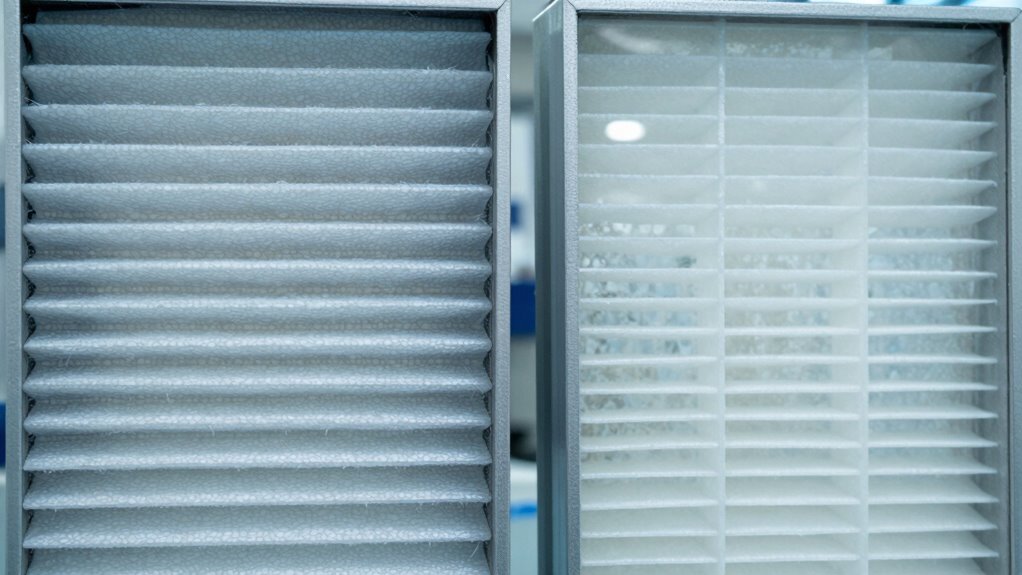
When deciding on the right HEPA filter, it’s important to take into account the specific air quality needs of your space. Consider how long the filter’s lifespan will be and how often you’ll need replacements, as this affects ongoing maintenance and costs. If your environment requires frequent filtering, a filter with a longer lifespan might save you money in the long run, despite a higher upfront cost. Conversely, if budget constraints are tight, you may opt for a less expensive filter that needs more frequent replacement. Think about your air quality goals and how much you’re willing to invest in maintenance. Balancing filter lifespan and cost considerations guarantees you select a HEPA filter that effectively meets your needs without unnecessary expense.
Standards and Certifications for Medical-Grade HEPA Filters

Medical-grade HEPA filters must meet strict standards and certifications to guarantee they effectively remove harmful particles from the air. These standards ensure high air quality and reliable filter lifespan. Certifications like EN 1822 or UL Class 1 confirm the filter’s efficiency and quality. When choosing a medical-grade HEPA filter, look for the following:
Medical-grade HEPA filters meet strict standards like EN 1822 or UL Class 1 for reliable air purification.
- Certification labels indicating compliance
- Minimum efficiency ratings of 99.95% for H13 or higher
- Verified particulate removal capabilities
- Consistent performance over filter lifespan
- Clear documentation of standards met
These certifications help you trust that your filter maintains excellent air quality, even during long-term use. Understanding the standards ensures you select a filter that performs reliably, protecting your environment and health.
Tips for Maintaining Your HEPA Filters for Peak Performance

Properly maintaining your HEPA filters is essential to guarantee they perform at their best and continue to provide clean, safe air. Regularly check for dust buildup and replace filters when airflow slows. Good airflow management prevents strain on the filter, extending its lifespan and ensuring peak performance. Keep the surrounding environment clean and avoid obstructions that could disrupt airflow. Visualize this process:
| Airflow Path | Filter Condition | Maintenance Action |
|---|---|---|
| Clear | Clean | Regular replacement |
| Obstructed | Dusty | Immediate cleaning or replacement |
| Restricted | Low airflow | Check for blockages |
Frequently Asked Questions
Are H13 and H14 Filters Suitable for Allergy Sufferers?
Yes, H13 and H14 HEPA filters are suitable for allergy sufferers. They markedly improve air quality by trapping tiny allergens like pollen, pet dander, and dust mites, providing allergy relief. Using these filters, you can breathe cleaner air and reduce allergy symptoms. Make sure your air purifier is compatible with these filters, and you’ll notice a difference in your indoor environment, especially during allergy season.
How Often Should HEPA Filters Be Replaced in Medical Settings?
You should replace HEPA filters in medical settings every 6 to 12 months, depending on usage and filter life. Regular filter maintenance and timely replacement are essential to prevent contamination and guarantee peak air purity. Forgetting this can lead to a buildup of harmful particles, making your environment as unsafe as a ticking time bomb. Stay vigilant with scheduled replacements, and you’ll maintain a safe, clean space for patients and staff alike.
Can HEPA Filters Eliminate Viruses and Bacteria Effectively?
Yes, HEPA filters can effectively eliminate viruses and bacteria through air purification and viral filtration. They trap airborne particles as small as 0.3 microns, including many pathogens. H13 and H14 filters are especially efficient, capturing nearly 99.95% and 99.995% of these tiny particles, respectively. To guarantee ideal viral filtration, regularly maintain and replace your filters according to manufacturer guidelines, keeping your environment safer and healthier.
What Are the Costs Differences Between H13 and H14 Filters?
Think of H14 filters as premium gasoline, costing more upfront but lasting longer. Typically, H14 filters are about 20-30% pricier than H13 filters, affecting your initial investment. When doing a cost-benefit analysis, consider filter maintenance; H14s may reduce replacement frequency and improve air quality. While more expensive initially, their durability can save you money over time, especially in high-demand environments.
Are There Environmental Impacts Associated With Disposing of HEPA Filters?
You should know that disposing of HEPA filters poses environmental impacts due to recycling challenges and disposal regulations. These filters often contain trapped pollutants, making them difficult to recycle safely. Many regions have strict disposal rules to prevent contamination, so you need to follow proper protocols. Improper disposal can harm the environment, so always check local guidelines and consider options like specialized recycling programs to minimize your impact.
Conclusion
Choosing between H13 and H14 HEPA filters is like picking the perfect brush for your masterpiece—you need the right tool to see your vision come alive. By understanding their differences and what ‘medical-grade’ truly means, you can protect your space like a fortress. Keep your filters maintained, and they’ll serve as your silent guardians, tirelessly trapping invisible enemies. With the right choice, you’ll breathe easier, knowing you’re surrounded by a shield of clean, pure air.