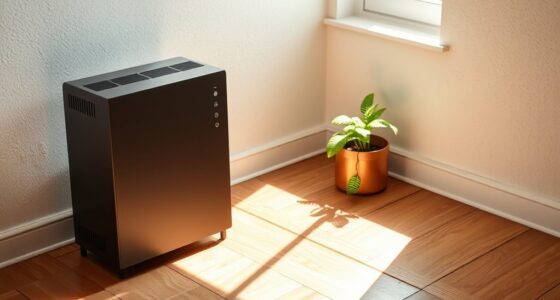
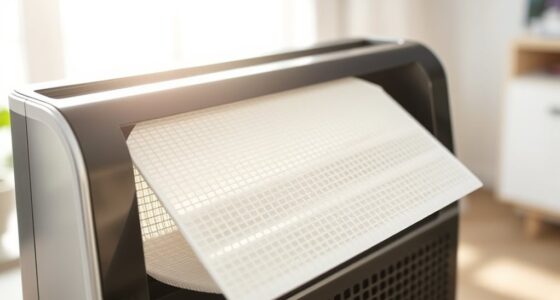
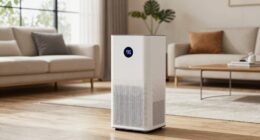
Activated carbon filters improve air purifiers by trapping gases and odors that HEPA filters can’t catch alone. They work through adsorption, where harmful VOCs and smells cling to the porous surface of the carbon. This process helps eliminate persistent odors from cooking, pets, and cleaning products, leaving your indoor air fresher. To get the most out of your purifier, regular filter maintenance is essential. Keep exploring to discover more ways to maximize odor control at home.
Key Takeaways
- Activated carbon filters absorb gaseous pollutants like VOCs, which cause odors, effectively neutralizing indoor smells.
- They complement HEPA filters by targeting gases that particles cannot trap, providing comprehensive air purification.
- Regular replacement of activated carbon filters maintains their ability to adsorb odors and VOCs efficiently.
- Properly sized air purifiers with activated carbon filters are essential for effectively eliminating odors in specific room sizes.
- Combining activated carbon filters with other filtration methods ensures a fresher, odor-free indoor environment.
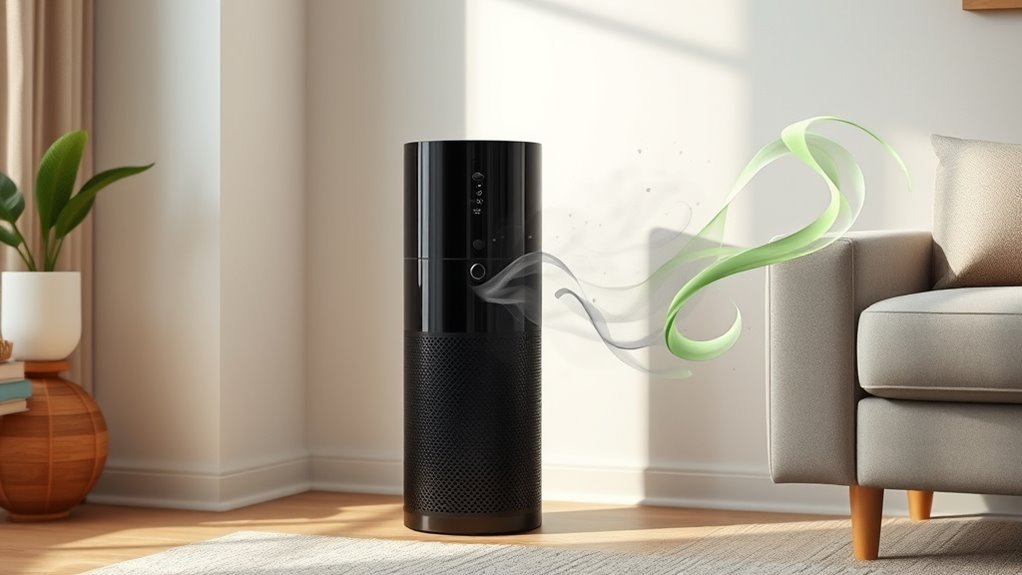
Have you ever wondered why some odors seem to linger despite your best efforts to eliminate them? The answer often lies in how your air purifier handles airborne particles and volatile organic compounds (VOCs). While many devices include HEPA filters that trap dust, pollen, and pet dander, they’re not always enough to tackle the more stubborn smells. That’s where activated carbon filters come into play, especially for VOC removal. These filters are designed to absorb and neutralize gaseous pollutants, which are often the main culprits behind lingering odors.
HEPA filters are excellent at capturing microscopic particles, but VOCs are different. These gaseous compounds originate from sources like cooking, cleaning products, paints, and even furniture, and they float freely in the air. Because HEPA filters don’t trap gases, odors caused by VOCs can persist even when your air purifier is running. That’s why a device equipped with an activated carbon filter can make a real difference. The activated carbon’s porous surface traps VOC molecules through a process called adsorption, effectively removing these odor-causing gases from your indoor environment.
When choosing an air purifier to combat odors, look for one that combines HEPA filters with activated carbon. The HEPA component will handle allergens and particles, while the carbon filter targets VOCs and smells. This dual approach ensures a more thorough purification process. You’ll notice a significant difference, especially in spaces with strong or persistent odors, like kitchens or pet areas. The activated carbon filter absorbs the gases responsible for these smells, often leaving the air smelling fresher and cleaner.
Keep in mind that activated carbon filters don’t last forever. Over time, they become saturated with absorbed gases and need replacement. Regular maintenance of your air purifier, including timely filter changes, is key to maintaining effective VOC removal. Also, ensure your device has the right size and airflow capacity for your space; otherwise, it might not work as efficiently in removing odors or VOCs. The combination of HEPA filters and activated carbon filters provides a powerful solution for improving indoor air quality, especially when it comes to eliminating stubborn odors that refuse to go away.
Additionally, understanding the role of activated carbon filters in removing gaseous pollutants can help you make more informed choices for your air quality needs.
Frequently Asked Questions
Do Activated Carbon Filters Remove All Types of Odors?
No, activated carbon filters don’t eliminate all types of odors. They work through chemical adsorption, capturing molecules responsible for common smells like smoke, pet odors, and cooking fumes. However, some persistent or strong odors, such as chemical fumes or certain industrial smells, may require additional filtration methods. For effective odor neutralization, make sure your filter is properly maintained and replaced regularly to keep its adsorption capacity high.
How Often Should I Replace Activated Carbon Filters?
You should replace activated carbon filters every 3 to 6 months, depending on your filter’s lifespan and usage. Keep an eye on replacement indicators, like decreased odor absorption or a warning light, which signal it’s time for a change. Regular replacement guarantees your air purifier continues effectively removing odors, maintaining clean, fresh air in your space. Be sure to follow your device’s manufacturer recommendations for ideal performance.
Can Activated Carbon Filters Eliminate Cigarette Smoke?
Activated carbon filters can substantially reduce cigarette smoke odors through smoke absorption, but they may not eliminate all traces completely. To maintain effectiveness, you need to replace the filter as part of its lifespan, usually every 3 to 6 months, depending on usage. Regular replacement ensures your air purifier continues to absorb smoke particles efficiently, helping improve indoor air quality and reduce lingering cigarette smell.
Are Activated Carbon Filters Effective Against Pet Odors?
Yes, activated carbon filters are effective for pet odor control. They absorb and trap the molecules responsible for pet smells, making your space fresher. To sustain their effectiveness, you should replace the filter regularly, considering the filter lifespan, especially if you have multiple pets or high odor levels. Proper maintenance ensures continuous odor removal and keeps your air clean and fresh.
Do Activated Carbon Filters Impact Indoor Humidity Levels?
Think of activated carbon filters as silent guardians—they don’t directly control humidity, but they can influence the air quality around it. They won’t impact humidity levels considerably, so for proper humidity control, you’ll need a dedicated humidifier or dehumidifier. Keep in mind, the filter’s lifespan determines how well it performs over time; a clogged filter won’t work effectively, regardless of humidity. Regular replacement ensures peak air quality.
Conclusion
Just like a sponge soaks up water, activated carbon filters absorb odors to freshen your space. When you use an air purifier with these filters, you’re giving your home a gust of fresh air, free from stubborn smells. Don’t let bad odors cling to your surroundings—trust in activated carbon to clear the air and improve your environment effortlessly. With this simple solution, you’ll enjoy a cleaner, more inviting space every day.