Yes, air purifiers can help reduce cooking odors effectively when you pick models with activated carbon or HEPA filters and maintain them properly. Pairing them with good ventilation — like range hoods vented outside, opening windows, or using fans — enhances odor removal. Regular filter checks and replacements guarantee your purifier works efficiently. Combining these strategies creates a fresher indoor environment. Want practical tips on making your kitchen smell fresher? Keep exploring for more insights.

Get home appliances delivered free with Prime
- Fast, free delivery on millions of items
- Prime Video, Amazon Music and more included
- Member-only deals all year
Key Takeaways
- Yes, air purifiers with activated carbon filters effectively absorb cooking odors and airborne particles.
- Regularly check and replace filters to maintain the purifier’s odor removal efficiency.
- Combining air purifiers with proper ventilation, like exhaust fans and open windows, enhances odor control.
- Match the purifier size to your room’s square footage for optimal coverage and performance.
- Using both ventilation methods and air purifiers provides the best strategy for minimizing lingering cooking smells.
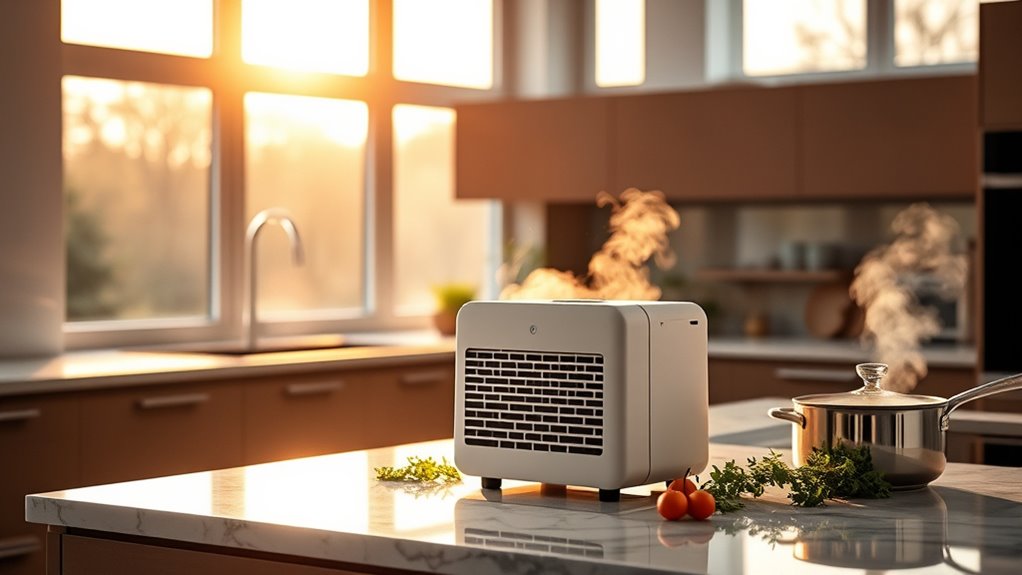
Cooking odors can quickly fill your home, making the air smell unpleasant and lingering long after you’ve finished meal prep. That’s where air purifiers come into play, but they’re only part of the solution. To truly combat cooking smells, you need to implement effective ventilation strategies alongside proper filter maintenance. Ventilation strategies involve more than just turning on the exhaust fan; it’s about creating a continuous airflow that pulls odors away from your living space. Using range hoods, especially those vented outside, markedly reduces airborne particles and smells during cooking. If a vented hood isn’t an option, opening windows or using portable fans to increase fresh air circulation can help dilute odors in your home.
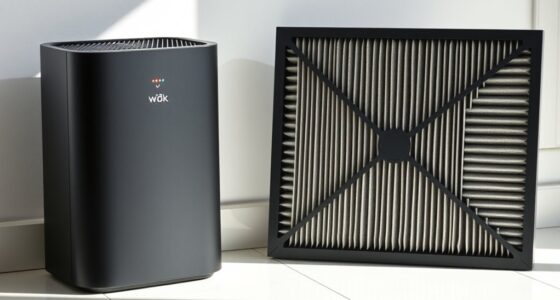
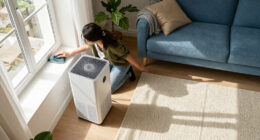
Air purifiers can assist in cleaning the air after cooking, but their effectiveness depends heavily on regular filter maintenance. Many air purifiers use HEPA or activated carbon filters, which trap airborne particles and absorb odors. Over time, these filters become saturated and less effective, so you need to check and replace them according to the manufacturer’s instructions. Neglecting filter maintenance means the purifier can’t do its job properly, leaving lingering smells in the air. When selecting an air purifier for cooking odors, look for one with activated carbon filters, as they are specifically designed to absorb cooking smells. Ensure the purifier’s size matches your space to maximize its efficiency and coverage.
Regular filter maintenance is key to keeping your air purifier effective against cooking odors.
Combining ventilation strategies with a clean air purifier offers the best results. Keep your exhaust fans running while cooking, and open windows if possible, to create a flow that pushes odors outside. After cooking, turn on your air purifier, making sure filters are clean and functioning properly. This two-pronged approach helps minimize lingering odors and improves indoor air quality. Remember, poor filter maintenance not only reduces your purifier’s effectiveness but can also cause it to emit unpleasant odors or become a source of indoor pollution itself.
Ultimately, managing cooking odors isn’t just about one device or trick. It’s about creating a routine that includes good ventilation practices and attentive filter maintenance. Incorporating proper ventilation techniques can significantly enhance odor control and air quality in your home. By doing so, you’ll notice less smell lingering after meals, and your home’s air will stay fresher longer. With a little effort and the right strategies, you can enjoy cooking without worrying about the aftermath filling your home with unwanted odors.
Products Worth Considering

Arlo Pro 2K HDR Wireless Security Camera, 6th Generation, 4-Camera Pack

Dyson Car+Boat Cordless Handheld Vacuum

Dyson Cyclone V10 Origin Cordless Vacuum
As an affiliate, we earn on qualifying purchases.
Frequently Asked Questions
Do Air Purifiers Eliminate All Types of Cooking Smells?
Air purifiers don’t eliminate all cooking smells, but their filter effectiveness varies. HEPA filters can trap particles that cause odors, while activated carbon filters are better at absorbing strong smells and odors with a longer lifespan. Keep in mind, some odors may linger if the smell is intense or recent. To improve results, use the purifier consistently and guarantee filters are maintained regularly for maximum odor removal.
How Long Does It Take for an Air Purifier to Remove Odors?
When you wonder how long it takes for an air purifier to remove odors, remember that it depends on factors like odor strength, room size, and purifier efficiency. Typically, you’ll see noticeable results within 15 to 30 minutes for light smells, but stronger odors may take a few hours. Regular odor absorption and proper purifier maintenance, such as filter replacement, guarantee faster, more effective odor removal, keeping your space fresh.
Can Air Purifiers Prevent Lingering Odors Between Cooking Sessions?
You can prevent lingering cooking odors by using an air purifier combined with effective ventilation strategies. Keep the purifier running during and after cooking to absorb odors quickly, and open windows or use exhaust fans to improve air circulation. Regularly maintaining your air purifier ensures maximum odor absorption, preventing odors from lingering between cooking sessions. This proactive approach helps keep your kitchen smelling fresh and odor-free.
Are Certain Air Purifier Models Better for Specific Cuisines?
Certain air purifier models excel for specific cuisines because of their filter efficiency and noise levels. For example, if you cook spicy or greasy dishes, choose purifiers with activated carbon filters to absorb odors effectively. Look for models with quiet operation so they don’t disturb your cooking or relaxing time. By selecting a purifier tailored to your cuisine’s needs, you’ll better eliminate lingering smells and enjoy fresher air.
Do Air Purifiers Also Improve Indoor Air Quality Aside From Odors?
You might wonder, do air purifiers do more than just absorb odors? Absolutely. They improve indoor air quality benefits by filtering out dust, allergens, and pollutants, creating a healthier environment. Their odor absorption efficiency not only eliminates cooking smells but also reduces pet odors and airborne allergens. With consistent use, you enhance your home’s air quality, making it fresher, cleaner, and more comfortable every day.
Conclusion
So, while air purifiers can softly work behind the scenes to gently lift away cooking scents, they aren’t a magic fix. Think of them as quiet partners that help keep your kitchen’s atmosphere fresh and inviting. With a little extra care—like proper ventilation and timely cleaning—you’ll create a cozy space where aromas drift away more gracefully. Ultimately, a thoughtful approach lets your home breathe easier, embracing the subtle dance of scent and freshness.